
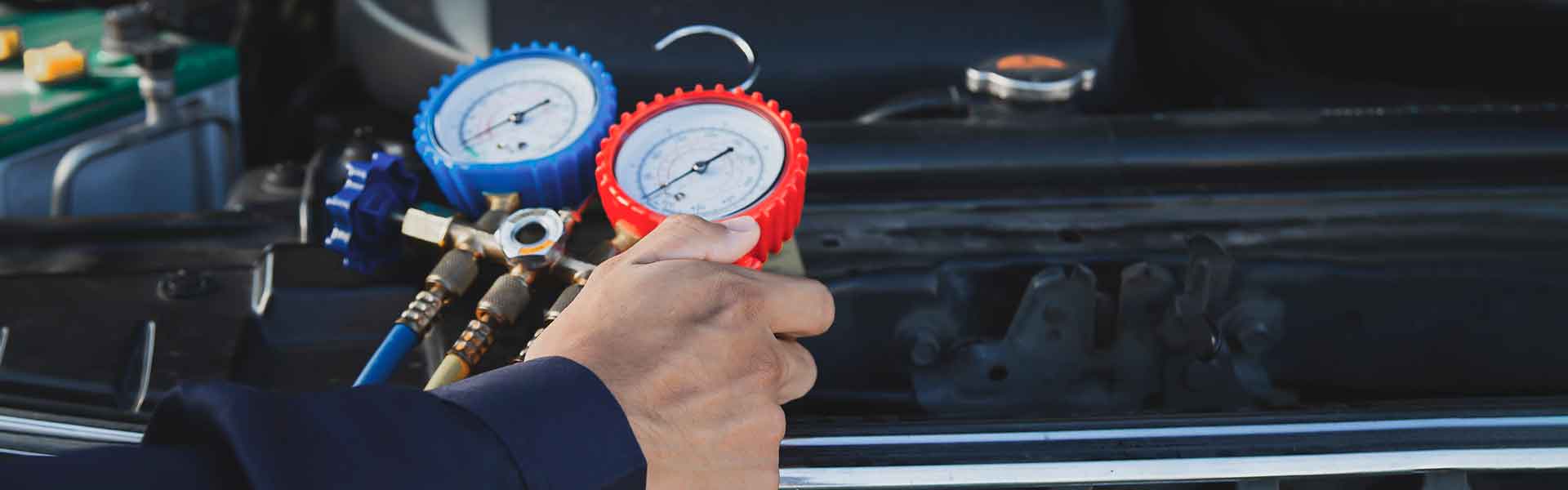
Toyota Air Conditioning AC Repair at Elevation Auto Repair
When the vents in your Camry or Tacoma start blowing warm air on a hot Denver afternoon, you want a shop that knows Toyota systems specifically – not one that just recharges refrigerant and sends you off. A working A/C system relies on the compressor, condenser, evaporator, expansion valve, and the correct refrigerant charge all functioning together, and Toyota has design details that trip up general shops.
Many Toyota models moved from R-134a to R-1234yf refrigerant, and mixing the two or using the wrong PAG oil viscosity damages the compressor fast. We pull live pressure and temperature data, verify the correct charge weight to spec rather than guessing by gauge, and follow Toyota's evacuation and vacuum-hold procedure so moisture and air stay out of the loop.
On Prius and hybrid models, the electric A/C compressor uses special non-conductive ND-oil – standard PAG oil can cause high-voltage faults. That distinction alone is why the right diagnosis matters.
- Accurate leak detection using dye and electronic sniffer methods
- Correct refrigerant type and charge weighed to Toyota spec
- Straightforward pricing with the diagnosis explained before any work
- Repairs handled in one visit whenever parts allow
Symptoms – How to Know You Need This Service
Toyota A/C trouble usually builds gradually, though some warning signs deserve attention right away. You may notice:
- Air that starts cold then turns warm after a few minutes of driving – often a sign of a leak or a failing expansion valve
- Weak airflow even at the highest fan setting, pointing to a blower motor or clogged cabin filter
- A musty or mildew smell from the vents, common when the evaporator case holds moisture
- Grinding, squealing, or clicking when the compressor clutch engages
- Water pooling on the passenger floor from a blocked evaporator drain
- The compressor short-cycling on and off rapidly at idle
- Visible oily residue near A/C fittings or the condenser
Schedule soon if you notice weak cooling or odors. Stop driving with A/C engaged if you hear loud grinding from the compressor – a seized clutch can throw debris through the whole system, turning a simple repair into a full component replacement.
Common Air Conditioning AC Repair Issues on Toyota Vehicles
If your Toyota is blowing warm air, cycling on and off, or smelling musty when you turn on the vents, you're dealing with problems we see across the lineup every week. Toyota AC systems are generally durable, but certain platforms have predictable weak points worth naming.
- Compressor clutch failure on 2007-2012 Camry (XV40) and RAV4 – The clutch coil and bearing wear out, causing squealing or a compressor that won't engage. Once debris circulates, it can contaminate the whole loop.
- Evaporator and condenser leaks on 2005-2015 Tacoma and Tundra – Road grit and gravel from Colorado driving pit the condenser, and micro-leaks slowly bleed off refrigerant until the system stops cooling.
- Blend door actuator faults on 2004-2010 Sienna and Highlander – A clicking behind the dash and inconsistent temperature control point to the small plastic actuator gears stripping out.
- Refrigerant undercharge on high-mileage Prius (2010-2015, XW30) – The electric A/C compressor uses special POE oil; a slow leak or the wrong oil during service can damage the hybrid compressor.
- Cabin air filter neglect on Corolla and Camry – A clogged filter chokes airflow and lets moisture breed the mildew smell owners describe.
- Expansion valve or receiver-drier restriction on older 4Runner and Avalon – Moisture in an aging system freezes at the valve, causing intermittent cooling that "works in the morning" but quits later.
Which Toyota Models We See for Air Conditioning AC Repair
We service Toyota A/C systems across nearly every current and recent platform. Denver's dry heat and elevation put extra strain on condensers and compressors, so we see a steady mix of these:
- Camry (XV50, XV70) – 2012 to present; later years use R-1234yf refrigerant requiring specific handling
- Corolla (E170, E210) – 2014 to present, including hybrid variants with electric compressors
- RAV4 (XA40, XA50) – 2013 to present; the popular RAV4 Hybrid uses the ND-oil electric compressor system
- Tacoma (2nd and 3rd gen) – 2005 to present, frequently in for condenser damage from road debris
- Tundra – 2007 to present, including rear-A/C double-cab systems with extra lines and valves
- 4Runner (N280) – 2010 to present
- Highlander (XU50, XU70) – 2014 to present, often with tri-zone climate control
- Prius (XW30, XW50) – 2010 to present, with high-voltage electric A/C compressors that require hybrid-specific service
Hybrid and Prime plug-in models differ noticeably from gas-only versions because of their electric compressors and high-voltage components – we handle those with the correct oil and isolation procedures. If you have an older classic Toyota still running an R-12 system, that conversion work falls outside what we commonly take on, and we'll point you toward a specialist for it.
Causes & Risks – What Happens if Ignored
Most Toyota A/C trouble traces back to slow refrigerant loss, aging seals, and Denver's mix of high UV, dry air, and gritty roads that wear condensers and dry out O-rings. Age is the biggest factor: rubber hoses and desiccant bags simply don't last forever.
Waiting turns a small fix into a big one. A low charge that could've been sealed early lets the compressor run hot and starve for lubrication.
- Ignoring a slow leak for a season typically lets the compressor run low on oil, leading to internal scoring and full compressor replacement.
- A failing compressor clutch that's left alone often sheds metal debris into the lines, forcing a full flush plus condenser and drier replacement.
- A clogged evaporator drain lets water pool and can wick into carpet and the passenger-side wiring under the dash.
- On Prius hybrids, contaminated or low compressor oil risks the expensive electric compressor rather than a simple recharge.
- Persistent mildew from a wet evaporator becomes an air-quality problem that a filter swap alone won't fix.
The pattern is consistent: an early diagnosis keeps the repair small, while months of "I'll deal with it later" pulls more parts into the job.
Safety Impact – Why Air Conditioning AC Repair Matters
A/C isn't only about comfort. On most Toyotas the system feeds the defrost function, so a dead compressor means slow, foggy windshield clearing in cold or humid weather – a real visibility hazard.
Heat also affects the driver. Long summer drives without cooling cause fatigue and slower reaction time, and a compressor that seizes can throw the serpentine belt, taking out power steering assist and charging at the same time.
- Stop driving soon: loud grinding or a burning smell from the compressor, or a belt squeal that appears when A/C engages.
- Schedule promptly: defrost that clears the windshield slowly, or intermittent cooling.
- Schedule soon: weak airflow, musty odor, or cooling that fades on longer trips.
If a known refrigerant leak or seized compressor leads to a belt failure and loss of steering assist in traffic, that's the kind of neglected-defect situation that raises liability questions. Addressing it early keeps you and everyone around you safer.
How Toyota Air Conditioning AC Repair Actually Works
Your Toyota's A/C moves refrigerant through a loop: the compressor pressurizes it, the condenser sheds heat, the expansion valve drops the pressure, and the evaporator absorbs cabin heat before a fan blows the cooled air at you. Sensors and the HVAC control head manage temperature blend and fan speed automatically.
What sets Toyota apart is how tightly the system is integrated, and the hybrid models change the rules entirely.
- Electric compressors on Prius and hybrid RAV4/Camry require specialty POE oil – the wrong oil can short the high-voltage compressor, so servicing demands the correct spec and clean handling.
- R-1234yf refrigerant on newer models (roughly 2017 and up) needs dedicated recovery equipment separate from older R-134a machines.
- Precise vacuum and charge specs – Toyota lists exact refrigerant weights and evacuation times; overcharging kills cooling as surely as undercharging.
- Blend-door actuator calibration after replacement so the HVAC head learns door position correctly.
We use proper recovery and charging equipment, follow Toyota's fill specs, and confirm the repair with pressure and temperature readings – then explain exactly what we found and what it costs before we start. That's how we keep the work honest and your Toyota cold.
How We Diagnose Air Conditioning AC Repair Issues on Toyota
Warm air blowing when you expect cold, a musty smell, or a compressor that won't kick on – these are the complaints that bring most Toyota owners in during a Denver summer. We start by confirming exactly what the system is doing before touching a single part.
- Symptom interview and visual check: We ask about warm-up behavior, noises, and smells, then inspect the condenser (a frequent debris and rock-strike victim on Tacoma and 4Runner), belt condition, and cabin filter.
- Factory-level scan: Using Techstream, we pull HVAC and body control codes to read blend-door actuator faults, pressure sensor data, and A/C amplifier communication – something a generic code reader often misses on Camry, Corolla, and RAV4 platforms.
- Manifold gauge testing: We connect to the high and low side ports to measure static and running pressures, which reveals undercharge, overcharge, or a restriction.
- Leak detection: UV dye and an electronic sniffer help us find leaks at O-rings, the condenser, or the compressor shaft seal.
- Road and vent test: We verify vent temperature and airflow at idle and cruising speed to catch electric fan or clutch issues.
Once we know the cause, we build a clear repair plan with transparent, itemized pricing so you approve the work before we begin – no surprises.
Air Conditioning AC Repair on Toyota: Repair vs. Replacement
Not every A/C problem means a big-ticket job. We match the fix to the actual failure.
- Genuine repair: A low charge from a leaking O-ring, a stuck blend-door actuator (common on 2007-2011 Camry), a failed pressure switch, or a plugged cabin filter often just needs a small part, cleaning, or a recharge with proper evacuation.
- Partial replacement: When a condenser is punctured by road debris on a Tacoma or 4Runner, or an expansion valve clogs, we replace that component and keep the rest of the serviceable system intact.
- Full replacement: A seized compressor that sends metal debris through the lines is the classic case – here the compressor, condenser, expansion valve, and receiver-drier all need replacement, plus a thorough flush, to avoid repeat failure.
Toyota compressor failures often show as a locked clutch or grinding at engagement. When repair cost creeps toward replacement cost, we lay out both paths, explain the risk of contamination, and let you decide. We never default to the most expensive option.
How to Make Your Toyota Air Conditioning AC Repair Last Longer
A little routine attention keeps your Toyota's A/C cold through Denver's heat and dry winters.
- Run it year-round: Use the A/C briefly even in cooler months to keep the compressor seals lubricated and prevent them from drying out.
- Ease the load: Crack windows to release trapped heat before blasting the system, and avoid maxing settings the moment you start up.
- Keep airflow clear: Rinse leaves and bugs from the condenser, and replace the cabin air filter on schedule – a clogged one strains the blower motor.
Owner-friendly checks you can safely do:
- Listen for new rattles or clicks when the A/C engages.
- Watch for weak airflow or fog at the vents, which hints at a failing evaporator or blend door.
- Note any sweet or musty smell that signals a drain or mold issue.
Stick with Toyota's recommended service intervals, insist on the correct refrigerant type and volume, and keep the A/C control software current where applicable. Recharging with the wrong amount or DIY refill cans that add sealant can damage the compressor – leave refrigerant handling and any electrical or compressor work to our technicians. We'll keep you comfortable and on the road with honest, straightforward service.
What to Expect When You Bring Your Toyota In
If your Toyota's vents are blowing warm on a hot Denver afternoon, or you're hearing a clutch cycling on and off under the hood, you're already past the point of wanting answers. Here's how a visit works from start to finish.
- Drop-off or scheduled appointment – Tell us what you're noticing: weak airflow, warm air, musty smell, or a compressor that won't engage. Leave personal items in the cabin if you like; we note anything valuable and keep the vehicle secure.
- Initial inspection – We measure system pressures, check for refrigerant charge, and use a dye or electronic leak detector to trace losses at the condenser, evaporator, and O-ring fittings common on Camry, RAV4, Corolla, and Highlander platforms.
- Written estimate – You get a clear, itemized breakdown before any work begins. No surprise add-ons.
- Updates during the work – We call or text as findings develop, so you approve each step.
- Pickup walkthrough – We explain what was done and show you the verified vent temperatures.
Shuttle service and loaner availability help you stay on schedule, and after-hours pickup can be arranged. Every A/C repair ends with a road test and scan-tool re-check for HVAC fault codes. If anything feels off afterward, bring it back and we'll re-verify.
Why Choose Elevation Auto Repair for Toyota Air Conditioning AC Repair
Toyota A/C problems tend to follow patterns, and knowing those patterns saves you money. We diagnose the actual failure instead of blindly recharging refrigerant that leaks right back out.
- Platform-specific knowledge – Compressor clutch and magnetic coil failures on 2007-2011 Camry, evaporator and expansion valve issues on older RAV4 and Highlander models, and blend-door actuator faults that mimic refrigerant problems on many Corolla and Sienna vehicles.
- TSB and software awareness – We check for applicable Toyota service bulletins and HVAC control module updates that address weak cooling and cycling complaints before condemning parts.
- Correct refrigerant handling – We recover, evacuate, and recharge to Toyota's specified capacity, including the newer R-1234yf systems on later models, then verify with proper micron and pressure targets.
We own the job end to end – diagnosis, repair, and post-repair verification under one roof. That means honest findings, transparent pricing, and clear communication at every step, so you drive away with cold air and no lingering doubts.
Our Toyota Services
- Battery Repair Replacement
- Brake Repair & Brake Fluid Change
- Check Engine Light Diagnostics
- Clutch Repair & Replacement
- Coolant Leak Repair
- Cooling System Repair
- Drive Shaft Repair
- Engine Repair
- Exhaust & Catalytic Converter Repair
- Head Gasket Repair & Replacement
- Oil Change
- Oil Leak Repair
- Scheduled Service Maintenance
- Steering Repair
- Suspension Repair
- Cambelt Timing Belt Replacement
- Transmission Repair
- Tune Up
- Wheel Alignment