
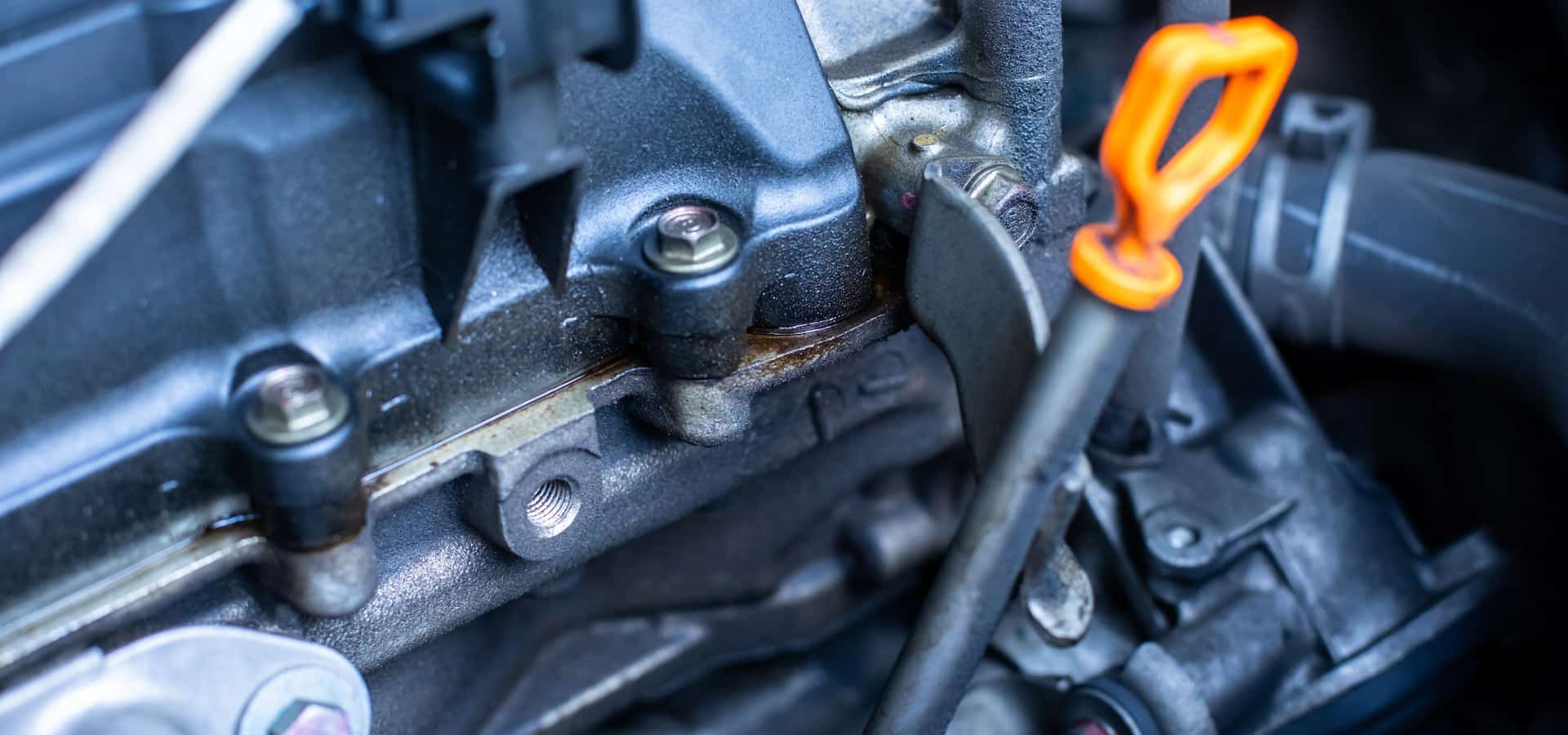
Toyota Oil Leak Repair at Elevation Auto Repair
That spot on your driveway or the burning smell after a highway run usually points to one thing on a Toyota: oil finding a path it shouldn't. Tracking it down correctly is where experience pays off, because Toyota engines hide leaks behind timing covers, valve covers, and rear main seals that all look similar from a shop floor but call for very different fixes.
Toyota reliability doesn't mean immunity. High-mileage 2AZ-FE four-cylinders (Camry, RAV4, Scion tC) are known for oil consumption tied to worn piston rings and weeping valve cover gaskets, while V6 3.5L 2GR-FE engines commonly seep from the timing cover and the notorious oil cooler pipe assembly. Getting seals to seat means clean surfaces, correct FIPG sealant application, and torque values pulled straight from Toyota service data – not guesswork.
We use factory-oriented diagnostics and dye testing to confirm the actual source before anything comes apart, so you're not paying to reseal a component that was never leaking.
- A clear diagnosis with the confirmed leak source shown to you
- OEM or OE-equivalent gaskets and seals installed to Toyota torque specs
- Transparent pricing before we start – no surprise add-ons
- A recheck to verify the repair is dry before you drive off
Symptoms – How to Know You Need This Service
Oil leaks rarely announce themselves loudly. You'll usually catch the small signs first, then the obvious ones. Here's what tends to show up on Toyotas:
- Dark spots or puddles under the front or center of the vehicle after parking
- A sharp burning-oil smell, strongest after highway driving or idling in traffic
- Light smoke drifting from the engine bay where oil drips onto the exhaust
- The dipstick reading low between changes, hinting at consumption or a slow leak
- Oil residue coating the valve cover, timing cover, or lower engine block
- A low oil pressure light or oil level warning on the dash
- Ticking or tapping at cold start as oil pressure builds slowly
Schedule soon if you're seeing minor seepage or a faint smell – these are manageable and cheaper to fix early. Stop driving immediately if the oil pressure light comes on, you spot a fast-growing puddle, or oil is spraying near hot exhaust components. Running low on oil pressure can cause bearing and engine damage that dwarfs the cost of a gasket.
Common Oil Leak Repair Issues on Toyota Vehicles
If you're seeing spots on the driveway or catching a burnt-oil smell after highway drives, your Toyota is telling you something. These are the leak patterns we see most often across the Denver fleet:
- Valve cover gasket leaks on 2AZ-FE four-cylinders (2002-2009 Camry, RAV4, Solara) – The rubber gasket hardens with heat cycling and weeps oil down the back of the block, often mistaken for a bigger problem.
- Rear main seal seepage on early 3.5L 2GR-FE V6 platforms (2007-2011 Camry, Highlander, Avalon) – A slow leak at the crankshaft-to-transmission junction that shows up as drips near the bellhousing.
- Timing cover and oil pump seal leaks on 1MZ-FE and 2GR-FE V6 engines – The front cover gasket and cam/crank seals age together, letting oil migrate down the front of the engine.
- Oil cooler line and gasket leaks on Tacoma and 4Runner 1GR-FE / 5VZ-FE trucks – Off-road heat and vibration loosen fittings and dry out the cooler seals.
- Camshaft position sensor and VVT-i actuator O-rings – A frequent overlooked leak point on 2AZ-FE and 2GR-FE engines that mimics a valve cover leak.
- Oil pan gasket and RTV failure – Common on higher-mileage Corolla and Camry engines where the original sealant shrinks and lifts at the pan seam.
Each of these has a distinct wear path, which is why guessing wastes your money. We confirm the source before touching a wrench.
Which Toyota Models We See for Oil Leak Repair
We work on the full Toyota lineup, and certain platforms roll in more often than others for oil leaks. Find your car below:
- Camry / RAV4 / Scion tC (2AZ-FE 2.4L) – valve cover gasket seepage and oil consumption, common on mid-2000s to early-2010s models
- Camry / Avalon / Highlander / Sienna (2GR-FE 3.5L V6) – timing cover seepage and the well-known oil cooler pipe rubber hose failure
- Corolla / Matrix (1ZZ-FE, 2ZR-FE) – valve cover and spark plug tube seals leaking into the plug wells
- Tacoma / 4Runner / FJ Cruiser (1GR-FE 4.0L V6) – front and rear main seal and timing cover leaks on higher-mileage trucks
- Tundra / Sequoia (3UR-FE 5.7L V8) – valve cover and cam tower leaks, plus front crank seal weeping
- Prius (1NZ-FXE / 2ZR-FXE) – valve cover gasket and oil control issues on hybrid four-cylinders
- Lexus-badged equivalents sharing 2GR and 3UR engines – same repair approaches apply
Turbocharged GR platforms (GR Supra, GR Corolla) involve added complexity around turbo oil feed and return lines, and we handle those as well. If you have a rare import or gray-market Toyota engine, call first so we can confirm parts availability before you make the trip.
Causes & Risks – What Happens if Ignored
Colorado's climate does Toyota gaskets no favors. Dry air, big temperature swings, and long climbs on I-70 accelerate gasket shrinkage and seal hardening, especially on the 2AZ-FE and 2GR-FE families. Age, mileage, and short-trip driving that never fully warms the oil do the rest.
A weep you can live with today rarely stays small. Here's how a minor leak escalates:
- A hardened valve cover gasket left alone drips onto hot exhaust components, creating smoke and a real fire concern.
- Oil contaminating spark plug tubes on 2AZ-FE engines causes misfires and rough running, turning a gasket job into ignition work.
- A slow rear main seal leak ignored for months lowers oil level, risking bearing wear and far costlier engine damage.
- Oil-soaked engine mounts and accessory belts deteriorate early, adding parts to the repair.
- Front timing cover seepage can reach the timing chain area, complicating what should have been a straightforward seal replacement.
The pattern is consistent: a small seal that could be handled cleanly becomes a multi-system repair once oil spreads. Catching it early keeps the job simple and the cost predictable, and we'll show you exactly what we found before recommending anything.
Safety Impact – Why Oil Leak Repair Matters
Oil leaks aren't just a maintenance nuisance – they touch systems that keep you in control. Low oil from an unaddressed leak can trigger engine stalling, and oil reaching brake or steering components affects how your Toyota responds. On newer models with electronic stability control and ABS, a stalled or overheating engine can disable those aids exactly when you need them.
- Stop driving now: visible smoke from the engine bay, a burning smell with the oil light on, or a sudden drop in oil pressure.
- Stop driving now: oil pooling near hot exhaust or dripping onto the ground in a steady stream.
- Schedule soon: a light film under the engine, faint burnt smell after long drives, or slow oil consumption between changes.
- Schedule soon: a small spot that reappears but oil level holds steady.
There's also a liability angle. A known leak that leads to a fire or breakdown-related incident is harder to defend after the fact. Addressing it while it's minor protects you and everyone sharing the road.
How Toyota Oil Leak Repair Actually Works
Finding a Toyota oil leak is detective work before it's mechanical work. Oil travels along the block and drips far from its source, so we clean the area, apply UV dye when needed, and run the engine to trace the true origin. Only then do we quote the repair.
Toyota's engine designs affect how we approach the job:
- VVT-i systems on 2AZ-FE and 2GR-FE engines route oil through cam actuators and sensor O-rings, so those points get inspected alongside the obvious gaskets.
- FIPG (Formed-In-Place Gasket) sealing on oil pans and timing covers requires Toyota-spec sealant, proper cure time, and correct surface prep – shortcuts here cause repeat leaks.
- Torque and sequence specs for valve covers and pans matter; overtightening warps the cover and undertightening weeps again.
- Transverse V6 layouts mean the rear bank and rear main seal need specific access steps rather than a generic teardown.
Our technicians follow the OEM procedure for each engine family, use the right seals and sealant, and verify the fix under load before it leaves. That's the difference between a leak that's gone and one that comes back next season – and we keep you informed at every step.
How We Diagnose Oil Leak Repair Issues on Toyota
You spotted a spot on the driveway, caught a burning smell after a drive, or your oil level keeps dropping between changes. On Toyota engines, a leak can travel far from its source, so tracing it accurately is the first job.
- Confirm the complaint – We verify low oil level, check for the maintenance light or a check engine code, and note where residue collects underneath.
- Scan with Techstream – Toyota's factory diagnostic software reads live data and stored codes, which helps rule out crankcase ventilation faults or oil-pressure sensor issues that mimic external leaks.
- Clean and inspect – We degrease the suspect area, then perform a visual under lift lighting to find the true origin instead of chasing residue.
- UV dye and pressure testing – Fluorescent dye pinpoints slow weeps at the valve cover, cam towers, or timing cover.
- Road test – We drive to bring the engine to full operating temperature and load, since many Toyota leaks only show under heat and pressure.
Common culprits we chase include valve cover gasket seepage on 2AZ-FE four-cylinders, rear main and timing cover leaks on 1GR-FE and 2GR-FE V6s, and camshaft/spool valve gasket weeps on VVT-i engines. Once the source is confirmed, you get a plain-language explanation and a clear written quote before any work begins.
Oil Leak Repair on Toyota: Repair vs. Replacement
Not every leak calls for a teardown. We match the fix to the actual condition of the part.
- Genuine repair – A single seeping gasket like a valve cover on a 2AZ-FE or a leaking oil pressure sensor is often a clean-and-reseal job. The surrounding components stay in service.
- Partial replacement – When a camshaft position sensor O-ring or VVT-i spool valve gasket fails, we replace the worn piece and reuse the rest of the assembly. Same logic applies to a spun oil filter housing seal or a weeping oil cooler line.
- Full replacement – A failed rear main seal on higher-mileage 2GR-FE V6s, or a timing cover that requires major disassembly, sometimes means replacing related seals and gaskets while the engine is open. If cascading wear is present or labor overlaps heavily, doing it once is the smarter call.
We lay out each path with its trade-offs so you decide based on your Toyota's mileage, how long you plan to keep it, and your budget – never a push toward the priciest option.
How to Make Your Toyota Oil Leak Repair Last Longer
A fresh seal lasts longest when the engine that surrounds it is treated well. A few habits protect the repair.
- Warm up before hard driving – Let oil reach temperature before heavy load, especially in Denver's cold mornings and high-altitude climbs. Cold, thick oil stresses fresh gaskets.
- Avoid overfilling – Too much oil raises crankcase pressure and pushes past new seals. Check the dipstick on level ground.
- Watch for early signs – Glance under the car for new spots, note any burning smell, and monitor the oil level and warning lights between services.
Brand-specific care that pays off:
- Use Toyota-recommended oil viscosity and OEM or equivalent filters – the 0W-20 spec on many modern engines matters for seal and VVT-i performance.
- Stick to Toyota's published service intervals rather than stretching them, since old, acidic oil degrades gaskets faster.
- Keep the PCV system clean, as a clogged valve raises pressure and reintroduces leaks.
Safe DIY includes checking fluid levels, inspecting for drips, and topping off between changes. Leave rear main seals, timing covers, and anything requiring engine disassembly to us – those jobs demand proper torque specs and sealant procedures to hold up long-term.
What to Expect When You Bring Your Toyota In
Maybe you spotted a dark patch on the driveway, or you keep catching that sweet-burnt smell from the vents after a highway run. Oil leaks on Toyotas rarely fix themselves, so here's how we handle yours from the moment you pull in.
- Drop-off or scheduled appointment – Tell us where the drips land and when you notice them. Leave personal items in the cabin if you like; we only need the key and glovebox access for the wheel lock.
- Initial inspection – We clean the suspected area and use UV dye or a borescope to trace the source, since oil travels and the highest wet spot is rarely the actual leak.
- Written estimate – You get a clear breakdown of the failed component, the gasket or seal set involved, and the labor required. No surprise add-ons.
- Communication during the work – We check in before doing anything beyond the approved scope, so you always know what's happening and why.
- Pickup walkthrough – We show you the old parts, the cleaned-up area, and what we replaced.
Need to keep moving? Ask about shuttle and loaner availability, plus after-hours key pickup. Before your Toyota goes back to you, we run a road test and a scan-tool re-check to confirm the repair holds and no codes lingered. If anything still feels off, bring it back and we'll re-verify our work.
Why Choose Elevation Auto Repair for Toyota Oil Leak Repair
Toyota oil leaks follow predictable patterns, and knowing those patterns means we spend your money fixing the real source instead of chasing symptoms.
- Platform-specific knowledge – We see valve cover gasket seepage and timing cover leaks on 2AZ-FE four-cylinders, rear main and cam tower leaks on 2GR-FE V6 Camry and Highlander, and VVT-i oil line failures on early 1MZ/2AZ engines. Older 22RE and 3.4L V6 trucks bring their own front seal quirks.
- TSB and software awareness – We cross-reference Toyota service bulletins and any related updates so a known pattern failure gets the corrected part revision, not a repeat repair.
- Correct sealing procedure – Many Toyota covers and cases use FIPG sealant with specific surface-prep and torque sequences. We follow those specs so the repair seals the first time.
We own the entire job – diagnosis, repair, and post-repair verification – under one roof. As your Denver dealership alternative, you get transparent pricing, honest diagnostics without unnecessary parts, and clear communication at every step. That's how we keep your Toyota reliable for the long haul.
Our Toyota Services
- Air Conditioning AC Repair
- Battery Repair Replacement
- Brake Repair & Brake Fluid Change
- Check Engine Light Diagnostics
- Clutch Repair & Replacement
- Coolant Leak Repair
- Cooling System Repair
- Drive Shaft Repair
- Engine Repair
- Exhaust & Catalytic Converter Repair
- Head Gasket Repair & Replacement
- Oil Change
- Scheduled Service Maintenance
- Steering Repair
- Suspension Repair
- Cambelt Timing Belt Replacement
- Transmission Repair
- Tune Up
- Wheel Alignment