
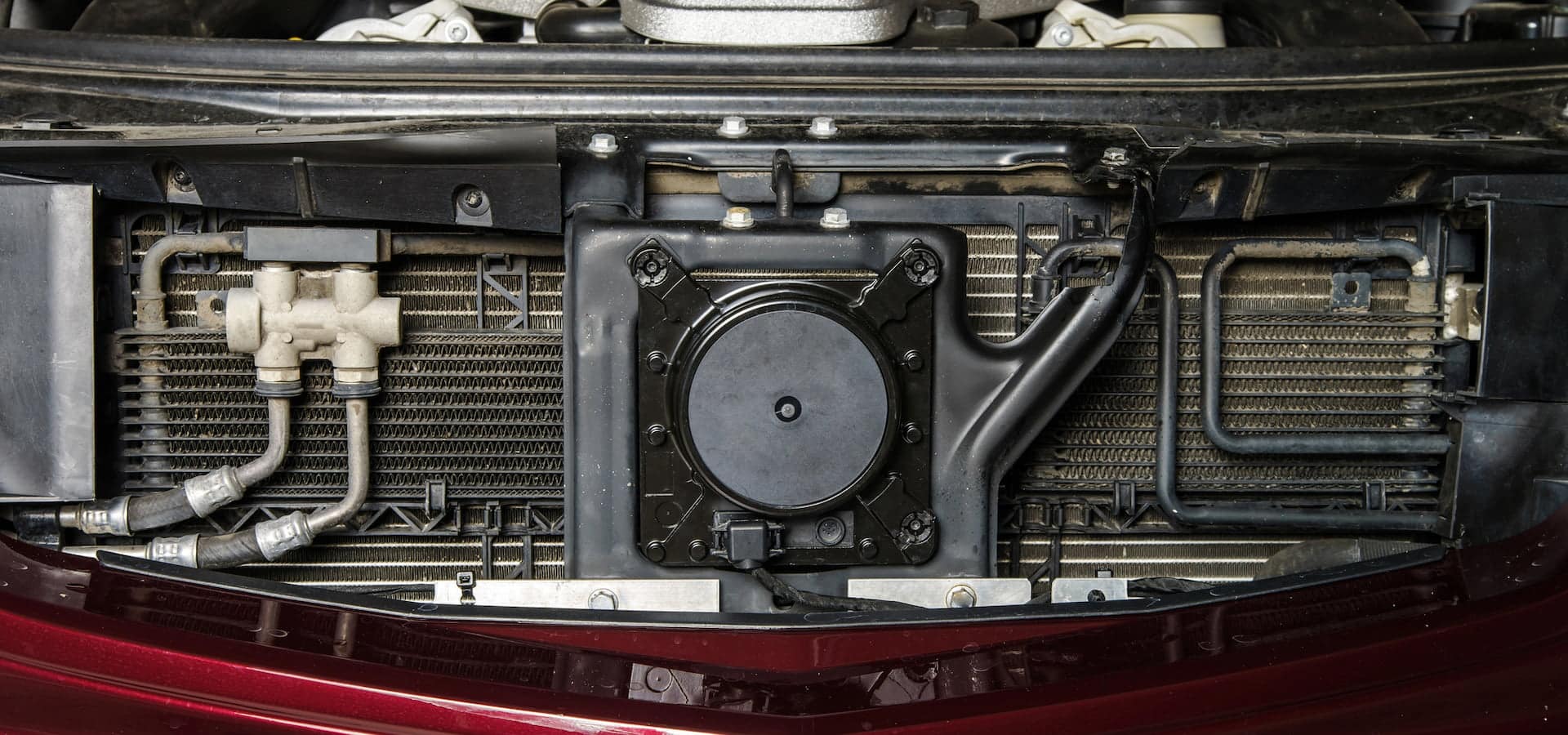
Toyota Cooling System Repair at Elevation Auto Repair
Toyota builds engines that run for a very long time, but that longevity depends on a cooling system that many owners quietly neglect. On engines like the 2GR-FE V6 found in the Highlander, Camry, and Sienna, Toyota routed coolant through a plastic Y-pipe buried in the valley of the engine – a known weak point that seeps coolant internally and fools drivers into thinking they have a simple hose leak.
Doing this work correctly on a Toyota is different from a generic radiator swap. The 2GR water pump and Y-pipe require intake removal, precise reassembly, and Toyota's long-life SLLC (Super Long Life Coolant, pink) – mixing in the wrong ethylene glycol formula shortens component life. On hybrid models like the Prius and RAV4 Hybrid, there are two separate cooling loops: one for the gas engine and a dedicated inverter/motor cooling circuit with its own pump that fails silently. We use factory bleed procedures and Techstream diagnostics so trapped air does not create hot spots after the repair.
- Pressure and combustion-gas testing to pinpoint the real leak source
- Correct Toyota SLLC coolant, filled and bled to factory spec
- Inspection of the water pump, thermostat, Y-pipe, and hoses as a system
- Clear explanation of what needs attention now versus what can wait
Symptoms – How to Know You Need This Service
Cooling problems on a Toyota often start subtly, then escalate fast. Here is what you may notice from the driver's seat:
- Sweet syrup smell inside or outside the cabin – a sign of leaking coolant near the heater core or Y-pipe
- Temperature gauge climbing above the halfway mark, especially on I-70 grades or in stop-and-go traffic
- Pink or orange puddles under the front of the vehicle after parking
- Heater blowing cold air at idle, pointing to low coolant or trapped air
- Low coolant warning light or an illuminated check engine light with P0128 or thermostat-related codes
- Whining or gurgling from the water pump area
- White sweet-smelling steam from the exhaust or an overflowing reservoir – possible head gasket or combustion gas intrusion
Stop driving immediately if the temperature gauge reaches the red zone, you see steam, or the low coolant light stays on – continued driving on a Toyota aluminum block can warp heads. Schedule soon for faint smells, small drips, or intermittent gauge movement before they become an overheating event.
Common Cooling System Repair Issues on Toyota Vehicles
Toyota built its reputation on longevity, but the cooling system is one area where age and heat cycling eventually catch up with even the most reliable platforms. Denver's altitude and temperature swings put extra load on radiators, thermostats, and water pumps, and certain engine families show predictable wear paths.
- Water pump weep on 2GR-FE V6 (2007-2017 Camry, Highlander, Sienna, RAV4) – the internally driven pump seeps coolant from the weep hole as the seal ages, often mistaken for a hose leak until the bearing starts whining.
- Plastic radiator end-tank cracking on 1MZ-FE and early 2AZ-FE 4-cylinders – the crimped plastic-to-aluminum seam splits at the upper tank, a classic wear point on high-mileage Corolla, Camry, and RAV4 models.
- Thermostat housing and gasket failures on the 1GR-FE (Tacoma, 4Runner, FJ Cruiser) – the housing warps and the O-ring hardens, leaving a slow drip and inconsistent warm-up temps.
- Head gasket coolant intrusion on 3.0L 1MZ-FE V6 (late 1990s-early 2000s) – a known weak spot where coolant migrates into a cylinder, showing up as overheating under load.
- Electric cooling fan and fan-relay faults on Prius and hybrid models – the inverter cooling loop is separate from the engine loop, and a failing inverter pump can throw hybrid system codes.
- Radiator-to-transmission cooler cross-contamination on trucks with the integrated ATF cooler, where a failed internal barrier lets coolant and transmission fluid mix.
Which Toyota Models We See for Cooling System Repair
We service cooling systems across nearly the full Toyota lineup. These are the platforms and engines we handle most often:
- Camry / Avalon (XV40, XV50, XV70) – 2GR-FE V6 Y-pipe and water pump leaks; 2AR-FE and A25A four-cylinders for thermostat and hose service
- Highlander & Sienna (2GR-FE / 2GR-FKS) – valley-mounted plastic Y-pipe seepage is very common on 2007–2016 units
- Tacoma & 4Runner (2TR-FE, 1GR-FE, 5VZ-FE) – radiator, thermostat, and water pump work on trucks that see towing and altitude heat
- Tundra & Sequoia (3UR-FE 5.7L V8) – water pump and radiator service on higher-mileage haulers
- Corolla & RAV4 (2ZR-FE, A25A, gas models) – thermostat housing and hose replacement
- Prius, RAV4 Hybrid, Camry Hybrid – dual-loop systems including the inverter coolant pump, which fails without obvious symptoms
- Land Cruiser & older Lexus-shared V8 platforms – larger-capacity radiator and hose service
Hybrid cooling work differs meaningfully – the inverter and battery loops need their own bleed and pump testing, not just an engine coolant flush. For very early or heavily modified applications we will tell you honestly if a part is dealer-only before we start. Bring us your Toyota and we will map out exactly what it needs to run cool through another Denver summer.
Causes & Risks – What Happens if Ignored
Most Toyota cooling problems trace back to age-hardened rubber, plastic components that grow brittle after years of heat cycling, and coolant that loses its corrosion inhibitors when service intervals slip. Denver's dry climate and long uphill grades only accelerate the process.
A small seep rarely stays small. Ignoring a weeping water pump or a hairline radiator crack for a few months typically turns a straightforward part swap into overheating that warps the cylinder head or fails the head gasket.
- Low coolant left unchecked – leads to steam pockets, hot spots, and eventually a warped aluminum head on 2AZ-FE and 2GR-FE engines.
- A failing water pump bearing – can seize and shred the timing components on interference engines, a far costlier repair than the pump alone.
- Old coolant with depleted inhibitors – corrodes the radiator core and heater core from the inside, spreading the repair to multiple parts.
- Radiator/trans cooler barrier failure – contaminates the transmission with coolant, risking a full transmission rebuild if driven.
- Repeated overheating cycles – crack the head gasket, letting combustion gases into the cooling system and coolant into the oil.
We catch these early with honest diagnostics so a minor leak stays a minor repair instead of an engine job.
Safety Impact – Why Cooling System Repair Matters
An overheating Toyota is a stranded – or worse, unsafe – Toyota. When engine temperatures spike, the computer pulls power and can shut the engine down, sometimes in traffic. On hybrid models, an overheated inverter loop triggers the hybrid system to derate, affecting acceleration and regenerative braking response.
Sudden coolant loss can also fog the cabin through a leaking heater core, cutting visibility, and a seized water pump on a serpentine-driven accessory belt can disable power steering assist.
- Stop driving now: temperature gauge in the red, steam from the hood, sweet coolant smell in the cabin, or a hybrid warning with reduced power.
- Schedule soon: slow coolant loss with no overheating, a small puddle after parking, heater blowing cooler than usual, or a faint whine from the pump.
There's a liability angle too – if a documented cooling defect leads to an overheating-related engine fire or a stall in traffic, an unaddressed known issue can complicate an insurance claim. Addressing it promptly keeps you safely on the road and your record clean.
How Toyota Cooling System Repair Actually Works
A Toyota cooling system moves coolant through the block and head with a belt- or gear-driven water pump, regulates temperature with a wax-element thermostat, and sheds heat through the radiator and electric fans. Hybrids add a second, independent loop with an electric pump to cool the inverter and motor-generator electronics, which the standard engine loop never touches.
What sets Toyota work apart is precision. These platforms use Toyota Super Long Life Coolant (pink SLLC), and mixing in a generic green or universal formula can gel and clog the heater core. Proper repair follows OEM fill-and-bleed sequences to clear air pockets the system is prone to trapping.
- Coolant type matters – SLLC is specified by chemistry, not just color, and correct concentration protects the aluminum internals.
- Bleed procedure is model-specific – V6 and hybrid systems require following the factory sequence to purge trapped air, or hot spots form.
- Torque specs on plastic housings – thermostat and pump housings crack if over-torqued, so OEM values are followed.
- Hybrid diagnostics need OEM software</str
How We Diagnose Cooling System Repair Issues on Toyota
Toyota cooling systems have their own quirks – the pink Toyota Super Long Life Coolant (SLLC) is not interchangeable with green universal antifreeze, and mixing them causes gelling that clogs radiator tubes. Getting the diagnosis right starts with knowing the platform in front of us.
- Pull codes with a scan tool that reads Toyota-specific data – we watch live coolant temp, thermostat behavior, and ECT sensor readings rather than relying on the dash gauge alone.
- Pressure-test the system to find slow leaks at the radiator end tanks, water pump weep hole, and hose clamps – a common failure on 2AZ-FE and 1MZ-FE engines.
- Perform a block test / combustion leak check when we suspect head gasket seepage, which shows up on higher-mileage 3.5L 2GR-FE and older 3.4L 5VZ-FE motors.
- Inspect the electric fans, fan clutch, and thermostat operation, plus check for the plastic timing-cover coolant passage weeping seen on some V6 applications.
- Road test to confirm temperature stability under load, then measure actual thermostat opening temperature against Toyota spec.
Once we know exactly which components are failing, we build a clear repair plan and quote so you understand what needs attention now versus what can wait – no surprises, no guesswork.
Cooling System Repair on Toyota: Repair vs. Replacement
Not every cooling complaint means a big bill. The right call depends on what's actually worn.
- Genuine repair: A leaking hose clamp, a single cracked coolant hose, or a stuck thermostat on a Camry or Corolla – replace the small part, flush the system, and refill with correct SLLC.
- Partial replacement: A weeping water pump on a 2GR-FE V6 where the radiator and hoses are still sound – we replace the pump and gasket, keep the rest, and pressure-verify before returning it.
- Full replacement: When a plastic radiator tank has cracked and the transmission cooler is contaminated, or when multiple components have cascading wear, replacing the radiator assembly is the safer, more economical path.
Overheating is one area we never gamble on – a warped aluminum head from a repeated overheat costs far more than the original repair. We walk you through each option, explain what we'd do on our own Toyota, and let you decide with the full picture in front of you.
How to Make Your Toyota Cooling System Repair Last Longer
A fresh cooling repair holds up when the driving and upkeep back it up.
Driving Habits That Help
- Let the engine reach operating temperature before hard acceleration, especially in cold Denver winters.
- Ease off during long grades or when towing at altitude – sustained high load stresses the water pump and radiator.
- Don't ignore a rising temperature gauge – pull over promptly to avoid head damage.
Owner Maintenance You Can Do
- Check the coolant reservoir level when the engine is cold and watch for the pink SLLC turning brown or cloudy.
- Glance under the car for puddles and listen for a squealing belt or gurgling behind the dash.
- Note any heater that blows cool at idle – often an early air-pocket or pump sign.
Brand-Specific Care
- Stick with genuine Toyota SLLC and OEM thermostats – aftermarket units often open at the wrong temperature.
- Follow Toyota's coolant interval rather than stretching it indefinitely.
Topping off coolant is fine to DIY. Leave pressure testing, bleeding air pockets, and any water pump or head gasket work to us – these are safety-critical and easy to get wrong.
What to Expect When You Bring Your Toyota In
Toyota cooling systems have a few signature weak points – the plastic radiator end tanks on many 2007-2017 Camry and Corolla models crack at the seams, and the water pump on the 2GR-FE V6 (Highlander, Sienna, Avalon) is driven off the timing chain, so a leak there turns into a bigger job if ignored. Here's how a visit flows:
- Drop-off or appointment: Schedule ahead or drop the keys after hours. Let us know the symptoms you've noticed – overheating at idle, sweet coolant smell, low reservoir, or a fan running constantly.
- Initial inspection: We pressure-test the system, inspect the radiator, water pump, thermostat housing, hoses, and coolant condition, and scan for temperature-related fault codes.
- Written estimate: You get a clear breakdown of what's failing and what's preventative, with photos of the actual parts before any work starts.
- During the work: We text or call with updates and never proceed on added items without your approval.
- Pickup walkthrough: We show you the replaced parts and explain what was done.
Loaner and shuttle options are available – ask when you book. Leave personal items in the cabin or take them with you; we'll set the seat and mirrors back where you had them. Every cooling repair ends with a road test to confirm normal warm-up behavior and a scan-tool re-check of coolant temp data. If anything feels off after pickup, bring it back and we'll re-verify.
Why Choose Elevation Auto Repair for Toyota Cooling System Repair
Cooling work on Toyotas rewards attention to detail. We refill and bleed the system to Toyota's procedure – critical on 2AR-FE and 2GR-FE engines that trap air and need proper burping to avoid hot spots and false overheat readings.
- Platform-specific knowledge: We reference current Toyota TSBs and know the common failure patterns – cracked radiator tanks, weeping water pumps, and thermostat housing seepage across recent Camry, RAV4, Highlander, Tacoma, and Prius platforms.
- Correct fluids and parts: We use Toyota Super Long Life Coolant (SLLC) where specified rather than a generic mix that can react with Toyota seals and gaskets.
- End-to-end ownership: The same shop diagnoses the leak, performs the repair, and verifies it with a pressure test and road test – no handing you off.
You get honest diagnostics that separate what's failing now from what's worth doing preventatively, all under one roof as your Denver dealership alternative. That means straight answers, no unnecessary repairs, and cooling work built to keep your Toyota reliable for the long haul.
Our Toyota Services
- Air Conditioning AC Repair
- Battery Repair Replacement
- Brake Repair & Brake Fluid Change
- Check Engine Light Diagnostics
- Clutch Repair & Replacement
- Coolant Leak Repair
- Drive Shaft Repair
- Engine Repair
- Exhaust & Catalytic Converter Repair
- Head Gasket Repair & Replacement
- Oil Change
- Oil Leak Repair
- Scheduled Service Maintenance
- Steering Repair
- Suspension Repair
- Cambelt Timing Belt Replacement
- Transmission Repair
- Tune Up
- Wheel Alignment