Ford Oil Leak Repair at Elevation Auto Repair
Ford's modular V8s and EcoBoost engines share a design habit worth knowing: they seal critical joints with RTV and precision-torqued fasteners rather than simple cork gaskets, which means a sloppy reseal fails fast. Chasing a Ford oil leak is rarely about slapping on a new gasket – it's about identifying the exact source and honoring the assembly sequence Ford engineers built around.
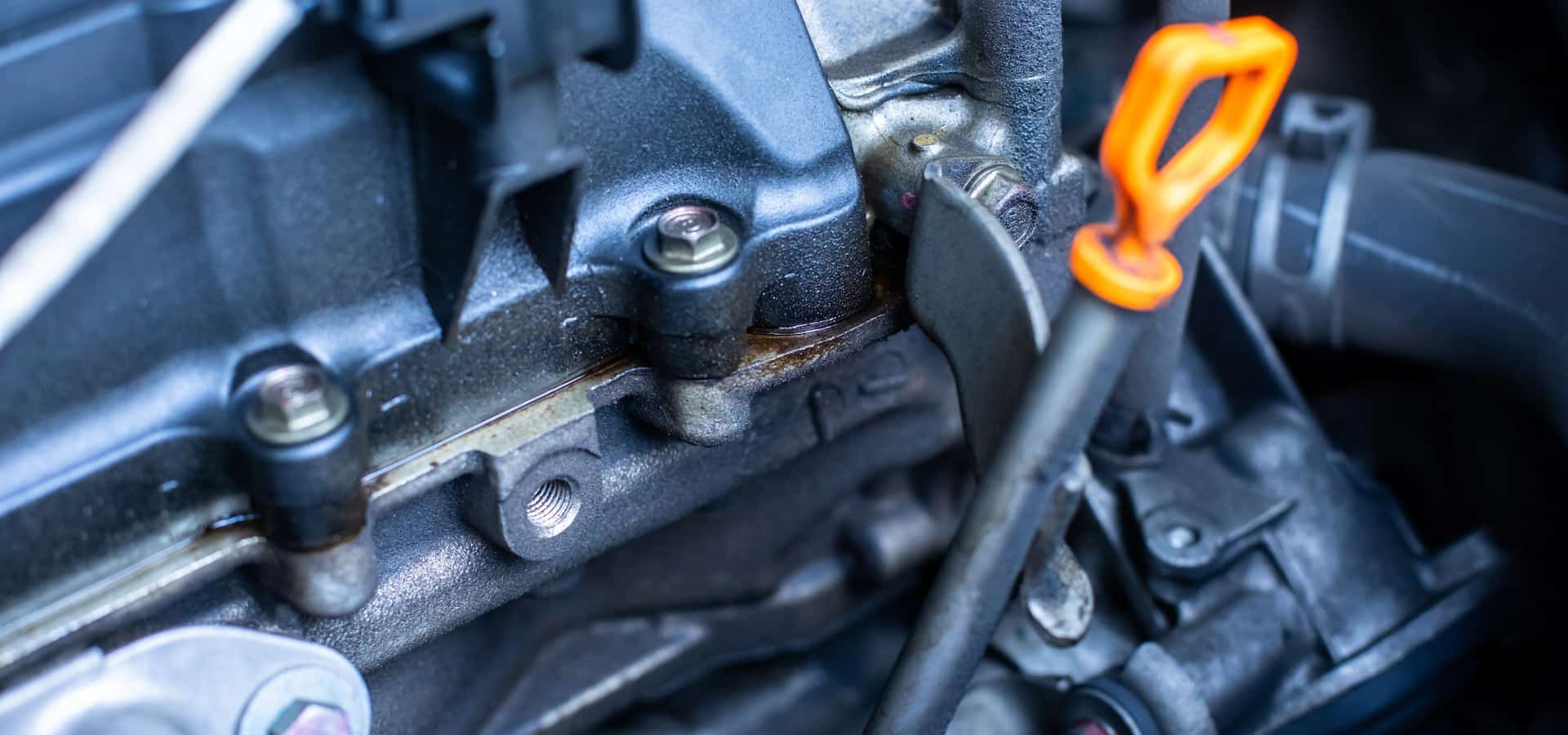
Oil leak repair covers finding the origin, replacing the failed seal or gasket, and verifying the fix under real operating pressure and temperature. On Ford platforms, that work leans on brand-specific knowledge.
- Cam phaser and timing cover leaks on 5.4L 3V and Coyote 5.0L engines demand correct RTV cure time and staged torque sequencing.
- Rear main seal and oil pan work on transverse EcoBoost applications often requires subframe or drivetrain access most shops rush.
- PCV and valve cover sourcing matters because a crankcase pressure fault mimics a gasket leak – IDS/FDRS diagnostics separate the two.
Here's what you can expect when you bring your Ford to us:
- A pinpoint diagnosis using dye tracing and factory scan data, not guesswork
- OEM or OE-equivalent seals installed to Ford torque and cure specifications
- Honest recommendations – we fix the leak that's actually leaking
- A post-repair pressure and road check to confirm the seal holds
Symptoms – How to Know You Need This Service
Ford oil leaks tend to announce themselves gradually, then all at once. Watch for these driver-facing signs:
- Oil spots under the front or center of your parking spot – amber or dark brown, often near the timing cover or oil pan.
- Burning oil smell after highway driving, usually oil dripping onto the exhaust manifold.
- Blue-tinged smoke at startup or under load, pointing to valve cover or seal seepage into the combustion path.
- Low oil level warning or the oil pressure light flickering at idle.
- Ticking or lifter noise on 3V engines, which can trace back to oil starvation from a chronic leak.
- Rough idle or a check engine light tied to PCV or crankcase pressure faults.
- Visible film or wet residue on the engine block, valve covers, or the front of the transmission bellhousing.
Schedule soon for a slow seep, a faint burning smell, or spotting on the driveway. Stop driving and call us if the oil pressure light stays on, you smell heavy burning oil, or you see rapid oil loss between checks – running a Ford low on oil risks bearing and cam phaser damage that costs far more than a seal.
Common Oil Leak Repair Issues on Ford Vehicles
Ford oil leaks tend to cluster around a handful of well-documented weak points that shift by engine family and generation.
- Valve cover gasket seepage on 5.4L/4.6L Triton V8s (1997-2010 F-150, Expedition) – the composite covers warp and the gaskets harden, dripping oil onto the exhaust manifolds and creating that burning smell.
- Rear main seal and oil pan leaks on 3.5L EcoBoost (2011-2016 F-150, Taurus SHO) – heat cycling from the turbos accelerates seal shrinkage, and the aluminum pan's RTV bead is a frequent reseal point.
- Cam cover and turbo oil feed line leaks on 2.0L/2.3L EcoBoost (Focus ST, Escape, Ranger, Mustang) – the plastic cam covers and PCV integration crack with age, wetting the front of the block.
- Timing cover leaks on the 3.5L/3.7L Duratec V6 (Edge, Explorer, Flex) – the front cover RTV and the VCT solenoid seals weep over time.
- Oil filter adapter and oil cooler gasket leaks on 6.7L Power Stroke diesels (2011+ Super Duty) – a common wet spot low on the engine that owners mistake for a pan leak.
- Coyote 5.0L cam cover and VCT phaser seal seepage (2011-2017 Mustang GT, F-150) – the front covers develop slow drips that pool near the belt.
Which Ford Models We See for Oil Leak Repair
We service oil leaks across Ford's car, truck, and SUV lineup. These are the platforms and engines we see most:
- F-150 (2004–2020) – 5.4L 3V Triton and Coyote 5.0L; common timing cover, valve cover, and cam phaser-area leaks.
- F-150 EcoBoost (2011–present) – 3.5L and 2.7L; turbo oil feed/return lines and oil pan gaskets are frequent culprits.
- Mustang (S197 and S550, 2011–present) – Coyote 5.0L and 2.3L EcoBoost; rear main and oil pan work, with GT350/Voodoo variants needing extra care around the flat-plane crank setup.
- Explorer and Edge (2011–present) – 3.5L/3.7L Cyclone and 2.0L/2.3L EcoBoost; transverse layout makes rear main access labor-intensive.
- Escape and Focus (2013–2018) – 1.6L and 2.0L EcoBoost; valve cover and turbo line seepage.
- Super Duty (6.7L Power Stroke, 2011–present) – front cover, turbo oil lines, and high-pressure system seals.
Manual and automatic Fords both come through, and we adjust the approach for EcoBoost turbo plumbing versus naturally aspirated modular V8s. Older pre-2004 platforms and select fleet-spec diesels fall outside what we handle day to day – if your Ford is on that list, tell us the VIN and we'll let you know honestly before you drive over.
Ford's engine lineup spans everything from the aluminum-block Coyote 5.0L V8 to the twin-turbo EcoBoost family, and each design carries its own oil-sealing personality. The gasket materials, cover types, and crankcase ventilation routing vary widely across platforms, which means an oil leak on a 3.5L EcoBoost F-150 rarely originates the same place it does on a 2.0L EcoBoost Escape. Our shop tracks the Ford TSBs and reseal procedures that pinpoint where these leaks actually start.
Causes & Risks – What Happens if Ignored
Most Ford oil leaks trace back to gasket aging, RTV sealant breakdown, and the heat stress that turbocharged EcoBoost engines put on nearby seals. Denver's temperature swings and altitude add expansion-and-contraction cycles that harden rubber and composite gaskets faster than in milder climates.
A slow valve cover weep looks harmless, but oil dripping onto a hot Triton exhaust manifold can smoke, smell, and eventually risk an underhood ignition point. Waiting turns a straightforward reseal into a chain of related damage.
- A neglected rear main seal on a 3.5L EcoBoost can starve oil pressure over time and threaten bearing wear.
- Oil-soaked serpentine belts and tensioners fail early, leading to loss of power steering and charging.
- Leaking VCT solenoid seals let oil contaminate wiring and connectors, triggering cam timing faults.
- Oil dripping onto motor mounts degrades the rubber, causing driveline vibration.
- Low oil level from an ignored leak invites turbo bearing damage on EcoBoost engines – a far pricier repair than a gasket.
- Contaminated oxygen sensors and catalytic converters from burning oil raise emissions repair costs.
Catching the leak early keeps it in gasket-and-seal territory instead of major engine territory, and we'll show you exactly where yours originates before any parts go on the ticket.
Safety Impact – Why Oil Leak Repair Matters
Oil leaks reach well beyond the engine on modern Fords. Oil migrating onto belts and electronics can compromise systems drivers depend on to stay in control.
- Power steering assist – an oil-fouled serpentine belt can slip or snap, and on belt-driven accessory setups that means sudden heavy steering.
- Braking and charging – a failed belt from oil contamination kills the alternator, and a dying battery affects brake-assist electronics and stability control.
- Stability, ABS, and traction control – oil intrusion into wiring or sensors can set faults that disable these safety aids.
- Fire risk – oil pooling on hot exhaust components, common on Triton V8s, is a genuine underhood hazard.
Stop driving now if: you smell strong burning oil, see smoke from the engine bay, hear belt squeal with warning lights, or the oil pressure light comes on.
Schedule soon if: you spot small driveway drips, notice a faint oil smell after driving, or find low oil at your next check. Addressing a known leak before an incident also keeps you on solid footing with insurance and liability.
How Ford Oil Leak Repair Actually Works
Sealing a Ford engine correctly is about matching the right method to the right joint. Some surfaces use pre-formed gaskets, while covers, oil pans, and timing covers rely on precise RTV beads applied and torqued in a specific sequence. Get the sequence or cure time wrong and the leak returns.
Ford's implementation differs from generic work in ways that matter during a proper reseal:
- EcoBoost turbo oil feed and return lines require exact torque specs and clean sealing surfaces to avoid pressurized leaks.
- VCT solenoid and phaser seals must be reset with Ford IDS/FDRS software after service so cam timing recalibr
How We Diagnose Oil Leak Repair Issues on Ford
Ford oil leaks rarely announce themselves cleanly. A drip on the driveway from a 3.5L EcoBoost or a 5.4L Triton often starts higher up and travels down the block before it ever hits the ground. Our job is tracing it to the true source.
- Connect Ford IDS/FDRS diagnostics to pull powertrain codes and check for pending oil pressure or crankcase ventilation faults that hint at a pressurized leak path.
- Verify software and TSB status against the VIN, since updates addressing PCV routing and cam cover venting exist for several EcoBoost and Modular V8 platforms.
- Perform a cold visual inspection with UV dye where needed, targeting known Ford weak points: valve cover gaskets, oil pan RTV joints, rear main seals, cam phaser cover leaks on 3.5L/3.7L Duratec, and turbo oil feed lines on EcoBoost engines.
- Road test under load to build cylinder pressure and heat, then re-inspect. Many timing cover and front crank seal leaks only weep when the engine is hot and the PCV system is working hard.
- Measure and confirm oil level, condition, and any consumption pattern to separate a true external leak from burn-off.
Once we isolate the source, you get a plain-English breakdown of what is leaking, why, and a written repair plan with a quote before any wrench turns.
Oil Leak Repair on Ford: Repair vs. Replacement
Not every Ford oil leak calls for major disassembly. We scale the fix to what the engine actually needs.
- Straightforward repair: A weeping valve cover gasket on a 3.5L EcoBoost, a loose oil filter housing, or a hardened PCV grommet – clean, reseal, or swap one part and the leak is done.
- Partial replacement: A failed front crank seal or cam phaser cover on a Duratec V6, or a leaking oil pan gasket on a 5.0L Coyote – replace the worn component while keeping the surrounding assembly intact.
- Full replacement territory: A rear main seal on a high-mileage 5.4L Triton that also shows a leaking oil pan and timing cover, or cascading damage where labor overlaps heavily. When multiple seals fail together, bundling the work saves you paying to open the same area twice.
Safety-critical or cost-driven calls – like a leak soaking a serpentine belt or approaching the value of a reseal package – get flagged clearly. We lay out each option with its trade-offs and let you choose. You will never be pushed toward the priciest path by default.
How to Make Your Ford Oil Leak Repair Last Longer
A clean reseal holds up when the engine stays healthy around it. A few habits protect the work.
- Warm up before hard driving – let oil reach temperature before high load, especially on turbocharged EcoBoost engines where cold oil stresses seals and turbo feed lines.
- Watch for early signs – check for spots under the vehicle, glance at the oil level monthly, and note any burning smell or dashboard oil light.
- Manage heat and load – towing near capacity and Denver's temperature swings accelerate gasket aging, so keep an eye on things after heavy hauling.
Brand-specific care makes a real difference on Ford:
- Use Motorcraft or Ford-spec oil (the correct 5W-20 or 5W-30 for your engine) and change it on Ford's interval – wrong viscosity stresses fresh seals.
- Replace the PCV components on schedule, since a clogged system pressurizes the crankcase and pushes new gaskets out.
- Keep powertrain software current, as some Ford updates refine crankcase ventilation behavior.
Safe DIY includes fluid checks, spotting drips, and monitoring lights. Leave seal replacement, timing cover work, and anything requiring engine disassembly to the shop – those jobs demand precise torque specs and proper sealant cure to last.
What to Expect When You Bring Your Ford In
Ford oil leaks rarely come from a single gasket. On the 5.4L and 6.2L Triton V8s, valve cover gaskets and the RH cam phaser area weep oil, while EcoBoost engines like the 3.5L and 2.7L are known for oil pan RTV seepage and turbo oil feed line drips. We start by finding the real source before touching a wrench.
- Drop-off or scheduled appointment – Tell us where the drips land on your driveway and any burning-oil smell you've noticed. Leave personal items in the cabin; we secure your vehicle either way.
- Initial inspection – We clean the engine, add UV dye when needed, and trace leaks from the valve covers, front cover, rear main, or oil cooler on 6.7L Power Stroke trucks.
- Written estimate – You get an itemized breakdown of parts and labor with the actual leak sources identified, not guesses.
- Repair updates – We text or call with findings and never proceed on added work without your approval.
- Pickup walkthrough – We show you the replaced gaskets or seals and explain what caused the failure.
Loaner and shuttle options are available, and after-hours pickup can be arranged. Every job ends with a road test and a scan-tool re-check to confirm no PCV or crankcase pressure issues remain. If something feels off afterward, bring it back and we'll re-verify.
Why Choose Elevation Auto Repair for Ford Oil Leak Repair
Ford oil leaks demand platform knowledge. We track Ford TSBs and PCM/software updates that affect crankcase ventilation and oil consumption, and we know which "leaks" are actually PCV-related pressure problems on EcoBoost engines rather than failed seals.
- Platform-specific diagnosis – Cam phaser oil weep on 5.4L 3V engines, timing cover seepage on modular V8s, and turbo oil line failures on 3.5L EcoBoost F-150s.
- Correct sealing procedures – We follow Ford's RTV bead specs and torque sequences on oil pans and front covers so the repair holds.
- End-to-end ownership – The same shop that diagnoses your leak performs the repair and verifies it with a post-service scan and road test.
As your Denver dealership alternative, we handle everything from a simple valve cover reseal to a rear main seal job on a Super Duty. Honest diagnostics mean we only replace what's actually leaking – and we tell you clearly what we found and why.
Our Ford Services
- Air Conditioning AC Repair
- Battery Repair Replacement
- Brake Repair & Brake Fluid Change
- Check Engine Light Diagnostics
- Clutch Repair & Replacement
- Coolant Leak Repair
- Cooling System Repair
- Drive Shaft Repair
- Engine Repair
- Exhaust & Catalytic Converter Repair
- Head Gasket Repair & Replacement
- Oil Change
- Scheduled Service Maintenance
- Steering Repair
- Suspension Repair
- Cambelt Timing Belt Replacement
- Transmission Repair
- Tune Up
- Wheel Alignment