
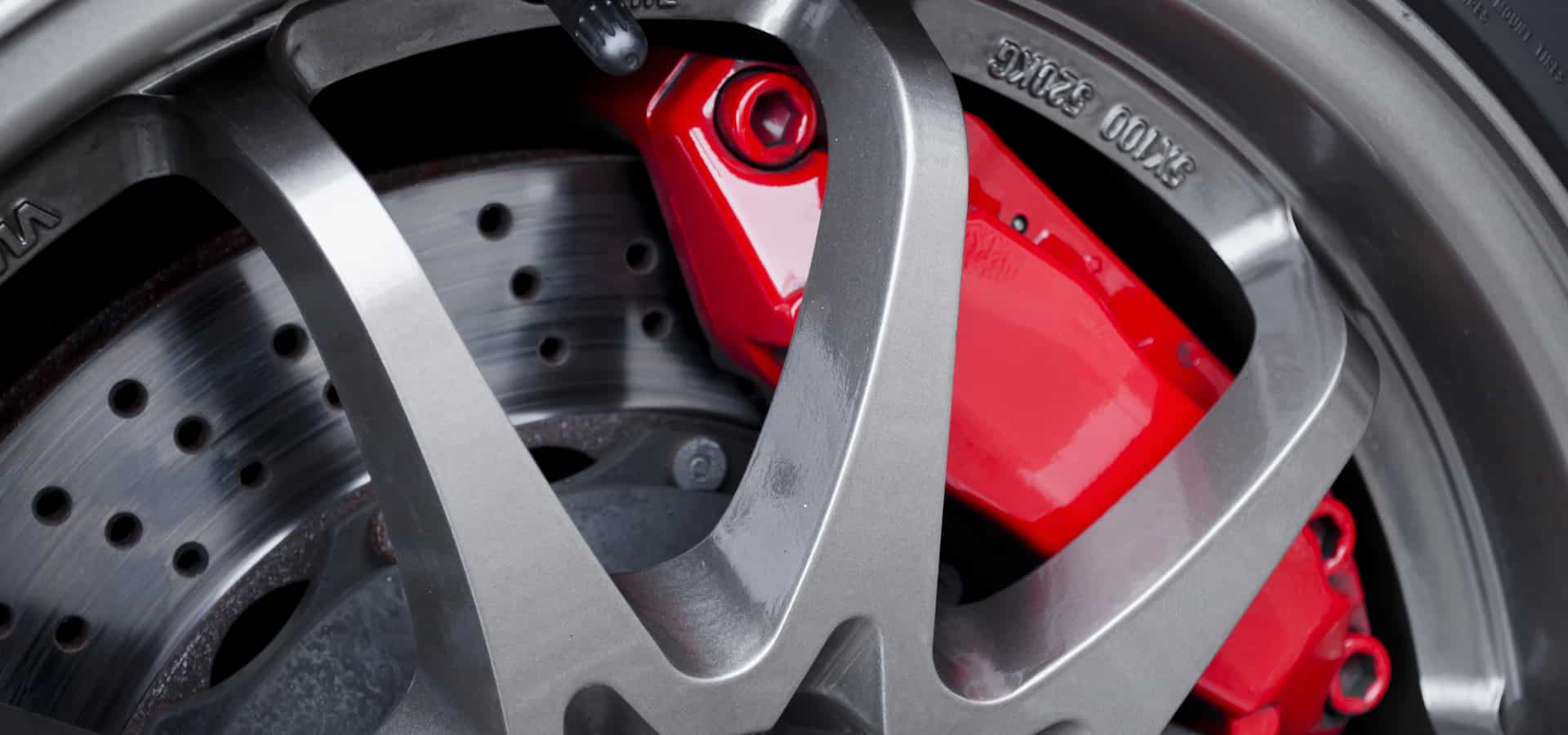
Ford Brake Repair & Brake Fluid Change at Elevation Auto Repair
A customer rolled into our Denver shop with a 2018 F-150 that had developed a pulsing brake pedal on the drive down from the mountains. She'd been told at a chain shop that she needed all four rotors and calipers. After a proper inspection, the real fix was a set of front pads, resurfacing within spec, and a long-overdue brake fluid flush. That's the difference a Ford-focused shop makes.
Brake repair covers pads, rotors, calipers, and hardware, while a brake fluid change replaces moisture-laden fluid that lowers your boiling point and corrodes internal components. Doing it right on a Ford matters because the details vary by platform.
- Later F-150 and Super Duty trucks (2015+ aluminum-body) require precise caliper bracket torque and slide-pin service to prevent uneven pad wear.
- Ford models with electronic parking brakes – Edge, Explorer, Fusion, Escape – need a scan tool to retract the caliper motor before pad service, not a screwdriver.
- ABS module bleeding on many Ford platforms calls for IDS/FDRS software to cycle valves and purge trapped air.
Here's what you can expect from us:
- Honest inspection with photos – we won't sell you parts that measure in spec.
- OEM-correct fluid meeting Ford's DOT 3 or DOT 4 spec for your model.
- Proper electronic parking brake retraction and ABS bleed procedures.
- Clear, upfront pricing before any work begins.
Symptoms – How to Know You Need This Service
Ford brakes tend to warn you before they fail. Pay attention to these signs, and don't wait if you notice the serious ones.
- A high-pitched squeal at low speed – the wear indicators on your pads are telling you they're near the end.
- Grinding or metal-on-metal noise – pads are gone and rotors are being damaged. Schedule right away.
- Pulsing or vibration through the pedal or steering wheel when braking – often warped or unevenly worn rotors, common on F-150s used for towing.
- A soft or spongy pedal that sinks toward the floor – air or moisture in the fluid. This is a stop-driving situation.
- A brake or ABS warning light on the cluster – have it scanned before your next longer trip.
- Longer stopping distances or the truck pulling to one side under braking.
- A burning smell after descending a grade – overheated fluid and pads, especially relevant on Colorado mountain routes.
Anything involving a sinking pedal or grinding means bring the vehicle in immediately. Squeaks and warning lights mean schedule soon before a small repair turns into rotors, calipers, and a stressful drive.
Common Brake Repair & Brake Fluid Change Issues on Ford Vehicles
Ford brake systems have a few recurring wear paths that show up across the truck, SUV, and car lineup. These are the ones we see roll through the shop most often:
- Warped front rotors on 2015-2020 F-150 (P552 platform) – heavy front-end weight and aggressive towing loads lead to rotor runout and steering-wheel shimmy under braking, especially on trucks that see mountain descents.
- Rear caliper seize on 2011-2019 Explorer (U502) and Edge – the electric parking brake actuators and slide pins corrode from road salt and brine, causing uneven pad wear and a stuck rear brake.
- Boost pump and brake fluid issues on Focus/Fiesta with hydroboost or ABS module – early 2012-2016 units are known for moisture-laden fluid triggering spongy pedal feel.
- Premature pad wear on Mustang (S550) and Police Interceptor packages – higher-performance brake packages burn through pads and glaze rotors faster than owners expect.
- Neglected fluid across the board – DOT 3/DOT 4 fluid absorbs water over time, and Denver's temperature swings accelerate the process, dropping the boiling point and softening the pedal.
- Super Duty (2017+) larger brake systems – bigger rotors and dual-piston calipers need correct pad bedding or they develop deposits and pulsation.
Which Ford Models We See for Brake Repair & Brake Fluid Change
We service the full lineup of modern and late-model Fords. Find yours below to know what to expect.
- F-150 (P552, 2015–2020 and 2021+) – aluminum-body trucks with heavy-duty brake packages; towing and mountain driving accelerate rotor and fluid wear.
- Super Duty F-250/F-350 (2017+) – larger rotors and heavier hardware; fluid flushes matter more under load.
- Explorer (U625, 2020+ RWD-based) and earlier U502 (2011–2019) – electronic parking brake retraction required on most trims.
- Escape (2013–2019 and 2020+ CX482) and Edge (2015+) – EPB scan-tool service standard.
- Fusion (2013–2020) – including hybrid and Energi variants, where regenerative braking changes pad wear patterns.
- Mustang (S550, 2015–2023) – GT and performance-pack models with Brembo front calipers need attention to specific pad compounds and rotor specs.
- Ranger (2019+), Bronco (2021+), and Maverick (2022+) on the newer platforms.
Performance variants like the Mustang GT350/GT500 and Raptor use upgraded braking systems, and we match parts and fluid to those higher specs. We focus on Fords from roughly the mid-2000s forward; for classic or pre-2000 models, call us first so we can confirm parts availability before you make the trip.
A Denver F-150 owner came in describing a pedal that sank slowly toward the floor at every stoplight, plus a faint grinding when he backed out of his driveway. What started as a squeal he'd ignored through two Colorado winters had turned into scored rotors and a caliper that wouldn't release. That's the pattern we see constantly – small brake symptoms that grow teeth. Here's how Ford brakes actually wear, what happens when the warning signs get ignored, and how we handle the work the right way.
Causes & Risks – What Happens if Ignored
Most Ford brake problems trace back to a mix of Colorado driving conditions, heat cycling from mountain grades, road salt corrosion, and simply overdue fluid. Brake fluid is hygroscopic – it pulls moisture from the air – and once water content climbs, the fluid boils under hard use and the pedal goes soft.
Waiting rarely saves money. A set of pads left too long chews into rotors, and a sticking caliper cooks nearby components.
- Ignoring a squeal for a few months typically means pads wear into the backing plate and grind rotors down past their minimum thickness.
- A sticking rear caliper on an Explorer left unaddressed can overheat and damage the parking brake actuator, turning a pad job into a caliper and module replacement.
- Old, moisture-heavy fluid corrodes ABS valves and the master cylinder from the inside – far costlier than a routine flush.
- Rotor runout that's ignored spreads vibration into wheel bearings and suspension components.
- Braking distances stretch, and on a loaded F-150 descending I-70, that gap becomes a safety emergency.
The honest reality: a fluid change and a pad set are affordable maintenance. A neglected system that takes out calipers, rotors, and an ABS module is not.
Safety Impact – Why Brake Repair & Brake Fluid Change Matters
Brakes don't fail in isolation. On modern Fords, the hydraulic system ties directly into ABS, AdvanceTrac stability control, traction control, and trailer sway control. Contaminated fluid or a failing caliper degrades all of them.
- Stop driving now: pedal sinks to the floor, grinding metal-on-metal, brake warning light with a hard or spongy pedal, or fluid leaking at a wheel.
- Schedule soon: intermittent squeal, mild vibration under braking, slightly longer stopping distance, or fluid that looks dark and dirty.
When ABS can't modulate pressure because fluid has boiled or a sensor is compromised, stability control loses its ability to correct a skid – a real hazard on Denver's icy overpasses. There's also a liability side: if a known brake defect goes unaddressed and contributes to a collision, that documented neglect can complicate an insurance claim. Keeping the system serviced protects you legally as well as physically.
How Ford Brake Repair & Brake Fluid Change Actually Works
A Ford brake system converts pedal pressure into hydraulic force that squeezes pads against rotors. Fluid carries that force, which is why clean, high-boiling-point fluid matters. On most 2013-and-newer Fords, the parking brake went electronic, and that changes how the job gets done.
Servicing rear brakes on an EPB-equipped Explorer, Edge, or Fusion requires putting the calipers into service mode with a scan tool before you can retract the pistons – you can't just wind them back by hand.
- Electronic parking brake – needs Ford IDS or FDRS software to enter maintenance mode and re-calibrate after pad replacement.
- Fluid specs – Ford calls for DOT 3 or DOT 4 depending on model; mixing or using the wrong spec risks pedal feel and seal issues.
- ABS bleeding – proper flushes on ABS-equipped Fords use scan-tool-actuated valve cycling to purge air from the module.
- Torque sequence – caliper bracket and guide-pin bolts have specific torque values; over- or under-tightening causes pull or pad drag.
-
A customer brought in a 2016 F-150 last winter with a pedal that sank slowly to the floor at every red light. She'd been told by another shop that the whole system needed replacing. It turned out the brake fluid had absorbed moisture and boiled during a mountain descent off I-70. A fluid flush and a single caliper solved it. That's the kind of honest work we do at Elevation Auto Repair – your Denver dealership alternative for Ford brake service.
How We Diagnose Brake Repair & Brake Fluid Change Issues on Ford
Ford braking complaints range from spongy pedals to grinding rotors. We pin down the real cause before quoting a single part.
- Scan with Ford-specific tools – We use IDS/FDRS-level diagnostics to read ABS module codes, wheel speed sensor faults, and brake pressure sensor data that generic readers miss on F-150, Explorer, Escape, and Super Duty platforms.
- Test-drive under real conditions – Denver's grades expose fade, pull, and pulsation you can't feel in a parking lot.
- Measure pad and rotor thickness – We compare against Ford wear specs, checking for the warped front rotors common on 2015-2020 F-150 (P552) trucks that tow.
- Inspect fluid condition – Moisture-test strips and a refractometer show when DOT 3/DOT 4 fluid has crossed its safe boiling point.
- Check hydraulics visually – Calipers, flex lines, and the master cylinder get inspected for leaks and sticking slide pins.
Once we know what's happening, you get a plain-language explanation and a transparent quote – no surprise add-ons, no scare tactics.
Brake Repair & Brake Fluid Change on Ford: Repair vs. Replacement
Not every brake job means new everything. We match the fix to the actual condition of your Ford.
- Genuine repair – A fluid flush, caliper slide-pin cleaning and re-lube, or a single seized guide pin often restores full function. Sticking rear calipers on Escape and Fusion models frequently respond to service, not replacement.
- Partial replacement – Worn pads with rotors still within spec means new pads and hardware while keeping serviceable rotors. On a 2011-2019 Explorer (U502), replacing one leaking flex line makes more sense than a full brake overhaul.
- Full replacement – When rotors are grooved past minimum thickness, or heat-warped from towing on a Super Duty, pads and rotors go together. If repair cost creeps toward replacement cost, or safety is on the line, we recommend the complete job.
We lay both options in front of you with honest tradeoffs, then let you decide. The most expensive path is never the default here.
How to Make Your Ford Brake Repair & Brake Fluid Change Last Longer
Good habits stretch the life of your Ford's brakes, especially in Colorado's altitude and long descents.
Driving habits that help
- Downshift and use engine braking on mountain grades instead of riding the pedal.
- Leave more following distance to avoid hard, heat-building stops.
- Don't overload your truck or SUV beyond its rated capacity when towing.
Maintenance you can do yourself
- Peek at pad thickness through the wheel spokes every few weeks.
- Listen for squeal, grinding, or a change in pedal feel.
- Watch for the brake or ABS warning light and note any fluid drop in the reservoir.
Brand-specific care that matters
- Use Ford-spec DOT 3 or DOT 4 fluid – the wrong fluid affects boiling point and ABS operation.
- Follow Ford's recommended fluid-change interval; moisture buildup is invisible until the pedal fades.
- Keep ABS and electronic brake module software current, which we handle during service.
Visual checks and listening are safe for any owner. Hydraulic work, caliper service, and fluid flushes are safety-critical – leave those to our technicians so your Ford stops the way it should, every time.
What to Expect When You Bring Your Ford In
A customer rolled in with a 2016 F-150 that pulsed hard under braking on the descent into Denver – classic warped-feeling rotors after a summer of towing. That kind of complaint tells us exactly where to start looking, and it sets the tone for how we walk every Ford owner through the process.
- Drop-off or appointment: Schedule ahead or leave the vehicle with us. Clear out valuables, but leave the key fob and any wheel-lock key so we can pull the wheels without delay.
- Initial inspection: We measure pad thickness, rotor runout and thickness variation, check caliper slide pins for the seizing that plagues Escape and Focus front calipers, and test brake fluid moisture content with a refractometer.
- Written estimate: You get a line-item breakdown before any work begins – pads, rotors, fluid flush, hardware – with a plain explanation of what's worn and what can wait.
- During the work: We text or call with findings. Loaner and shuttle options are available so you're not stuck waiting, and after-hours pickup can be arranged.
- Pickup walkthrough: We show you the old parts and go over what we replaced.
Before your Ford leaves, we road test it under real braking loads and run an IDS/FDRS scan to confirm ABS and any electronic parking brake actuators reset cleanly. If anything feels off afterward, bring it back and we'll re-check it.
Why Choose Elevation Auto Repair for Ford Brake Repair & Brake Fluid Change
Ford brakes have platform-specific quirks that a generic flush-and-go shop misses. We know the ones worth flagging.
- Electronic parking brake handling: On Fusion, Edge, and later Explorer models, the rear calipers need the EPB retracted through FDRS before service – forcing pistons back the old way damages the actuator.
- TSB and software awareness: We check for Ford brake-related service bulletins and ABS module updates, including known judder and pedal-feel campaigns on trucks and SUVs.
- Correct fluid spec: We use the DOT 3 or DOT 4 spec your Ford calls for and perform a full ABS-module bleed rather than a top-off, so trapped moisture and air actually leave the system.
We own the job start to finish – diagnosis, repair, and post-repair verification all under one roof. That means honest recommendations, transparent pricing, and no upselling rotors when a pad slap and hardware kit is what your Ford truly needs. You get clear communication at every step and repairs built for long-term reliability on Colorado's grades.
Our Ford Services
- Air Conditioning AC Repair
- Battery Repair Replacement
- Check Engine Light Diagnostics
- Clutch Repair & Replacement
- Coolant Leak Repair
- Cooling System Repair
- Drive Shaft Repair
- Engine Repair
- Exhaust & Catalytic Converter Repair
- Head Gasket Repair & Replacement
- Oil Change
- Oil Leak Repair
- Scheduled Service Maintenance
- Steering Repair
- Suspension Repair
- Cambelt Timing Belt Replacement
- Transmission Repair
- Tune Up
- Wheel Alignment