Ford Clutch Repair & Replacement at Elevation Auto Repair
Ford manual transmissions cover a wide spread of engineering – from the light-duty cable and hydraulic setups in a Focus to the heavy-duty ZF and TREMEC boxes bolted behind a Mustang GT or a 6.7L Power Stroke. Getting the clutch right on each one takes more than swapping parts and hoping the pedal feels normal.
A clutch job done properly on a Ford means matching the correct pressure plate, disc, and release bearing to the exact platform, then addressing the parts a rushed shop skips. On the Focus and Fiesta with the PowerShift dual-clutch (DPS6), the "clutch" isn't a traditional friction disc at all – it's a dry dual-clutch module that often needs TCM software calibration after service. On Mustang and Super Duty applications, the dual-mass flywheel and concentric slave cylinder (CSC) frequently wear alongside the disc, and reusing a worn CSC buried inside the bellhousing is how comebacks happen.
We use Ford IDS/FDRS scan tooling for clutch adaptations and pilot bearing alignment specs, and we torque pressure plate and flywheel bolts to Ford's staged values rather than eyeballing them.
- Correct diagnosis of whether it's the clutch, hydraulics, or transmission itself
- OEM-grade friction components matched to your specific Ford platform
- Flywheel inspection and resurfacing or replacement as needed
- Post-repair adaptation and road testing for a clean, long-lasting engagement
Symptoms – How to Know You Need This Service
Ford clutch trouble usually builds gradually, then reaches a point where the car won't move reliably. Watch for these driver-facing signs:
- Slipping under load – engine RPM climbs but speed doesn't follow, especially uphill or in higher gears
- Shuddering on takeoff – a common DPS6 PowerShift complaint on Focus and Fiesta, felt as a jerky, chattering launch
- High or soft pedal – a spongy pedal often points to a failing concentric slave cylinder or air in the hydraulic line
- Grinding or hard shifts into gear – the clutch may not be fully releasing
- Burning smell after stop-and-go driving or towing with a Super Duty
- Rattle or growl at idle that changes when you press the pedal – a worn release bearing or dual-mass flywheel
- Transmission warning or "service transmission" message on PowerShift-equipped models
Schedule soon if you notice slipping, shudder, or a warning light. Stop driving if the pedal goes to the floor and won't return, you can't select gears, or you smell heavy burning – continuing risks stranding the vehicle and damaging the flywheel or transmission.
Common Clutch Repair & Replacement Issues on Ford Vehicles
Ford clutch complaints tend to cluster by platform. Here are the patterns we see most often:
- MT-82 shift quality on 2011-2017 Mustang GT (S197/S550) – notchy engagement, grinding into 1st or 2nd, and clutch shudder tied to fluid, hydraulic throwout bearing, and clutch disc wear under spirited driving.
- PowerShift dual-clutch shudder on 2011-2018 Focus and Fiesta – the dry-clutch DPS6 transmission is known for juddering, slipping, and clunking as clutch friction material and the transmission control module calibration degrade.
- Dual-mass flywheel failure on diesel and higher-torque applications – rattling at idle, excessive freeplay, and vibration signal a worn DMF that should be replaced alongside the clutch, not reused.
- Concentric slave cylinder (CSC) leaks – many modern Fords integrate the slave and release bearing inside the bellhousing, so a soft or sinking pedal often means an internal hydraulic leak requiring transmission removal.
- IB5/B6 clutch wear on Focus, Fiesta, and Escort manuals – heat and stop-and-go driving cause disc glazing and weak clutch cable or hydraulic response.
- Pilot bearing and input shaft wear on high-mileage trucks – Ranger and older F-150 manuals develop grabby engagement and noise when the pilot bearing dries out.
Which Ford Models We See for Clutch Repair & Replacement
We handle clutch work across most Ford manual and dual-clutch platforms. If your car is on this list, we likely have the tooling and specs on hand:
- Mustang (S197 2005–2014, S550 2015–2023) – GT and EcoBoost with TREMEC and MT82 boxes; dual-mass flywheel and CSC service common
- Focus (2012–2018) & Fiesta (2011–2019) – DPS6 PowerShift dual-clutch shudder and module replacement, plus TCM calibration
- Focus ST / RS (2013–2018) – performance manual clutches that need upgraded or OEM-spec components for higher torque
- F-250/F-350 Super Duty Power Stroke – heavy-duty ZF and later manual applications; dual-mass flywheel wear from towing
- Ranger (older manual T5/M5OD platforms) and select Escape/Fusion manuals
Performance variants like the Focus RS and Mustang GT often need attention to flywheel condition and clutch tolerance more than base models, since owners drive them harder. Manual and PowerShift dual-clutch repairs are very different procedures, so we confirm your exact configuration first.
Note: we focus on serviceable clutch and hydraulic components. For internal transmission rebuilds on rare or discontinued gearboxes, we'll tell you honestly if a specialist rebuild is the smarter route before any parts come off the car.
Ford's manual-transmission lineup runs the gamut from the tough Getrag/MT-82 six-speeds behind Mustang GTs to the little B6 and IB5 gearboxes in Focus and Fiesta, plus the dual-clutch PowerShift found in many 2011-2018 Focus and Fiesta models. Each of these uses different clutch hardware and different service procedures, which is exactly why a Ford clutch job rewards platform-specific knowledge rather than a one-size-fits-all approach. At Elevation Auto Repair in Denver, we match the repair to the exact chassis and driveline in front of us.
Causes & Risks – What Happens if Ignored
Most Ford clutch failures trace back to heat, contamination, and normal friction wear accelerated by how the vehicle is driven. Denver's hills and stop-and-go traffic add clutch slip that wears friction material faster, and hard launches in a Mustang GT or towing with a truck push components past their comfort zone.
A slipping or shuddering clutch rarely fixes itself. Ignoring early symptoms lets small problems pull in expensive neighbors.
- Ignoring clutch slip usually leads to a scorched flywheel that must be resurfaced or replaced rather than reused.
- Letting a PowerShift DPS6 judder go untreated often adds control-module and mechatronic damage on top of the clutch.
- A leaking concentric slave cylinder that's driven on can leave you stranded when the pedal drops to the floor with no engagement.
- Worn clutch material contaminates the pressure plate and can overheat the dual-mass flywheel, turning a straightforward job into a full driveline teardown.
- A failing pilot or throwout bearing left alone can score the input shaft, adding transmission internals to the bill.
The safety line is simple: once a clutch slips under load on a hill or won't fully disengage, the vehicle becomes unpredictable in traffic. That's the point to schedule service, not push through.
Safety Impact – Why Clutch Repair & Replacement Matters
A clutch that won't disengage or slips at the wrong moment affects far more than the pedal. On a Ford manual or PowerShift, degraded clutch behavior interferes with smooth power delivery, which can trigger traction control and stability control intervention, hesitation at intersections, and a driveline that surges or stalls unexpectedly. A clutch stuck partially engaged also makes controlled stops and rolling starts on Denver grades genuinely hazardous.
Use these guidelines on urgency:
- Stop driving now: pedal drops to the floor and stays down, clutch won't disengage so gear grinding is unavoidable, or you smell hot friction material with sudden power loss.
- Schedule soon: mild shudder on takeoff, occasional slip under hard acceleration, or a slightly high engagement point.
There's also a documentation angle worth knowing: the DPS6 PowerShift was the subject of extensive warranty and litigation attention. Keeping records of properly performed clutch work protects you if a related failure ever comes into question.
How Ford Clutch Repair & Replacement Actually Works
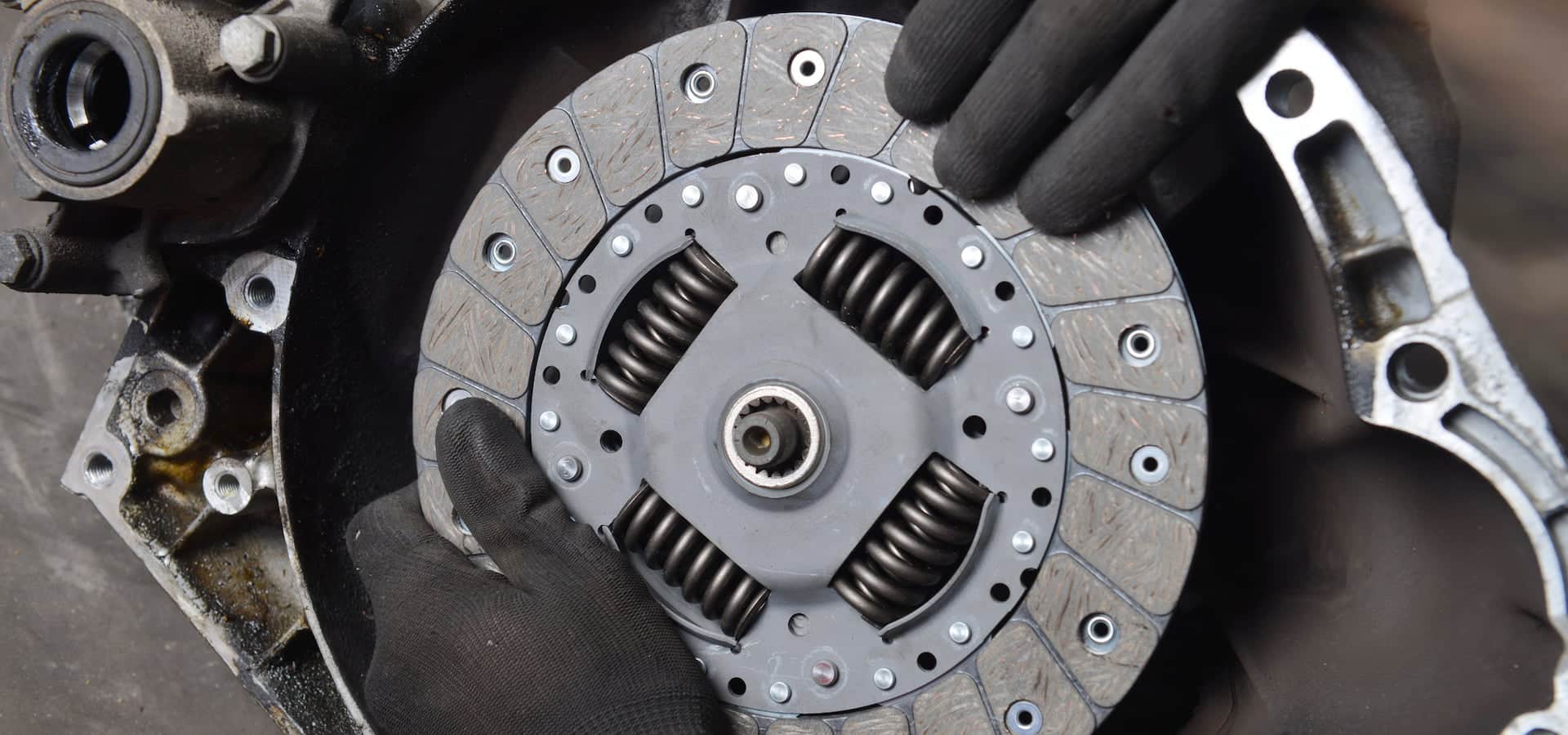
A Ford clutch links the engine's flywheel to the transmission input shaft through a friction disc squeezed by a spring-loaded pressure plate. Pressing the pedal moves a release bearing that eases that clamp so you can shift. On many newer Fords the release bearing and slave cylinder are combined into one concentric unit inside the bellhousing, so the transmission has to come out to service what a driver simply feels as a soft pedal.
What sets Ford work apart:
- The DPS6 PowerShift is a dry dual-clutch automated manual – it needs the correct clutch kit and a control-module clutch adaptation relearn after replacement, not just mechanical assembly.
- MT-82 six-speeds are sensitive to the right transmission fluid; using the specified spec keeps shift feel and prevents cold-weather notchiness.
- Dual-mass flywheels have runout and freeplay limits that determine replace-versus-resurface decisions.
Ford's manual and clutch-equipped lineup covers a wide spread of engineering – the hydraulic concentric slave cylinder buried inside the bellhousing on Focus and Fiesta, the heavy-duty dual-mass flywheels behind the 6.7L Power Stroke and 7.3L Godzilla in Super Duty trucks, and the dry dual-clutch PowerShift transaxle on 2011-2018 Focus and Fiesta that behaves nothing like a traditional clutch. Each platform needs a specialist who knows the difference, and that's the work we do at Elevation Auto Repair.
How We Diagnose Clutch Repair & Replacement Issues on Ford
Clutch complaints rarely point to one cause on their own, so we work through a repeatable process that separates a slipping disc from a leaking hydraulic circuit or a failing dual-mass flywheel.
- Interview and history – We ask about shudder on takeoff, high engagement point, or difficulty selecting gears, all common on Focus and Fiesta hydraulic setups.
- Ford IDS/FDRS scan – On PowerShift-equipped Focus and Fiesta, we pull TCM adaptation values and clutch wear counters, and check for stored codes like P0810 or P189C that reveal clutch position and adaptation faults.
- Hydraulic inspection – We check the master cylinder, line, and concentric slave for fluid loss, a frequent failure on the smaller platforms.
- Road test – We load the drivetrain uphill to provoke slip and feel for dual-mass flywheel rattle on diesel Super Duty trucks.
- Measurement and visual – Pedal free-play, engagement height, and, where accessible, disc thickness confirm what the scan suggested.
Once we've confirmed the root cause, we turn the findings into a clear repair plan and written quote – you see exactly which parts are worn and why, with no filler work added.
Clutch Repair & Replacement on Ford: Repair vs. Replacement
Not every clutch complaint means dropping the transmission. We sort each Ford into the right category based on what's actually worn.
- Genuine repair – A high or spongy pedal from a leaking master or slave cylinder, or air in the hydraulic circuit, can often be fixed by replacing that single component and bleeding the system. TCM adaptation resets on PowerShift cars sometimes restore normal behavior without hardware.
- Partial replacement – If the disc is worn but the flywheel surface and pressure plate remain within spec, we can replace the friction components and keep serviceable parts. This is common on lower-mileage Mustang and Ranger manuals.
- Full replacement – Cascading wear – a scored dual-mass flywheel on a 6.7L Power Stroke, a contaminated disc from a rear main leak, or a worn pressure plate alongside the disc – calls for a complete clutch kit. Once labor to access the bellhousing is already committed, replacing the whole assembly protects long-term reliability.
We walk you through the trade-offs and recommend the option that lasts, not the most expensive line item on the estimate.
How to Make Your Ford Clutch Repair & Replacement Last Longer
A fresh clutch can deliver years of dependable service when it's driven and maintained with a little care.
- Driving habits – Avoid riding the pedal at stoplights, release fully in each gear, and don't slip the clutch to hold on Denver's hills. For Super Duty trucks, ease into heavy loads rather than launching under full throttle.
- Owner checks – Listen for new shudder or rattle, watch for a rising engagement point, and keep an eye on the clutch or transmission warning lights on PowerShift models.
- Fluid and software – Use Ford-spec hydraulic fluid, keep the reservoir topped correctly, and let us apply current TCM calibrations on dual-clutch cars where Ford has released updated adaptation logic.
- OEM parts – Genuine Ford or OE-equivalent discs and dual-mass flywheels match the original torque and damping characteristics better than budget kits.
Safe DIY includes visual checks, fluid level monitoring, and noting changes in feel. Leave hydraulic bleeding, adaptation resets, and any bellhousing work to the shop – these are safety-critical and easy to get wrong. Bring it to Elevation Auto Repair and we'll keep your Ford shifting cleanly for the long haul.
Ford clutch systems carry their own personality, and getting the repair right means knowing the platform quirks that generic shops miss. A hydraulic concentric slave cylinder buried inside the bellhousing on many Focus, Fiesta, and Fusion manuals behaves nothing like the external slave on a Mustang GT or the heavy-duty setup in a F-150 or Super Duty. The pedal-feel complaints on early-2010s Fiesta ST and Focus ST owners often trace back to slave cylinder failure rather than the disc itself, and knowing that difference keeps you from paying for parts you don't need.
What to Expect When You Bring Your Ford In
We built the visit around clear checkpoints so you always know where your Ford stands.
- Drop-off or scheduled appointment – Bring the vehicle in and describe the symptoms: slipping under load, chatter on takeoff, a soft or sinking pedal, or a rattling throwout bearing.
- Initial inspection – We verify the actual failure by checking clutch engagement point, hydraulic line integrity, flywheel condition, and pilot bearing before recommending any teardown.
- Written estimate – You get an itemized breakdown covering the disc, pressure plate, release bearing, and any pilot bearing or flywheel resurfacing needed – no surprise add-ons.
- Work updates – We call or text with findings once the transmission is dropped, especially if we spot a leaking rear main seal or worn input shaft.
- Pickup walkthrough – We show you the old parts and explain what failed and why.
Shuttle and loaner options are available so you stay mobile, and after-hours pickup can be arranged. Clear out personal items from the cabin before drop-off. Every clutch job ends with a road test to confirm smooth engagement plus a scan-tool re-check for pedal-position and driveline codes. If anything feels off after you leave, bring it back and we'll recheck it.
Why Choose Elevation Auto Repair for Ford Clutch Repair & Replacement
Clutch work rewards precision, and Ford platforms punish shortcuts. We follow OEM torque sequences on pressure plate bolts and bleed the hydraulic system to Ford spec so you don't get a spongy pedal a week later.
- Platform-specific knowledge – We account for concentric slave cylinder failures on Focus and Fiesta manuals, dual-mass flywheel wear on diesel Super Duty applications, and the heavier clutch loads in Mustang GT and EcoBoost builds.
- TSB and software awareness – We check for relevant Ford service bulletins and clutch or transmission software updates that affect engagement and pedal calibration.
- End-to-end ownership – The same shop diagnoses the fault, performs the replacement, and verifies the result with a road test and scan-tool check.
We handle everything under one roof – clutch, hydraulics, driveline, and any adjacent leaks we find along the way. That focus on doing the full job correctly is what keeps your Ford's clutch reliable for the long haul, not just until you leave the lot.
Our Ford Services
- Air Conditioning AC Repair
- Battery Repair Replacement
- Brake Repair & Brake Fluid Change
- Check Engine Light Diagnostics
- Coolant Leak Repair
- Cooling System Repair
- Drive Shaft Repair
- Engine Repair
- Exhaust & Catalytic Converter Repair
- Head Gasket Repair & Replacement
- Oil Change
- Oil Leak Repair
- Scheduled Service Maintenance
- Steering Repair
- Suspension Repair
- Cambelt Timing Belt Replacement
- Transmission Repair
- Tune Up
- Wheel Alignment