
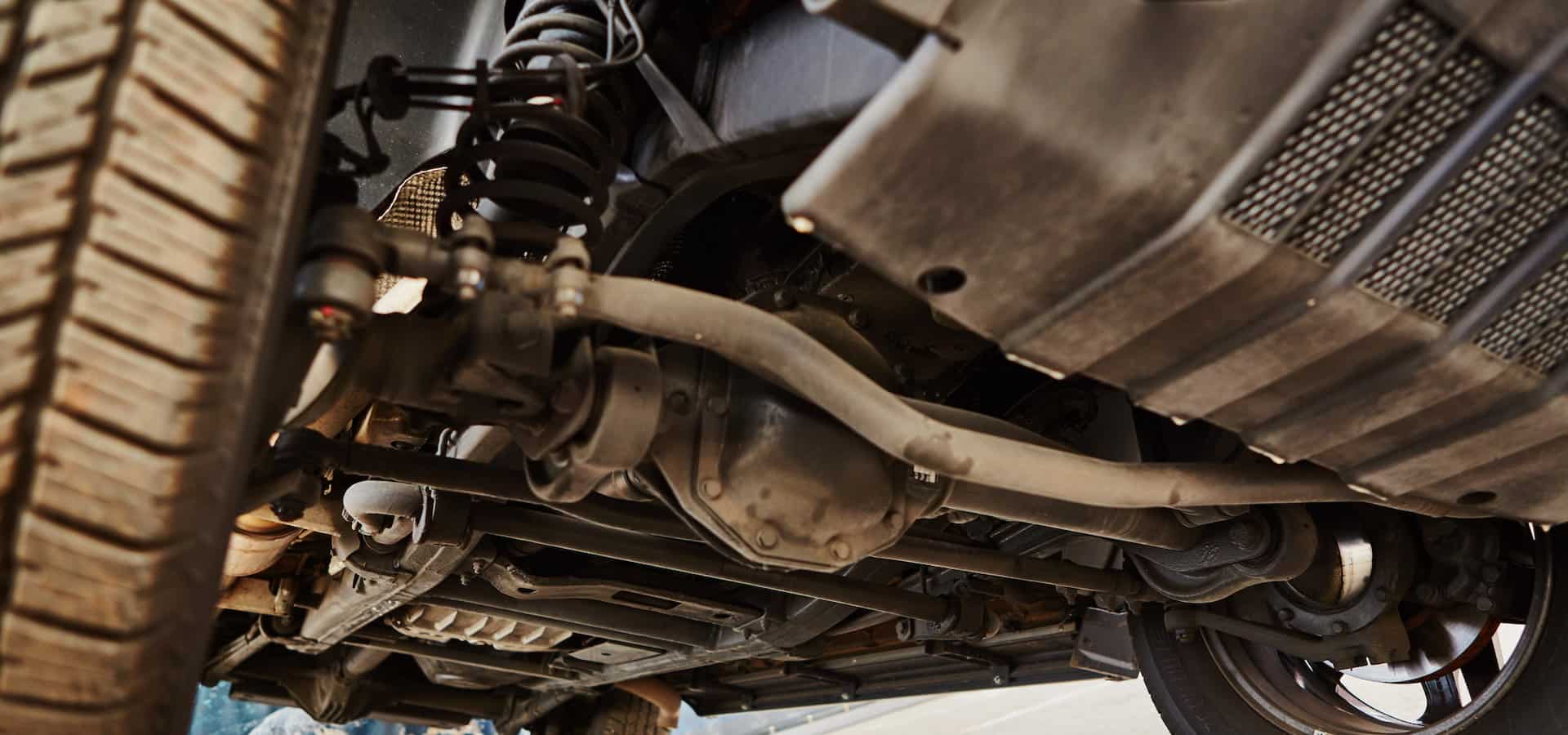
Subaru Suspension Repair at Elevation Auto Repair
Subaru's symmetrical all-wheel-drive layout puts unique loads on suspension components that most shops overlook. The longitudinally mounted boxer engine sits low and forward, and the front strut assemblies carry weight and steering duties differently than a transverse front-driver would. Colorado roads add their own punishment, and worn suspension parts on a Subaru rarely wear evenly.
Suspension repair covers struts, control arms, sway bar links and bushings, wheel bearings, and the alignment work that ties it all together. Doing it right on a Subaru means respecting factory torque sequences on the crossmember and lateral links, checking the self-aligning torque on the AWD system, and setting camber and toe to Subaru's tighter spec tolerances so the drivetrain doesn't fight itself.
We use factory-referenced alignment specs and OEM-grade replacement parts rather than the cheapest boxed strut on the shelf. Rear lateral link and trailing arm bushings, in particular, need the right approach or you get clunks that come right back.
- Honest diagnosis that separates worn parts from parts that still have life
- Fast turnaround with a clear explanation of what we found and why
- Precision alignment set to Subaru factory tolerances
- Quality parts chosen for long-term reliability, not just the quick fix
Symptoms – How to Know You Need This Service
Suspension trouble usually shows up gradually, then all at once. Here's what you may notice from the driver's seat:
- Clunking or knocking over bumps or when turning – often worn sway bar end links or lateral link bushings on Outback and Legacy models.
- A rhythmic humming or growling that changes with speed or when cornering – a classic worn wheel bearing, extremely common on Subaru AWD hubs.
- Uneven or feathered tire wear showing your alignment has drifted out of spec.
- The car pulling to one side on a straight, level road.
- Bouncing that won't settle after a bump, pointing to tired struts.
- A vibration in the steering wheel that builds with speed.
- Nose-diving under braking or squatting hard under acceleration.
- Visible fluid on a strut body or a leaning stance at one corner.
A steady growl or minor clunk means schedule soon before it takes out related parts. If you feel sudden looseness in the steering, a loud grinding wheel bearing, or a corner that has visibly dropped, stop driving and have it inspected right away.
Common Suspension Repair Issues on Subaru Vehicles
Subaru's symmetrical all-wheel-drive layout puts unique loads on the suspension, and the boxer engine's low center of gravity means the strut assemblies and control arms take a different beating than a front-heavy transverse setup. These are the wear patterns we see most on Denver Subarus.
- Front strut mount and bearing wear on 2010-2014 Legacy/Outback (BM/BR chassis) – clunking over bumps and a groaning noise while turning at low speed, often traced to worn upper strut bearings rather than the strut itself.
- Rear self-leveling and coil sag on Outback wagons – the extra ride height and cargo duty on Outbacks accelerates rear coil fatigue, producing a noticeable rearward rake and bottoming out over dips.
- Control arm bushing failure on 2008-2014 WRX/STI (GR/GV) and Impreza – enthusiast driving and stiffer factory tuning wear the rear lateral link and front lower control arm bushings, causing wandering alignment and uneven tire wear.
- Rear trailing arm and lateral link bushings on 2015+ Outback/Legacy – Colorado's freeze-thaw cycles crack the rubber, leading to rear-end sloppiness and clunks under acceleration.
- Sway bar end links and bushings across most Foresters – the taller SUV body flexes the anti-roll setup harder, and worn end links rattle over washboard roads and dirt approaches.
- Ball joint and wheel bearing wear on high-mileage AWD Subarus – the constant driveline load through all four corners wears wheel bearings and lower ball joints faster than a comparable front-drive car.
Which Subaru Models We See for Suspension Repair
We work on the full range of modern Subaru platforms and know where each one tends to wear. Find your car below:
- Outback (BR, BS, BT generations, 2010–present) – frequent rear lateral link bushings, sway bar links, and wheel bearings from higher ride height and load.
- Legacy (BM/BR and later) – shares much of the Outback's rear suspension; front strut mounts and control arm bushings are common.
- Forester (SH, SJ, SK, 2009–present) – rear trailing arm bushings and front lower control arms see wear on rougher roads.
- Impreza and Crosstrek (GP/GJ, GK/GT and current) – sway bar end links and strut wear, often paired with alignment drift.
- WRX and WRX STI (GD, GR/GV, VA) – performance driving accelerates bushing, end link, and strut wear; STI variants with the inverted struts and stiffer setup need model-specific alignment specs and adjustable component knowledge.
- BRZ (ZC6, ZD8) – lower-slung suspension geometry; camber and toe settings matter more here for tire life.
- Ascent (2019–present) – heavier three-row platform that loads rear suspension and bearings harder.
We handle both manual and CVT-equipped cars the same way on the suspension side. For very early Subaru platforms from the 1990s and early 2000s, parts availability can be limited, so we'll be upfront about what we can source before we start.
Causes & Risks – What Happens if Ignored
Denver's mix of pothole-heavy streets, mountain grades, and hard freeze-thaw swings is tough on Subaru suspension components. Road salt, dust, and constant AWD load accelerate bushing and bearing breakdown well before highway-only mileage would suggest.
A small clunk or vibration rarely stays small. Waiting turns an inexpensive bushing or end link into a chain of failures that pull in pricier parts and alignment work.
- Ignoring a worn strut bearing for months typically chews up the strut mount and eventually the strut itself, doubling or tripling the parts involved.
- A failing wheel bearing that gets driven on grinds into the hub and can damage the ABS tone ring, adding electronic faults to a mechanical repair.
- Cracked control arm bushings let the wheel shift under load, wearing tires unevenly and throwing off alignment that then destroys new tires prematurely.
- Loose sway bar end links let the bar bang against the subframe, loosening mounts and worsening body roll on mountain switchbacks.
- Sagging rear coils on an Outback overload the remaining suspension travel, accelerating shock failure and bottoming out on rough dirt roads.
The safety window closes as parts loosen – what starts as noise becomes unpredictable handling. We diagnose fast so a bushing repair does not become a subframe job.
Safety Impact – Why Suspension Repair Matters
Subaru builds its reputation on stability and grip, and the suspension is what feeds accurate data to those systems. When it wears out, the vehicle's active safety tech works against bad inputs.
Worn suspension affects far more than ride comfort:
- Braking distance grows when tired struts let the nose dive and the tires lose consistent contact.
- Vehicle Dynamics Control (VDC) and traction control rely on stable wheel positioning – loose bushings and bearings feed erratic wheel-speed data that can cause false or delayed intervention.
- Steering precision degrades as ball joints and control arm bushings wear, letting the car wander in crosswinds and on grooved highway.
- EyeSight camera calibration can drift if ride height changes from sagging coils, affecting how the system judges distance.
Know the difference between urgent and schedulable:
- Stop driving now: a grinding wheel bearing, a knocking ball joint, or a strut that has visibly collapsed or is leaking heavily.
- Schedule soon: intermittent clunks over bumps, a soft groan when turning, or mild rear sag.
Documenting and repairing a known worn component protects you if an incident ever raises questions about vehicle condition.
How Subaru Suspension Repair Actually Works
Subaru's MacPherson strut front and multi-link rear suspension is tuned around the flat boxer engine and full-time AWD, so component geometry and torque values are specific to the platform. Getting the corners back to spec means respecting how Subaru intended the whole system to work together.
What makes Subaru suspension work different from a generic strut swap:
- AWD-specific loading means wheel bearings and hubs carry driveline torque, so bearing press work and hub torque specs must match Subaru values to avoid premature failure.
- Multi-link rear geometry uses several lateral links and a trailing arm – each bushing has a torque-at-ride-height requirement, meaning bolts are final-torqued with the suspension loaded, not hanging.
- VDC and ABS sensors at each corner require clean tone rings and correct sensor seating so the stability system reads accurately after the repair.
- Four-wheel alignment is essential after control arm or link work because Subaru's
How We Diagnose Suspension Repair Issues on Subaru
Subaru's symmetrical all-wheel-drive layout puts unique loads on suspension components, which is why worn front lower control arm bushings and rear lateral links show up early on models like the Outback, Forester, and Legacy. A clunk over bumps or a steering pull rarely tells the whole story, so we start with a structured process built for the platform.
- Interview and history review – We ask about noises, pulling, uneven tire wear, and recent impacts or curb strikes.
- Scan for related codes – Using a Subaru-capable scan tool, we pull VDC, ABS, and steering-angle sensor data, since suspension geometry issues often trip stability-control faults on the EyeSight-equipped platforms.
- Road test – We replicate the complaint at speed and over rough pavement to isolate front strut mounts, sway bar end links, and wheel bearings.
- Lift inspection – Visual check of struts for weeping oil, torn CV boots, cracked control arm bushings, and worn ball joints.
- Measurement – We check ride height side to side and run alignment readings to spot bent components and toe/camber drift.
From there we build a clear repair plan and a written quote, so you know exactly which parts need attention and why – no guesswork, no padding.
Suspension Repair on Subaru: Repair vs. Replacement
Not every suspension complaint means a big parts order. We match the fix to the actual condition of the components.
- Genuine repair – Loose sway bar end links, a re-torque of settled fasteners, or a fresh alignment after new tires. On many Foresters, a squeak traced to dry bushings is corrected without replacing the arm.
- Partial replacement – Replacing a single worn rear lateral link or a leaking front strut assembly while the opposite side still has life left. Subaru wheel bearings often fail one corner at a time, so we replace what's worn, not the whole axle.
- Full replacement – When wear cascades, such as tired struts that have accelerated damage to strut mounts and top hats, or when corroded control arms make repair cost approach the price of new assemblies. Safety-critical ball joint and steering knuckle wear also gets replaced outright.
We show you the worn parts and walk through the options side by side. The goal is a safe, lasting fix that fits your budget – not the most expensive line item on the estimate.
How to Make Your Subaru Suspension Repair Last Longer
Colorado's rough roads, road salt, and temperature swings are hard on Subaru suspension. A few habits protect the work you've paid for.
Driving Habits That Help
- Slow down for potholes, dips, and speed bumps – hard impacts crack bushings and bend links.
- Avoid overloading the roof rack or cargo area, which stresses rear struts and lateral links.
- Let the vehicle settle over rough ground rather than braking hard mid-bump.
Maintenance You Can Do
- Glance under the car for torn CV or strut boots and rust streaks on fasteners.
- Listen for new clunks, squeaks, or a change in ride quality and report them early.
- Watch tire wear patterns – inner or outer edge wear signals alignment drift.
Brand-Specific Care
- Use OEM or OEM-equivalent bushings and links – softer aftermarket rubber wears faster on AWD platforms.
- Keep alignments current, especially after new struts or tires, to protect Subaru's symmetrical geometry.
- Follow the factory service intervals and keep EyeSight and stability-control software up to date.
Visual checks and reporting changes are safe for any owner. Leave strut, ball joint, and steering component work to the shop – these are safety-critical, and we handle them fast to keep you on the road.
What to Expect When You Bring Your Subaru In
Subaru's symmetrical all-wheel-drive layout puts specific loads on suspension components, and the self-leveling and strut geometry on models like the Outback, Forester, and Legacy wear in predictable ways. We build the visit around fast diagnosis so you know what's happening early.
- Drop-off or scheduled appointment – Tell us what you're feeling: clunks over bumps, a wandering steering feel, uneven tire wear, or a knocking front strut common on 2010–2014 Outback and Legacy platforms.
- Initial inspection – We put the car on the lift and check control arm bushings, sway bar end links, strut mounts, rear lateral links, and wheel bearings – frequent wear points on high-mileage EyeSight-era Subarus.
- Written estimate – You get a clear breakdown of what needs attention now versus what to watch, with no add-ons you didn't approve.
- Communication during the work – We reach out before any change in scope, so there are no surprises when you return.
- Pickup walkthrough – We show you the replaced parts and explain what changed in how the car drives.
Loaner and shuttle options are available so you stay mobile, and after-hours pickup can be arranged. Leave personal items in the cabin if you like – we work around them. Every suspension job ends with a road test and an alignment or scan-tool re-check where applicable. If anything feels off afterward, bring it back and we'll recheck it.
Why Choose Elevation Auto Repair for Subaru Suspension Repair
We treat Subaru suspension work as a platform-specific job, not a parts swap. That means knowing why a 2015–2019 Outback develops rear strut knock, when a Forester's front control arm bushing separates, and how ride height affects alignment on lifted or heavily loaded wagons.
- Subaru TSB and software awareness – We check for relevant service bulletins and any steering or stability control recalibration needed after suspension work.
- Correct torque and alignment specs – Subaru control arm and subframe fasteners get torqued to factory values, with bushings loaded at ride height to prevent premature failure.
- End-to-end ownership – The same shop diagnoses the noise, does the repair, and verifies it on a road test and alignment rack.
Quality OE-grade or OEM parts go on Subaru struts, links, and bearings so the fix lasts. You get honest diagnostics, clear communication, and repairs focused on how your Subaru handles for the long haul – all under one roof in Denver.
Our Subaru Services
- Air Conditioning AC Repair
- Battery Repair Replacement
- Brake Repair & Brake Fluid Change
- Check Engine Light Diagnostics
- Clutch Repair & Replacement
- Coolant Leak Repair
- Cooling System Repair
- Drive Shaft Repair
- Engine Repair
- Exhaust & Catalytic Converter Repair
- Head Gasket Repair & Replacement
- Oil Change
- Oil Leak Repair
- Scheduled Service Maintenance
- Steering Repair
- Cambelt Timing Belt Replacement
- Transmission Repair
- Tune Up
- Wheel Alignment