Subaru Air Conditioning AC Repair at Elevation Auto Repair
Subaru A/C systems have a few personality traits that trip up general shops. The horizontally opposed boxer engine packs the compressor and lines into tight spaces low in the engine bay, and Denver's high-altitude, dry heat pushes these systems hard through summer. Getting the repair right means treating it as a full-system job, not a quick top-off.
Doing Subaru A/C work correctly starts with proper diagnosis rather than guessing. We pull refrigerant capacity and PAG oil specs from OEM documentation because overfilling either one kills cooling performance and stresses the compressor. On many Foresters, Outbacks, and Legacys we see condensers pitted from road debris behind the lower grille, along with compressor clutch and internal control-valve failures that a pressure gauge alone won't reveal.
What you can expect when you bring your Subaru to us:
- Full-system diagnosis with electronic leak detection and dye tracing – not just a recharge
- Refrigerant recovery, evacuation, and refill to Subaru's exact charge and PAG oil spec
- Honest recommendations that separate the failing part from parts that are still fine
- Fast turnaround so you're back on the road with cold air, often the same day
Symptoms – How to Know You Need This Service
Subaru A/C trouble usually shows up gradually, then all at once on the first hot day. Watch for these signs:
- Air blows warm or only cools at highway speed – often a low charge or failing compressor clutch
- Weak airflow even on high fan – a clogged cabin filter or failing blower motor
- A grinding, whining, or rattling noise when the A/C engages – a red flag for compressor bearing or clutch failure
- A musty or sour smell from the vents – bacterial growth on the evaporator core
- Cycling that turns cold air on and off repeatedly – low refrigerant or a bad pressure switch
- Fogging windows the defroster can't clear – a sign the A/C compressor isn't running
- Wet floor mats or a sweet coolant smell – possible heater core or drain issue
Schedule soon for weak cooling, odors, or intermittent operation. If you hear a loud grinding or metallic noise the moment the A/C kicks on, stop using the system and have it checked right away – a seizing compressor can shed debris through the entire loop and turn a small fix into a major one.
Common Air Conditioning AC Repair Issues on Subaru Vehicles
Certain A/C failures show up again and again across Subaru platforms, and knowing the pattern speeds up diagnosis.
- Condenser leaks on 2010-2019 Outback/Legacy (BM/BR and BN chassis) – The low, forward-mounted condenser catches road debris and rock strikes, developing pinhole refrigerant leaks along the tube-and-fin core.
- Compressor clutch and bearing wear on Forester (SH/SJ) and Crosstrek – Constant heat soak from the boxer engine wears the clutch coil and front bearing, producing a whine or a clutch that fails to engage.
- Evaporator leaks on 2015-2021 WRX/STI (VA chassis) – The evaporator core buried in the dash can seep slowly, showing up as gradual cooling loss and a sweet odor rather than a sudden failure.
- O-ring and line fitting leaks – Subaru's aluminum lines and rubber O-rings dry out with age, especially at the compressor and condenser junctions, letting refrigerant escape.
- Blend door actuator faults on Outback/Legacy – The dash actuators click or stick, leaving airflow stuck on hot or cold regardless of the setting.
- Cooling fan and relay issues – Weak condenser fan operation at idle on turbo models causes poor cooling in stop-and-go Denver traffic.
Which Subaru Models We See for Air Conditioning AC Repair
We service A/C systems across the full modern Subaru lineup. Find your car below:
- Outback (BP, BR, BS, and current gen) – condenser damage and compressor wear are common on higher-mileage examples
- Forester (SG, SH, SJ, SK) – tight bay routing makes proper evacuation and recharge important on FB-engine models
- Legacy (BL/BP through current) – compressor clutch and pressure-switch faults show up frequently
- Impreza / Crosstrek (GD, GE/GH, GJ/GP, GK/GT) – FB20-based cars respond well to full-system service
- WRX / STI (GD, GR/GV, VA) – EJ and FA turbo engines add underhood heat that stresses A/C components
- Ascent (FA24 platform) – larger cabin means charge accuracy matters even more for rear cooling
- BRZ (ZC6, ZD8) – compact system that benefits from precise OEM-spec charging
Turbocharged WRX and STI models run hotter under the hood, so we pay extra attention to line condition and compressor load on those. We focus on gasoline Subaru models from the early-2000s platforms forward, where parts and OEM specs are well documented. Very early or heavily modified vehicles may need a quick evaluation first so we can give you an honest answer before any work begins.
Subaru's boxer-engine layout and symmetrical all-wheel-drive packaging make for tight engine bays, and that affects how air conditioning components get routed and serviced. Condensers sit low and forward on models like the Outback, Forester, and Crosstrek, while compressors mount close to the horizontally opposed cylinders where heat soak is constant. Our shop knows these packaging quirks, which lets us pinpoint A/C problems fast and get you cooling again without the guesswork.
Causes & Risks – What Happens if Ignored
Colorado's dry air, altitude, and wide temperature swings age A/C seals and O-rings faster than milder climates. Add road debris on I-70 and the low-mounted Subaru condenser takes a beating.
A small refrigerant leak rarely stays small. Once the system runs low, the compressor loses lubrication, and that turns a simple recharge into a component replacement.
- Ignoring a slow condenser leak for a season typically starves the compressor of oil, leading to bearing and clutch failure.
- A failed compressor can send metal debris through the system, contaminating the condenser and requiring a full flush and dryer replacement.
- Neglected evaporator leaks on VA-chassis WRX/STI often mean pulling the entire dash later – a far larger job than an early fix.
- A stuck blend door actuator left alone can strip its gears completely, removing all temperature control.
- Weak fan operation lets pressures climb, stressing hoses and fittings until they rupture.
The sooner we catch the source, the more likely we keep the repair confined to one part instead of the whole system.
Safety Impact – Why Air Conditioning AC Repair Matters
A/C on a Subaru does more than keep you comfortable – it feeds the defrost system that clears fog and ice from the windshield, directly affecting visibility.
When the compressor or fan fails, defrost performance drops, and in Denver's cold mornings that means longer waits to clear glass and impaired sightlines while driving. A seized compressor can also throw a serpentine belt, which drives the water pump and alternator on many models, cascading into overheating or a dead battery.
- Stop driving soon: compressor grinding or a locked clutch that could snap the belt, or a burning smell from the belt path.
- Schedule promptly: defrost that no longer clears the windshield, or sudden loss of all cooling.
- Monitor and book: gradual cooling loss, a faint sweet odor, or intermittent airflow.
If a known refrigerant or compressor issue goes unaddressed and contributes to a visibility-related incident, that can complicate an insurance claim. Handling it early keeps you covered and safe.
How Subaru Air Conditioning AC Repair Actually Works
A Subaru A/C system moves refrigerant through a closed loop: the compressor pressurizes it, the condenser sheds heat, an expansion valve drops the pressure, and the evaporator absorbs cabin heat before blowing cool air through the vents. Subaru's tight boxer engine bay and low condenser placement mean access and routing differ from a typical inline-engine car, so shortcuts don't work here.
Proper service starts with recovering the old refrigerant, pulling a deep vacuum to remove moisture, and recharging to Subaru's exact capacity – overfilling at altitude causes poor cooling and high-side pressure spikes.
- Correct refrigerant charge weight per model and year, measured by scale not by feel.
- PAG oil type and quantity matched to the compressor spec to protect internal bearings.
- Vacuum and hold test to confirm the system is leak-free before recharge.
- Blend door actuators on many Outback/Legacy models require re-calibration after replacement so airflow tracks the dash controls.
- Torque specs on aluminum line fittings to avoid crushing O-rings and creating new leaks.
Getting these steps right the first time is what keeps your Subaru cooling reliably instead of coming back next summer.
Subaru A/C systems have a few personality traits that reward a technician who knows the platform. The horizontally opposed boxer layout crowds the front of the engine bay, so compressor and condenser access differs from inline-four cars. Many 2010-2014 Legacy, Outback, and Forester models share the same clutch-cycling compressor design that develops noise as the bearing wears, and the FB-series engine cars route the low-side service port in a spot that hides slow leaks. Fast, accurate diagnosis matters here – guessing at Subaru A/C problems wastes refrigerant and your time.
How We Diagnose Air Conditioning AC Repair Issues on Subaru
We start with data, not parts swapping. A structured process gets your Subaru diagnosed quickly and gives you a repair plan you can trust.
- Scan the HVAC and body modules – Subaru Select Monitor (SSM) or an equivalent OEM-capable tool reads climate control codes, ambient and evaporator sensor values, and blower/actuator commands that generic readers miss.
- Verify refrigerant charge – we recover and weigh the R-134a (or R-1234yf on newer models) against Subaru's specified charge, which flags overcharge, undercharge, and leaks.
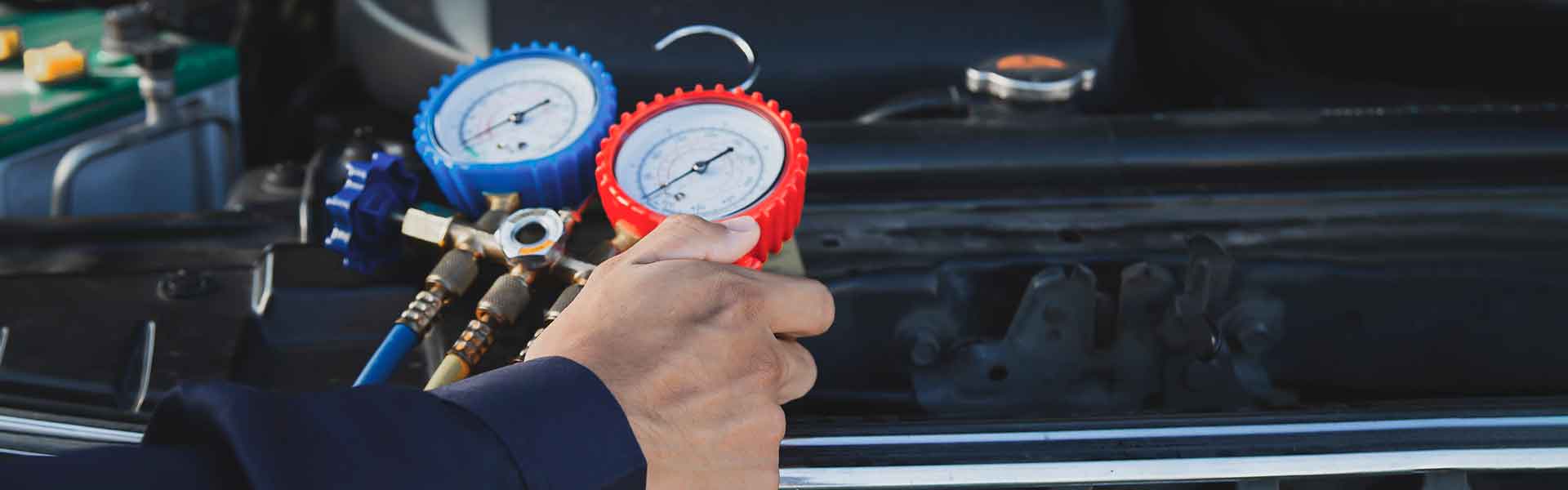
- Manifold gauge readings – high- and low-side pressures reveal a failing compressor, blocked expansion valve, or condenser airflow problems.
- Electronic leak detection and UV dye – common leak points include the condenser (rock damage from the open Subaru grille), evaporator core, and compressor shaft seal.
- Visual and mechanical checks – belt condition, clutch engagement, cooling fan operation, and cabin filter restriction all affect cooling performance.
- Road test – we confirm vent temperatures under real load, since idle-only testing hides airflow and fan issues.
Once we've isolated the fault, you get a written diagnosis with clear options and an upfront quote – no surprise add-ons.
Air Conditioning AC Repair on Subaru: Repair vs. Replacement
Not every warm-air complaint needs major parts. We match the fix to what the system actually needs.
- Genuine repair – a slightly low charge from a service port o-ring, a stuck blend-door actuator on Legacy/Outback models, or a clogged cabin filter restricting airflow. These are cleaning, adjustment, or single small-part jobs.
- Partial replacement – replacing just the condenser after rock damage while keeping the good compressor, or swapping a leaking expansion valve without touching the evaporator. We keep serviceable components and replace only what's worn.
- Full system service – when a compressor fails internally and sends metal debris through the lines, cleanliness demands replacing the compressor, receiver/drier, orifice or expansion valve, and flushing the system. Skipping steps here almost guarantees a repeat failure.
We lay out the tradeoffs – cost, longevity, and risk of a comeback – and let you decide. The goal is a system that stays cold, not the biggest invoice.
How to Make Your Subaru Air Conditioning AC Repair Last Longer
A little attention keeps your A/C healthy long after the repair.
- Run the A/C year-round – using it briefly in winter keeps the compressor seals lubricated and prevents them from drying out.
- Use the defrost setting occasionally – it circulates refrigerant oil and helps clear evaporator moisture that breeds odors.
- Keep the condenser clean – rinse leaves and road debris from the grille area, especially on Outback and Forester models driven on dirt roads.
- Listen for changes – a squeal or rattle when the compressor clutch engages is an early bearing warning worth catching quickly.
Owner-friendly tasks include replacing the cabin air filter on Subaru's recommended interval, checking that the recirculation and vent controls move freely, and watching for weak airflow. Leave refrigerant handling, compressor work, and evaporator jobs to the shop – these involve pressurized systems and require recovery equipment.
- Insist on OEM-grade refrigerant oil and the correct charge weight – overfilling hurts cooling.
- Keep up with software and climate-control updates during routine service.
- Follow Subaru's maintenance schedule so airflow and sensor issues get caught early.
Bring it in at the first sign of weak cooling and we'll keep small problems from becoming big ones.
Subaru air conditioning systems carry a few platform habits that reward a specialist's eye. The horizontally opposed boxer layout crowds the compressor low on the engine, and models like the 2010-2014 Legacy and Outback (BM/BR chassis) plus the FB-powered Forester are known for condenser leaks from road debris and O-ring seepage at the compressor and expansion valve. Getting to the root fast is what keeps a warm-air complaint from turning into a guessing game.
What to Expect When You Bring Your Subaru In
From the moment you drop off, the goal is a clear picture of what your A/C system is actually doing – not a parts-cannon approach.
- Drop-off or appointment – Schedule ahead or use after-hours drop-off; shuttle and loaner options can be arranged so you're not stranded.
- Initial inspection – We recover and weigh the refrigerant charge, pressure-test the system, and check compressor clutch engagement and blend-door operation on your specific model.
- Written estimate – You get a line-item breakdown before any work begins, whether it's a leaking condenser, a failed compressor, or a stuck expansion valve.
- Communication during the work – We reach out with findings and options, and nothing extra happens without your approval.
- Pickup walkthrough – We explain what was replaced and what we verified at the vents.
Bring any personal items you'll need – we'll keep the cabin as you left it. Before your Subaru goes back to you, we run a road test and re-check vent temperatures and system pressures with a scan tool. If anything feels off afterward, bring it back and we'll re-verify it directly.
Why Choose Elevation Auto Repair for Subaru Air Conditioning AC Repair
We handle Subaru A/C work start to finish – diagnosis, repair, and post-repair verification under one roof, so no one hands your car off mid-job.
- Platform-specific diagnosis – We know where FB and EJ boxer engines hide leaks, from compressor front seals to condenser tabs damaged by rocks on the CO front range.
- TSB and software awareness – We check for applicable Subaru service bulletins and control-module updates that affect climate operation before condemning hardware.
- Correct refrigerant and oil charge – We follow factory capacity and PAG oil specs by model year, including R-1234yf systems on newer Legacy, Outback, and Ascent platforms.
- Honest scope – If a resealed fitting fixes it, that's what you'll pay for – no unnecessary compressor sales.
That combination of Subaru familiarity and fast, dye-and-pressure driven diagnosis gets you back to cold air without repeat visits – and it's the same care we bring to every system in your car.
Our Subaru Services
- Battery Repair Replacement
- Brake Repair & Brake Fluid Change
- Check Engine Light Diagnostics
- Clutch Repair & Replacement
- Coolant Leak Repair
- Cooling System Repair
- Drive Shaft Repair
- Engine Repair
- Exhaust & Catalytic Converter Repair
- Head Gasket Repair & Replacement
- Oil Change
- Oil Leak Repair
- Scheduled Service Maintenance
- Steering Repair
- Suspension Repair
- Cambelt Timing Belt Replacement
- Transmission Repair
- Tune Up
- Wheel Alignment