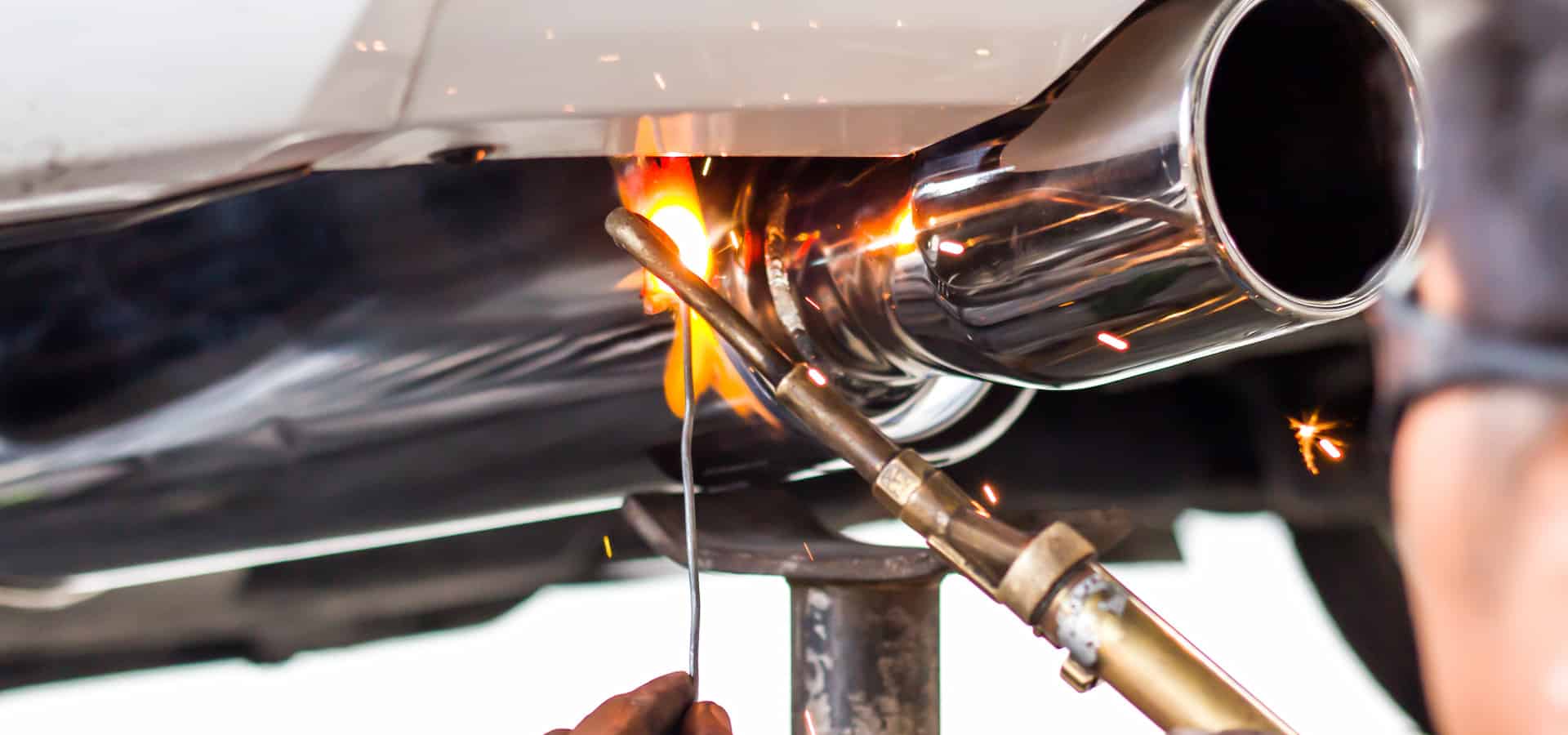
Subaru Exhaust & Catalytic Converter Repair at Elevation Auto Repair
A customer rolled in with a 2015 Outback throwing a P0420 code and a low rumble that got louder every time she merged onto I-25. She'd already been quoted for a full exhaust replacement by a chain shop. What she actually needed was a single upstream flex pipe and a wideband O2 sensor – a fraction of the work.
Exhaust and catalytic converter repair on a Subaru means more than bolting on parts. The horizontally opposed Boxer layout puts dual exhaust manifolds tucked low against the subframe, and the front pipes route through tight bends that trap moisture and rust at Colorado altitude. Getting the air-fuel ratio dialed back in after a converter or sensor swap requires reading live data the way the factory intended.
Two things set Subaru work apart:
- Air-fuel and rear O2 sensor readings must be validated against Subaru's readiness monitors – a generic scan tool often clears the code without confirming the fix.
- Boxer exhaust flanges and manifold studs use specific torque sequences, and seized studs on high-mileage EJ and FB engines demand careful removal to avoid cracking the head.
What you can expect from us:
- Honest diagnostics that separate a bad converter from a lazy sensor
- OEM-matched or emissions-legal converters, not cheap universal cans
- Proper torque specs and new gaskets on every flange
- Post-repair drive cycle verification so the check engine light stays off
Symptoms – How to Know You Need This Service
Subaru exhaust problems tend to announce themselves gradually, then all at once. Watch for these signs:
- Check engine light with P0420 or P0430 – the classic catalytic converter efficiency code, common on FB25 and EJ25 engines.
- A deep rumble or ticking that grows louder under acceleration – often a cracked flex pipe or blown gasket at the up-pipe.
- Rotten-egg (sulfur) smell – you may notice this near the tailpipe when a converter is failing internally.
- Sluggish acceleration or reduced power – a clogged converter restricts flow and chokes the Boxer engine.
- Rattling from underneath – broken heat shields or a collapsed converter substrate shifting around inside the case.
- Drop in fuel economy – a lazy O2 sensor pushing the engine rich.
- Vibration through the floor at idle – often a failed hanger or misaligned flange.
Schedule soon for codes, smells, and mileage changes. Stop driving immediately if you hear loud roaring paired with a strong exhaust smell inside the cabin, or if you smell fumes while sitting at a light – both point to leaks that can push carbon monoxide into the interior.
Common Exhaust & Catalytic Converter Repair Issues on Subaru Vehicles
Subaru's flat-four exhaust design runs hot and routes tightly under the engine, which produces a handful of failure modes we see over and over in the shop.
- Front catalytic converter failure (P0420/P0430) – Very common on 2010-2014 EJ253 Outback and Legacy 2.5i models, where the close-coupled cat degrades from repeated heat cycling and oil consumption feeding contaminants into the substrate.
- Cracked exhaust manifold / up-pipe – Turbocharged EJ25 platforms (WRX/STI, older Forester XT) crack the up-pipe near the flex joint, triggering ticking noises and boost-related exhaust leaks.
- Rusted flex pipe and mid-pipe joints – Colorado road salt and winter moisture eat through the flexible coupling on 2005-2012 Foresters and Imprezas, causing rattles and exhaust bleed into the cabin.
- Oil consumption clogging the cat – FB25 engines (2011-2018 Forester, Outback) known for high oil use can foul the converter substrate, killing catalyst efficiency prematurely.
- Oxygen and air-fuel ratio sensor failure – Front wideband A/F sensors on the boxer platform sit in a high-heat zone and drift over time, mimicking a bad cat when the sensor is the real culprit.
- Corroded exhaust hangers and heat shields – Loose or rusted heat shields produce the classic Subaru "buzz at idle" that owners often mistake for a serious internal problem.
Which Subaru Models We See for Exhaust & Catalytic Converter Repair
We handle exhaust and converter work across nearly the full modern Subaru lineup. The most common ones through our bays:
- Outback & Legacy (2005–present) – EJ25 and FB25 engines; the 2010–2014 and 2015–2019 generations frequently show P0420 as converters age.
- Forester (SG, SH, SJ, SK) – EJ253 and FB25; up-pipe and front-pipe rust are common at higher mileage.
- Impreza & Crosstrek (GD/GE and GP/GK/GT chassis) – FB20 engines; flex pipe and rear converter concerns.
- WRX & STI (GD, GR/GV, VA) – EJ255/EJ257 turbo cars need up-pipe converter and downpipe attention, and we address these with the higher exhaust gas temps in mind.
- Ascent (2019–present, FA24 turbo) – newer platform exhaust and sensor work.
- BRZ (ZC6 and ZD8, FA20/FA24) – equal-length header and mid-pipe service.
Turbo variants – WRX, STI, Ascent, and Forester XT – differ noticeably because the up-pipe often carries the primary catalyst and sees far more heat than naturally aspirated cars. We handle those differently from Outback and Forester Boxer setups.
For pre-2005 legacy Subaru models with heavily corroded original exhaust systems, we'll give you a straight answer on whether repair or full replacement makes more sense before any work begins.
A Denver Outback owner rolled in recently after noticing a low rumble that grew louder every week, plus a check engine light flashing P0420. What started as a small exhaust leak had turned into a failed catalytic converter and a downstream oxygen sensor throwing codes. Subaru's boxer engine layout and horizontally opposed exhaust routing create wear patterns you won't see on inline-four sedans, and catching them early keeps repairs simple.
Causes & Risks – What Happens if Ignored
Most Subaru exhaust problems trace back to a mix of Denver's climate, the boxer engine's heat load, and design quirks like tight cat placement and known oil consumption on certain FB and EJ engines. Road salt accelerates flex-pipe and hanger corrosion, while high oil use quietly poisons the catalytic converter.
Waiting rarely makes any of this cheaper. A small leak that costs little to weld or clamp today becomes a multi-part job once heat and vibration spread the damage.
- Ignoring a cracked up-pipe on a turbo EJ25 lets exhaust wash over nearby wiring and sensors, adding electrical repairs to the bill.
- Driving months on a fouled cat (P0420) can damage downstream O2 sensors and drop fuel economy noticeably.
- A minor flex-pipe leak left through a Colorado winter typically spreads corrosion into the mid-pipe and resonator, turning a patch into a section replacement.
- Unaddressed oil consumption on FB25 engines re-contaminates a new converter, so the underlying cause has to be diagnosed too.
- Loose heat shields can eventually contact rotating components or exhaust, creating a fire risk near dry undercarriage debris.
Safety Impact – Why Exhaust & Catalytic Converter Repair Matters
Exhaust integrity is a safety system, not just a noise concern. Leaks upstream of the cabin can allow carbon monoxide to seep in, especially in wagons and SUVs like the Outback and Forester where rear seals and hatch gaps age. A failing cat also affects how the engine management system controls fueling, which can flag broader drivability faults.
- Stop driving now: strong exhaust smell inside the cabin, exhaust fumes with headache or drowsiness, loud roaring with a flashing check engine light, or a glowing/overheating converter.
- Schedule soon: steady P0420/P0430 code, mild rattle at idle, reduced fuel economy, or a low drone that grows over time.
A flashing check engine light means the catalyst is being damaged in real time and raw fuel may be entering the exhaust. Beyond safety, an untreated known-defect exhaust leak involved in a carbon monoxide incident can complicate insurance and liability claims, which is why documented, correct repairs matter.
How Subaru Exhaust & Catalytic Converter Repair Actually Works
Subaru's horizontally opposed engine splits exhaust into two banks that merge under the car before reaching the front converter, oxygen sensors, and rear cat. The engine control module compares front and rear O2/A-F sensor readings to judge catalyst efficiency, so accurate diagnosis depends on reading live sensor data, not just swapping the converter.
Because of that design, the work has to respect Subaru-specific procedures rather than a one-size-fits-all approach.
- Live-data diagnostics distinguish a genuinely dead catalytic converter from a lazy A/F sensor or an upstream exhaust leak.
- OEM-grade converters are matched to Subaru's substrate and O2 sensor spacing so the ECM reads them correctly and won't re-flag P0420.
- Turbo EJ up-pipes and manifolds require correct torque sequences and new gaskets to prevent repeat cracking at the flex joint.
- Underlying causes – like FB25 oil consumption – get addressed so a new cat isn't re-contaminated.
- Sensor resets and drive-cycle verification conf
A Denver Outback owner rolled in complaining about a droning rumble that got louder on the highway, plus a check engine light that kept coming back after a parts-store reset. That combination – noise plus a P0420 code – is one of the most common exhaust and catalytic converter stories we hear on Subaru, and it usually points to more than a single loose clamp. Here's how we sort out what's actually wrong and where we take it from there.
How We Diagnose Exhaust & Catalytic Converter Repair Issues on Subaru
Subaru's boxer layout puts the exhaust and cats in tight, heat-cycled spots, so guessing is expensive. We follow a repeatable process.
- Pull codes and live data with a Subaru-capable scan tool – reading front and rear O2 sensor voltages, fuel trims, and freeze-frame data behind P0420/P0421 catalyst efficiency codes and P0300-series misfires.
- Compare upstream vs. downstream O2 activity to see whether the converter is truly dead or a lazy air/fuel ratio sensor is faking a bad-cat reading – common on 2.5L EJ25 and FB25 engines.
- Cold-start and road test to reproduce the drone, rattle, or ticking under load and locate it by position.
- Visual inspection on the lift for rusted flex pipes, cracked exhaust manifolds/up-pipes, blown gaskets, and rotted hangers – rust-belt and mountain-road Subarus show this early.
- Backpressure and leak checks to confirm a clogged converter versus an upstream leak throwing off the readings.
Once we know whether the fault is a sensor, a leak, or a spent converter, you get a plain-language repair plan and quote before any work starts.
Exhaust & Catalytic Converter Repair on Subaru: Repair vs. Replacement
Not every P0420 means a new converter. We match the fix to the actual failure.
- Genuine repair – a leaking gasket at the up-pipe or manifold flange, a cracked hanger, or a failed air/fuel/O2 sensor tricking the system. Replacing a lazy sensor or resealing a flange often clears the code entirely.
- Partial replacement – swapping a rusted flex pipe or resonator while keeping a healthy converter, or replacing one section on a WRX/STI or Outback where only the mid-pipe rotted out.
- Full replacement – a converter with melted or collapsed substrate, honeycomb rattle, or one paired with cascading rust through the head pipe. When misfires or a rich condition have already cooked the cat, patching upstream without replacing the converter just repeats the failure.
On older EJ-powered Foresters and Imprezas, we also flag whether an underlying cause – like a lean condition or coolant intrusion – killed the cat, so you're not buying two converters. We lay out the options side by side and let you decide, instead of defaulting to the biggest invoice.
How to Make Your Subaru Exhaust & Catalytic Converter Repair Last Longer
Once the system is right, a few habits keep it that way and protect the new parts.
- Let it warm briefly before hard acceleration in Denver's cold – heavy load on a cold exhaust stresses joints and seals.
- Fix misfires and rough idle fast – unburned fuel is the number-one converter killer on Subaru engines.
- Avoid short-trip-only driving when possible so the converter reaches full operating temperature and burns off moisture.
- Listen for changes – a new rattle, ticking, or drone means a hanger or gasket is starting to go before it becomes a big leak.
Owner-friendly maintenance that pays off:
- Do a quick visual under the car for rust, hanging pipes, or dark soot at the joints.
- Keep an eye on the check engine light and don't just clear codes – a returning P0420 is telling you something.
- Stick to Subaru's service intervals and use OEM-spec sensors, gaskets, and coolant; the wrong parts or a head-gasket coolant leak can poison a converter.
- Keep engine management software current so fuel trims stay accurate.
Visual checks and listening are safe to do yourself. Leave lift work, sensor replacement, and anything touching the hot exhaust to us – it's a safety-critical system, and we'll handle it right the first time.
What to Expect When You Bring Your Subaru In
A customer rolled in with a 2015 Outback rattling like a coffee can full of bolts every time the engine idled – a classic loose heat shield masquerading as something far worse. That kind of noise deserves a real look, not a guess. Here's how your visit goes:
- Drop-off or appointment – Schedule ahead or leave the car with us. Grab personal items from the cabin; we'll note anything left behind.
- Initial inspection – We lift the car and trace the exhaust from the up-pipe and front cat back to the rear muffler, checking flex joints, flanges, hangers, and the front and rear O2/air-fuel sensors.
- Written estimate – You get a clear breakdown of what's failing, what's fine, and what can wait. No surprise add-ons.
- Updates during the work – We call or text before changing scope. Shuttle and loaner options help you stay on your day.
- Pickup walkthrough – We show you the replaced parts, explain the repair, and offer after-hours key drop for pickup on your schedule.
Before you leave, we run a road test and a scan-tool re-check to confirm no catalyst efficiency or O2 heater codes return. If anything feels or sounds off afterward, bring it back and we'll re-inspect it.
Why Choose Elevation Auto Repair for Subaru Exhaust & Catalytic Converter Repair
Subaru exhaust work has its own quirks, and we handle them daily. The EJ and FB boxer layouts run twin front pipes and often a Y-collector, so a P0420 catalyst code on a 2011-2019 Forester or Outback can trace back to a lazy front sensor, an exhaust leak upstream, or an aftermarket cat that never met OEM light-off specs.
- Brand-specific diagnosis – We check for relevant Subaru TSBs and ECM software updates before condemning a converter, since a reflash sometimes resolves borderline P0420 readings.
- Correct parts and sensors – We match OEM-grade catalytic converters and Subaru-spec air-fuel ratio sensors so downstream readings stay accurate.
- Leak-first mindset – Cracked flex pipes and rotted flange gaskets skew fuel trims and mimic cat failure; we rule those out first.
We own the job end to end – diagnosis, repair, and post-repair verification with proper drive-cycle confirmation so the readiness monitors actually set. That's the difference between clearing a code and fixing the problem, and it's how we keep your Subaru running clean and quiet.
Our Subaru Services
- Air Conditioning AC Repair
- Battery Repair Replacement
- Brake Repair & Brake Fluid Change
- Check Engine Light Diagnostics
- Clutch Repair & Replacement
- Coolant Leak Repair
- Cooling System Repair
- Drive Shaft Repair
- Engine Repair
- Head Gasket Repair & Replacement
- Oil Change
- Oil Leak Repair
- Scheduled Service Maintenance
- Steering Repair
- Suspension Repair
- Cambelt Timing Belt Replacement
- Transmission Repair
- Tune Up
- Wheel Alignment