Subaru Wheel Alignment at Elevation Auto Repair
A customer brought in a 2018 Outback last spring with front tires worn paper-thin on the inside edges at barely 22,000 miles. The culprit wasn't bad driving – it was rear toe that had never been set correctly after a strut replacement elsewhere. That's the story we hear again and again with Subaru owners.
Wheel alignment sets the angles of your wheels – camber, caster, and toe – so they meet the road the way the factory intended. On a symmetrical all-wheel-drive Subaru, alignment matters more than on most cars because every corner is transmitting power. An angle that's off throws uneven load through the center differential and eats tires fast.
Subaru alignment isn't the same as a generic four-wheel job. Most Subaru platforms have independent rear suspension with adjustable rear toe and camber, and getting the thrust angle right takes proper equipment and patience. We reference OEM camber and toe specs for your exact chassis, torque the eccentric bolts and lateral links to Subaru values, and account for ride height and self-leveling behavior on lifted or loaded wagons.
- A true four-wheel alignment measured against factory Subaru specs
- Torque-to-spec on all adjustment hardware to hold the setting
- A printout showing before and after angles – nothing hidden
- An honest inspection of tie rods, bushings, and links first
Symptoms – How to Know You Need This Service
Subarus tend to telegraph alignment trouble clearly once you know what to feel for. You may notice:
- Uneven tire wear – inner-edge feathering on the fronts or rears is a classic AWD alignment sign
- The car pulling to one side on a flat road or drifting when you relax your grip
- A steering wheel that sits off-center when you're driving straight
- A vibration or shimmy through the wheel that gets worse with speed
- Squealing from the tires on gentle turns despite good tread
- The car feeling darty or wandering, especially noticeable after a strut, control arm, or lift install
- Steering that feels heavier or slower to return to center after a turn
A gentle pull or off-center wheel means schedule soon before tire damage adds up. But if you feel a sudden violent shimmy, hear clunking over bumps, or the pull appears out of nowhere, stop driving and have it checked – that points to a worn link, damaged tie rod, or bent component, not just alignment.
Common Wheel Alignment Issues on Subaru Vehicles
Subaru's symmetrical all-wheel-drive layout puts real demands on suspension geometry, and certain models show predictable alignment wear patterns.
- Rear inner-edge tire wear on Outback and Legacy (BM/BR and later BS/BN chassis): Rear toe and camber drift out of spec as the multi-link bushings age, chewing the inside shoulder long before the tread center is worn.
- Forester (SJ/SK) rear camber shift: Softer rear suspension bushings and frequent light off-pavement use let camber creep negative, producing uneven wear and a subtle rear-end wander.
- WRX/STI (VA chassis) alignment sensitivity: Lowered springs and spirited driving quickly pull front camber and toe off factory numbers, and these cars punish sloppy setups with darty steering.
- Crosstrek pull after curb and pothole strikes: The raised ride height and Colorado road conditions make front toe knock-outs common after a hard hit.
- Post-repair misalignment: Any control arm, tie rod, or wheel bearing service on a Subaru requires a follow-up alignment – skip it and you'll see steering-wheel-off-center and rapid wear.
- Steering wheel off-center with straight tracking: Often a front toe imbalance that also affects the steering angle sensor reference used by stability control.
Which Subaru Models We See for Wheel Alignment
We align the full Subaru lineup across recent generations. Owners scan for their car, so here's what we work on most:
- Outback & Legacy – BM/BR (2010–2014), BN/BS (2015–2019), and current BT/BW (2020+); the taller Outback ride height makes correct rear camber and thrust angle especially important
- Forester – SJ (2014–2018) and SK (2019+); rear toe adjustment is common after link or strut work
- Impreza & Crosstrek – GP/GJ, GK/GT Impreza and GP/GT Crosstrek on the Subaru Global Platform
- WRX & WRX STI – VA chassis (2015–2021) and the newer VB WRX; performance-oriented specs, and lowered or coilover-equipped cars need alignment tailored to the new ride height
- BRZ – ZC6 (2013–2020) and ZD8 (2022+); rear-drive layout with its own camber and toe targets that reward precise setup
- Ascent – WM three-row (2019+), heavier chassis that benefits from load-corrected alignment
Lifted Outbacks, lowered WRX/STI builds, and BRZ track cars all get setup matched to how they're driven rather than a one-size number. We handle older EJ-era Legacy and Impreza models too, though sourcing adjustment hardware for high-mileage examples can take longer. If your Subaru falls outside what we typically see, tell us the year and chassis and we'll be straight with you about it.
A Denver Outback owner came in after burning through the inside edge of a fresh set of tires in a single season. She'd hit one too many potholes on I-70 and assumed the pull to the right was "just how it drove now." One alignment check later, we found the rear toe way out of spec – a classic Subaru pattern. Let's talk about how we get your Subaru tracking straight again and protect the investment you've made in it.
Causes & Risks – What Happens if Ignored
Most Subaru alignment problems in the Denver area trace back to a mix of rough roads, seasonal temperature swings, and normal bushing aging. Add heavy AWD loading and lowered or lifted setups, and small deviations grow fast.
Waiting on an alignment rarely stays cheap. A car that's slightly out of toe today can cost you a full set of tires and a worn suspension component in a few months.
- Ignoring inner-edge rear wear on an Outback for a season typically ruins otherwise healthy tires and can mask a failing rear bushing.
- Driving a WRX with excess negative camber accelerates shoulder wear and stresses wheel bearings and CV components under AWD load.
- A steady pull left uncorrected forces constant steering input, wearing tie rod ends and inner rack bushings faster.
- Uneven tire diameters from mismatched wear can strain the center differential and transfer clutch – an expensive AWD repair unique to how Subaru distributes power.
- Persistent vibration and pull make hydroplaning and winter traction loss far more likely on I-70 and mountain passes.
Catching it early keeps the fix to an alignment instead of tires, bushings, and driveline parts.
Safety Impact – Why Wheel Alignment Matters
Alignment isn't just about tire life on a Subaru – it feeds the systems that keep the car planted.
The steering angle sensor and yaw inputs that support Vehicle Dynamics Control (Subaru's stability and traction system) rely on a correct straight-ahead reference. Bad alignment and worn steering parts can make VDC and ABS respond to a car that isn't actually going where the sensors think it is. Uneven tire wear also lengthens braking distances and reduces grip in the wet and snow.
- Stop driving now: Sudden hard pull, clunking over bumps, loose or wandering steering, or a wheel that visibly leans – these point to damaged suspension parts, not just alignment.
- Schedule soon: Steering wheel off-center, gradual pull, feathered tire edges, or a VDC/traction light that appears after a curb strike.
If a known suspension defect is left unaddressed and contributes to a crash, it can complicate insurance and liability. Correcting alignment promptly keeps your Subaru predictable and your documentation clean.
How Subaru Wheel Alignment Actually Works
A Subaru alignment sets three main angles – camber, caster, and toe – at each corner so all four tires track true and the steering centers correctly. Because Subaru's AWD system depends on all four wheels turning at matched rates, precise toe settings matter more here than on many front-drive cars.
What makes Subaru work different from a generic setup:
- Steering angle sensor calibration: After alignment, the SAS reference often needs resetting so VDC and EPS read true center – an OEM-level scan tool step.
- Independent rear geometry: Rear toe and camber are adjustable on most Outback, Legacy, and Forester models, so a proper job is a true four-wheel alignment, not a front-only "toe and go."
- EyeSight-equipped models: Ride height and thrust angle affect the forward-facing camera's aim, so alignment work needs to respect factory specs to keep driver-assist features accurate.
- Torque and sequence specs: Eccentric bolts and lock nuts are torqued to Subaru values so settings hold under AWD loading.
We align to factory specs on modern equipment and verify the electronics afterward – protecting your handling, your warranty, and your resale value.
A Denver-area Outback owner came in convinced her tires were defective – the outer edges were shredded at barely 20,000 miles, and the car drifted right on I-25. The tires weren't the problem. Her alignment had drifted after a hard hit on a pothole, and the symmetrical all-wheel-drive system had been quietly scrubbing rubber ever since. That's the kind of thing a proper alignment check catches early, before it costs you a set of tires and a fuel economy hit.
How We Diagnose Wheel Alignment Issues on Subaru
Subaru's symmetrical AWD layout makes precise alignment more than a comfort issue – uneven angles put extra strain on the center differential and drivetrain. Our process is methodical:
- Interview and road test – We confirm pulling, wandering, or a crooked steering wheel, common after curb strikes on Impreza and Crosstrek models.
- Visual and hands-on inspection – We check tire wear patterns, control arm bushings, tie rod ends, and the rear lateral links that wear on GD/GG and later Impreza platforms.
- Suspension load check – We inspect strut mounts and sway bar links, since worn parts skew readings before we ever touch the alignment heads.
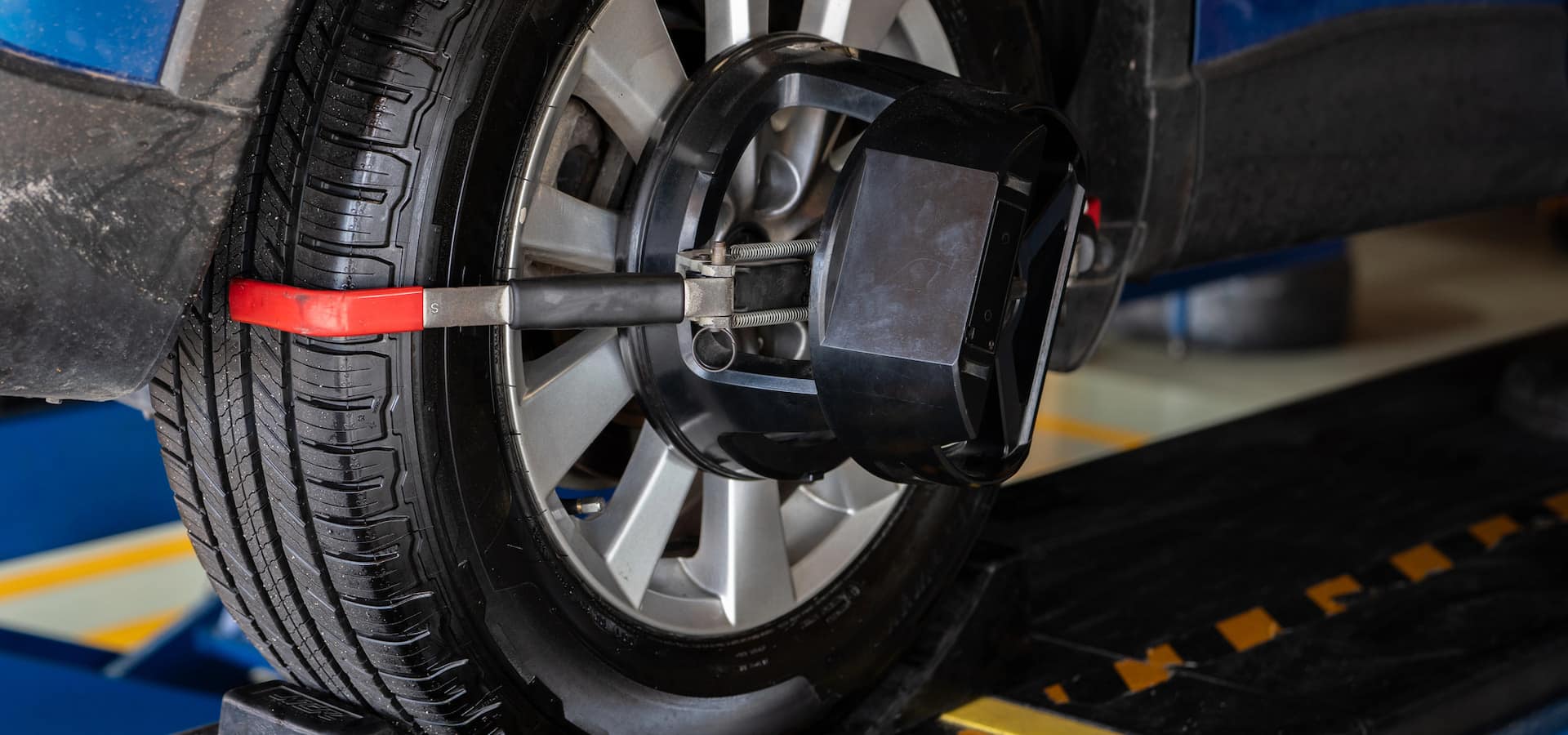
- Digital alignment measurement – Sensor targets mounted to all four wheels give us live camber, caster, toe, and thrust angle against Subaru's factory specs.
- Scan tool review – On models with EyeSight and steering angle sensors, we verify no fault codes are throwing off the data and flag any needed recalibration.
Once we see the numbers, we translate them into a plain-language plan – what's out of spec, what's causing it, and a clear quote before any work starts.
Wheel Alignment on Subaru: Repair vs. Replacement
Most alignment concerns are a straightforward adjustment. The question is whether worn hardware needs attention first.
- Adjustment only (repair) – Suspension components are sound and we simply reset toe, camber, and caster to spec. Common after a mild curb tap or fresh tire install on a Forester or Legacy.
- Partial replacement – A single worn part throws the geometry off. Think a sloppy tie rod end, a torn control arm bushing, or a worn rear lateral link on older Impreza and WRX chassis. We replace that part, then align.
- Full assembly replacement – Cascading wear or impact damage – a bent lower control arm, collapsed strut, or damaged rear subframe mount – where piecemeal fixes won't hold an alignment or compromise safety.
We show you the readings and the worn parts, explain what each path buys you, and let you decide. Protecting your warranty and resale value usually means fixing the root cause once – not chasing repeat alignments.
How to Make Your Subaru Wheel Alignment Last Longer
Colorado roads are hard on suspension geometry between potholes, winter freeze-thaw, and mountain grades. A few habits keep your alignment holding.
Driving habits that help
- Slow down for potholes and rough shoulders – curb and pothole hits are the number one cause of sudden alignment shifts.
- Avoid overloading past Subaru's rated capacity, which sags the suspension and changes camber.
- Ease into cold-morning driving so bushings and struts warm before hard cornering.
Owner maintenance you can do
- Watch for uneven tire wear – feathered or inner-edge wear signals toe problems early.
- Rotate tires on schedule to spread wear across the AWD system.
- Listen for new clunks over bumps and note any steering-wheel drift.
- Keep tire pressures at the door-placard spec.
Brand-specific care
- Use OEM-spec suspension parts – aftermarket links and bushings often shift geometry.
- Follow Subaru's service intervals and keep EyeSight and steering-angle software current.
Tire rotations and pressure checks are safe DIY. Alignment measurement, suspension replacement, and sensor recalibration should stay with our technicians to keep the AWD system safe and dialed in.
A Denver Outback owner rolled in recently chasing the same front tire that kept feathering on the outer edge every 8,000 miles. The dealer kept resetting the alignment without addressing the worn control arm bushing behind it. That's the kind of Subaru-specific detail that separates a real fix from a temporary reset.
What to Expect When You Bring Your Subaru In
From the moment you schedule, the goal is to get your alignment corrected without surprises. Here's how a visit moves:
- Drop-off or appointment check-in – Tell us the symptoms: a pull, off-center steering wheel, or uneven wear on your Forester or Crosstrek tires.
- Initial inspection – We put the car on the rack and check tie rods, control arm bushings, wheel bearings, and the self-leveling suspension components before touching a single adjustment.
- Written estimate – You get a clear breakdown of what's needed and why, including any worn parts that would throw the alignment off again.
- Communication during the work – We call or text before doing anything beyond the approved scope. No mystery add-ons.
- Pickup walkthrough – We review before-and-after alignment readings so you can see the corrected camber, caster, and toe numbers.
Practical stuff matters too. Shuttle and loaner options are available so you're not stranded, after-hours pickup can be arranged, and you can leave personal items in the cabin – we work around them.
Every alignment ends with a road test to confirm the wheel sits centered and the car tracks straight. If anything still feels off, bring it back and we'll re-check it on the rack. Preserving your factory warranty and resale value means we document the work properly.
Why Choose Elevation Auto Repair for Subaru Wheel Alignment
Subaru's symmetrical all-wheel-drive layout makes alignment more than a toe adjustment. Rear toe and camber matter as much as the front, and getting them wrong accelerates tire wear and stresses the AWD driveline.
- Platform familiarity – We know the rear subframe bushing and lateral link wear patterns common on Outback, Legacy, and Forester models, plus the sensitivity of EyeSight-equipped cars to alignment geometry.
- TSB and software awareness – Many newer Subarus need a steering angle sensor reset or camera recalibration after alignment work. We handle those steps instead of leaving a fault behind.
- End-to-end ownership – One shop diagnoses the pull, replaces the worn link or bushing causing it, sets the alignment to Subaru spec, and verifies the result on a road test.
You get honest diagnostics – if your car doesn't actually need an alignment, we'll tell you. We'd rather fix the real cause once than chase symptoms and cost you tires down the road.
Our Subaru Services
- Air Conditioning AC Repair
- Battery Repair Replacement
- Brake Repair & Brake Fluid Change
- Check Engine Light Diagnostics
- Clutch Repair & Replacement
- Coolant Leak Repair
- Cooling System Repair
- Drive Shaft Repair
- Engine Repair
- Exhaust & Catalytic Converter Repair
- Head Gasket Repair & Replacement
- Oil Change
- Oil Leak Repair
- Scheduled Service Maintenance
- Steering Repair
- Suspension Repair
- Cambelt Timing Belt Replacement
- Transmission Repair
- Tune Up