Subaru Battery Repair Replacement at Elevation Auto Repair
Your Subaru clicks instead of cranks on a cold Denver morning, and suddenly a simple errand turns into a jump-start scramble. Battery service sounds basic, but modern Subarus have made it anything but simple. On newer models with stop-start systems and integrated battery sensors, dropping in a random parts-store battery can trigger charging faults and dashboard warnings.
Doing this correctly on a Subaru means more than swapping terminals. Many 2015-and-newer Legacy, Outback, Forester, and Crosstrek models use an AGM or EFB battery paired with a battery current sensor on the negative cable. That sensor feeds the charging strategy, and the ECU often needs a battery registration or reset with Subaru's SSM4 diagnostic platform so the alternator charges the new battery at the right rate.
We also watch for the small parasitic drains common to Subaru infotainment head units and DCM telematics modules that quietly kill a marginal battery overnight. Here's what you can expect when you bring your Subaru to us:
- Load testing and charging-system analysis before we recommend anything
- Correct OEM-spec AGM, EFB, or flooded battery matched to your trim
- Battery registration and sensor reset where the platform requires it
- Parasitic draw testing if your battery keeps dying prematurely
Symptoms – How to Know You Need This Service
Subaru charging problems rarely announce themselves politely. You may notice small quirks days before a no-start leaves you stranded.
- Slow or lazy cranking – the starter drags before the engine catches, especially in cold weather
- Clicking with no crank – a rapid clicking when you turn the key usually means the battery can't deliver enough current
- Battery or charging warning light – schedule soon; this points to the battery or alternator
- Flickering headlights and dimming dash – lighting fades at idle or when you use the blower and rear defroster together
- Stop-start disabled – equipped Subarus turn off auto stop-start when the battery is too weak to support it
- Random electronic glitches – EyeSight faults, infotainment reboots, or power window quirks tied to low voltage
- Swollen battery case or corrosion – bulging sides or heavy white buildup on the terminals
- Rotten-egg smell under the hood – a venting battery; stop driving and get it checked right away
If you smell sulfur or see a swollen case, treat it as urgent and avoid opening the hood near the terminals. A clicking no-start or warning light means you can still schedule promptly rather than panic – just don't ignore it.
Common Battery Repair Replacement Issues on Subaru Vehicles
You turn the key on a cold Denver morning, the dash lights flicker, and the starter groans instead of cranking. Subaru owners see this pattern more than most, and it usually ties back to a handful of predictable failure paths.
- Parasitic drain on 2015-2019 Outback and Legacy (FB-series): The Data Communication Module (DCM) and STARLINK head unit can stay awake after shutdown, pulling the battery down overnight. Subaru addressed several of these with software updates and revised sleep-timer logic.
- Undersized OE battery on early EyeSight-equipped models: The camera-based driver-assist system adds electrical load, and the factory battery on some 2013-2017 Foresters and Crosstreks struggles to keep up in cold climates, shortening service life.
- Corroded terminals and ground straps on WRX/STI (VA chassis): Underhood heat and vibration accelerate terminal oxidation, causing intermittent voltage drops that mimic charging faults.
- Alternator decoupler pulley wear on 2.5L and 3.6L flat engines: A failing overrunning alternator pulley leaves the battery undercharged, so a "bad battery" is often the symptom rather than the root cause.
- Auto start-stop cycling on 2020+ Outback/Ascent: These use an EFB or AGM battery with a current sensor; installing a standard flooded battery without registration causes premature failure and start-stop dropout.
- Short trip lifestyles: Frequent brake-light and accessory cycling in stop-and-go Denver traffic rarely lets the battery reach full state of charge.
Which Subaru Models We See for Battery Repair Replacement
We service battery and charging-system work across nearly the entire Subaru lineup. Denver's altitude and temperature swings are hard on batteries, so we see a steady mix of these platforms:
- Outback (2010-present) – both the BR-generation and newer global-platform models; later years often need battery registration
- Forester (SH, SJ, SK generations) – FB-series engines; SK models frequently run AGM batteries with a current sensor
- Crosstrek (2013-present) – including the hybrid, which uses a separate 12V auxiliary battery strategy
- Legacy (2010-present) – sedans on the same platforms as the Outback
- Impreza (GE/GH, GJ/GP, and current GK/GT) – common on daily-driver 2.0L models
- WRX and WRX STI (2015-2021 VA chassis) – EJ257 and FA20 turbo cars that are hard on batteries with frequent short trips
- BRZ (ZC6 and ZD8) – lightweight batteries where the correct group size matters
- Ascent (2019-present) – FA24 turbo three-row with higher electrical demand
For turbo WRX/STI and Ascent models, we pay extra attention to correct cold-cranking amps and AGM compatibility. If you have an older EJ-powered Outback or a specialized hybrid setup, bring it in – we'll confirm the right battery and reset procedure before we touch anything.
Causes & Risks – What Happens if Ignored
Most Subaru battery problems trace back to a mix of climate, driving habits, and the extra electrical load these cars carry. Colorado's temperature swings, high altitude, and short commutes are hard on any battery, and Subaru's EyeSight, STARLINK, and always-on modules add draw that a weak battery can't sustain.
Waiting on a slow crank or a battery light rarely stays cheap. A marginal battery forces the alternator to work harder, which cooks the diodes and drives up the eventual repair.
- Ignoring a weak battery for a few weeks often pulls the alternator into failure, turning a simple swap into a charging-system job.
- Chronic undercharging on start-stop models can trip the current sensor and store fault codes that disable the system entirely.
- Repeated deep discharges damage the plates, so a battery that could have been recovered becomes non-serviceable.
- Voltage sag can corrupt module memory, forcing recalibration of EyeSight, throttle, and transmission adaptations.
- Corroded ground straps left unchecked create backfeed through sensors and headlights that are far harder to diagnose later.
We'll catch the root cause early with a proper load and charging-system test, then handle the fix before it snowballs into a multi-part repair.
Safety Impact – Why Battery Repair Replacement Matters
A failing battery on a modern Subaru is a safety issue, not just an inconvenience. Low or unstable voltage can throw off the systems you rely on to stop and stay in control.
- EyeSight pre-collision braking and lane keep: These camera systems can disable themselves or behave erratically under low voltage.
- ABS, VDC stability control, and traction control: Voltage drops can set faults that shut these systems down without warning.
- Electronic parking brake and brake assist: Undervoltage can leave the EPB unresponsive.
- Airbag and SRS readiness: A weak battery can trigger stored codes that affect deployment logic.
Stop driving now if you see:
- Multiple warning lights (VDC, ABS, EyeSight) illuminating together
- Steering or brake assist feeling heavy or delayed
- The battery light staying on while driving
Schedule soon if you notice: slow cold cranking, dimming headlights at idle, or a start-stop system that no longer activates. Addressing a known battery-related fault before an incident also keeps you clear on the liability side. We'll get the electrical system back to spec and confirm every safety module comes back online.
How Subaru Battery Repair Replacement Actually Works
On a modern Subaru, the battery is part of a managed electrical network, not just a box that starts the engine. Many 2018-and-newer models use a battery current sensor on the negative terminal that reports state of charge back to the ECU, which then tells the alternator how hard to charge. Swap in a battery without registering it, and the charging strategy stays wrong.
That's why a correct replacement on these cars takes more than loosening two clamps.
- Battery registration: Start-stop and current-sensor equipped models need the new battery coded via Subaru SSM4 diagnostics so the charging profile matches the chemistry.
- Correct chemistry match: AGM or EFB batteries must be replaced with the same type – a flooded battery in an AGM application fails early.
- Memory and adaptation retention: We use a memory saver so EyeSight, throttle, and transmission adaptations don't reset.
- Terminal and ground service: Cleaning corrosion and torquing terminals to spec prevents the intermittent faults these platforms are prone to.
- Charging-system verification: We conf
How We Diagnose Battery Repair Replacement Issues on Subaru
You turn the key on your Outback, hear that slow crank, and the dash lights flicker before the engine finally catches. On modern Subarus, a weak battery does more than cause hard starts – it can trigger check engine lights, disable the EyeSight cameras, or throw random codes across the CAN network. Here's how we track down the real cause.
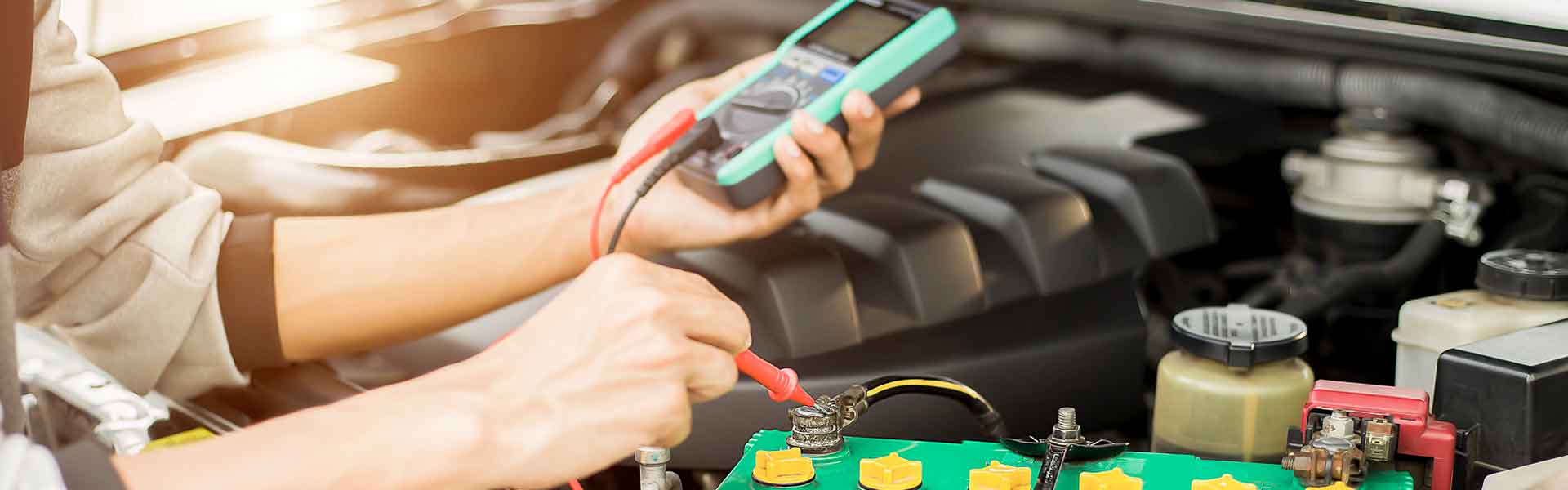
- Full state-of-health test – We load-test the battery and measure cold cranking amps against Subaru's spec, not just voltage at rest.
- Charging system scan – Using a Subaru-capable scan tool, we read the battery management data and alternator output. Newer models with the FB-series engines and stop-start-adjacent electronics are sensitive to voltage drop.
- Parasitic draw check – We measure key-off current to catch drains from aftermarket accessories, a stuck relay, or a module that won't sleep, a known complaint on some 2015-2019 Legacy and Outback platforms.
- Terminal and ground inspection – Visual check for corrosion on the terminals and the chassis ground strap, plus the harness where road salt and moisture cause resistance.
- Road test and reload – We confirm the charging voltage stays stable under real load with headlights, defrost, and blower running.
From there we build a clear repair plan and quote so you know exactly what's failing – the battery, the charging side, or a wiring fault – before any parts go in.
Battery Repair Replacement on Subaru: Repair vs. Replacement
Not every battery complaint means buying a new battery. The right call depends on what the testing shows.
- Genuine repair – A Subaru that tests healthy but starts poorly often just needs corroded terminals cleaned, a loose clamp torqued, or a fatigued ground strap replaced. These small fixes restore reliable starting without touching the battery.
- Partial replacement – Sometimes the battery is fine but the hold-down bracket, terminal ends, or a corroded positive cable is the weak link. We replace the worn piece and keep the rest of the system, common on higher-mileage Foresters that have seen Colorado winters.
- Full replacement – When the battery fails a load test, shows internal shorting, or is several years old with cascading voltage drop, replacement is the honest answer. On EyeSight-equipped models we also register the new battery so the charging logic adapts correctly.
We walk you through what the numbers show and let you make the decision – no pushing the priciest route when a cable end or clean-up solves it.
How to Make Your Subaru Battery Repair Replacement Last Longer
Battery life on a Subaru comes down to charging habits, heat, and keeping connections clean. A few simple routines go a long way at Denver's altitude and temperature swings.
- Drive habits – Short trips never let the alternator fully recharge. Take a longer drive weekly, and if the car sits, a maintainer keeps the battery topped off through cold snaps.
- Reduce key-off draw – Avoid leaving accessories, dash cams, or USB devices pulling power when parked. These slow drains age a battery fast.
- Owner checks – Look for white or green corrosion on the terminals, listen for slow cranking, and watch for flickering dash lights or EyeSight warnings that hint at low voltage.
- Brand-specific care – Use the correct group-size battery Subaru specifies, keep software and TSB updates current since some address module sleep behavior, and follow the factory service intervals so the charging system gets inspected.
Cleaning light terminal corrosion and using a maintainer are safe DIY tasks. Leave charging system diagnosis, cable replacement, and battery registration to us – guessing on the electrical side can leave you stranded or damage a module.
What to Expect When You Bring Your Subaru In
You turn the key on your Outback and get a slow crank, or the dash lights flicker and the Starlink screen resets on its own. On many Subaru models with the JIS-standard battery and the smart charging system, a weak battery also throws odd warnings – AWD, hill-start assist, or EyeSight faults that have nothing to do with those systems directly.
- Drop-off or appointment – Schedule ahead or bring it in; we grab your concerns and note any recent symptoms like parasitic drain or dead-battery-after-sitting complaints.
- Initial inspection – We load-test the battery, check charging-system output, inspect the negative sensor at the battery terminal, and scan for stored codes tied to the electrical load management.
- Written estimate – You get a clear breakdown before anything moves forward, including whether the battery current sensor or software recalibration is involved.
- Communication during the work – We text or call with findings, no surprise add-ons.
- Pickup walkthrough – We explain what was replaced and any battery registration steps performed.
Shuttle and loaner options are available on request. Leave personal items in the vehicle if you like – we work around them, and after-hours pickup can be arranged. Before you go, we road-test and re-scan with the tool to confirm charging output and that memory-dependent modules relearned properly. If anything feels off afterward, bring it back and we recheck it directly.
Why Choose Elevation Auto Repair for Subaru Battery Repair Replacement
Swapping a battery on a modern Subaru is not just loosening a clamp. The FB-series and later FA-turbo platforms use a battery current sensor and load-management strategy that needs proper handling, and skipping the correct procedure can leave you with idle-charging faults or a repeat no-start.
- Brand-specific know-how – We follow Subaru TSBs and apply available software updates for the charging and body-control modules on 2015-up Legacy, Outback, Forester, and Crosstrek platforms.
- Root-cause diagnosis – Parasitic-draw testing pinpoints drain culprits like DCM/telematics modules or aftermarket accessories, so you are not buying a second battery in six months.
- Correct fitment and specs – Proper group-size battery, torqued hold-down, and sensor reconnection done right the first time.
We own the whole job – diagnosis, replacement, and post-repair verification under one roof. That means honest recommendations, no unnecessary parts, and a Subaru that starts confidently every time you turn the key.
Our Subaru Services
- Air Conditioning AC Repair
- Brake Repair & Brake Fluid Change
- Check Engine Light Diagnostics
- Clutch Repair & Replacement
- Coolant Leak Repair
- Cooling System Repair
- Drive Shaft Repair
- Engine Repair
- Exhaust & Catalytic Converter Repair
- Head Gasket Repair & Replacement
- Oil Change
- Oil Leak Repair
- Scheduled Service Maintenance
- Steering Repair
- Suspension Repair
- Cambelt Timing Belt Replacement
- Transmission Repair
- Tune Up
- Wheel Alignment