Cadillac Oil Leak Repair at Elevation Auto Repair
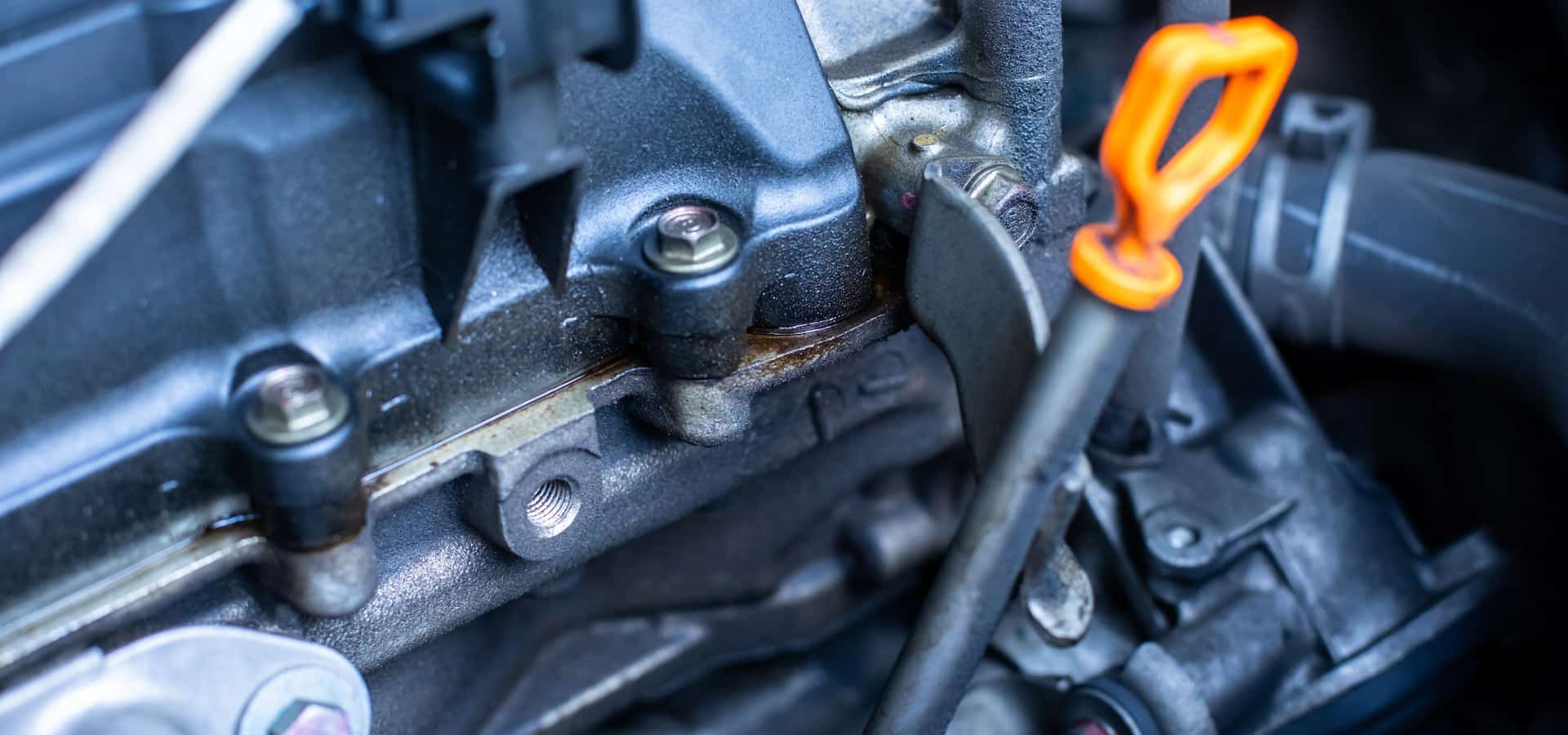
A slow drip on the garage floor of a CTS or an Escalade rarely stays small. Oil leaks on Cadillac engines tend to originate at gaskets and seals that live in tight, heat-soaked spots, and chasing them properly takes a shop that knows the platform.
Oil leak repair means finding the true source, replacing the failed gasket or seal, and confirming the fix holds under real pressure and heat. On Cadillac, that job differs from generic work in a few ways:
- Platform-specific leak points – The 3.6L LFX/LLT V6 in CTS, SRX, and XTS is known for valve cover gaskets, timing cover seepage, and the rear main letting go over time; the Northstar V8 in DTS and older DeVille/Seville has a well-documented history of rear main and case half-seam leaks.
- Precise torque and sealant specs – GM composite covers and aluminum mating surfaces demand correct torque sequence and RTV where called out, not guesswork, or the leak returns.
- Proper diagnosis first – We UV-dye test and clean the area so you're paying to fix the actual source, not the lowest gasket that happens to be wet.
Here's what you can expect from us:
- Honest diagnostics that pinpoint the real leak, not a shotgun parts list
- OEM-grade gaskets and seals installed to GM spec
- Clear communication before any work begins
- Repairs built for long-term reliability so you're not back next month
Symptoms – How to Know You Need This Service
Cadillac oil leaks announce themselves in more ways than a spot on the driveway. From the driver's seat, you may notice:
- Burning oil smell – Often strongest at stoplights when oil hits the hot exhaust manifold or turbo housing.
- Blue-gray smoke from under the hood or drifting past the mirrors after a highway run.
- Dark spots on the pavement where you park, growing over days or weeks.
- Low oil level on the dash reminder or dipstick between changes, meaning oil is escaping.
- Oil-soaked components – Grime built up around valve covers, the timing cover, or the oil pan when you glance under the car.
- Check Engine or low oil pressure warning if a leak drops the level far enough.
- Ticking or lifter noise at cold start on 3.6L V6 models, sometimes tied to low oil from a leak.
Schedule soon for a slow seep or a faint burning smell. Stop driving immediately if you see a low oil pressure light, heavy smoke, or a rapidly dropping oil level – running a Cadillac engine starved of oil risks bearing and camshaft damage that costs far more than the leak itself.
Common Oil Leak Repair Issues on Cadillac Vehicles
Cadillac oil leaks tend to follow predictable paths tied to specific engine families and how they age in Colorado's temperature swings and altitude. Here are the patterns we see most often:
- Valve cover gasket seepage on 3.6L LFX/LGX V6 engines – found in CTS, ATS, XTS, and later XT5/XT6 models. The molded gaskets harden with heat cycling and leak onto the ignition coils and exhaust, producing that telltale burning smell.
- Timing cover and chain guide leaks on 3.6L VVT engines (early CTS, SRX, STS) – oil migrates from the front cover as the RTV sealant and cover gaskets fatigue, often complicated by known timing chain stretch on these variants.
- Rear main seal leaks on Northstar 4.6L V8 (DeVille, DTS, older SRX) – the aluminum block and long service life let the rear seal harden and weep, sometimes alongside the well-documented head bolt thread issues these engines carry.
- Oil pan gasket and drain-related leaks on CTS-V and Escalade 6.2L L86/LT1 – heavy-duty use and heat expose the pan seal and the front/rear cover joints.
- Turbocharger oil feed and return line leaks on 2.0T LTG four-cylinders – seen in ATS and CTS turbo models, where high underhood heat cooks seals at the turbo fittings.
- Camshaft/cam cover seals and PCV-driven leaks – a clogged PCV path builds crankcase pressure that pushes oil past the weakest gasket first.
Which Cadillac Models We See for Oil Leak Repair
We service oil leaks across most modern and late-model Cadillac platforms. Find your car below:
- CTS / CTS-V (2008–2019) – 3.6L LFX/LLT V6 valve cover and timing cover leaks; supercharged LSA V8 in the CTS-V needs extra care around the blower and front cover.
- ATS / ATS-V (2013–2019) – 2.0L LTG turbo-four (turbo oil feed/return line seepage) and 3.6L V6 cover gaskets.
- SRX (2010–2016) – 3.6L LFX, common valve cover and oil filter housing weeping.
- XTS (2013–2019) – 3.6L V6, rear main and timing cover leaks with age.
- Escalade / ESV (2007–present) – 6.2L and 5.3L V8 (L86/L94, and newer L87) valve cover, oil cooler line, and rear main leaks.
- DTS, DeVille, Seville – Northstar V8 case half-seam and rear main leaks, a well-known concern on these platforms.
- XT4, XT5, XT6, CT4, CT5 – Newer 2.0L turbo and 3.0L twin-turbo (LGW) engines with turbo oil line and cover seepage.
V-Series and supercharged variants often take extra labor because of the tight packaging around the blower and manifolds. If you have a very early Northstar or a rare specialty build, call us first – we'll tell you honestly whether it's a fit before you drive over.
A Denver owner rolls into the shop after spotting dark spots on the garage floor under a CTS that had run flawlessly for years. By the time we lifted it, the valve cover gaskets had been weeping onto the exhaust manifold for months, leaving a burnt-oil smell and a slow drip toward the belt. That kind of slow leak is the most common way Cadillac oil problems sneak up – and the most fixable when caught early.
Causes & Risks – What Happens if Ignored
Most Cadillac oil leaks trace back to age-hardened seals, heat-cycled gaskets, and crankcase pressure that finds the path of least resistance. Denver's altitude and big daily temperature swings accelerate gasket shrinkage, and stop-and-go city miles keep underhood temps high enough to bake seals over time.
A weep that looks minor rarely stays minor. Ignoring valve cover seepage for a season on a 3.6L, for example, commonly lets oil saturate the coil-on-plug wells and trigger misfires long before you see a puddle.
- Oil on hot exhaust – smoke, burning odor, and a real fire risk as saturation increases.
- Coil and connector damage – valve cover leaks flood spark plug wells, causing misfires and rough running.
- Belt and accessory contamination – front cover or oil filter housing leaks reach the serpentine belt, risking sudden loss of charging and power steering assist.
- Low oil level – a slow leak left unchecked starves the timing chain tensioners on VVT V6s, accelerating chain stretch and lifter wear.
- Cheap gasket becomes major teardown – a delayed rear main seal can turn into a transmission-out job once contamination spreads.
Driving becomes unsafe once a leak reaches the belt, exhaust, or drops oil onto tires or brake components. Our honest diagnostics catch the source early so a gasket stays a gasket.
Safety Impact – Why Oil Leak Repair Matters
Oil where it doesn't belong touches more than the engine. On modern Cadillacs, a neglected leak can cascade into systems you rely on to stop and steer.
- Braking and steering assist – oil-soaked serpentine belts can fail, killing power steering and, on many models, the accessory drive that supports braking effort.
- Stability control, ABS, and traction – oil dripping onto wheel-speed sensor wiring or a contaminated tire surface can undermine StabiliTrak and traction control response.
- Fire risk – oil pooling on the exhaust manifold or turbo housing is a genuine underhood fire hazard.
- Engine seizure – large leaks that drop oil level fast can lock up an engine mid-drive.
Stop driving now if: you smell burning oil with smoke, the oil pressure light comes on, or you see steering suddenly get heavy. Schedule soon if: you find small drips, a faint oil smell after parking, or slightly low oil at checks. A known, documented leak left unaddressed can also complicate liability after an incident, which is one more reason to close it out quickly.
How Cadillac Oil Leak Repair Actually Works
Sealing a Cadillac engine is about matching the original design – the right gasket material, the correct RTV where the factory used it, and torque applied in the proper sequence so aluminum covers seat evenly without warping. Getting to the source is the real work; we clean, apply UV dye or smoke-test where needed, and confirm the exact joint before pulling anything apart.
What sets Cadillac work apart from a generic gasket swap:
- Torque-to-yield and sequence specs – 3.6L valve covers and front covers use staged torque patterns on aluminum; over-torquing warps the cover and reseals the leak right back in.
- <strong
A Cadillac owner rolls into the shop after spotting dark spots on the garage floor and catching a faint burnt-oil smell at stoplights. That story plays out often with Northstar V8s, the 3.6L LGX/LFX V6, and the turbocharged 2.0L LSY four-cylinder – each with its own favorite places to weep oil. The good news is that a leak caught early rarely becomes an engine-out repair. Here's how we track down the source and set your Cadillac up for years of dry, dependable driving.
How We Diagnose Oil Leak Repair Issues on Cadillac
Chasing an oil leak on a Cadillac means separating the true source from where the oil ends up. Airflow and heat spread residue across the block, so a bottom-up guess wastes time and money.
- Interview and history review: We ask about mileage, recent service, and whether you top off between changes – a fast leak points toward a gasket, a slow seep toward a seal.
- GM-compatible scan: Using a GDS2/Tech2-style scan tool, we pull codes and check oil pressure sensor data and any oil-level module readings that flag a real loss versus a cosmetic film.
- Degrease and inspect: We clean the suspect areas, then look at classic Cadillac trouble spots – Northstar rear main and case-half seams, 3.6L timing cover and valve cover gaskets, and the 2.0T oil filter housing and turbo feed lines.
- UV dye and pressure testing: A traced dye run under a UV light pinpoints the exact origin after a short drive cycle.
- Road test and re-inspect: We warm the engine under load, then measure fresh residue to confirm the source and rule out PCV-driven pressure issues.
Once we know exactly where and why it's leaking, you get a clear written repair plan and quote – no guesswork, no unnecessary add-ons.
Oil Leak Repair on Cadillac: Repair vs. Replacement
Not every leak calls for major work. The right answer depends on the part, the mileage, and how the wear has spread.
- Genuine repair: A weeping valve cover or cam cover gasket on a 3.6L, a loose oil filter housing on the 2.0T, or a seeping oil cooler line often just needs a fresh gasket, correct torque, and cleanup.
- Partial replacement: When the timing cover gasket fails but the cover and chain are sound, we replace only the sealing components – on Northstar engines, a leaking half-case seam may mean resealing without touching internals.
- Full replacement: Cascading wear – a failed rear main seal alongside a worn crankshaft surface, or an oil pan corroded past resealing – justifies replacing the whole assembly to avoid a repeat repair.
We lay out each option with its trade-offs so you decide based on how long you plan to keep the car, never on which ticket costs the most.
How to Make Your Cadillac Oil Leak Repair Last Longer
A quality reseal lasts far longer when the engine isn't fighting heat and pressure it doesn't need. A few habits protect the new gaskets and seals.
- Warm up gently: Let the engine reach temperature before hard acceleration – cold thick oil stresses fresh seals, especially on turbocharged 2.0T engines.
- Manage heat and load: Avoid long idling in Denver summer traffic when possible, and don't overload the vehicle, which raises crankcase pressure.
- Do your own quick checks: Glance under the car for spots, watch the oil-level and oil-pressure indicators, and note any burnt smell after driving.
- Use the right fluids and parts: Stick with dexos-approved synthetic oil and OEM-grade gaskets – cheap sealing parts are a common cause of repeat Cadillac leaks.
- Keep up with intervals and software: Follow Cadillac's oil-change schedule and let us apply any relevant module updates during service.
Checking fluids and watching for spots are safe to do yourself. Anything involving the PCV system, timing cover, or turbo oil lines should come to us – those areas affect engine longevity and are easy to damage without the right procedure. Bring it in and we'll keep your Cadillac running clean and reliable for the long haul.
What to Expect When You Bring Your Cadillac In
A customer once brought us an Escalade with a fresh oil spot on the garage floor that had been "just a little seep" for over a year. By then the leak had wicked back onto the exhaust and cooked off, filling the cabin with that hot-oil smell. Catching leaks early keeps a small gasket job from turning into a soaked engine bay, and our process is built to find the true source the first time.
- Drop-off or appointment – Tell us where you see drips and any burning smell. Leave keys and let us know if you need a shuttle or loaner arranged.
- Initial inspection – We clean the suspect area, add UV dye when needed, and pinpoint the source rather than guessing at the highest gasket.
- Written estimate – You get a clear breakdown of parts, labor, and any related items we spotted, with no add-ons you didn't approve.
- Repair with updates – We text or call as work progresses and confirm before doing anything beyond the estimate.
- Pickup walkthrough – We show you the old gaskets or seals and explain what caused the leak.
Bring personal items home if you can, and ask about after-hours pickup when your schedule is tight. Before your Cadillac leaves, we run a road test and a scan-tool re-check, then verify the repair area stays dry. If anything feels off afterward, bring it straight back and we'll make it right.
Why Choose Elevation Auto Repair for Cadillac Oil Leak Repair
Oil leaks on Cadillacs tend to follow platform patterns, and knowing them saves you money. We see repeat offenders across the lineup and repair them at the true source instead of chasing symptoms.
- Northstar V8 (DeVille, Seville, STS) – valve cover and half-case leaks tied to torque sequence and heat cycling.
- 3.6L V6 (CTS, SRX, ATS, XTS) – timing cover, cam cover, and oil cooler seal seepage common on the LFX/LLT/LGX family.
- Escalade 6.2L (L86/L87) – rear main and oil pan gasket weeping, plus valley cover concerns on later trucks.
- Turbo 2.0T (ATS, CTS) – turbo feed line and front cover leaks that need proper reseal, not just retorque.
We reference current Cadillac TSBs and apply software updates where GM has revised a fix, so you get the manufacturer's answer rather than a shortcut. Every job stays in-house from diagnosis through post-repair verification – one team owns the outcome.
As your Denver dealership alternative, we use factory-level diagnostic tools and OEM torque and sealant specs to make the repair hold. That's how we keep your Cadillac dry and reliable for the long haul.
Our Cadillac Services
- Air Conditioning AC Repair
- Battery Repair Replacement
- Brake Repair & Brake Fluid Change
- Check Engine Light Diagnostics
- Clutch Repair & Replacement
- Coolant Leak Repair
- Cooling System Repair
- Drive Shaft Repair
- Engine Repair
- Exhaust & Catalytic Converter Repair
- Head Gasket Repair & Replacement
- Oil Change
- Scheduled Service Maintenance
- Steering Repair
- Suspension Repair
- Cambelt Timing Belt Replacement
- Transmission Repair
- Tune Up
- Wheel Alignment