Cadillac Cooling System Repair at Elevation Auto Repair
Cadillac's supercharged LSA and LT4 V8s, along with the twin-turbo 3.0L and 3.6L LGX V6s, run tight thermal margins that punish neglected cooling systems. A weak water pump or clogged heat exchanger doesn't just risk an overheat – on the mile-high heat load of Denver driving, it can put a supercharger snout or aluminum head at real risk.
Cooling system repair on a Cadillac isn't a bolt-and-go job. These platforms use dexcos-spec long-life coolant, plastic-and-aluminum radiator end tanks that grow brittle, and electric auxiliary pumps tied into the ECM. Getting it right means honoring GM torque specs on composite housings and following the proper GDS2-guided bleed procedure so you don't trap air behind the thermostat.
A few Cadillac-specific factors shape how we approach this work:
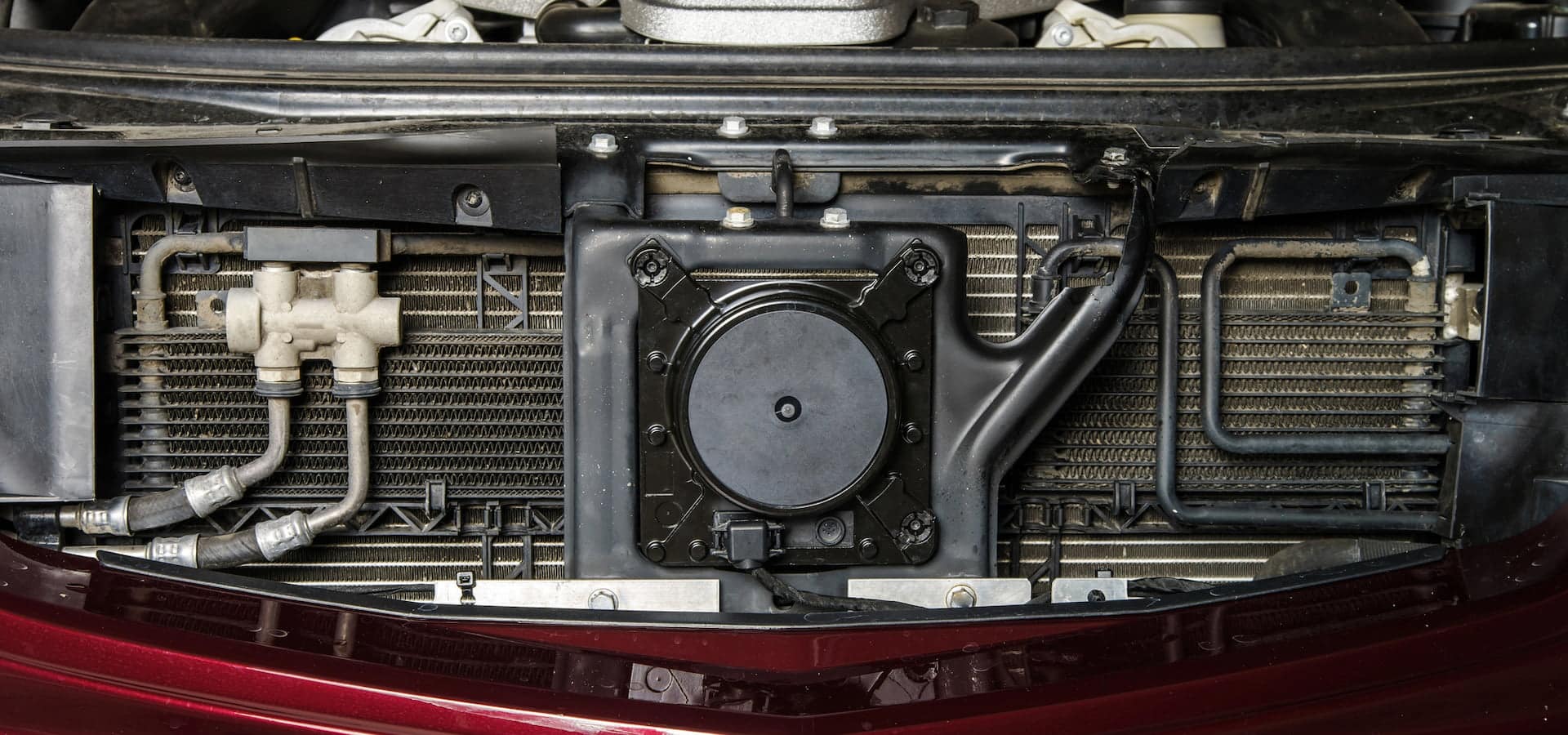
- The LSA/LT4 supercharged cars run a secondary intercooler cooling loop with its own pump and heat exchanger that generic shops routinely miss.
- Composite thermostat housings and water outlets on the 3.6L crack and weep – they need correct sealing and staged torque, not overtightening.
- Proper GDS2/Tech2 diagnostics catch electric pump faults and coolant temp sensor drift before they trigger a limp mode.
What you can expect from us:
- A pressure test and visual trace to find the actual leak source, not a guess
- OEM-correct coolant and a proper vacuum-fill bleed to eliminate air pockets
- Honest findings – we won't sell you a radiator when a hose clamp is the culprit
- Clear communication before any work moves forward
Symptoms – How to Know You Need This Service
Cooling problems on a Cadillac often start subtle, then escalate fast. Watch for these driver-side warning signs:
- The temperature gauge climbing higher than normal or swinging erratically – stop driving if it reaches the red zone to protect the heads and supercharger.
- A sweet, syrupy smell inside the cabin or steam from under the hood – a sign of coolant escaping, schedule right away.
- Green, orange, or pink puddles under the front of the car after parking.
- A low coolant warning or check engine light – often a coolant temp sensor or level issue on the 3.6L and LT4 cars.
- Weak or cold heat from the vents, hinting at trapped air or a failing water pump.
- Gurgling or bubbling sounds from behind the dash after shutdown.
- White exhaust smoke or coolant loss with no visible leak – stop driving and have it towed, as this can signal a head gasket or intercooler crossover issue.
Overheating on these engines does expensive damage quickly. If the gauge spikes or you smell coolant, pull over safely and let it cool before you continue.
Common Cooling System Repair Issues on Cadillac Vehicles
Cadillac cooling problems tend to cluster around a handful of well-documented weak points that vary by engine family and platform.
- Northstar V8 head gasket and coolant loss (1993-2011 DeVille, Seville, STS, DTS) – The aluminum block's torque-to-yield head bolts can pull the threads, letting combustion pressure seep into the coolant. Owners often chase mystery coolant loss and overheating before the real cause is found.
- Plastic water pump and thermostat housing failure on the LFX/LF3/LGW 3.6L and turbo V6 (2013-2019 ATS, CTS, XTS) – The composite housings crack and weep at the seams as they age and heat-cycle, leaving crusty coolant trails under the intake.
- Electric water pump concerns on the CT6 3.0TT (LGW) – Auxiliary and primary pump control faults can trigger coolant temperature codes without an obvious external leak.
- Radiator end-tank splits and clogged transmission coolers – Common on higher-mileage Escalade (GMT900/K2XX platform) 6.2L trucks that tow.
- Surge tank (coolant reservoir) cracking – The pressurized plastic tanks on CTS and ATS models develop hairline cracks at the cap neck.
- Radiator fan module and PWM control failures – A failed fan control leads to slow warm-idle overheating even when the rest of the system is healthy.
Which Cadillac Models We See for Cooling System Repair
We service cooling systems across the modern Cadillac lineup. Find your car below:
- CTS / CTS-V (2nd gen 2008–2014, 3rd gen 2014–2019) – the supercharged LSA and LT4 V-cars need attention to the secondary intercooler loop and its dedicated pump.
- ATS / ATS-V (2013–2019) – the twin-turbo 3.6L LF4 runs hot; radiator end tanks and turbo coolant lines are common repair points.
- CT4 / CT5 / CT5-V Blackwing (2020–present) – Alpha-platform cars with the 2.7L turbo and supercharged LT4; software-guided bleeds matter here.
- SRX (2010–2016) and XT4 / XT5 / XT6 – the 3.6L LGX and 2.0L turbo see thermostat housing and water pump wear.
- Escalade (GMT900, K2XX, and current T1XX 2021+) – 6.2L L86/L87 V8s with plastic-tank radiators and long coolant runs.
- XTS (2013–2019) – transverse 3.6L layouts where housing access differs from RWD cars.
The V-series supercharged cars differ most – their dual-loop cooling means twice the components to inspect and bleed correctly. If you're driving an older DeVille or STS and aren't sure we cover it, reach out and we'll tell you honestly whether it's a fit before you drive over.
Cadillac's cooling systems have grown more sophisticated with each platform, from the Northstar V8's aluminum-block architecture to the twin-turbocharged LF4/LGW V6 found in the ATS-V and CT6. That engineering pays off in performance – but it also means cooling repairs demand platform-specific knowledge. At Elevation Auto Repair, we handle these systems the way the dealership should, without the dealership markup.
Causes & Risks – What Happens if Ignored
Denver's altitude, temperature swings, and dry air are hard on cooling components. Heat cycling makes plastic brittle, and low-quality or mixed coolant accelerates internal corrosion in aluminum-heavy Cadillac engines.
A small weep rarely stays small. On a Northstar, a minor coolant loss ignored for months often escalates into a full head gasket job once thread damage sets in.
- A seeping plastic thermostat housing on a 3.6L can split without warning, dumping coolant and causing a roadside overheat.
- Chronic low coolant lets the LFX/LGW run hot, warping heads and cooking the head gasket – a repair many times the cost of a housing swap.
- Overheating an Escalade 6.2L while towing risks scored cylinders and a spun bearing.
- A failing water pump bearing that's left alone can seize and snap the accessory belt, killing power steering and charging at speed.
- Degraded coolant clogs the heater core and transmission cooler, adding an interior and drivetrain repair on top of the original fix.
Once temperatures climb into the red, driving even a few miles can turn a routine repair into an engine rebuild. Catching it early keeps the job simple and keeps you safely on the road.
Safety Impact – Why Cooling System Repair Matters
An overheating Cadillac is more than an inconvenience. A cooling failure can cascade into systems that keep you in control of the vehicle.
- Power steering and braking assist – A seized water pump or shredded belt can take out steering assist and the vacuum/charging systems that support braking feel.
- Stability and traction control – Engine overheat protection can force reduced-power limp mode, cutting throttle response in traffic and disabling normal ESC/traction behavior.
- Windshield defrost – A plugged heater core kills defog performance, a real visibility hazard in Colorado winters.
- Electrical faults – Coolant leaking near sensors and modules can trigger warning lights and unexpected shutdowns.
Stop driving now if the temperature gauge reaches the red, you see steam, or you smell hot coolant. Schedule soon if you notice sweet coolant odor, a slowly dropping reservoir, or occasional heat spikes at idle.
If a known coolant defect goes unaddressed and contributes to a crash, that neglected repair can complicate an insurance or liability claim – another reason to fix it while it's minor.
How Cadillac Cooling System Repair Actually Works
A Cadillac cooling system circulates pressurized coolant through the block, heads, radiator, and heater core, with a thermostat and electronically controlled fans managing temperature. Newer models add electric or map-controlled pumps and PWM fan modules that the ECM commands directly, so the system is far more integrated than a basic mechanical setup.
That integration changes how the work has to be done. Guessing at parts or skipping the software side leaves codes and cooling faults behind.
- OEM-correct coolant – Cadillac's Dex-Cool-based long-life formula must not be mixed with green coolant, which gels and clogs passages.
- Proper bleed procedure – Aluminum Northstar and 3.6L engines trap air; we vacuum-fill and follow the factory bleed sequence to prevent hot spots.
- Torque-to-yield fasteners – Head bolts and housing hardware follow specific torque-angle specs, replaced rather than reused where the OEM requires.
-
Cadillac cooling systems have evolved from the Northstar V8's aluminum block, which demanded meticulous coolant chemistry to protect head gasket integrity, to today's turbocharged 2.0T and 3.6L LGX platforms that route coolant through intercoolers, turbo housings, and electric auxiliary pumps. Each generation brings its own failure signatures – and knowing them is what separates a targeted fix from parts-cannon guesswork.
How We Diagnose Cooling System Repair Issues on Cadillac
Overheating on a Cadillac rarely has one obvious cause. We work through it methodically before recommending anything.
- GM diagnostic scan: We connect a factory-capable scan tool (GDS2/Tech2 level) to pull ECM coolant temperature data, monitor the electric coolant pump commands on turbo models, and read stored codes like P0217 (engine overheat) or P00B7 (low coolant flow).
- Cooling system pressure test: We pressurize the system to spec to expose leaks at the plastic radiator end tanks, the crossover pipes on the 3.6L V6, or the notoriously brittle water pump housings on the LF3/LF4 twin-turbo engines.
- Visual inspection: We check for the pink Dex-Cool residue that signals weeping seals, inspect the surge tank for cracks, and look over hoses and the thermostat housing.
- Thermal and flow check: Using an infrared thermometer, we map temperature across the radiator to spot clogged cores and confirm thermostat opening.
- Road test: We verify fan operation, watch live temperature under load, and confirm heater output.
From there, you get a clear written repair plan and a quote that names the actual parts involved – no vague "it's the cooling system" hand-waving.
Cooling System Repair on Cadillac: Repair vs. Replacement
Not every cooling complaint means a big bill. The right call depends on what's actually worn.
- Genuine repair: A stuck thermostat, a single leaking hose, a failed coolant temperature sensor, or a burped air pocket after prior service. These are clean, isolated fixes on an otherwise healthy system.
- Partial replacement: When one component fails but the assembly is sound – for example, replacing a leaking water pump on a 3.6L while keeping the radiator, or swapping a cracked surge tank without touching the radiator core.
- Full replacement: When wear cascades. A radiator with degraded plastic end tanks often arrives alongside a tired water pump and hardened hoses. On Northstar platforms, a warped head sealing surface changes the conversation entirely. When repair cost climbs toward replacement cost, or safety is on the line, replacement wins.
We walk you through which bucket your Cadillac falls into, show you the failed parts, and lay out the options so you decide – rather than being pushed toward the priciest job.
How to Make Your Cadillac Cooling System Repair Last Longer
Good habits keep a fresh cooling repair holding for the long haul.
- Driving habits: Let turbocharged LF3/LF4 engines idle briefly after hard runs so the electric auxiliary pump can carry heat away from the turbos. Avoid sustained high-load towing in extreme heat without confirming coolant is topped and fresh.
- Owner checks you can safely do: Peek at the surge tank level when the engine is cold, watch for pink residue under the front of the car, and listen for the electric fans cycling. React quickly to any coolant temperature warning or message on the driver information center.
- Brand-specific care: Use GM-spec Dex-Cool – mixing coolant types accelerates seal and gasket breakdown on aluminum Cadillac engines. Keep ECM and body software current, since GM has issued updates affecting fan and pump control strategies. Follow Cadillac's published coolant service intervals rather than stretching them.
Topping off cold coolant is fine for owners. Pressure testing, bleeding the system, and anything involving the thermostat housing or water pump should stay with the shop – trapped air pockets and improper fills are a common cause of repeat overheating.
What to Expect When You Bring Your Cadillac In
Cadillac cooling systems have their own personality – from the Northstar V8's history of head gasket and coolant seepage issues to the plastic coolant crossovers and electric water pumps on the 3.6L LGX and 2.0T LSY engines in the CT4, CT5, and XT-series. Here's how a visit flows:
- Drop-off or appointment – Schedule ahead or use after-hours drop-off. Leave the vehicle with a brief description of the symptoms you've noticed, whether that's overheating, coolant smell, or low-coolant warnings.
- Initial inspection – We pressure-test the system, inspect the radiator, water pump, thermostat housing, and hoses, and pull codes with GM-compatible diagnostics to catch faults like P0128 or coolant temperature sensor irregularities.
- Written estimate – You get a clear breakdown of what's failing and what's recommended before any work begins. No surprise add-ons.
- Updates during the work – We call or text with findings and get your approval before moving forward. Loaner and shuttle options help you stay on the move, and personal items are safe to leave in the cabin.
- Pickup walkthrough – We show you the replaced parts, explain what was done, and answer questions.
Every cooling repair ends with a road test and a scan-tool re-check to confirm temps hold steady and no fault codes return. If something feels off afterward, bring it back and we'll re-inspect it.
Why Choose Elevation Auto Repair for Cadillac Cooling System Repair
Cooling work on a Cadillac is not a one-size-fits-all radiator swap. Northstar platforms need proper head bolt thread repair when studs pull, and modern 3.6L and turbo engines rely on precise bleed procedures and correct DEX-COOL fill to avoid air pockets that mimic a bad thermostat.
What sets our work apart:
- Brand-specific knowledge – We track Cadillac TSBs and software updates that affect cooling fan operation, temperature sensor calibration, and electric water pump control.
- Correct fluids and specs – DEX-COOL compatible coolant, factory torque values on housings and manifolds, and proper vacuum-fill bleeding.
- End-to-end ownership – The same shop diagnoses the fault, performs the repair, and verifies the fix with a road test and scan check.
You get dealership-level Cadillac expertise without the dealership runaround – honest diagnostics, clear communication, and repairs built to keep your temperature gauge exactly where it belongs.
Our Cadillac Services
- Air Conditioning AC Repair
- Battery Repair Replacement
- Brake Repair & Brake Fluid Change
- Check Engine Light Diagnostics
- Clutch Repair & Replacement
- Coolant Leak Repair
- Drive Shaft Repair
- Engine Repair
- Exhaust & Catalytic Converter Repair
- Head Gasket Repair & Replacement
- Oil Change
- Oil Leak Repair
- Scheduled Service Maintenance
- Steering Repair
- Suspension Repair
- Cambelt Timing Belt Replacement
- Transmission Repair
- Tune Up
- Wheel Alignment