Cadillac Air Conditioning AC Repair at Elevation Auto Repair
Cadillac climate systems are built around dual-zone and tri-zone automatic controls, HVAC actuator networks, and electronic compressors that talk to the vehicle over the data bus. A generic recharge misses the point on these cars – the fault usually lives in a sensor, actuator, or control module, not just the refrigerant charge.
Getting Cadillac A/C right takes brand-specific know-how. Many GM Epsilon and Omega platform Cadillacs use variable-displacement compressors with control valves that fail intermittently, and the electric A/C compressors on hybrid and later models require dedicated POE oil and high-voltage safety procedures. We use factory-level scan tools to command actuators, read HVAC data, and pull temperature-door position codes rather than guessing.
Correct refrigerant type, precise oil charge, and evacuation to proper vacuum matter on these systems – overfilling or using the wrong oil damages the compressor quickly. Here's what you can expect:
- Electronic system scan of HVAC control modules and actuator data, not just a gauge reading
- Leak detection with dye or electronic sniffing before any refrigerant goes in
- Correct OEM refrigerant and compressor oil specification for your exact model
- Straight answers on what's failing and what can wait
Symptoms – How to Know You Need This Service
Cadillac A/C problems often show up gradually, then all at once. Watch for these signs:
- Air blows warm on one side while cold on the other – a classic blend-door actuator or dual-zone fault
- You may notice a clicking or knocking behind the dash, often a failing HVAC actuator gear
- Weak airflow even on high fan, pointing to a blower motor or resistor/module issue
- A musty or sweet smell from the vents, suggesting evaporator mold or a coolant heater-core leak
- The compressor short-cycles or the system loses cold after a few minutes – common with variable-displacement control valve failure
- Automatic climate control ignores your temperature setting or resets on its own
- Hissing or bubbling sounds after shutdown, a sign of a refrigerant leak
A sweet coolant smell with fog from the vents means schedule soon – a leaking heater core can foul the cabin and lose engine coolant. Most A/C faults let you keep driving, but if you notice coolant loss or overheating tied to HVAC symptoms, have it looked at right away.
Common Air Conditioning AC Repair Issues on Cadillac Vehicles
Cadillac A/C complaints tend to follow platform patterns rather than random luck. Here are the failure modes we handle most often:
- Condenser leaks on 2010-2016 SRX and XTS – forward-mounted condensers pick up road debris and stone damage, developing slow refrigerant leaks at the tube-to-fin joints that show up as gradual cooling loss.
- A/C compressor clutch and control valve failures on CTS/ATS (Sigma and Alpha platforms) – the variable-displacement compressor's control valve sticks, causing weak cooling even with a full charge.
- HVAC actuator "clicking" and stuck blend doors on Escalade (GMT900/K2XX) – the small electric actuators strip their plastic gears, leaving one zone stuck hot or cold and often throwing a tick or knock behind the dash.
- Evaporator core leaks on higher-mileage DTS/STS – the buried evaporator seeps refrigerant and oil, requiring dash disassembly to access.
- Rear A/C line and rear evaporator leaks on Escalade/ESV – long refrigerant runs to the rear unit corrode and leak at fittings under the body.
- Cabin air filter neglect and blower resistor/module faults – restricted airflow and dead blower speeds across CTS, XT5, and Escalade caused by clogged filters and failing blower control modules.
Which Cadillac Models We See for Air Conditioning AC Repair
We service the full modern Cadillac lineup and can identify your platform quickly. Common cars through our bay:
- CTS / CTS-V (2003–2019) – Sigma and Alpha platforms; blend-door actuators and compressor control valves are frequent culprits, with LSA/LT4 supercharged V models needing careful underhood service
- ATS / ATS-V (2013–2019) – Alpha platform; tight engine bay makes condenser and compressor access model-specific
- CT4 / CT5 (2020–present) – newer Alpha variants with updated HVAC module logic requiring current scan-tool software
- Escalade (2007–2020, GMT900/K2XX) – rear-zone A/C lines and rear evaporator issues are common; the 2021+ platform uses updated controls
- SRX / XT4 / XT5 / XT6 – crossover HVAC actuator and blower module faults
- ELR and hybrid models – electric A/C compressors with high-voltage handling and POE oil requirements
- STS / DTS / XTS (Epsilon and rear-drive sedans) – older automatic climate control and actuator repairs
V-Series cars get the same diagnostic depth as the standard trims, with extra attention to supercharged cooling loads. If you have a pre-2000 classic Cadillac with an R-12 system, let us know ahead of time so we can confirm the right approach before you come in.
Cadillac's climate systems blend GM's global HVAC hardware with brand-specific electronics – automatic dual-zone and tri-zone controls, rear climate on Escalade, and the electronic HVAC control modules that talk to the vehicle over GMLAN and CAN. That integration is exactly why an A/C problem on a CTS, XT5, or Escalade often needs more than a can of refrigerant. Let's break down what we see and how we fix it right.
Causes & Risks – What Happens if Ignored
Most Cadillac A/C failures trace back to a handful of causes: Denver's dry, debris-heavy roads that pepper condensers, altitude and heat cycling that stresses seals, plastic actuator gears that wear with age, and refrigerant oil that slowly migrates through aging O-rings. Small leaks almost never stay small.
Waiting turns an inexpensive fix into a layered repair. A minor refrigerant leak that could be sealed with an O-ring often ends with a burned-out compressor once the oil charge escapes and lubrication drops.
- Ignoring a slow condenser leak for a season typically leads to low charge, compressor starvation, and metal debris circulating through the whole system.
- A sticking actuator left alone strips completely, locking a blend door and forcing full dash teardown.
- Debris-contaminated systems after a compressor failure require flushing lines, condenser, and replacing the accumulator/orifice – a far larger job.
- Fogged or foul-smelling vents signal a leaking heater core or moldy evaporator that worsens with time.
The safety side matters too – a defroster that can't clear the windshield in cold, wet Colorado mornings becomes a visibility hazard fast.
Safety Impact – Why Air Conditioning AC Repair Matters
Climate faults on a Cadillac reach beyond comfort. The same system feeds the defrost and demist functions tied to safe visibility, and refrigerant loss can force the cooling fans and compressor into modes that raise underhood temperatures.
- Stop driving soon: windshield won't defog or defrost, strong refrigerant/chemical smell in the cabin, or a burning odor from the blower area.
- Schedule promptly: weak cooling on one side, intermittent blower speeds, clicking behind the dash, or gradual loss of cold air.
- Monitor: mild musty smell at startup that clears once airflow runs.
A refrigerant leak that lets oil and moisture into the system can also affect engine cooling behavior on shared radiator/condenser stacks, and a distracted driver fighting a fogged windshield is a real-world crash risk. If a known climate defect goes unaddressed before an incident, that neglect can complicate an insurance or liability claim. We prioritize the visibility and heat-related items first, then restore full cooling.
How Cadillac Air Conditioning AC Repair Actually Works
Your Cadillac's A/C is a sealed loop: the compressor pressurizes refrigerant, the condenser sheds heat up front, an expansion device drops the pressure, and the evaporator behind the dash absorbs cabin heat while blend-door actuators mix in warm air for exact temperature control. What sets Cadillac apart is how heavily the electronics manage all of it.
The HVAC control module commands actuators, blower modules, and the variable compressor over the vehicle network, so correct repair means talking to those modules – not just adding gas.
- Refrigerant type matters – newer Cadillac platforms use R-1234yf, which needs dedicated equipment and can't be mixed with older R-134a service.
- Actuator recalibration – after replacing a blend-door actuator, the module must relearn door travel, a step that requires GM-compatible scan software.
- Precise charge by weight – variable-displacement compressors are sensitive to over/undercharge, so we evacuate and recharge to OEM spec rather than by gauge feel.
- Leak verification – electronic detection and dye tracing confirm the act
Cadillac climate systems have grown far more integrated than a simple compressor and blower. Modern platforms like the CT4, CT5, XT5, XT6, and Escalade run automatic dual and tri-zone climate control managed through the HVAC control module and body control module, which means an A/C complaint is often a networked problem rather than a single failed part. That's why guessing costs Cadillac owners money – accurate diagnosis starts with reading what the car already knows.
How We Diagnose Air Conditioning AC Repair Issues on Cadillac
Cadillac's electronic climate control stores fault data that a generic gauge set will never show. We start with the electronics, then confirm with hands-on measurement.
- Full scan with GM-capable tooling – We pull HVAC and BCM codes using GDS2/Tech2-style diagnostics to catch blend-door actuator faults, refrigerant pressure sensor data, and communication errors on the GMLAN bus.
- Live data review – We watch commanded vs. actual blend-door positions, evaporator temperature, and compressor engagement to spot a variable-displacement compressor that isn't stroking.
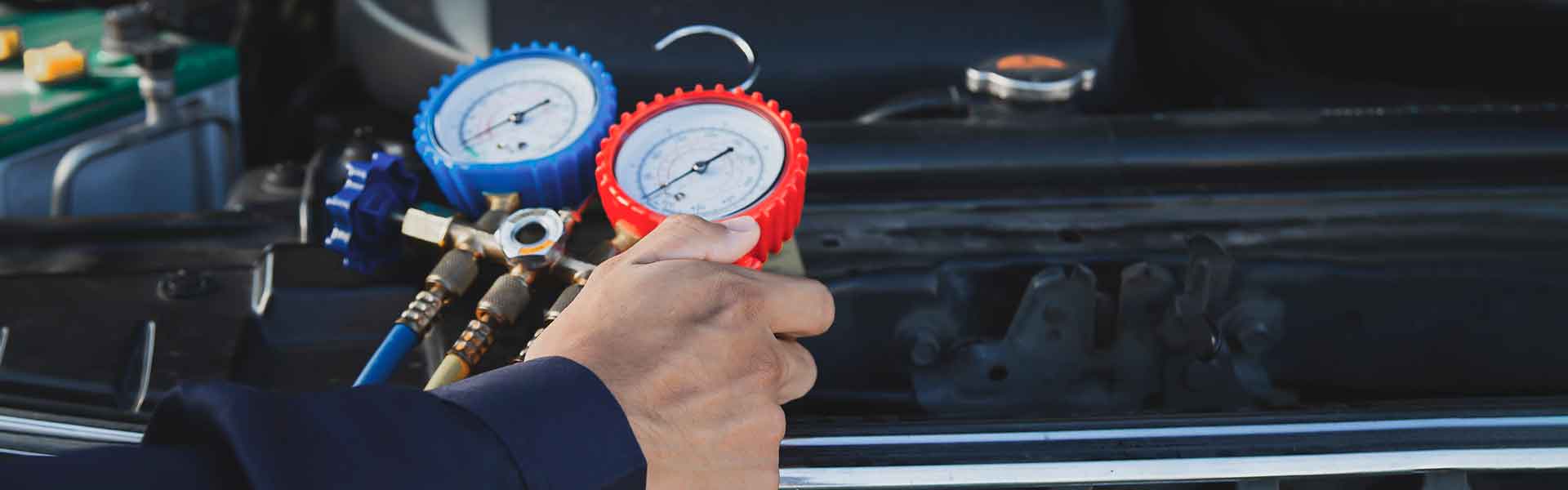
- System pressure and performance test – High- and low-side readings tell us whether the issue is a charge problem, an expansion valve restriction, or a failing condenser.
- Visual and dye inspection – We check the condenser (vulnerable to road debris on Escalade and XT models), lines, and the compressor clutch for oil residue indicating a leak.
- Vent temperature and road test – We measure actual outlet temperatures across zones and drive the vehicle so intermittent clicking actuators or airflow drops reveal themselves.
Once we know the real cause, you get a plain-language explanation and a written repair plan with the parts and labor spelled out – no surprise add-ons.
Air Conditioning AC Repair on Cadillac: Repair vs. Replacement
Not every warm-air complaint means a new compressor. We match the fix to the actual failure.
- Genuine repair: Recharging a system after a minor seal service, replacing a single blend-door actuator (a frequent chatter/temperature-split cause on XT5 and CTS models), or clearing a stuck pressure sensor.
- Partial replacement: Swapping a leaking condenser or a failed expansion valve while keeping a healthy compressor, or replacing an evaporator temperature sensor without touching the case.
- Full replacement: When a variable-displacement compressor grenades and sends metal debris through the system, the compressor, condenser, orifice/expansion valve, and receiver-drier all need replacement to prevent repeat failure. Cascading contamination makes piecemeal repair a false economy here.
Escalade and other large-platform Cadillacs with rear climate units add extra evaporators and lines, so we confirm which zone is actually failing before recommending parts. We lay out repair, partial, and full options side by side with the reasoning behind each, then let you decide – we never default to the biggest invoice.
How to Make Your Cadillac Air Conditioning AC Repair Last Longer
A little routine attention keeps a Cadillac climate system healthy well past the repair.
- Run the A/C year-round – Operating it briefly in winter keeps compressor seals lubricated and prevents them from drying out and leaking refrigerant.
- Use MAX A/C sparingly and ease the load – Cracking windows to vent heat before cooling reduces strain on the compressor during Denver's hot, high-altitude summers.
- Replace the cabin air filter on schedule – A clogged filter chokes airflow and overworks the blower motor. This is a safe owner DIY on most CT and XT models.
- Listen and watch – New clicking behind the dash (actuators), weak airflow, or a musty smell means it's time to have it checked before it worsens.
- Keep the condenser area clear – Rinse leaves and road grime from the front of the radiator area where the condenser sits.
Insist on the correct refrigerant type and OEM-grade components – many newer Cadillacs use R-1234yf, and mixing refrigerants damages the system. Keep climate and BCM software current at service intervals, since updates address actuator calibration quirks. Leave refrigerant handling, compressor work, and evaporator jobs to us – those are sealed, pressurized, safety-relevant systems best handled with proper recovery equipment.
What to Expect When You Bring Your Cadillac In
Cadillac climate systems have grown complex – dual-zone and tri-zone HVAC on platforms like the XT5, XT6, and Escalade rely on the HVAC control module talking to body and powertrain modules, so a weak vent output isn't always a refrigerant problem. Our visit flow is built to catch that early.
- Drop-off or appointment – Tell us the symptoms: warm air on one side, intermittent cooling, or a compressor that won't engage. Leave personal items in the cabin only if needed; we secure the vehicle either way.
- Initial inspection – We pull HVAC and body codes with a scan tool, check static and running pressures, verify compressor clutch or variable-displacement command, and inspect the condenser, lines, and cabin air filter.
- Written estimate – You get a clear breakdown of the actual fault before any work starts – no guessing, no piling on parts.
- Communication during the work – We reach out with findings and get your approval before moving forward. Shuttle and loaner options are available, and after-hours pickup can be arranged.
- Pickup walkthrough – We show you what was replaced and explain what we found.
Every job ends with a road test and scan-tool re-check to confirm vent temperatures, actuator movement, and system pressures hold. If anything feels off afterward, bring it back – we stand behind the repair and re-verify.
Why Choose Elevation Auto Repair for Cadillac Air Conditioning AC Repair
Cadillac A/C faults tend to hide behind their electronic controls. We know the recurring patterns – failing blend-door and mode actuators that click or stick, HVAC control head faults, and evaporator or condenser leaks common on GMT-platform Escalades and the Lambda-based crossovers.
- Brand-specific diagnosis – We reference applicable Cadillac TSBs and check for HVAC software updates instead of throwing a compressor at the problem.
- Correct refrigerant handling – Proper recovery, evacuation, and charge to the factory spec, including the R-1234yf systems on newer models.
- Root-cause focus – Variable-displacement compressor commands, control valve faults, and actuator calibration are verified, not assumed.
We own the work end to end – diagnosis, repair, and post-repair verification all happen under one roof with technicians experienced across every major Cadillac system. That means honest findings, no unnecessary parts, and a climate system that actually cools the way it should before you drive away.
Our Cadillac Services
- Battery Repair Replacement
- Brake Repair & Brake Fluid Change
- Check Engine Light Diagnostics
- Clutch Repair & Replacement
- Coolant Leak Repair
- Cooling System Repair
- Drive Shaft Repair
- Engine Repair
- Exhaust & Catalytic Converter Repair
- Head Gasket Repair & Replacement
- Oil Change
- Oil Leak Repair
- Scheduled Service Maintenance
- Steering Repair
- Suspension Repair
- Cambelt Timing Belt Replacement
- Transmission Repair
- Tune Up
- Wheel Alignment