Nissan Exhaust & Catalytic Converter Repair at Elevation Auto Repair
A customer rolled into our Denver shop last winter convinced his 2013 Altima needed a whole new exhaust. The reality? A single cracked flex pipe near the front flange and a lazy downstream oxygen sensor throwing a P0420. That kind of accurate diagnosis is where a Nissan-focused approach pays off.
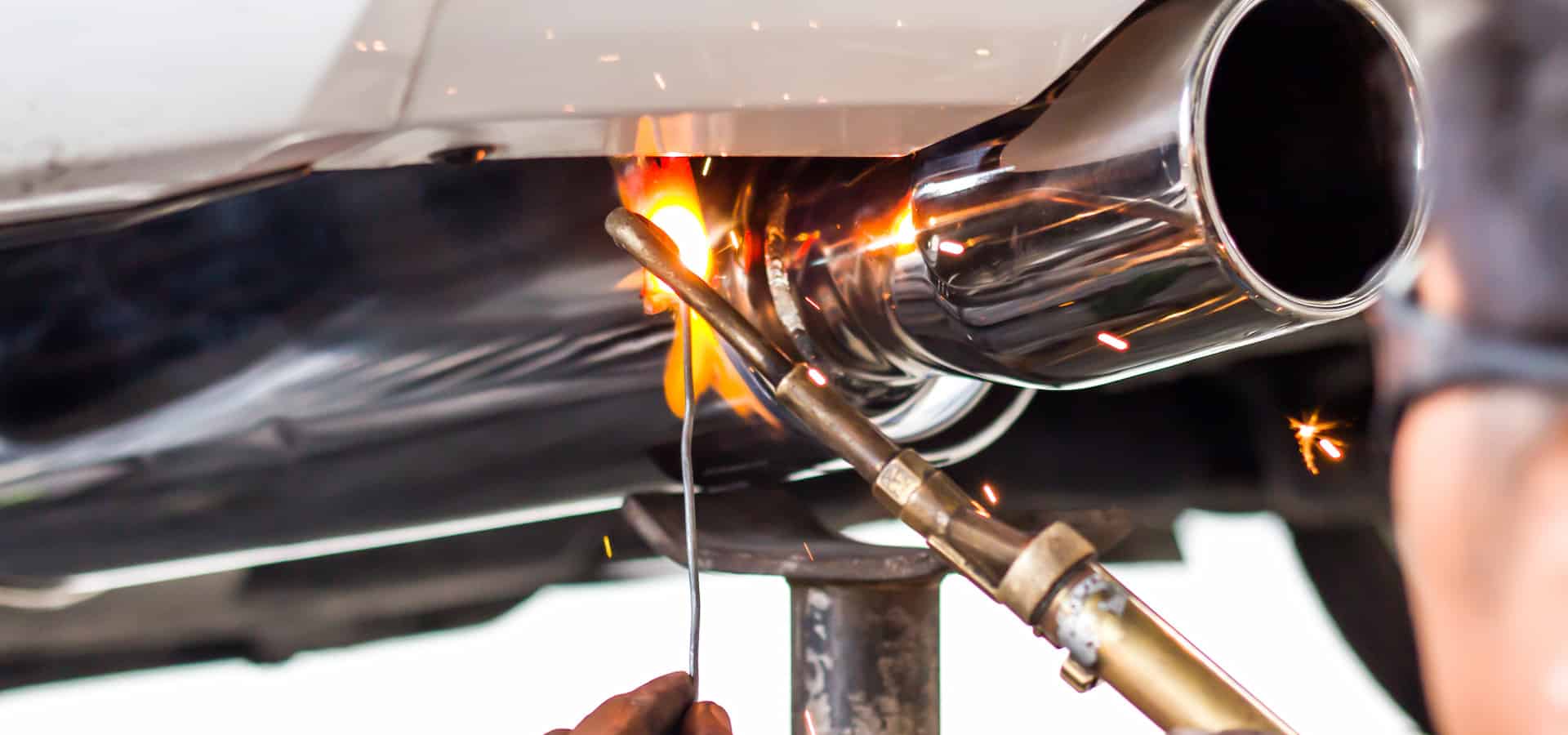
Exhaust and catalytic converter work covers everything from welded flex joints and manifold gaskets to full converter replacement. Nissan platforms have their own quirks that generic shops miss. On the VQ35DE and VQ37VHR engines, the pre-cats are integrated into the exhaust manifolds, so a "check engine light" for catalyst efficiency often means a manifold assembly, not a bolt-on cat. Many QR25DE Altima and Sentra owners also chase phantom P0420 codes that trace back to fuel trim and sensor calibration rather than a failed converter.
We read live data with factory-level scan tools, watch upstream and downstream O2 sensor switching, and torque flanges and sensor bungs to Nissan spec so nothing leaks or seizes later.
- Honest diagnosis that separates a bad sensor from a truly failed converter
- OEM-grade or CARB-compliant converters that keep you legal in Colorado
- Proper flange, gasket, and O2 sensor torque to prevent repeat leaks
- Clear communication before any parts go on the car
Symptoms – How to Know You Need This Service
Exhaust problems rarely stay quiet. Here is what Nissan drivers tend to notice before bringing the car in:
- A check engine light with a P0420 or P0430 catalyst efficiency code – schedule soon so we can confirm cat versus sensor
- A deep drone or ticking that grows louder under acceleration, often from a cracked flex pipe or manifold
- A rotten-egg or sulfur smell, a classic sign of a failing catalytic converter
- Sluggish acceleration or reduced power from a clogged, melted-substrate converter
- Rattling underneath at idle – the ceramic honeycomb inside the cat has broken loose
- Vibration through the floor or seat when the exhaust hangers or flanges have failed
- Exhaust fumes entering the cabin – stop driving and call us, since carbon monoxide exposure is a real safety risk
Loud leaks near the engine and any cabin fumes mean immediate attention. A steady catalyst code with no fumes can usually wait until we get you scheduled.
Common Exhaust & Catalytic Converter Repair Issues on Nissan Vehicles
Nissan exhaust systems have a handful of predictable weak points that show up across specific platforms and model years. Knowing where to look saves time and prevents guesswork.
- Rattling heat shields on Altima and Maxima (2007-2018) – The spot-welded shields corrode and vibrate against the exhaust, mimicking a failing converter and sending owners chasing the wrong repair.
- Catalytic converter efficiency codes (P0420/P0430) on VQ35/VQ37 engines – The 350Z, 370Z, Maxima, and Murano V6s commonly trip these codes as the honeycomb substrate degrades with age and heat cycling.
- Manifold-integrated pre-cats cracking on Sentra and Versa (HR-series 4-cylinders) – Close-coupled converters run hot and crack internally, dumping substrate that can migrate back into the engine.
- Flex pipe failures on front-wheel-drive Nissans – The braided flex joint downstream of the manifold splits from engine rock and road salt, common on higher-mileage Rogue and Altima units around Denver's winters.
- Rusted exhaust hangers and clamps on Frontier and Xterra (2005-2015) – Trucks that see snow and mountain roads lose hangers, letting the system sag and stress joints.
- Oxygen and air-fuel ratio sensor faults – Aging upstream sensors on Nissan V6s skew fueling and prematurely damage the converter if left unaddressed.
Which Nissan Models We See for Exhaust & Catalytic Converter Repair
We handle exhaust and converter work across most modern Nissan and select Infiniti platforms. Find your vehicle below:
- Altima (L31, L32, L33, L34) – QR25DE and VQ35 models, frequent P0420 and pre-cat manifold concerns
- Sentra (B16, B17, B18) – MR20DE and MRA8DE, common downstream sensor and flex pipe issues
- Maxima (A35, A36) – VQ35DE with integrated manifold pre-cats
- Rogue (T32, T33) – QR25DE and hybrid variants, mid-pipe and cat-back repairs
- Pathfinder / Murano (R52, Z52) – VQ35 exhaust manifold and converter service
- Frontier / Titan (D40, D41, A61) – VQ40DE and 5.6L VK56, heavier truck exhaust and Y-pipe work
- 370Z / G37 (Z34, VQ37VHR) – performance and OEM cat-back options, careful with the tuned exhaust variants
- Versa and Kicks – HR16DE and HR16, straightforward converter and muffler repairs
We also see the older 350Z (Z33) and early Altima platforms. Fully electric Leaf models have no exhaust system, so that work does not apply there. If your Nissan is not listed, reach out – we likely still service it and can confirm parts availability before you commit.
A Denver Frontier owner rolled in last winter with a rattle that sounded like a can of bolts under the truck at idle. He'd been told it was "just a heat shield" by another shop, but a proper inspection found a collapsing catalytic converter substrate ready to choke the exhaust. That's the difference careful diagnosis makes, and it's the kind of Nissan-specific work we handle every day.
Causes & Risks – What Happens if Ignored
Most Nissan exhaust problems trace back to heat cycling, road salt, engine oil or coolant contamination, and simple age. Denver's freeze-thaw climate and mountain grades accelerate corrosion and stress flex joints faster than milder regions.
A converter rarely fails on its own – it's usually poisoned by an upstream issue like a rich-running condition or an oil leak. Ignore the root cause, and you replace the same part twice.
- A minor P0420 code left alone often means substrate breakdown that spreads to a fully clogged converter, choking power and fuel economy.
- A cracked flex pipe grows into a full exhaust leak that skews sensor readings and triggers additional running problems.
- Loose or broken hangers let the system swing, cracking the converter can or manifold flange and turning a clamp job into a major replacement.
- A leaking upstream O2 sensor circuit can push extra fuel into the converter, overheating it until the honeycomb melts.
- Substrate that breaks loose can migrate and restrict flow badly enough to leave you stranded on a grade.
What starts as a rattle or a check engine light becomes a safety and cost problem when hot exhaust gases and fumes enter the cabin. We diagnose the cause first, so the fix actually lasts.
Safety Impact – Why Exhaust & Catalytic Converter Repair Matters
A failing exhaust system isn't just noise – it affects how safely your Nissan runs. Exhaust leaks can introduce carbon monoxide into the cabin, and a clogged converter can rob the power you need to merge or climb a grade safely.
Sensor faults tied to exhaust problems also feed the engine control module, which can affect throttle response and how the vehicle behaves under load. A dragging, disconnected pipe can contact the road or a tire and create a sudden hazard.
- Stop driving now: exhaust fumes or a rotten-egg smell inside the cabin, loud roaring with sudden power loss, or a pipe dragging on the ground.
- Schedule soon: a steady check engine light with a P0420/P0430 code, a light rattle at idle, or a mild exhaust drone that's slowly getting louder.
A known exhaust defect left unrepaired can also complicate emissions compliance and liability if it contributes to an incident. Addressing it promptly keeps you legal, comfortable, and safe on Denver roads.
How Nissan Exhaust & Catalytic Converter Repair Actually Works
Your Nissan's exhaust routes gases from the manifold through one or more catalytic converters, which use a coated honeycomb to convert harmful emissions into safer compounds before they exit the tailpipe. Oxygen and air-fuel ratio sensors before and after each converter tell the ECM whether it's working, which is exactly what a P0420 or P0430 code is reporting.
Nissan's implementation adds a few wrinkles that generic exhaust work misses, so the repair has to respect factory specs and software.
- Close-coupled and manifold-integrated converters on many 4-cylinder Nissans require specific removal sequences and gasket sets rather than a simple bolt-on swap.
- Air-fuel ratio sensors on VQ-series V6s need correct torque and connector routing to read accurately after replacement.
- OEM-grade converters matched to the platform prevent the downstream sensor from re-flagging an efficiency code.
- Factory-level scan tools confirm readiness monitors have completed so the repair actually clears and passes emissions.</li
A customer brought in a 2013 Altima with a persistent rattle under the floorpan and a P0420 code that kept coming back after a parts-store converter was installed elsewhere. Within an afternoon we traced it to a loose heat shield and an aftermarket cat that never met Nissan's oxygen storage threshold. That story repeats often on Nissan platforms, and it's exactly the kind of work we sort out with real diagnostics rather than guesswork.
How We Diagnose Exhaust & Catalytic Converter Repair Issues on Nissan
Exhaust complaints on Nissans usually show up as a check engine light, a droning noise, or a sulfur smell. We start with data, not assumptions.
- Scan and pull codes: Using a Nissan-capable scan tool with CONSULT-style access, we read stored and pending codes – P0420/P0430 catalyst efficiency, P0300-series misfires, and O2/air-fuel sensor faults common on VQ35DE and QR25DE engines.
- Live data review: We watch upstream and downstream oxygen sensor waveforms and fuel trims. A lazy rear sensor mirroring the front points to a spent converter, not just a sensor.
- Visual inspection: On a lift we check flex pipes, weld seams, the Y-pipe on V6 Maximas and Pathfinders, hangers, and heat shields for the rattle Altimas are known for.
- Physical measurement: Backpressure testing and a temperature check across the converter body confirm whether the substrate is clogged or broken loose.
- Road test: We verify the noise or smell under load and confirm the code doesn't reset after a drive cycle.
From there you get a written repair plan and a clear quote – what's actually failing, what's still good, and why.
Exhaust & Catalytic Converter Repair on Nissan: Repair vs. Replacement
Not every exhaust problem means a new converter. We separate serviceable repairs from parts that are genuinely done.
- Genuine repair: Loose or rattling heat shields, a single cracked hanger, or a leaking gasket at the manifold flange. These are welds, clamps, and hardware – no converter needed.
- Partial replacement: When a single section rots out – such as a mid-pipe or resonator on an older Sentra or Frontier – we replace that segment and preserve the good downstream muffler and tips.
- Full replacement: A converter that fails efficiency testing, has a collapsed substrate, or was damaged by an upstream misfire or oil-fouling issue. On VQ-powered Maximas and Muranos with integrated exhaust manifold converters, a compromised unit often warrants a proper OEM-grade replacement to clear P0420 for good.
An underlying misfire or rich condition will kill a new converter fast, so we address the cause first. We lay out each option with its trade-offs and let you decide – no pushing the priciest route.
How to Make Your Nissan Exhaust & Catalytic Converter Repair Last Longer
Good habits protect the repair and the converter substrate for years.
Driving habits that help
- Let the engine reach operating temperature before hard acceleration, especially in cold Denver winters when condensation collects in the exhaust.
- Avoid short trips only – the system needs highway heat to burn off moisture that rusts pipes and hangers.
- Don't ignore misfires or a rough idle, since raw fuel overheats and destroys the catalyst.
Owner maintenance you can do
- Glance under the vehicle for rust streaks, hanging pipes, or scorched heat shields.
- Listen for new ticking, droning, or rattling and note when it happens.
- Address a lit check engine light promptly rather than resetting it.
Brand-specific care
- Use OEM-spec oxygen and air-fuel sensors – cheap universal sensors trigger false catalyst codes on Nissans.
- Keep ECM software current and follow Nissan's service intervals for spark plugs and fuel system upkeep.
Visual checks and listening are safe DIY. Leave welding, converter work, and sensor diagnostics to us – exhaust systems run hot and carry safety-critical emissions components.
A customer once rolled into our Denver shop with a 2013 Altima (L33) that droned like a lawnmower at highway speed and threw a P0420 code. The flex pipe behind the front cat had cracked at the weld – a familiar sight on the QR25DE Altimas. That kind of specific fix is what we do, and here's how the visit unfolds.
What to Expect When You Bring Your Nissan In
From the first phone call to the final road test, we keep the process straightforward and the communication clear.
- Drop-off or appointment: Schedule ahead or leave it with us. Grab your personal items from the cabin – we'll handle the rest. Shuttle service and loaner arrangements are available so you're not stranded.
- Initial inspection: We lift the vehicle and inspect the full exhaust path – manifold, flex pipe, front and rear catalytic converters, O2 and air-fuel ratio sensors, hangers, and gaskets. We pull codes with a factory-level scan tool.
- Written estimate: You get a clear breakdown of what's failing and why, whether it's a rusted mid-pipe or a genuine converter failure versus a lazy sensor. No unnecessary parts.
- Repair updates: We call or text before we proceed and again if anything new surfaces during the work.
- Pickup walkthrough: We show you the replaced parts and explain what we did. After-hours pickup can be arranged when your schedule is tight.
Before you leave, we road test the vehicle and re-scan to confirm the code cleared and fuel trims settled. If something still feels or sounds off, bring it back and we'll recheck it.
Why Choose Elevation Auto Repair for Nissan Exhaust & Catalytic Converter Repair
We don't guess at Nissan exhaust problems – we diagnose them. A P0420 doesn't automatically mean a new converter, and we've saved plenty of owners from replacing a good cat when the real culprit was a downstream O2 sensor or a small leak skewing readings.
- Platform-specific knowledge: QR25DE Altima and Sentra flex-pipe cracking, VQ35 Maxima and Pathfinder rear cat efficiency codes, and rust-driven mid-pipe failures common on Colorado winter-driven vehicles.
- TSB and software awareness: We check for applicable Nissan bulletins and ECM calibration updates that affect catalyst monitoring before condemning hardware.
- End-to-end ownership: The same shop diagnoses, sources correct-fit converters and sensors, performs the repair, and verifies the fix with a post-repair drive cycle.
You get dealership-level Nissan expertise without the dealership runaround – honest diagnostics, quality parts, and repairs built to keep your emissions system passing and your vehicle quiet.
Our Nissan Services
- Air Conditioning AC Repair
- Battery Repair Replacement
- Brake Repair & Brake Fluid Change
- Check Engine Light Diagnostics
- Clutch Repair & Replacement
- Coolant Leak Repair
- Cooling System Repair
- Drive Shaft Repair
- Engine Repair
- Head Gasket Repair & Replacement
- Oil Change
- Oil Leak Repair
- Scheduled Service Maintenance
- Steering Repair
- Suspension Repair
- Cambelt Timing Belt Replacement
- Transmission Repair
- Tune Up
- Wheel Alignment