Nissan Drive Shaft Repair at Elevation Auto Repair
A Denver Maxima owner rolled in describing a rhythmic clunk every time they pulled away from a stoplight – classic worn CV joint chatter that a rushed shop had misdiagnosed as a transmission mount. That kind of detail-driven diagnosis is where drive shaft work separates a specialist from a parts-swapper.
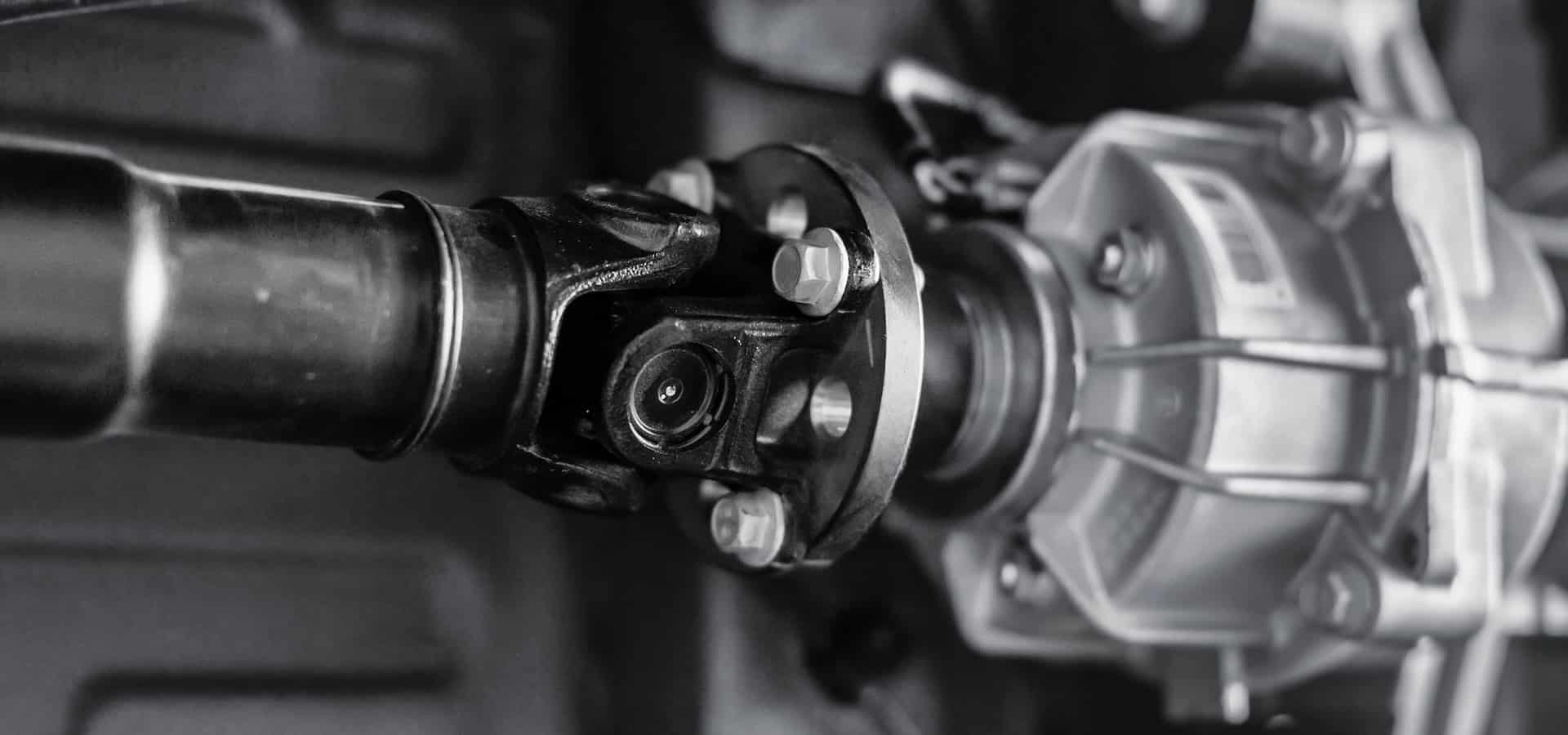
Drive shaft and halfshaft repair covers the CV axles, center support bearings, and driveshaft assemblies that transfer power to your wheels. Getting it right on a Nissan matters because the platforms differ sharply. Front-drive Altima and Maxima models run inner and outer CV joints where torn boots and grease slinging cause the trouble, while the FM-platform 350Z/370Z and Frontier/Titan rely on a rear driveshaft with a center support bearing and precise flange torque and phasing.
Sloppy reassembly on a rear-drive Nissan driveshaft creates driveline vibration you'll feel at highway speed. We follow Nissan torque specs on flange bolts, index the shaft correctly, and confirm axle nut torque to prevent premature wheel bearing failure.
- Honest diagnosis that pinpoints the failed component, not a guessed-at parts list
- OEM-grade axles, boots, and center bearings matched to your exact model
- Correct torque, phasing, and axle-nut specs verified during reassembly
- A road test to confirm the vibration or clunk is fully resolved
Symptoms – How to Know You Need This Service
Drive shaft problems announce themselves early if you know what to listen for. Here's what you may notice from the driver's seat:
- Clicking or popping during turns – a torn outer CV joint on front-drive Altima, Sentra, or Maxima models, worse under acceleration in a curve.
- Rhythmic clunk when accelerating from a stop – worn inner joint or excessive axle play.
- Vibration that builds with speed – a failing center support bearing or an out-of-phase rear driveshaft on 350Z/370Z, Frontier, or Titan.
- Grease sprayed inside the wheel well – a split CV boot flinging lubricant; address this soon before the joint runs dry.
- Shudder under hard acceleration – binding joint or worn U-joint on rear-drive trucks.
- Humming or growling that changes with load – often a center bearing on its way out.
- Clunk when shifting between drive and reverse – excessive slack in the driveline.
A torn boot means schedule soon. A loud metallic clunk paired with strong vibration means stop driving and have it towed – a separated axle or driveshaft can strand you or damage surrounding components.
Common Drive Shaft Repair Issues on Nissan Vehicles
Nissan uses a mix of front-wheel-drive half-shaft setups and rear/AWD propeller shaft designs, and each platform has its own wear signature. Here are the patterns we see most often across the Denver fleet:
- Center support (carrier) bearing failure on Frontier, Xterra, and Pathfinder (D40/R51 platforms): The rubber isolator around the support bearing dries out and cracks with age and heat cycling, producing a launch clunk and a vibration that builds with speed.
- Rear propeller shaft U-joint wear on Titan (A60) and older Frontier trucks: Non-greaseable factory joints seize or develop play, causing driveline vibration and a rust-colored dust ring at the cross bearings.
- CV joint boot tears on Altima, Maxima, and Sentra half-shafts: A split outer boot slings grease into the wheel well, contaminating the joint. Once grit gets in, the telltale clicking on turns follows within a few thousand miles.
- Transfer case output and driveshaft coupling wear on Rogue and Murano AWD (CVT-based systems): The coupling and its electronic controls can bind or shudder, especially in Colorado's tight parking-garage turns.
- Inner tripod joint shudder on FWD models under load: A worn tripod produces a fore-aft judder during hard acceleration, commonly mistaken for a motor mount issue.
- Flange and pinion yoke run-out on 4WD Nissans: Corrosion at the differential flange, common after Front Range winters and road salt, throws off shaft balance.
Which Nissan Models We See for Drive Shaft Repair
We handle drive shaft and halfshaft work across the Nissan lineup. Find your platform below:
- Altima (L32/L33/L34, 2007–present) – front CV axles, with torn boots and inner joint wear the usual culprits.
- Maxima (A35/A36, 2009–present) – higher-torque VQ35 models put extra strain on outer joints.
- Sentra (B16/B17/B18) and Rogue (T32/T33) – common halfshaft and boot service.
- 350Z / 370Z (Z33/Z34) – rear driveshaft, center support bearing, and halfshafts; phasing and flange torque are critical here.
- Frontier (D40/D41) and Titan (A60/A61) – rear and, on 4WD, front driveshafts plus U-joints and center bearings.
- Pathfinder and Armada – front and rear driveline components on 4WD variants.
- GT-R (R35) – AWD driveline work requires specialized handling and precise setup; we assess these case by case.
4WD and AWD variants involve front driveshafts and transfer case output components that differ from 2WD trucks, so we confirm your drivetrain configuration before quoting parts. If you're driving an older or rare Nissan and aren't sure it fits, call us – we'll confirm what we can source and service before you commit.
A Denver Nissan Pathfinder owner recently rolled in with a vibration that got worse the faster he drove, plus a clunk every time he pulled away from a stop. He assumed it was a tire balance problem. It turned out to be a worn center support bearing and a failing rear U-joint on his propeller shaft – the kind of thing that starts small and ends with a driveline dropping metal on the highway. Catching it early kept a minor repair from becoming a major one.
Causes & Risks – What Happens if Ignored
Colorado is hard on drivelines. Elevation swings, road salt, gravel mountain roads, and stop-and-go city driving all accelerate wear on U-joints, CV boots, and support bearings. Age and heat cycling do the rest – the rubber isolators and grease seals Nissan uses simply harden and fail over time.
Waiting rarely saves money. A torn CV boot ignored for a few months usually means replacing the entire half-shaft instead of a boot and repack. A clunking support bearing left alone can chew into the transmission output flange or damage the propeller shaft slip yoke.
- Torn CV boot ignored – grit destroys the joint, turning a boot repair into a full axle replacement.
- Worn U-joint left in service – the cross bearing can seize and shear, dropping the driveshaft at speed.
- Failing center support bearing – vibration transfers into the transmission tailshaft and mounts, adding secondary parts to the bill.
- AWD coupling shudder untreated – heat and binding can damage the transfer case internals on Rogue and Murano.
- Driveline vibration ongoing – accelerates wheel bearing and differential wear from constant harmonic stress.
Safety Impact – Why Drive Shaft Repair Matters
A driveshaft isn't just a spinning tube – its condition ripples into the systems that keep a Nissan controllable. Wheel-speed data feeding ABS and traction control depends on smooth, predictable axle rotation, and a seized joint or dropped shaft can produce sudden, dangerous loss of drive.
- Stop driving now: loud grinding or banging from under the vehicle, a driveshaft you can hear or feel shifting, or sudden severe vibration.
- Stop driving now: loss of power to the wheels combined with a clunk – a possible sheared U-joint or separated half-shaft.
- Schedule soon: clicking on turns, a light launch clunk, or a mild speed-related vibration.
- Schedule soon: grease flung inside the wheel well from a split CV boot.
A separated driveshaft can strike the fuel or brake lines, lock a rear wheel, or damage the undercarriage. On AWD Nissans, a binding coupling can affect stability control behavior. If a known driveline problem contributes to a crash, that unaddressed defect can also complicate an insurance claim – another reason to handle it before it escalates.
How Nissan Drive Shaft Repair Actually Works
On FWD Nissans like Altima and Sentra, power travels through half-shafts with CV joints at each end, letting the wheels steer and move with the suspension. On trucks and AWD models, a propeller shaft with U-joints and a center support bearing carries torque back to the differential or through a transfer case. Repairing these correctly means matching Nissan's balance, torque, and coupling specs – not just bolting on any replacement.
What sets Nissan work apart is the detail in reassembly and, on AWD models, the electronic side of the drivetrain.
- Shaft balance and phasing – propeller shaft yokes must be reindexed to factory marks to avoid reintroducing vibration.
- Torque sequence on flanges and axle nuts – Nissan specifies particular axle-nut torque and staking to keep hub bearings preloaded correctly.
- <strong
A Nissan Pathfinder rolls in with a rhythmic clunk that shows up every time the driver pulls away from a stop. The owner assumed it was the transmission. It turned out to be a worn CV joint and a tired center support bearing on the propshaft – exactly the kind of thing that gets misdiagnosed when a shop skips the road test. Drive shaft trouble on Nissan vehicles rarely announces itself with a single obvious symptom, so a careful process matters.
How We Diagnose Drive Shaft Repair Issues on Nissan
We treat vibration, clunks, and driveline noise as a puzzle with several possible sources – axle shafts, propshaft, center bearing, or U-joints. Here is how our technicians work through it.
- Pull codes with a Nissan-capable scan tool (CONSULT-style diagnostics) to rule out ABS wheel-speed, VDC, and AWD coupling faults that mimic driveline vibration on Rogue, Murano, and Pathfinder models.
- Road test at varying speeds and loads to isolate whether the noise is acceleration-based, deceleration-based, or constant – a strong clue between CV joints and propshaft components.
- Lift the vehicle and inspect CV boots for cracking and grease slinging, a frequent early-Nissan failure that leads to joint wear once the boot tears.
- Check the center support bearing on rear- and all-wheel-drive Frontier, Titan, and Pathfinder propshafts for play, rubber degradation, and noise.
- Inspect U-joints and slip yokes for binding, rust, and rough rotation, and measure runout where a bent shaft is suspected.
- Verify companion flange bolt torque and driveline angles against Nissan specs.
Once we know exactly which component is failing, we build a clear repair plan and quote so you see what needs attention now versus what can wait.
Drive Shaft Repair on Nissan: Repair vs. Replacement
Not every driveline complaint means a full assembly. We match the fix to the actual wear.
- Genuine repair: A torn CV boot caught early – before grit contaminates the joint – often means a boot and grease service plus torque verification, keeping the original axle. Loose flange bolts or a dry slip yoke fall in this category too.
- Partial replacement: A worn CV joint with a healthy shaft, or a failed center support bearing on a Titan or Pathfinder propshaft, lets us replace the specific worn part rather than the whole assembly. A single bad U-joint can often be pressed and replaced.
- Full replacement: When the joint is contaminated and clicking, the shaft is bent, or a bearing failure has damaged neighboring components, a complete axle or propshaft is the safer and often more economical call – especially since some Nissan propshafts are sold as sealed assemblies.
We lay out the options with the trade-offs for each, then let you decide. Nobody here pushes the biggest ticket when a targeted repair does the job.
How to Make Your Nissan Drive Shaft Repair Last Longer
Good habits keep a fresh axle or propshaft healthy for years. A few things are easy to manage yourself.
- Ease into acceleration from a stop rather than launching hard, which reduces shock loading on CV joints and U-joints.
- Avoid riding with the wheels turned to full lock for extended periods – it stresses outer CV joints on front-drive Altima and Sentra platforms.
- Watch for early warning signs: clicking on turns, a shudder under acceleration, or grease flung onto the inner wheel wells.
- In Denver's road-salt and gravel conditions, rinse the undercarriage in winter to slow corrosion on slip yokes and center bearings.
- Peek under the vehicle occasionally for split or leaking CV boots – catching a small tear early is the difference between a boot service and a full axle.
Brand-specific care matters here. Use OEM-grade axles and boots, keep AWD transfer case and differential fluids serviced at Nissan's intervals since heat and old fluid accelerate coupling and bearing wear, and stay current on any driveline-related software updates. Boot inspections are fine to do yourself – but joint pressing, propshaft R&R, and torque-critical flange work belong on our lift, where we can measure angles and torque fasteners to spec safely.
A vibration that starts around 45 mph and worsens under acceleration sent one Frontier owner our way convinced the tires were out of balance. The real culprit was a worn center support bearing and a sloppy rear U-joint on the two-piece drive shaft – a pattern we see often on Nissan trucks and rear-drive platforms that log serious highway miles.
What to Expect When You Bring Your Nissan In
Drive shaft work rewards careful diagnosis, so we build the visit around confirming the source of the vibration or clunk before touching a wrench.
- Drop-off or appointment – Schedule ahead or leave the vehicle with us. Grab personal items from the cabin; we secure the keys and log your concerns in detail.
- Initial inspection – We lift the Nissan and check U-joints, center support bearing, slip yoke splines, CV boots on AWD Rogue and Murano units, and driveline angles for phasing issues.
- Written estimate – You get a clear breakdown of what's worn, what's fine, and which parts we recommend – no padded add-ons.
- Communication during the work – We text or call with findings before proceeding, and shuttle or loaner options are available so you're not stranded.
- Pickup walkthrough – We show you the replaced components and explain the repair. After-hours pickup can be arranged.
Every drive shaft repair ends with a road test through the same speed range that triggered the complaint, plus a scan-tool re-check on AWD models to confirm no driveline or ABS wheel-speed faults linger. If anything feels off after you leave, bring it back and we'll re-verify at no runaround.
Why Choose Elevation Auto Repair for Nissan Drive Shaft Repair
Driveline vibrations get misdiagnosed constantly because they mimic tire, wheel bearing, and mount problems. We isolate the actual source instead of throwing parts at the symptom.
- Platform-specific knowledge – Two-piece shaft center bearing wear on Frontier, Titan, and Xterra chassis; transfer case and rear coupling behavior on AWD Rogue, Murano, and Pathfinder; and CV-style front shafts on transverse-engine models.
- TSB and software awareness – We check for applicable Nissan service bulletins and control-module updates that affect AWD engagement and driveline feel before condemning hardware.
- Correct assembly, not guesswork – Proper U-joint indexing, phasing of two-piece shafts, and torque-spec fastener tightening so the repair stays quiet.
You deal with the same team from diagnosis through post-repair verification – one shop that owns the whole job. As your Denver dealership alternative, we handle Nissan driveline work with the tooling and precision it demands, then confirm the fix on the road before it goes back to you.
Our Nissan Services
- Air Conditioning AC Repair
- Battery Repair Replacement
- Brake Repair & Brake Fluid Change
- Check Engine Light Diagnostics
- Clutch Repair & Replacement
- Coolant Leak Repair
- Cooling System Repair
- Engine Repair
- Exhaust & Catalytic Converter Repair
- Head Gasket Repair & Replacement
- Oil Change
- Oil Leak Repair
- Scheduled Service Maintenance
- Steering Repair
- Suspension Repair
- Cambelt Timing Belt Replacement
- Transmission Repair
- Tune Up
- Wheel Alignment