Nissan Air Conditioning AC Repair at Elevation Auto Repair
When your Nissan blows warm air on a hot Denver afternoon, the problem is rarely just "low refrigerant." Nissan A/C systems have their own quirks, and chasing them down takes more than a can of R-134a and a hope.
Getting Nissan A/C repair right means understanding platform-specific behavior. On the R51 Pathfinder and D40 Frontier, compressor lock-up can spread metal debris through the whole loop, forcing a full flush and receiver-drier replacement rather than a simple recharge. Many later Nissans use R-1234yf refrigerant and electronically controlled compressors that report faults through CONSULT diagnostics – you can't just eyeball a pressure gauge and call it done.
We charge to Nissan's exact refrigerant capacity by weight, pull a proper deep vacuum to remove moisture, and verify system pressures under load. That precision is what separates a repair that lasts from one that fails again by mid-summer.
Here's what you can expect when you bring your Nissan to us:
- Electronic leak detection and dye tracing before any parts get replaced
- Refrigerant recovery and recharge to factory weight specs, not guesswork
- Honest diagnostics – if it's a blend door actuator and not the compressor, that's what we tell you
- Repairs built for long-term reliability through Colorado's hottest stretches
Symptoms – How to Know You Need This Service
Nissan A/C trouble usually announces itself in stages. Catch it early and you often save the compressor.
- Air that starts cold but slowly turns warm, especially at idle or in stop-and-go traffic – a classic sign of low refrigerant or a struggling compressor clutch
- A loud grinding, whirring, or clunking from the engine bay when you press the A/C button – this points to compressor bearing failure, and you should stop using the A/C to avoid contaminating the system
- Musty or sour smells from the vents, often from a clogged evaporator drain or mold on the cabin filter
- Weak airflow even at the highest fan setting, common when a blend door or mode actuator fails on Altima and Maxima models
- Fluctuating temperature that swings hot and cold on its own, hinting at an electronic control or actuator fault
- Visible oily residue near A/C fittings or the condenser – a leak point that will only worsen
- Fog or mist coming from the dash vents when you first switch on the A/C
Warm air paired with grinding noise means schedule right away – running a failing compressor can send debris through the entire system. Weak airflow or odors can wait for a scheduled visit, though the sooner we look, the cheaper the fix.
Common Air Conditioning AC Repair Issues on Nissan Vehicles
Warm air blowing from the vents in Denver traffic is usually the first sign something's wrong. Nissan A/C systems have a few recurring weak points that show up across specific platforms.
- Compressor lock-up on 2007-2012 Altima and Maxima (L32/A35): The factory compressor clutch and internal bearings wear out, and when they seize they can shed metal debris throughout the system, contaminating the condenser and lines.
- Evaporator and condenser leaks on 2013-2018 Altima and Sentra: The compact condenser design sits low and forward, making it prone to road-debris punctures on Colorado's gravel-treated winter roads.
- Blend door actuator failure on Rogue (T32) and Pathfinder (R52): A clicking sound behind the dash and air that won't switch temperature or direction points to a worn plastic actuator gear – a common Nissan design wear path.
- Refrigerant leaks at O-rings and service ports on Frontier and Xterra: High-mileage trucks lose charge slowly through hardened seals, especially in Denver's dry, high-altitude climate.
- Blower motor and resistor failures on Titan and Armada: Fan speeds that only work on high, or not at all, usually trace to a failed resistor or worn motor bushings.
- Cooling fan and relay issues on Leaf and hybrid models: The electric A/C compressor and battery cooling share logic, so a fault can affect both cabin comfort and thermal management.
Which Nissan Models We See for Air Conditioning AC Repair
We service A/C systems across the Nissan lineup, from daily commuters to trucks and SUVs. If your model isn't listed, ask – this covers the platforms we see most often.
- Altima (L32, L33, L34, 2007–present) – frequent blend door actuator and compressor clutch issues
- Maxima (A35, A36) – condenser leaks and evaporator faults are common on higher-mileage cars
- Rogue (T32, T33) – compressor and expansion valve concerns, often paired with cooling fan diagnostics
- Sentra (B17, B18) – actuator noise and refrigerant leaks at line fittings
- Pathfinder (R51 and R52) – R51 models are prone to compressor lock-up requiring full system flush
- Frontier (D40, D41) – condenser damage from road debris given the front-mount location
- Titan (A60, A61) – dual-zone rear A/C circuits that need careful charge balancing
- Murano (Z50, Z51, Z52) – electronic climate control and blower motor faults
- 370Z (Z34) and GT-R (R35) – performance variants where cooling capacity matters under high underhood heat
Newer Nissans running R-1234yf refrigerant need model-specific handling and factory-correct charge weights, which we're equipped for. On older R-134a systems, we can retrofit and rebuild as needed. One shop, every system – done right the first time.
Causes & Risks – What Happens if Ignored
Most Nissan A/C problems trace back to age, heat cycling, and Denver's dry, dusty air drying out seals faster than in humid climates. Low refrigerant from a slow leak is the usual starting point, and it snowballs from there.
Running an undercharged system starves the compressor of the oil that rides with the refrigerant. That's how a cheap seal repair becomes a full compressor replacement.
- Ignored slow leak: Low charge starves the compressor of lubricant, leading to bearing and clutch failure within a season or two.
- Seized compressor: Metal debris spreads to the condenser, expansion valve, and lines, forcing a much larger cleanout and parts job.
- Failed blend door actuator: Left alone, the broken gear can jam the door and knock out defrost function entirely.
- Clogged cabin filter and moldy evaporator: Restricted airflow strains the blower motor and creates persistent cabin odors.
- Neglected condenser damage: A small leak becomes a full condenser and receiver-drier replacement once moisture contaminates the system.
Beyond comfort, a dead A/C means no defrost on cold Denver mornings – and that's when it crosses into a safety problem.
Safety Impact – Why Air Conditioning AC Repair Matters
Your Nissan's A/C system does more than cool the cabin. It drives the defrost and dehumidification function that keeps your windshield clear, and a fogged or iced windshield directly compromises visibility.
On models where the compressor shares a serpentine belt with other accessories, a seized A/C compressor can throw or shred that belt – taking out the water pump, alternator, or power steering with it.
- Stop driving soon if: defrost no longer clears the windshield, you hear grinding or squealing from the compressor, or you smell burning near the front of the engine bay.
- Schedule promptly if: air is warm, you hear intermittent clicking from the dash, or fan speeds are inconsistent.
- Address at next service if: cooling is slightly weaker than normal or there's a faint odor at startup.
A seized compressor that damages the belt can leave you stranded and affect braking assist and steering. Handling a known A/C fault before it cascades keeps every connected system working the way it should.
How Nissan Air Conditioning AC Repair Actually Works
Your Nissan's A/C is a sealed loop. The compressor pressurizes refrigerant, the condenser sheds heat, the expansion valve drops the pressure, and the evaporator absorbs cabin heat before the blower pushes cool air through the vents. Sensors and the climate control module manage it all automatically.
What sets Nissan apart is how tightly the climate system integrates with the vehicle's electronics – especially on newer models and the Leaf's electric compressor. That's why proper repair takes more than a can of refrigerant.
- Refrigerant type matters: Newer Nissans use R-1234yf, which requires dedicated recovery equipment and correct PAG oil specs – mixing systems causes damage.
- Actuator relearn: Blend door actuators on many Nissans need a calibration cycle through CONSULT-style diagnostics so the module knows their travel range.
- Electric compressor caution: Leaf and hybrid systems use high-voltage compressors requiring insulated tools and specific oil to avoid shorting the inverter.
- Precise charge weight: These systems are sensitive to overcharge and undercharge, so we evacuate, vacuum-test for leaks, and recharge to Nissan's exact spec by weight.
Getting the electronics, oil, and charge right the first time is what makes a repair last. As your Denver dealership alternative, we handle Nissan A/C work with the OEM procedures and honest diagnostics that keep it cold for the long haul.
How We Diagnose Air Conditioning AC Repair Issues on Nissan
Warm air blowing at a Denver stoplight, a clutch that won't engage, or a musty smell when you first turn the vents on – these are the symptoms that bring most Nissan owners in. We start by pinpointing exactly where the system is failing before touching a single part.
- Full system scan: We connect Nissan-compatible scan tools (CONSULT-III/IV level data) to pull HVAC and climate control codes, read compressor engagement commands, and check blend door actuator feedback on models like the Altima, Rogue, and Pathfinder.
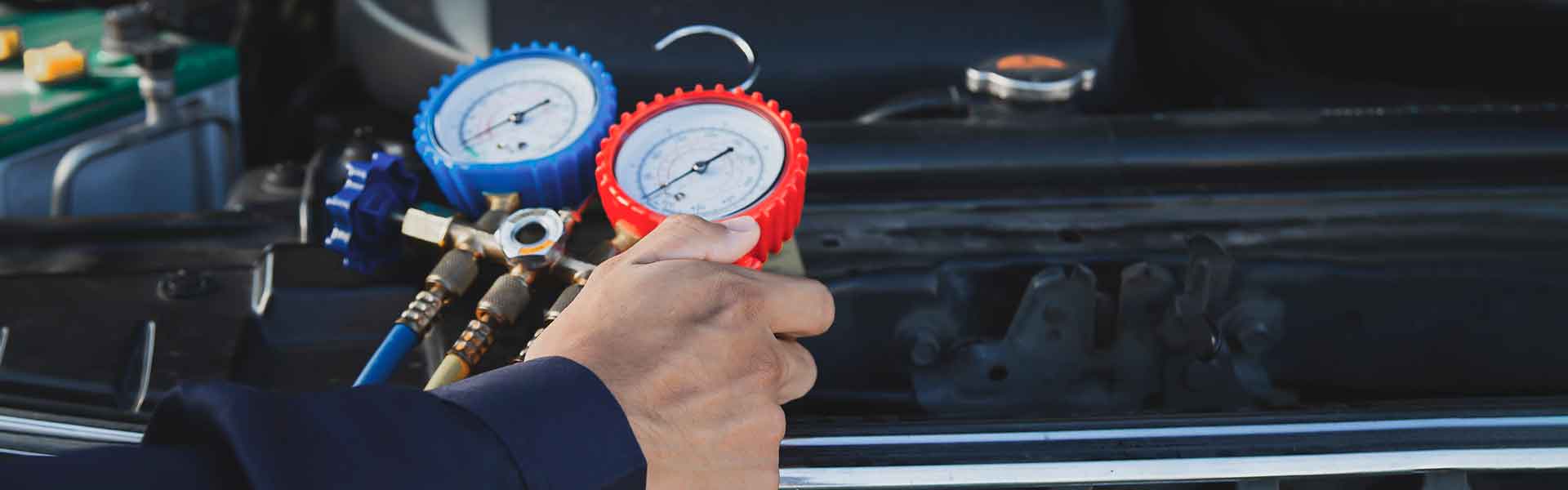
- Refrigerant pressure test: High and low side gauges reveal undercharge, overcharge, or a stuck expansion valve – a frequent complaint on later Sentra and Maxima systems.
- Visual inspection: We look for oily residue at the compressor shaft seal, condenser damage from road debris (common on front-mounted Rogue condensers), and cracked O-rings at line fittings.
- Electrical checks: We verify the compressor clutch relay, pressure switch, and wiring, since a failed A/C amplifier or relay can mimic a mechanical failure.
- Dye and leak detection: UV dye and an electronic sniffer confirm slow leaks that gauges alone miss.
- Road test: We confirm cooling performance and vent temperature under real load.
From there you get a plain-language explanation of what failed, what it will take to fix, and a clear quote before any work begins.
Air Conditioning AC Repair on Nissan: Repair vs. Replacement
Not every A/C problem calls for major parts. We recommend the smallest fix that restores reliable cooling.
- Genuine repair: A single leaking O-ring, a stuck relay, a clogged cabin filter restricting airflow, or a system that simply needs an evacuation and recharge with the correct refrigerant. On many Nissan models a low charge from a minor seal leak is the whole story.
- Partial replacement: Swapping just the failed component while keeping the rest of the assembly – for example, replacing a leaking condenser damaged by rock strikes on a Rogue or Murano, or a worn expansion valve, without touching a healthy compressor.
- Full replacement: When the compressor has seized and sent metal debris through the system, the entire loop is contaminated. That means compressor, condenser, drier, orifice/expansion valve, and a thorough flush. This cascading failure is where repair cost approaches full replacement, and a partial fix would only fail again.
We lay out each option side by side, including the long-term risk of a cheaper patch, so you decide what fits your Nissan and your budget – never a push toward the priciest path.
How to Make Your Nissan Air Conditioning AC Repair Last Longer
A properly repaired A/C system holds up for years when you treat it right. A few habits make a real difference in Denver's dry, high-altitude climate.
Driving and usage habits
- Run the A/C for a few minutes even in winter to keep seals lubricated and prevent them from drying out and cracking.
- Use recirculation on hot days to reduce compressor load, then switch to fresh air to manage cabin humidity.
- Avoid blasting max cold the instant you start after the car has baked in the sun – crack the windows first to ease the initial load.
Owner maintenance you can handle
- Replace the cabin air filter on Nissan's recommended interval to protect airflow and the evaporator.
- Listen for new clutch clicks, hissing, or weaker cooling and address changes early.
- Keep the condenser area clear of leaves and debris.
Brand-specific care
- Insist on the correct refrigerant type and volume – many newer Nissans use R-1234yf, not older R-134a.
- Use OEM-grade O-rings, drier, and compressor oil for proper compatibility.
- Keep climate control software current during service visits.
Filter swaps and visual checks are safe to do yourself. Leave refrigerant handling, compressor work, and electrical diagnosis to our technicians – it protects both the system and your warranty.
What to Expect When You Bring Your Nissan In
You're probably here because the vents are blowing warm, the compressor cycles on and off, or you hear a faint hiss after shutdown. Here's how we move from that frustration to cold, steady air.
- Drop-off or scheduled appointment – Tell us the symptoms: weak airflow, warm air only at idle, a burning smell, or the system that quit entirely. We log it before touching the car.
- Initial inspection – We pressure-test the system, check for dye leaks at the condenser and O-rings, and read live data from the HVAC module for actuator faults and clutch relay behavior.
- Written estimate – You get a clear breakdown of parts and labor before we proceed. No surprise add-ons.
- Communication during the work – We text or call with findings and wait for your approval before ordering parts or opening the refrigerant loop.
- Pickup walkthrough – We show you what failed, what we replaced, and confirm vent temperatures in front of you.
Loaner and shuttle options are available so you're not stranded. Clear personal items from the cabin, though we treat every vehicle carefully, and ask about after-hours pickup if your schedule is tight. Before you leave, we road-test under load, re-scan the HVAC and engine modules for stored codes, and verify system pressures. If anything feels off afterward, bring it back and we'll recheck it.
Why Choose Elevation Auto Repair for Nissan Air Conditioning AC Repair
Nissan A/C failures follow patterns, and we know them. On Altima and Sentra platforms, the compressor clutch and internal debris from a grenaded compressor often contaminate the whole loop – a proper flush and orifice tube service prevents a repeat failure.
- Platform-specific knowledge – Rogue and Pathfinder condenser leaks, Titan blend-door actuator faults, and Leaf electric compressor quirks that generic shops misdiagnose.
- TSB and software awareness – We check for Nissan service bulletins and HVAC control module updates that resolve intermittent cooling and actuator recalibration issues.
- Correct refrigerant handling – We evacuate, pull a proper vacuum to confirm the system holds, and charge to Nissan's spec by weight – not by guesswork.
We own the job start to finish: diagnosis, repair, and post-repair verification under one roof. That end-to-end accountability means the compressor, condenser, expansion valve, and controls all get addressed together, so your Nissan stays cold long after you drive off – and you deal with one shop, not a runaround.
Our Nissan Services
- Battery Repair Replacement
- Brake Repair & Brake Fluid Change
- Check Engine Light Diagnostics
- Clutch Repair & Replacement
- Coolant Leak Repair
- Cooling System Repair
- Drive Shaft Repair
- Engine Repair
- Exhaust & Catalytic Converter Repair
- Head Gasket Repair & Replacement
- Oil Change
- Oil Leak Repair
- Scheduled Service Maintenance
- Steering Repair
- Suspension Repair
- Cambelt Timing Belt Replacement
- Transmission Repair
- Tune Up
- Wheel Alignment