Nissan Wheel Alignment at Elevation Auto Repair
Nissan's multi-link rear suspension – used across the FM platform Maxima, Altima, and Z cars – rewards precise setup and punishes sloppy alignment work. A few clicks off on rear toe or camber and you'll chew through the inside edge of a set of tires in a season.
Wheel alignment brings your Nissan's camber, caster, and toe back to factory specification so the tires meet the road the way the engineers intended. On a Nissan that means more than dropping it on a rack. Many models – especially the D40 Frontier, R51 Pathfinder, and CVT-equipped Rogue and Altima – carry tight toe tolerances and eccentric cam bolts on the lower control arms that need careful adjustment and correct torque on reassembly.
We reference Nissan factory alignment values rather than a generic database guess, and on Nissans with steering angle sensors we account for the reset those systems expect after a rear-toe change. That attention to the small stuff keeps the steering centered and the electronic stability system happy.
- Four-wheel alignment measured against Nissan factory specs, not a one-size-fits-all range
- Before-and-after readings so you see exactly what changed
- Suspension and steering inspection for worn parts that would throw a fresh alignment off
- Correct torque on eccentric cams and control-arm hardware
Symptoms – How to Know You Need This Service
Nissan alignment problems usually show up gradually, then all at once when a tire starts wearing hard. Watch for these signs from the driver's seat:
- The car pulls left or right on a flat, straight road when you loosen your grip
- Steering wheel sits off-center while driving straight ahead
- Inside or outside edge of a tire wearing faster than the rest – common on rear tires of Altima and Maxima
- A feathered or scalloped feel when you run your hand across the tread
- Vibration through the wheel that changes with speed
- Steering feels loose or wanders, requiring constant small corrections
- Uneven handling after hitting a Denver pothole or curb
Schedule soon if you notice a mild pull or an off-center wheel – those are alignment issues you can drive on for a short time. Stop driving and have it towed if the pull is severe, the steering feels disconnected, or you see cord showing through a tire. Those point to worn suspension components that need attention before an alignment will hold.
Common Wheel Alignment Issues on Nissan Vehicles
Nissan builds a wide range of platforms, and each generation carries its own alignment tendencies. Front-wheel-drive commuters and rear-drive sports cars wear their tires and geometry in very different ways.
- Rear camber wear on the 2013-2019 Altima (L33): The multi-link rear setup tends to pull into negative camber as bushings age, chewing the inside edges of the rear tires well before the tread block is used up.
- Front toe drift on Rogue (T32, 2014-2020): Heavy front-end weight combined with tie rod and lower control arm bushing wear commonly nudges front toe out of spec, showing up as feathered tread and a wandering feel on the highway.
- Sentra (B17/B18) crash-bar and pothole sensitivity: Denver's broken pavement and curb strikes push these lighter front struts and lower arms out of caster/camber, and the symmetric wear pattern is easy to miss until a tire rotation reveals it.
- Frontier and Titan (D40/A60) solid rear axle drift: Trucks used for towing or off-pavement work commonly develop thrust-angle problems as leaf spring bushings and upper ball joints wear, causing the truck to "dog-track" down the road.
- 370Z / 350Z (Z34/Z33) aggressive camber setups: These rear-drive coupes run tighter alignment tolerances, and lowered examples with worn eccentric bolts frequently need camber and toe reset to stop shoulder wear.
- Maxima (A35/A36) front camber loss: The strut-based front end loses positive camber as top mounts fatigue, producing a subtle pull that owners often blame on tire pressure.
Which Nissan Models We See for Wheel Alignment
We align the full Nissan lineup, from daily commuters to trucks and sports cars. These are the platforms that come through most often:
- Altima (L32/L33/L34, 2007–present) – rear multi-link toe adjustment is a frequent culprit for inner-edge wear
- Maxima (A35/A36, FM platform) – benefits from precise caster and camber setup for its sport-tuned feel
- Rogue (T32/T33, 2014–present) – CVT crossovers that need accurate toe to protect tire life and fuel economy
- Sentra (B17/B18) – common alignment work after curb strikes and pothole damage
- Frontier (D40, 2005–2021 and current D41) – trucks with eccentric-cam front adjustment and heavier duty tolerances
- Pathfinder (R51 body-on-frame and R52 unibody) – setup differs noticeably between the two generations
- 370Z / 350Z (Z34 / Z33) – performance alignments where camber and toe settings matter for grip and even wear
- Titan (A60/A61) – full-size trucks, especially after lift or leveling changes
- Leaf (ZE0/ZE1) – EV weight makes correct toe important for range and tire longevity
Lifted or lowered Nissans, and Frontier and Titan trucks with aftermarket suspension, need extra measurement time and sometimes adjustable hardware to reach spec – tell us about any modifications when you book. If your Nissan needs control arms, tie rods, or bushings before alignment will hold, we'll show you what we find and handle it in one visit.
Causes & Risks – What Happens if Ignored
Most Nissan alignment problems trace back to a mix of road conditions and normal component fatigue. Denver's freeze-thaw potholes, curb contact, and long highway miles all shift the geometry over time. Worn control arm bushings, tie rod ends, and sagging springs on higher-mileage cars accelerate the process.
Waiting turns a quick correction into a parts job. A toe problem that could have been dialed in becomes a set of scalloped tires and, eventually, worn steering and suspension joints.
- Ignoring inside-edge rear wear on an Altima for a few thousand miles typically ruins otherwise healthy tires and can mask a failing rear bushing underneath.
- Letting front toe drift on a Rogue eventually loads the tie rod ends and outer CV joints unevenly, adding expensive parts to a simple adjustment.
- A neglected thrust-angle issue on a Frontier or Titan pulls the truck to one side, forcing constant steering correction and premature tire failure.
- Continued curb-strike damage on a Sentra or Maxima can bend a lower arm, turning an alignment into a suspension replacement.
- Uneven tire wear reduces wet-weather grip, which becomes a real hazard once the tread depth drops.
The safety line gets crossed when the car pulls hard, wanders at speed, or the tread wears into the wear bars. We'll catch it before it gets there.
Safety Impact – Why Wheel Alignment Matters
Alignment does more than protect tires. On modern Nissans it feeds directly into the systems that keep the car stable and pointed where you steer.
- Stability control and ABS: A crooked steering angle sensor reference from a bad alignment can confuse VDC and ABS, causing them to intervene when they shouldn't.
- Braking balance: Uneven tire wear from misalignment lengthens stopping distances and can make the car dart under hard braking.
- Steering response: A pull or dead spot means more correction from the driver, which fatigues you and slows reaction in an emergency.
- ProPILOT and lane-keep equipped models: These rely on a centered steering position and accurate steering angle data to hold a lane correctly.
Stop driving and call us now if: the car pulls sharply, the steering wheel is off-center and getting worse, or you feel shaking that changes with speed. Schedule soon if: you notice mild drift, uneven tire wear, or a steering wheel that sits slightly crooked. Addressing a known alignment defect before an incident also keeps you on the right side of liability questions after any collision.
How Nissan Wheel Alignment Actually Works
A proper Nissan alignment sets three angles – camber, caster, and toe – on each corner so the tires meet the road squarely and the steering returns to center. On newer Nissans it's not just a mechanical adjustment; the electronics have to agree with what the suspension is doing.
Most 2010-and-newer models with VDC, ProPILOT, or lane-keep require a steering angle sensor reset after the wheels are set, and that step needs Nissan-compatible scan software to complete correctly.
- Steering angle sensor calibration: After setting toe and centering the wheel, the SAS must be reset so stability control reads "straight" accurately.
- Electronic parking brake models: Many current Nissans use an EPB, which changes how the vehicle is secured and lifted during the procedure.
- Platform-specific specs: Rear multi-link cars like the Altima and Maxima use eccentric cam bolts with defined torque sequences; solid-axle trucks are set by thrust angle instead.
- OEM tolerances: Sports models like the 370Z run tighter camber/toe windows than a typical commuter, so the numbers
How We Diagnose Wheel Alignment Issues on Nissan
Many Nissan platforms use multi-link rear suspension and independent front struts that respond sensitively to worn bushings and ride-height changes. On models like the Altima (L33/L34), Rogue (T32/T33), and Maxima (A36), a pull or uneven tire wear rarely traces back to just one cause.
- Customer interview and road test – we confirm the pulling direction, steering-wheel offset, and any clunks over bumps that hint at worn control-arm bushings or tie-rod ends.
- Visual and hands-on inspection – we check tire wear patterns (feathering, inner-edge wear common on lowered or high-mileage sedans), and inspect ball joints, sway-bar links, and strut mounts for play.
- Ride-height measurement – Nissan alignment specs assume factory ride height, so we measure before touching camber or toe.
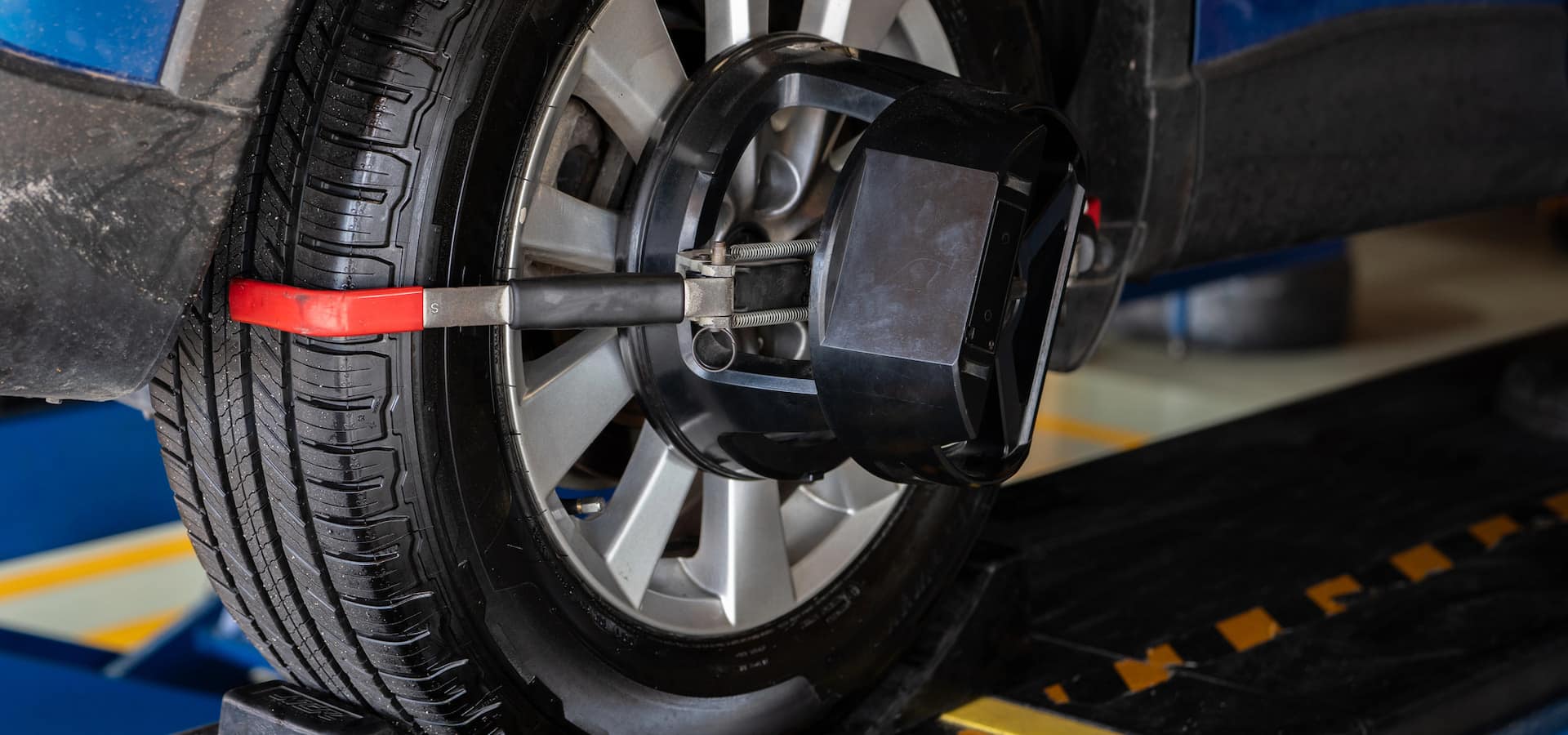
- Computerized alignment scan – our imaging alignment rack reads live camber, caster, toe, and thrust angle against Nissan's factory values.
- Scan tool check – for models with steering-angle sensors or ADAS lane-keep cameras (later Rogue and Altima), we verify no steering or chassis codes that require recalibration after adjustment.
Once measurements are in front of us, we show you exactly which angles are out and which parts are causing it, then translate that into a clear repair plan and quote before any work begins.
Wheel Alignment on Nissan: Repair vs. Replacement
Not every out-of-spec reading means new parts. We match the fix to what your Nissan actually needs.
- Adjustment only (true repair) – when suspension components are still tight and only toe or camber has drifted from curb impacts or normal settling, a standard alignment corrects it. Many Sentras and Altimas fall here.
- Partial replacement – when a single worn part is throwing the angle off, we replace just that piece: an outer tie-rod end, a sway-bar link, or a rear control arm with a failed bushing. Some Nissan rear camber issues also need aftermarket adjustable arms since the factory setup offers limited adjustment.
- Full assembly replacement – when there's cascading wear, such as a collapsed strut mount combined with a torn ball joint, or when a bent component makes proper alignment impossible, replacing the assembly is the safe and honest call.
Safety-critical parts like ball joints and tie-rod ends aren't candidates for patching. When repair cost climbs close to replacement, we lay both options side by side and let you decide – we never default to the most expensive path.
How to Make Your Nissan Wheel Alignment Last Longer
Good alignment holds far longer when the car is driven and cared for with a little intention.
Driving habits that protect your alignment
- Slow down for potholes, curbs, and Denver's rougher winter roads – hard hits knock toe and camber out fast.
- Avoid overloading cargo beyond rated capacity, which changes ride height and stresses rear links.
- Rotate tires on schedule so uneven wear doesn't accelerate on one corner.
Owner maintenance you can do safely
- Glance at tire edges monthly for feathering or inner-shoulder wear – an early warning of drifting toe.
- Keep tires at Nissan's door-placard pressure; low pressure mimics and masks alignment problems.
- Listen for new clunks or steering-wheel offset after a rough drive and note it.
Brand-specific care
- Use OEM-spec parts for tie-rods and bushings – cheaper components wear quickly and shift alignment sooner.
- Keep steering-angle and ADAS software current, since Nissan may require recalibration after suspension work.
- Follow Nissan's inspection intervals for suspension and steering.
Leave ball-joint, strut, and alignment-angle work to us – those are safety-critical and need proper tooling. Checks and tire pressure are the safe DIY zone.
What to Expect When You Bring Your Nissan In
Nissan multi-link rear setups and the front subframe geometry on platforms like the Altima (L33/L34), Rogue (T32/T33), and Maxima (A36) reward precise alignment work. Pulling to one side, uneven tire shoulder wear, or a steering wheel that sits crooked after a curb strike usually traces back to camber, caster, or toe drifting out of factory spec.
Here's how a visit moves along:
- Drop-off or appointment – Schedule ahead or bring it by. We ask about symptoms – wander at highway speed, feathered tires, a steering wheel off-center – so we know what to chase.
- Initial inspection – We check tie rod ends, ball joints, wheel bearings, and strut mounts before mounting the sensors, since worn parts throw off any alignment.
- Written estimate – You get clear numbers and a plain explanation of what's out of spec and why. No add-ons you didn't approve.
- During the work – We keep you updated by call or text. Leave personal items in the cabin if you like; shuttle service and after-hours key drop are available.
- Pickup walkthrough – We show you the before-and-after alignment readout and explain what we adjusted.
Every alignment ends with a road test to confirm the wheel is centered and tracking is straight. If anything feels off afterward, bring it back and we'll re-check the numbers – no runaround.
Why Choose Elevation Auto Repair for Nissan Wheel Alignment
Alignment on a Nissan isn't just clamping sensors and setting toe. Several platforms have quirks worth knowing – rear toe adjustment on independent-rear Rogue and Murano models, sensitive electric power steering that may need a steering-angle sensor relearn after adjustment, and CVT-equipped cars where dragging tires from bad alignment stress the drivetrain.
What sets our work apart:
- We reference current Nissan TSBs and factory alignment specs rather than generic ballpark ranges.
- We perform steering-angle sensor resets and any needed software relearns so the ADAS and lane-keep systems read correctly after adjustment.
- We inspect and address the worn suspension parts causing the misalignment – not just mask the symptom.
You get one shop handling diagnosis, repair, and post-repair verification from start to finish. That end-to-end ownership means the person who found the problem is the one confirming it's fixed – with printed readouts and a road test to back it up.
Our Nissan Services
- Air Conditioning AC Repair
- Battery Repair Replacement
- Brake Repair & Brake Fluid Change
- Check Engine Light Diagnostics
- Clutch Repair & Replacement
- Coolant Leak Repair
- Cooling System Repair
- Drive Shaft Repair
- Engine Repair
- Exhaust & Catalytic Converter Repair
- Head Gasket Repair & Replacement
- Oil Change
- Oil Leak Repair
- Scheduled Service Maintenance
- Steering Repair
- Suspension Repair
- Cambelt Timing Belt Replacement
- Transmission Repair
- Tune Up