Lincoln Coolant Leak Repair at Elevation Auto Repair
Lincoln's shift toward turbocharged EcoBoost power and shared Ford platforms means cooling systems now run hotter and route more coolant through plastic components than the naturally aspirated V8 luxury cars of decades past. That extra thermal load punishes plastic thermostat housings, degas bottles, and quick-connect fittings, which is exactly where leaks tend to start.
Getting this repair right on a Lincoln is different from a generic radiator swap. The 2.7L and 3.5L EcoBoost engines in the Nautilus, MKX, and Continental run intricate coolant crossovers and secondary cooling circuits for the turbos, and a mis-torqued plastic housing or the wrong coolant blend leads to a repeat leak within months.
We follow Lincoln's specified fill-and-bleed procedure using the correct Motorcraft orange coolant, and we pressure-test the system rather than guessing at the source. Here's what you can expect from us:
- A pressure test that pinpoints the actual leak instead of replacing parts blindly
- OEM or OEM-equivalent housings, gaskets, and fittings built to survive Denver's temperature swings
- Proper vacuum-fill and bleed so no air pocket cooks your heater core or turbos
- Straight talk on what needs attention now versus what can wait
Symptoms – How to Know You Need This Service
Coolant leaks rarely announce themselves all at once. On a Lincoln you may notice one small clue long before the temperature gauge climbs.
- Sweet syrupy smell inside or outside the cabin after driving – a classic sign of leaking coolant contacting hot components
- Orange or pink puddles under the front of the vehicle, often near the thermostat housing or lower radiator hose
- Low coolant warning or a "Check Coolant" message on the dash
- Heater blowing cold at idle, hinting at air trapped from a slow leak
- White sweet-smelling smoke from under the hood or the exhaust
- Gurgling or bubbling behind the dash from the degas bottle or heater core
- Temperature gauge creeping up in traffic or on long grades
If you see steam, a climbing temperature gauge, or an overheat warning, stop driving immediately – overheating an EcoBoost can warp a head or damage a turbo. A faint smell, an occasional low-coolant light, or a small drip means schedule soon before it becomes a roadside event.
Common Coolant Leak Repair Issues on Lincoln Vehicles
Lincoln coolant leaks tend to cluster around a handful of predictable points once you know the platform. Here are the patterns we see most often:
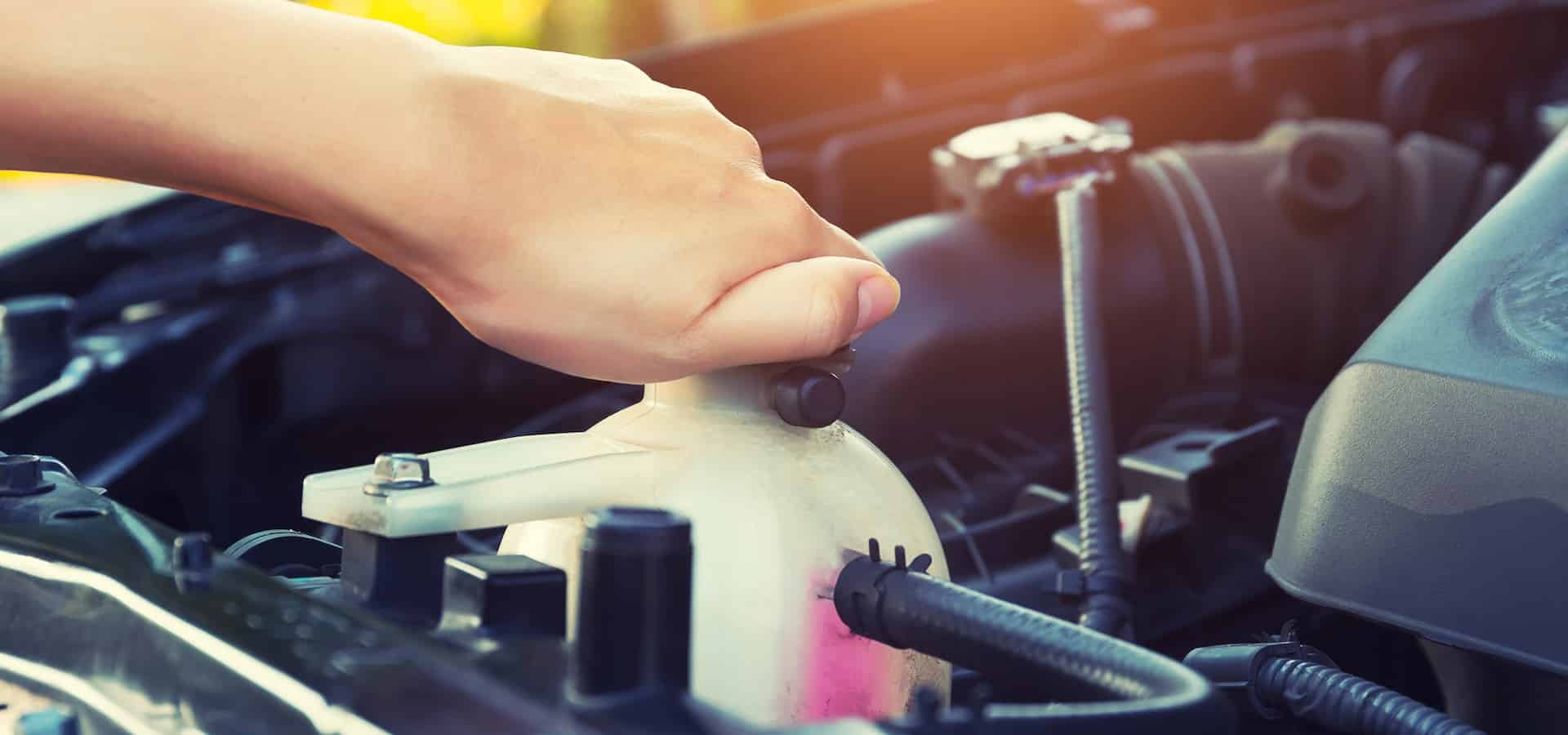
- Degas/expansion bottle cracking – The plastic coolant reservoir on 2013-2020 MKZ and MKX with the 2.0L and 3.5L Ecoboost gets brittle with heat cycling and seeps at the seams or the cap neck.
- Water pump weep on 3.5L/2.7L Ecoboost – The engine-driven pump on Aviator, Nautilus, and Continental applications leaks past the shaft seal, often signaled by a weep hole trail behind the accessory drive.
- Turbo coolant line and fitting seepage – Twin-turbo 3.5L Navigators route coolant to the turbo center sections; the crimped and quick-connect fittings loosen and weep after repeated heat soak.
- Radiator end-tank separation – On older MKS and MKX (Duratec-based) platforms, the plastic-to-aluminum crimp at the tank splits, dripping at the passenger or driver corner.
- Heater core and dash-line couplings – Sweet smell inside the cabin and foggy windows on MKC and MKZ point to heater core or under-dash quick-connect leaks.
- Thermostat housing gasket weep – The composite housings on 2.0L and 2.7L engines shrink and leak at the gasket surface, leaving a dried crust around the housing.
Which Lincoln Models We See for Coolant Leak Repair
We service the full modern Lincoln lineup along with the earlier body-on-frame models. Find your vehicle below.
- Lincoln Nautilus (2019–present) – 2.0L and 2.7L EcoBoost; plastic coolant crossovers and turbo cooling lines are frequent leak points
- Lincoln MKX (2016–2018) – 3.7L V6 and 2.7L EcoBoost; degas bottle and thermostat housing seepage common with age
- Lincoln MKC (2015–2019) – 2.0L/2.3L EcoBoost; compact bay makes proper bleeding important
- Lincoln Aviator (2020–present) – 3.0L twin-turbo EcoBoost and Grand Touring hybrid; the hybrid variant adds a separate inverter cooling loop we handle carefully
- Lincoln Corsair (2020–present) – shares the 2.0L/2.3L turbo platform with the MKC's successor
- Lincoln Continental (2017–2020) – 2.7L and 3.0L EcoBoost; front crossover fittings and water pump areas are worth inspecting
- Lincoln MKZ (2013–2020) – 2.0L EcoBoost, 3.7L V6, and the hybrid; leaks vary by drivetrain
- Lincoln Navigator (2015–present) – 3.5L EcoBoost; heavy cooling demand and long hose runs
Twin-turbo Aviator and Navigator setups involve extra coolant lines feeding the turbochargers, so those repairs differ from the single-turbo cars. We're happy to look at older Town Car and LS models too, though parts availability on those platforms can affect turnaround. Not sure which engine you have? Bring it by and we'll confirm before any work begins.
Lincoln's shift toward the Ecoboost family – the twin-turbo 3.5L V6, the 2.7L V6, and the 2.0L four – put more thermal load on cooling systems than the naturally aspirated 4.6L and 3.5L Duratec engines that came before them. That change reshaped where and how coolant leaks show up on modern MKX, MKZ, Nautilus, Aviator, and Navigator platforms. Our shop treats these leaks as a system problem, not a single hose, so the fix holds up over the long haul.
Causes & Risks – What Happens if Ignored
Colorado's altitude and temperature swings work against cooling systems. Low humidity accelerates plastic embrittlement, and repeated cold-start to highway-heat cycles fatigue every gasket and quick-connect. Add the extra pressure from turbocharged Ecoboost engines and small seeps escalate faster than most owners expect.
A dime-sized reservoir crack ignored through a summer of Front Range driving often turns into a stranded no-start, because a low system runs hot and pulls timing.
- Chronic low coolant leads to overheating, warped cylinder heads, and blown head gaskets on Ecoboost blocks.
- Turbo coolant starvation cooks the center bearing housing, turning a fitting reseal into turbocharger replacement.
- Oil-coolant cross-contamination through a failed cooler damages bearings and internal seals.
- Heater core leaks coat the windshield in film, cutting visibility and soaking carpet and control modules under the dash.
- Air pockets from slow leaks trick the temperature sensor, causing false readings and hard-to-diagnose stalling.
Catching the leak early keeps the repair to a gasket or hose instead of an engine teardown. We pressure-test the whole system so the small fix stays small.
Safety Impact – Why Coolant Leak Repair Matters
An overheating Lincoln does more than risk the engine. Once coolant temperature climbs, the PCM can trigger limp mode, cutting power on a merge or grade – dangerous at Denver freeway speeds. Steam and fogging from a heater core leak block the windshield, and coolant on a hot manifold creates a real fire hazard.
Heat-related derates and warnings can also cascade into stability and traction control faults when sensors and modules see erratic data.
- Stop driving now: temperature gauge in the red, steam from the hood, sweet smell with interior fogging, or a coolant warning with power loss.
- Schedule soon: slow reservoir drop over weeks, occasional sweet odor after shutdown, or a dried crust near the water pump or thermostat.
There's a liability angle too. A known, unaddressed leak that leads to an overheating stall or a fire can complicate an insurance claim. Documenting and correcting the repair properly protects both the vehicle and the driver.
How Lincoln Coolant Leak Repair Actually Works
A Lincoln cooling system moves coolant through the block, heads, radiator, heater core, and – on Ecoboost engines – the turbocharger center sections, all managed by sensors reporting to the PCM. Modern Lincolns run tight thermal targets to protect turbos and meet emissions, which means the system has to be sealed, bled, and calibrated correctly, not just topped off.
What sets Lincoln work apart from a generic radiator swap:
- Specified coolant only – these engines call for the correct orange or yellow long-life formula; mixing types causes gelling and voids the fix.
- Vacuum-fill and bleed procedures – Ecoboost layouts trap air; we use a vacuum fill to prevent the pockets that cause false overheating.
- Quick-connect and torque specs – housing bolts and turbo fittings have defined sequences; over-torquing cracks composite housings.
- IDS/FDRS scan verification – Ford/Lincoln factory-level software
Lincoln's modern lineup leans heavily on Ford's Duratec and EcoBoost architecture, which means a coolant leak on an MKZ, MKX, Nautilus, or Navigator often traces back to the same weak points Ford engineers have wrestled with for years. The 3.5L and 2.7L EcoBoost engines are known for water pump and coolant crossover issues, while the 3.0L twin-turbo in the Aviator and later Nautilus adds turbo coolant lines to the mix. Finding the real source quickly is where a focused diagnostic pays off.
How We Diagnose Coolant Leak Repair Issues on Lincoln
We track the leak to its actual origin instead of chasing steam trails. Coolant migrates, so a wet spot rarely marks the source on these platforms.
- Scan for stored codes – Using Ford IDS/FDRS, we pull cooling-related DTCs, monitor cylinder head temperature (CHT) sensor data, and check for correlation faults that hint at internal loss on EcoBoost engines.
- Cooling system pressure test – We pressurize to spec and watch for drop-off, isolating weeping at the water pump weep hole, plastic coolant crossover, or degausser-prone hose connections.
- UV dye and visual inspection – Dye traces slow seeps at the thermostat housing, radiator seams, and heater core fittings that pressure alone won't reveal.
- Cold-and-hot inspection – Many 3.5L/2.7L leaks only appear once the block expands, so we inspect at operating temperature.
- Road test and level check – We measure reservoir level before and after a drive, listening for coolant intrusion and confirming heater performance.
From there you get a plain-language report of what's leaking, why, and a clear repair plan with the quote spelled out before any work starts.
Coolant Leak Repair on Lincoln: Repair vs. Replacement
Not every coolant leak means a major job. We match the fix to the actual failure.
- Genuine repair – A loose hose clamp, a hardened upper radiator hose, or a leaking reservoir cap on an MKZ or MKC is a straightforward part swap that restores full function.
- Partial replacement – When a 2.7L or 3.5L EcoBoost water pump seeps but the timing components are healthy, we replace the pump and gaskets rather than the entire front assembly. A cracked plastic thermostat housing gets swapped without disturbing sound components.
- Full replacement – Internal water pump failures on some EcoBoost designs route coolant into the crankcase, and a degraded radiator with multiple failing seams or a compromised heater core justifies replacing the assembly outright for lasting reliability.
We walk you through each option with the trade-offs laid out – no steering you toward the priciest path. If a targeted repair will hold up, that's what we recommend.
How to Make Your Lincoln Coolant Leak Repair Last Longer
A good repair lasts when the cooling system isn't stressed. A few habits keep your Lincoln's fix holding for the long haul.
- Let it warm up – Easy throttle for the first few minutes lets the block and plastic housings expand gradually, reducing thermal shock on gaskets and hoses.
- Watch loads and heat – Towing with a Navigator or Aviator in Denver's summer heat raises coolant temps, so avoid hard runs immediately after startup.
- Check the reservoir monthly – Confirm the level sits between the marks cold, and glance under the front for fresh residue on the driveway.
- Listen and watch the gauge – Rising temps, a sweet smell, or a heater blowing cool air all signal a developing issue worth an early look.
Use the correct Motorcraft orange coolant – mixing coolant types accelerates seal and plastic degradation on these engines. Keep FDRS-delivered powertrain software current, and follow Lincoln's cooling service intervals for flushes.
Topping off fluid and visual checks are safe to do yourself. Leave pressure testing, thermostat housings, water pumps, and any work involving hot coolant to us – those systems are pressurized and hot enough to cause injury.
What to Expect When You Bring Your Lincoln In
Lincoln's cooling systems – from the 3.7L and 3.5L EcoBoost V6 in the MKX/Nautilus and MKZ to the 3.0L twin-turbo in the Aviator and Continental – tend to leak at predictable points: plastic coolant crossover pipes, the degas (overflow) bottle, water pump weep holes, and the notorious coolant-in-oil path on some EcoBoost blocks. Here's how a visit works:
- Drop-off or appointment – Schedule ahead or leave keys in our after-hours drop box. Clear out valuables; we log any personal items left in the cabin.
- Initial inspection – We pressure-test the system, UV-dye trace hidden seepage, and inspect common failure zones like the crossover pipe O-rings and degas tank seams.
- Written estimate – You get a line-item breakdown of parts and labor before anything moves forward, with photos of the actual leak source.
- Repair updates – We call or text as we confirm findings, and we ask before adding any work.
- Pickup walkthrough – We show you the replaced components and explain what we found.
Need to keep moving? Ask about shuttle and loaner availability when you book. Before your Lincoln leaves, we run a road test and a scan-tool re-check for temperature and pressure faults, then top and bleed the system to spec. If anything feels off afterward, bring it back – we stand behind the repair and re-verify.
Why Choose Elevation Auto Repair for Lincoln Coolant Leak Repair
Coolant leaks on Lincoln platforms are rarely just a hose. We diagnose to the source instead of throwing parts at symptoms, which matters when a plastic crossover pipe or degas bottle mimics a water pump failure.
- Platform-specific knowledge – We track Lincoln TSBs and cooling-system software updates for EcoBoost and Aviator applications, including degas cap and thermostat housing revisions.
- Correct fluid and fill procedure – We use the specified Motorcraft orange coolant and follow the factory vacuum-fill and bleed sequence so no air pockets cause hot spots or false gauge readings.
- End-to-end ownership – The same shop handles diagnosis, repair, and post-repair verification, so nothing gets lost in a handoff.
As your Denver dealership alternative, we focus on long-term reliability – proper torque on plastic housings, quality gaskets and O-rings, and a re-pressure test after assembly. That's how we keep your Lincoln cool for the miles ahead, not just past the parking lot.
Our Lincoln Services
- Air Conditioning AC Repair
- Battery Repair Replacement
- Brake Repair & Brake Fluid Change
- Check Engine Light Diagnostics
- Clutch Repair & Replacement
- Cooling System Repair
- Drive Shaft Repair
- Engine Repair
- Exhaust & Catalytic Converter Repair
- Head Gasket Repair & Replacement
- Oil Change
- Oil Leak Repair
- Scheduled Service Maintenance
- Steering Repair
- Suspension Repair
- Cambelt Timing Belt Replacement
- Transmission Repair
- Tune Up
- Wheel Alignment