Lincoln Air Conditioning AC Repair at Elevation Auto Repair
Get an A/C repair wrong on a modern Lincoln and the cost adds up fast – a misdiagnosed electronic expansion valve or a compressor replaced when the real fault was a control module means paying twice. Lincoln climate systems have grown into networked, software-controlled setups that reward a specialist and punish guesswork.
Air conditioning repair covers the full loop: compressor, condenser, evaporator, expansion valve or orifice, refrigerant charge, and the electronics that command it all. Doing it right on a Lincoln differs from a generic shop in a few concrete ways:
- Dual-zone and rear climate calibration on Navigator and Aviator relies on blend-door actuators and cabin sensors that need scan-tool actuation, not just a gauge set.
- R-1234yf refrigerant on newer models (2017-up) requires the correct machine and PAG oil spec – mixing it with R-134a hardware contaminates the system.
- HVAC module reprogramming after component swaps often needs Ford/Lincoln IDS or FDRS software to clear stored faults and relearn actuator travel.
What you can expect from us:
- Electronic leak detection and dye testing before any parts get thrown at it
- Refrigerant recovery, evacuation, and precise recharge to factory weight
- Actuator and sensor diagnostics using OEM-level scan tools
- A clear explanation of what failed and what it takes to fix it right
Symptoms – How to Know You Need This Service
Lincoln A/C problems usually announce themselves before the system quits entirely. You may notice:
- Warm or lukewarm air from some vents while others blow cold – a classic blend-door actuator or dual-zone fault on Navigator and MKX.
- Weak airflow even on high fan speed, pointing to a failing blower motor or clogged cabin filter.
- A clicking or knocking behind the dash when you change temperature – a stripped actuator gear.
- Musty or sour smells at startup, signaling a fouled evaporator or blocked condensate drain.
- Grinding or squealing from the compressor clutch when the A/C engages.
- Hissing under the dash or oily residue near fittings, indicating a refrigerant leak.
- A/C cutting out at idle or in stop-and-go Denver traffic, often a pressure sensor or overheating condenser.
Schedule soon for warm air, odors, or intermittent cooling. Stop and address quickly if you hear loud grinding from the compressor – a seizing clutch can throw the accessory belt and take out other systems with it.
Common Air Conditioning AC Repair Issues on Lincoln Vehicles
Get Lincoln A/C work wrong and you pay twice – once for the guess, again for the correct fix. Lincoln's dual-zone and tri-zone EATC (Electronic Automatic Temperature Control) systems layer blend-door actuators, cabin sensors, and module logic on top of the refrigerant loop, so a "no cold air" complaint rarely traces to a single obvious part. Here are the patterns we see most on Denver Lincolns:
- Blend-door actuator failure on MKX/MKZ and Navigator – The stepper-motor actuators strip internally, producing a clicking or knocking behind the dash and one side blowing warm while the other stays cold. Common across mid-2000s through 2010s models with dual-zone EATC.
- Condenser leaks on Aviator and Nautilus (CD6 platform) – Front-mounted parallel-flow condensers pick up road debris and rock strikes, seeping refrigerant slowly until cooling fades on the highway.
- A/C compressor clutch and control-valve issues – Variable-displacement compressors on many Lincoln applications lose control-valve function, so the clutch engages but output pressure never builds.
- Evaporator core leaks on older Town Car and Navigator – A hidden, labor-heavy failure that shows up as a sweet smell and gradual loss of cold with no visible underhood leak.
- Cabin temperature and sunload sensor drift – EATC systems on MKZ/MKC misread cabin demand, cycling the compressor incorrectly and confusing owners who assume a refrigerant problem.
- Corroded compressor and pressure-switch connectors – Colorado's dry-then-wet cycles oxidize terminals, dropping the signal the module needs to command the clutch.
Which Lincoln Models We See for Air Conditioning AC Repair
We work across the Lincoln lineup, from body-on-frame SUVs to the car-based crossovers. Find your vehicle below:
- Navigator (U228, 2018-present and prior U326) – dual-zone and rear climate systems; blend-door actuators and rear evaporator lines are frequent culprits.
- Aviator (U611, 2020-present) – uses R-1234yf; watch for condenser leaks and cabin sensor faults on Grand Touring PHEV variants with their added thermal management.
- MKX / Nautilus (2016-present) – compressor clutch and evaporator concerns are common on higher-mileage examples.
- MKZ (2013-2020) – shares much with the Fusion platform; expansion valve and blower motor issues show up regularly.
- Corsair (2020-present) – newer R-1234yf systems needing the correct machine and PAG oil.
- MKC (2015-2019) – actuator noise and dual-zone imbalance complaints.
- MKS, MKT, and earlier Town Car – older R-134a systems where compressor and condenser wear dominate.
Plug-in and hybrid Aviator models carry extra high-voltage thermal loops – we handle those with the right precautions. If you have a pre-2000 classic Lincoln, we'll take a look, though parts availability can vary. Not sure which system your Lincoln runs? Bring it in and we'll confirm before any work begins.
Causes & Risks – What Happens if Ignored
Most Lincoln A/C trouble comes from a blend of age, Colorado's temperature swings, and platform-specific design choices – plastic actuator gears, front-line condensers, and refrigerant systems that depend on precise charge weight. A small leak or a lazy actuator feels like a minor annoyance, but the refrigerant loop is unforgiving once oil starts leaving the system.
Running a low or contaminated system accelerates wear fast. Ignoring a slow condenser seep for a season typically starves the compressor of oil, turning a simple recharge into a full compressor replacement.
- A neglected leak lets moisture in, corroding the accumulator/drier and metal lines – now those parts join the repair.
- Low refrigerant forces the compressor to run hot and dry, leading to clutch or internal failure that can shed debris through the whole loop.
- Compressor debris contaminates the condenser and orifice/expansion valve, requiring a flush and multiple new components.
- A failing blend-door actuator left clicking can jam a door, killing defrost airflow when you need it.
- Evaporator leaks worsen into mold growth and cabin odor, plus a bigger labor bill as the problem spreads.
What starts as a recharge often becomes compressor, condenser, drier, and flush work when it waits too long.
Safety Impact – Why Air Conditioning AC Repair Matters
A/C on a Lincoln is not just comfort – the system feeds the defrost and defog function. When cooling and dehumidification fail, windshield fogging in Denver's cold, damp mornings cuts visibility fast, and that is a real driving hazard.
Failures also overlap with other systems. A seized compressor clutch can throw a belt, taking out power steering assist and charging. Overheating from a debris-clogged condenser and radiator stack raises coolant temps that stress the whole cooling system.
- Stop driving soon: squealing or grinding from the compressor, a burning smell, or a belt that starts smoking.
- Stop driving now: defrost failure during freezing or foggy conditions where you cannot keep the windshield clear.
- Schedule soon: one-sided temperature output, weak cooling that fades on the highway, or a clicking blend-door actuator.
If your Lincoln has a known condenser or evaporator weak point and it is left unaddressed before a visibility-related incident, that neglect can complicate liability. Getting it fixed keeps you safe and covered.
How Lincoln Air Conditioning AC Repair Actually Works
Your Lincoln's A/C is a closed loop – the compressor pressurizes refrigerant, the condenser sheds heat, an expansion device drops pressure, and the evaporator absorbs cabin heat while the EATC module manages temperature by blending airflow. What sets Lincoln apart is how much the electronics drive the experience, so a mechanical fix without proper setup rarely holds.
That is why Lincoln A/C work needs OEM-level tooling and procedure, not a generic recharge. We pull codes with factory-capable diagnostics, verify actuator calibration, and charge to the exact refrigerant weight the platform specifies.
- EATC module logic – blend-door actuators often require an initialization/calibration sweep after replacement so the module learns door end-stops.
- Precise charge by weight – Lincoln systems are sensitive to overcharge and undercharge; we evacuate, vacuum-test for leaks, and recharge to spec rather than by gauge feel.
- Correct refrigerant type – newer Lincolns may use R-1234yf, requiring the right equipment and handling.
- Sensor verification – c
A botched A/C repair on a Lincoln costs more than a warm cabin – it can mean a repeat compressor failure, a contaminated system, or a slow refrigerant leak that keeps you coming back. Whether you drive an MKZ, MKX, Navigator, Aviator, or Continental, the climate systems on these vehicles pair luxury features like dual-zone automatic temperature control and rear climate zones with tightly integrated electronics. Getting it right the first time takes brand knowledge and the right tools.
How We Diagnose Air Conditioning AC Repair Issues on Lincoln
Warm air out of the vents rarely has just one cause on a Lincoln, so we work methodically rather than guessing at parts.
- Scan the HVAC and body modules – Using Ford/Lincoln-capable factory-level diagnostics (IDS/FDRS), we pull DTCs from the climate control and PCM, read blend-door actuator status, and check compressor clutch commands that a generic code reader misses.
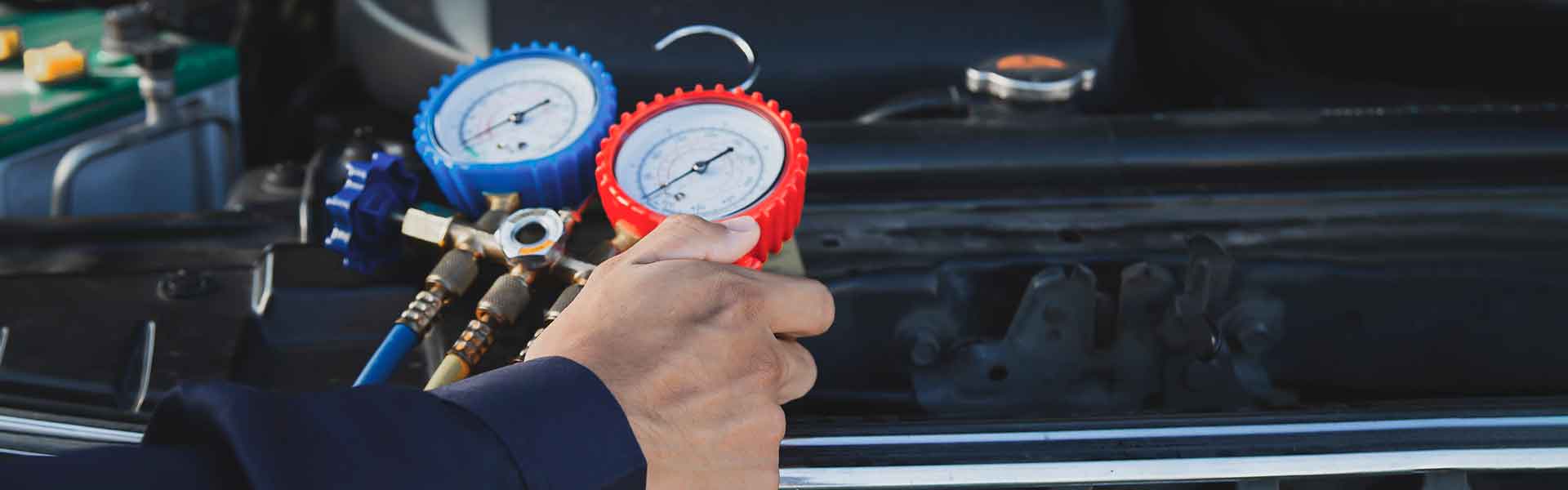
- Verify system pressures – We connect manifold gauges to the high and low sides to see whether the system is undercharged, overcharged, or showing a restriction.
- Measure vent temperatures – We record center and side vent temps at idle and at speed to confirm actual cooling performance against expected output.
- Inspect for leaks – UV dye and electronic leak detection help us find common failure points like the condenser (frequently stone-damaged on Navigator and Aviator), evaporator core, and O-ring seals.
- Road test and listen – A drive confirms blend-door clicking, compressor cycling, and blower behavior under real load, plus airflow issues on rear-zone systems.
Once we know exactly what failed and why, we translate the findings into a clear repair plan and an upfront quote – no surprise add-ons after the work starts.
Air Conditioning AC Repair on Lincoln: Repair vs. Replacement
Not every A/C complaint needs an expensive assembly. We recommend the smallest fix that actually solves the problem.
- Genuine repair – A low charge from a weeping O-ring, a stuck blend-door actuator, a failed pressure switch, or a clogged cabin air filter restricting airflow. These are targeted fixes that restore full cooling.
- Partial replacement – Replacing a leaking condenser after road debris damage while keeping the rest of the system, or swapping a single failed blend-door actuator behind the dash on an MKX or MKZ without touching the healthy ones.
- Full replacement – When a compressor fails internally and sends metal debris downstream, the correct call is replacing the compressor, accumulator/drier, and orifice or expansion device, then flushing the lines. Skipping this on a Navigator almost guarantees a repeat failure.
We lay out each option with its trade-offs so you decide with full information – we never default to the priciest path.
How to Make Your Lincoln Air Conditioning AC Repair Last Longer
A few habits protect the work and keep your Lincoln cooling strong through Denver summers.
- Run the A/C year-round – Operating it briefly in winter keeps compressor seals lubricated and prevents them from drying out.
- Don't overload the system – Precool with windows cracked on hot days rather than blasting max A/C against a heat-soaked cabin, easing strain on the compressor.
- Watch for early warning signs – Weaker cooling, unusual clicking behind the dash, or a musty smell often signal a small issue worth catching early.
- Replace the cabin air filter on schedule – A clogged filter chokes airflow and makes the system work harder; this is a safe owner-level task on most Lincoln models.
Brand-specific care matters too – use the correct refrigerant type and OEM-spec charge amount for your model, since many newer Lincolns use R-1234yf rather than R-134a. Keep climate-control software current and follow Lincoln's service intervals. Leave refrigerant handling, compressor work, and evaporator service to the shop, where proper recovery, vacuum, and charging equipment protect both the system and the environment.
A botched A/C repair on a Lincoln rarely stays cheap. Overcharge the system on an MKZ or MKX and you risk hydro-locking the compressor. Miss a slow leak at the condenser and you burn through refrigerant and PAG oil twice. Skip the electronic diagnosis on a Navigator's dual-zone HVAC and you throw parts at a blend-door actuator problem that never fixes the actual complaint. Getting it right the first time is what protects your wallet and your comfort.
What to Expect When You Bring Your Lincoln In
We keep the process straightforward so you always know where your vehicle stands.
- Drop-off or appointment – Schedule ahead or leave the vehicle with us. Take valuables with you; anything in the cabin we note and set aside. Ask about shuttle or loaner availability when you book.
- Initial inspection – We measure static and operating pressures, check for leaks with dye and electronic sniffers, and scan the HVAC control module for stored codes and actuator faults.
- Written estimate – You get a clear breakdown of the confirmed fault, needed parts, and the recommended repair before we proceed. No surprise add-ons.
- Communication during the work – We call or text with updates and get your approval before any additional labor.
- Pickup walkthrough – We show you what was replaced, verify vent temperatures, and answer questions. After-hours pickup can be arranged if you need it.
Every repair ends with a road test and a scan-tool re-check to confirm the system holds pressure, cycles correctly, and delivers proper cabin temperatures. If anything feels off after you leave, bring it back and we'll re-inspect it – we stand behind the diagnosis.
Why Choose Elevation Auto Repair for Lincoln Air Conditioning AC Repair
Lincoln HVAC systems have their own personality, and we work on them the way the platforms demand. On many MKX, MKC, and MKZ models we routinely see failing blend-door and mode-door actuators, leaking condensers vulnerable to road debris, and compressor clutch problems that mimic a low-charge complaint. On Navigator and Aviator applications, dual and tri-zone systems require correct actuator calibration after any control work.
- Brand-specific diagnosis – We reference Lincoln TSBs and apply HVAC software updates and control-module recalibrations that generic shops skip.
- Correct refrigerant handling – Proper recovery, evacuation, and charge-by-weight to factory spec, including systems that use R-1234yf.
- End-to-end ownership – The same shop diagnoses, repairs, and verifies the fix, so nothing gets lost in a handoff.
You get dealership-level Lincoln knowledge without the dealership runaround – honest diagnostics, no unnecessary parts, and clear communication from start to finish.
Our Lincoln Services
- Battery Repair Replacement
- Brake Repair & Brake Fluid Change
- Check Engine Light Diagnostics
- Clutch Repair & Replacement
- Coolant Leak Repair
- Cooling System Repair
- Drive Shaft Repair
- Engine Repair
- Exhaust & Catalytic Converter Repair
- Head Gasket Repair & Replacement
- Oil Change
- Oil Leak Repair
- Scheduled Service Maintenance
- Steering Repair
- Suspension Repair
- Cambelt Timing Belt Replacement
- Transmission Repair
- Tune Up
- Wheel Alignment