Nissan Battery Repair Replacement at Elevation Auto Repair
Modern Nissans don't take a battery swap kindly if you treat it like a 1990s job. Many current models with the Intelligent Key push-button start and Automatic Start/Stop rely on a registered battery, and dropping in a fresh one without notifying the vehicle can leave the charging system pushing incorrect voltage into a battery it thinks is old.
Battery replacement done right on a Nissan means matching the exact group size and cold cranking amps, then completing the electrical reset the platform expects. On Denver's altitude and temperature swings, an undersized or unregistered battery cranks weak in winter and cooks in summer.
- OEM-spec battery matched to your Nissan's group size, CCA, and Start/Stop AGM requirement
- Battery registration and charging system reset where the platform calls for it using proper scan-tool procedures
- Full charging system check – alternator output, ground straps, and parasitic draw testing
- Transparent findings before any work, so you only pay for what your car actually needs
Symptoms – How to Know You Need This Service
Battery trouble on a Nissan rarely shows up all at once. You may notice small warnings for weeks before a no-start morning.
- Slow or labored cranking – the starter drags before the engine catches, worse on cold Denver mornings
- Start/Stop stops working – the system disables itself when battery state-of-health drops, a common early flag on Altima and Rogue
- Flickering dash lights or dimming headlights at idle or when accessories load up
- Intelligent Key errors – "Key ID Incorrect" or the fob range shrinking as voltage sags
- Clicking with no crank – often a dead cell or heavy corrosion on the terminals
- Swollen battery case or a rotten-egg smell – stop driving and schedule immediately, this points to an overcharging or venting battery
- Battery or charge warning light on the cluster – have it checked soon before you're stranded
- Random electronic glitches – radio resets, clock loss, or erratic gauges after shutdown
A swollen case or sulfur smell means don't drive it. Slow cranking or Start/Stop dropping out means book a test soon.
Common Battery Repair Replacement Issues on Nissan Vehicles
Most shops swap a Nissan battery, clamp the terminals, and hand you the keys. That misses the part that trips people up later: modern Nissans need the new battery registered so the charging system knows it's there. Here's what we see roll into the shop regularly.
- Parasitic drain on 2013-2019 Nissan Altima (L33) and Sentra (B17): Body Control Module and infotainment head units that don't fully sleep pull the battery down overnight, killing a healthy battery in weeks.
- Auxiliary/second battery failures on Nissan Rogue Hybrid and Pathfinder Hybrid: the 12V support battery degrades and triggers hybrid system warnings even when the main pack is fine.
- IMA and lithium-ion pack degradation on the LEAF (ZE0/AZE0): early 24 kWh packs, especially pre-2015, lose capacity bars in hot climates because of passive air cooling rather than a liquid loop.
- Missing battery registration on models with the intelligent charging system: late-model Nissans vary alternator output based on battery state. Install a battery without resetting the data and it chronically undercharges.
- Corroded terminals and swollen cases on Titan and Frontier trucks: heat under the hood and towing loads shorten battery life and crack the case.
- Group-size and CCA mismatches: owners drop in a cheaper battery with lower cold cranking amps, and the truck struggles on Denver cold mornings.
Which Nissan Models We See for Battery Repair Replacement
Battery and charging work spans nearly the whole Nissan lineup, though the procedure varies by platform and whether Start/Stop is fitted.
- Altima (L33 2013-2018, L34 2019+) – frequent Start/Stop AGM batteries requiring registration
- Rogue (T32 2014-2020, T33 2021+) – high accessory draw, common for parasitic-drain complaints
- Sentra (B17 2013-2019, B18 2020+) – standard flooded and AGM depending on trim
- Maxima (A36 2016+) – larger CCA demand, sensitive to weak grounds
- Pathfinder (R52 2013-2020, R53 2022+) and Murano (Z52 2015+) – CVT-equipped, voltage stability matters for transmission logic
- Frontier (D40 2005-2021, D41 2022+) and Titan (A61 2016+) – dual-battery diesel and heavy-accessory setups on some builds
- 370Z (Z34) and GT-R (R35) – performance models where correct CCA and clean grounds affect cold cranking
- LEAF (ZE0/ZE1) – we service the 12V auxiliary battery; the high-voltage traction pack is handled separately
We cover most gas and CVT Nissans from the mid-2000s forward. High-voltage traction battery repair on LEAF and e-POWER hybrid systems falls outside our standard battery service – ask us and we'll point you in the right direction.
Causes & Risks – What Happens if Ignored
Denver's altitude and temperature swings are hard on batteries. Cold mornings raise the current needed to crank, while summer heat accelerates plate corrosion and electrolyte loss. Nissan's intelligent charging strategy adds another wrinkle – if the battery data isn't registered, the alternator either overcharges or starves the battery.
Waiting rarely makes a weak battery cheaper to fix. A marginal battery drags down connected systems, and a slow parasitic drain you ignore for a few weeks usually ends with a no-start in a parking lot.
- Voltage sag under load confuses the BCM and can throw phantom fault codes across unrelated systems.
- Chronic undercharging sulfates the plates, so even a good battery permanently loses capacity.
- Repeated deep discharges on a LEAF pack push capacity loss faster and can strand you with reduced range.
- Terminal corrosion left alone spreads to cable ends and the fuse box, turning a battery job into a wiring repair.
- A dying 12V battery in hybrids can prevent the high-voltage system from starting at all, mimicking a much larger failure.
Catch it early and the fix is a battery and a registration. Let it ride and you're chasing electrical gremlins that cost far more to diagnose.
Safety Impact – Why Battery Repair Replacement Matters
A Nissan's electronics lean on stable voltage. When the battery can't hold it, safety systems misbehave before the car ever refuses to start.
- ABS and Vehicle Dynamic Control can drop out on low voltage, disabling stability and traction assistance.
- Electric power steering on many models reduces assist when voltage dips, making the wheel heavy without warning.
- Airbag and occupant-detection modules may set faults that disarm protection.
- Backup camera, blind-spot, and around-view systems glitch or blank out during voltage sag.
Stop driving now if you notice:
- Multiple warning lights flickering together (ABS, VDC, airbag, power steering).
- Steering that suddenly feels heavy or inconsistent.
- Dashboard resets or the car dying at idle.
Schedule soon if you notice: slow cranking, dimming headlights at idle, or a battery light on startup. There's also a liability angle – if a known charging fault contributed to a crash, addressing it promptly keeps you on solid ground. We'll test the whole system and tell you straight where it stands.
How Nissan Battery Repair Replacement Actually Works
Newer Nissans use an intelligent charging system with a current sensor on the negative battery cable. The engine control module watches battery state and adjusts alternator output to save fuel, which means the system needs to know a fresh battery was installed.
That's why a proper Nissan battery replacement is more than a swap. We match the correct group size and cold cranking amps, then complete the electronic steps so the charging strategy resets to a new battery's profile.
- Battery registration/reset so the ECM charges to the right target voltage instead of undercharging.
- Current-sensor handling on the negative cable – it must be seated and connected correctly or charging logic goes haywire.
- Memory retention during the swap so radio presets, window auto-up, and steering-angle data survive.
- Terminal torque to spec and anti-corrosion treatment to prevent voltage-drop faults.
- Hybrid 12V vs. high-voltage distinction on LEAF, Rogue Hybrid, and Pathfinder Hybrid so we address the right pack.
We test charging output, parasitic draw, and battery health with proper tooling, then confirm the reset took. You get a clear expl
How We Diagnose Battery Repair Replacement Issues on Nissan
A dead battery on a Nissan is often the symptom, not the cause. Many late-model Nissans – especially Altimas, Rogues, and Pathfinders with the intelligent charging system and IBS (Intelligent Battery Sensor) on the negative terminal – need more than a quick voltage test to pinpoint what is actually draining or under-charging the battery.
- We connect Nissan-capable scan tools (CONSULT-III/GTR-level access) to read charging system data, IBS state-of-charge history, and any stored charging or CAN communication codes.
- We load-test the battery and verify cold cranking amps against the factory spec for that trim and climate rating.
- We measure alternator output and ripple, since a failing diode pack on high-mileage Altimas can mimic a bad battery.
- We perform a parasitic draw test – tracing modules like the BCM, telematics unit, or aftermarket accessories that keep the battery awake.
- We visually inspect terminals, ground straps, and the IBS connector for corrosion, and check for swelling from heat under Denver's temperature swings.
- A short road test confirms the alternator charges correctly under real electrical load.
Once we know whether the fault is the battery, the sensor, the charging circuit, or a draw, we build a clear repair plan and a transparent quote before any work begins – no guessing, no unnecessary parts.
Battery Repair Replacement on Nissan: Repair vs. Replacement
Not every battery complaint means buying a new battery. We match the fix to the actual failure.
- Genuine repair: Corroded terminals, a loose ground strap, or a dirty IBS connector often just need cleaning, re-torquing, and a charging system reset. The battery itself may test fine.
- Partial replacement: If the battery is healthy but the IBS sensor, a positive cable end, or a hold-down bracket is corroded, we replace only that part and keep the rest of the assembly.
- Full replacement: A battery with failed cells, physical swelling, or one that repeatedly falls out of charge acceptance needs replacement – ideally with the correct group size and CCA rating. On models with the intelligent charging system, the new battery must be registered so the ECU learns its state of charge.
Skipping that battery registration is a mistake generic shops make, and it leads to overcharging or chronic undercharging. We walk you through which path fits your Nissan and why, so you decide with full information rather than defaulting to the priciest option.
How to Make Your Nissan Battery Repair Replacement Last Longer
Denver's altitude, heat, and cold cycling are hard on batteries. A few habits stretch the life of a new battery and charging components.
- Take occasional longer drives – frequent short trips on a Rogue or Sentra never fully recharge the battery, shortening its life.
- Turn off accessories and cabin electronics before shutting down to reduce startup load.
- Park in a garage during extreme cold snaps when possible to ease cranking demand.
- If the car sits for weeks, use a quality maintainer to prevent deep discharge.
Owner-friendly maintenance you can safely handle:
- Inspect terminals for white or blue corrosion and keep the hold-down snug.
- Watch for a slow crank, dimming lights, or a battery/charging warning – early signs worth checking.
- Keep an eye on the dash for charging system alerts after cold mornings.
Leave the safety-critical work to the shop: replacing the IBS sensor, registering a new battery to the charging system, diagnosing parasitic draws, and updating ECU/BCM software per Nissan's service bulletins. Using the correct OEM-spec battery and honoring Nissan's maintenance intervals keeps the whole electrical system dependable for the long haul.
What to Expect When You Bring Your Nissan In
Nissan batteries fail in ways generic shops miss – an Altima or Rogue with a weak battery can throw phantom faults across the CVT, IPDM, and even the steering-angle sensor before the charging system actually gives up. A parasitic drain on 2013-2018 Altimas (L33) often traces back to the BCM or a stuck relay in the IPDM, not the battery itself. We sort that out before recommending anything.
- Drop-off or appointment – Schedule ahead or leave it with us. Tell us the symptoms: slow cranking, dash flicker, or a battery that dies overnight.
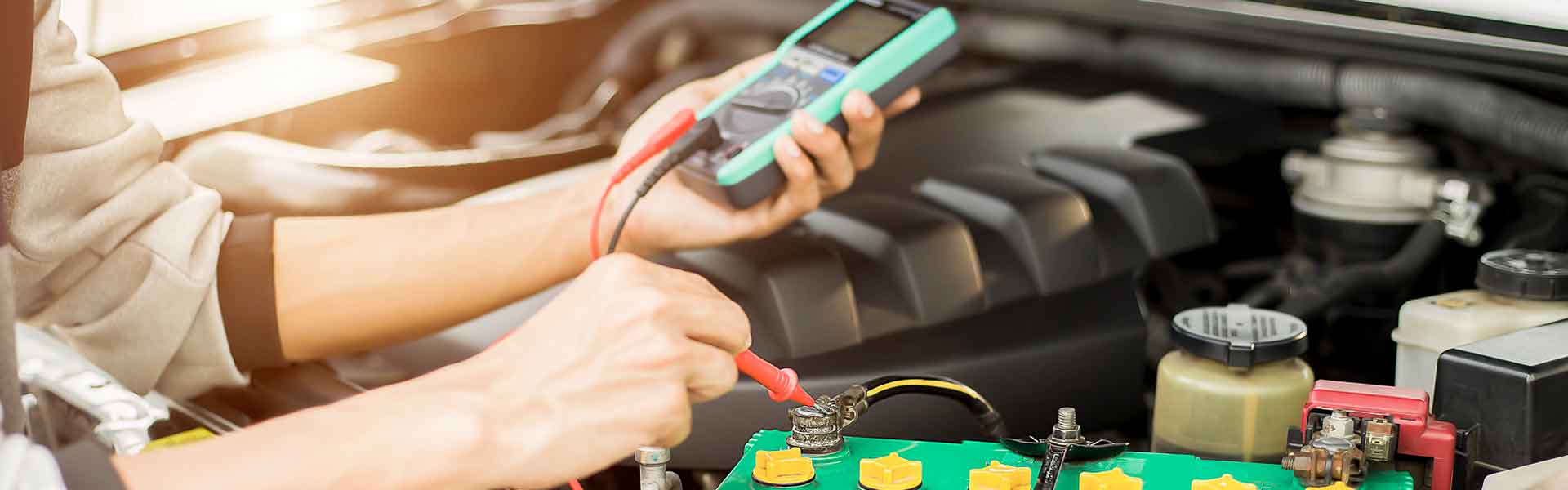
- Initial inspection – We load-test the battery, check state of charge, and measure parasitic draw with a clamp meter to isolate a drain from a worn-out battery.
- Written estimate – You get a clear, itemized quote before any work starts. We explain what your Nissan needs and what can wait.
- Communication during work – We call or text with findings and never proceed on extra repairs without your approval.
- Pickup walkthrough – We show you the old part, explain the fix, and confirm any required registration or reset.
Shuttle and loaner options are available, and after-hours pickup can be arranged. Grab valuables from the glovebox and console. Before your Nissan leaves, we road test it and run a scan-tool re-check to confirm no stored codes returned. If anything feels off afterward, bring it back and we make it right.
Why Choose Elevation Auto Repair for Nissan Battery Repair Replacement
Modern Nissans don't accept a battery swap the way older cars did. Vehicles with intelligent charging and idle stop-start systems require the new battery to be registered so the ECM adjusts charge voltage correctly – skip that step and you'll cook a fresh battery in months. We handle that registration in-house.
- Familiarity with Nissan TSBs covering parasitic draw on Altima (L33), Rogue (T32), and Pathfinder (R52) platforms.
- Correct group-size and CCA fitment – no undersized replacements that struggle at Denver elevation and cold starts.
- Battery registration and charging-system software checks using proper diagnostic tooling, not just a code reader.
- Inspection of the IPDM, ground straps, and terminal corrosion that commonly mimics a bad battery.
We own the job start to finish – diagnosis, replacement, and post-repair verification with a scan-tool re-check and road test. As your Denver dealership alternative, we give you honest diagnostics and transparent pricing, so you only pay for what your Nissan actually needs.
Our Nissan Services
- Air Conditioning AC Repair
- Brake Repair & Brake Fluid Change
- Check Engine Light Diagnostics
- Clutch Repair & Replacement
- Coolant Leak Repair
- Cooling System Repair
- Drive Shaft Repair
- Engine Repair
- Exhaust & Catalytic Converter Repair
- Head Gasket Repair & Replacement
- Oil Change
- Oil Leak Repair
- Scheduled Service Maintenance
- Steering Repair
- Suspension Repair
- Cambelt Timing Belt Replacement
- Transmission Repair
- Tune Up
- Wheel Alignment