
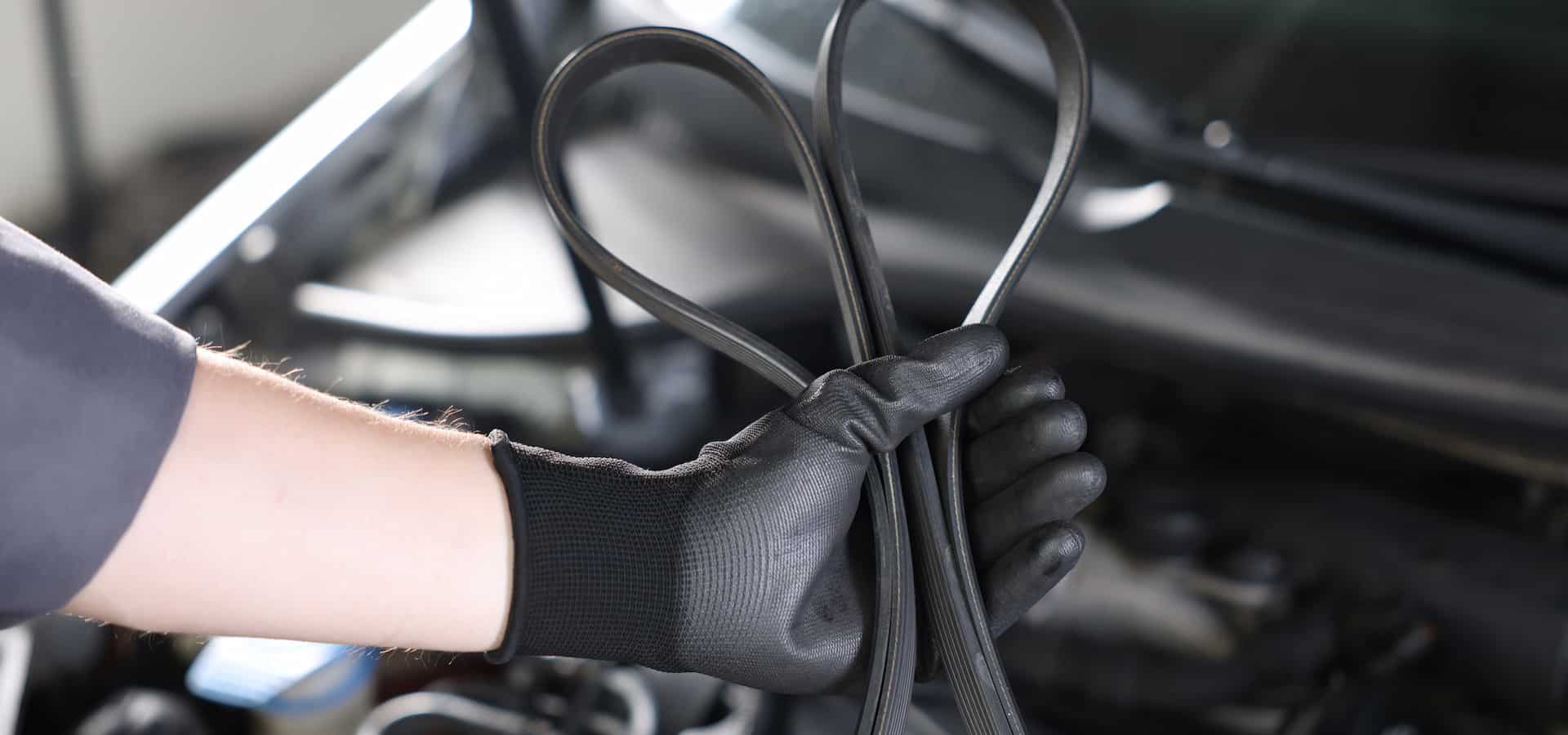
Buick Cambelt Timing Belt Replacement at Elevation Auto Repair
Your Buick idles smoothly today, but a worn timing belt gives little warning before it lets go – and on interference engines, that failure bends valves and pistons in an instant. Getting ahead of it is one of the smartest things a Buick owner in Denver can do.
A cambelt timing belt replacement keeps the crankshaft and camshafts spinning in perfect sync, which controls valve timing and combustion. Doing it right on a Buick means more than swapping a rubber belt. Older belt-driven Buicks – think the 3.0L and 3.8L V6 families found in Century, Regal, and Skylark platforms – demand exact tensioner setup and correct crank-to-cam alignment, and many later models moved to timing chains that call for a different service entirely.
What separates our work from a generic shop:
- We verify whether your specific engine uses a belt or chain before quoting anything – no guesswork.
- We replace the tensioner, idler pulleys, and water pump alongside the belt when the design calls for it.
- We follow OEM torque specs and timing-mark procedures rather than eyeballing alignment.
- We reset and road-test to confirm smooth timing and no leaks before it leaves the bay.
Symptoms – How to Know You Need This Service
Timing components rarely fail silently. From the driver's seat, you may notice warning signs long before catastrophe – if you catch them early.
- Ticking or slapping noise from the front of the engine that changes with RPM.
- High-pitched squeal on cold starts, often pointing to a glazed belt or failing tensioner.
- Rough idle or misfires as timing drifts out of spec.
- Hard starting or extended cranking before the engine catches.
- Visible cracks, fraying, or oil contamination on the belt if you can see it.
- Check engine light with camshaft/crankshaft correlation codes (P0016, P0017).
- Coolant weeping near the timing cover, hinting at a water pump driven by the belt.
Schedule soon if you hear squealing, see minor cracks, or catch a correlation code. Stop driving immediately if you hear loud slapping, the engine suddenly loses power, or it stalls and won't restart – continuing risks bent valves on interference engines. Bring it in and we'll pin down the cause with an honest diagnosis, not a guessed-at repair.
Common Cambelt Timing Belt Replacement Issues on Buick Vehicles
You start the car on a cold Denver morning and hear a faint chirp or rattle from the front of the engine that fades once things warm up. On many Buicks, that early noise is your first clue the timing components are aging. Here are the patterns we see most often:
- Timing belt interference-engine risk on older 3.0L/3.3L V6 Buicks – Certain 1980s–1990s Century, Skylark, and Regal models ran belt-driven overhead-cam engines where a snapped belt bends valves. Age and heat cycling crack the belt long before mileage limits.
- Serpentine and timing tensioner wear on 3.1L/3.4L platforms – Spring-loaded tensioners lose their damping, letting the belt slap and skip teeth. Owners often confuse this with a failing water pump.
- Water pump failure driven off the timing belt – On several belt-driven Buick V6 setups, the pump is turned by the timing belt. A weeping pump seal contaminates the belt and accelerates cracking.
- Idler pulley bearing noise – Dry idler bearings whine and eventually seize, throwing belt tension off and risking a jump in timing.
- Oil-soaked belts from front cam or crank seal leaks – A common wear path where a minor seal drip degrades the rubber and shortens belt life dramatically.
- Chain-driven confusion on modern Ecotec and 3.6L LFX/LLT Buicks – Many newer Enclave, LaCrosse, and Regal models use timing chains, and we frequently verify which system a specific VIN actually runs before quoting.
Which Buick Models We See for Cambelt Timing Belt Replacement
Buick's engine lineup shifted between belts and chains over the years, so identifying your exact powertrain matters. Here's what we commonly service:
- Buick Century / Regal (3.0L, 3.3L, 3.8L V6) – older belt-driven platforms where belt and tensioner service is routine.
- Buick Skylark and Somerset (Quad 4 and V6 variants) – belt-equipped four-cylinders needing careful tensioner setup.
- Buick LaCrosse and Lucerne – many use the 3.6L LY7/LLT V6 or Series III 3800, which are typically chain-driven; we handle timing chain and guide work on these.
- Buick Enclave (3.6L LLT/LFX) – chain-driven; we address stretch, guide wear, and cam actuator issues here rather than belt service.
- Buick Verano and Encore (2.0L/2.4L Ecotec, 1.4L turbo) – chain-driven fours; we service chains and tensioners.
To be upfront: many modern Buicks from the mid-2000s onward use timing chains designed to last the life of the engine, so a true "cambelt" replacement mainly applies to older belt-equipped models. Turbocharged and higher-mileage engines get extra scrutiny for guide and tensioner wear. If you're not sure whether your Buick runs a belt or a chain, bring it by and we'll confirm your engine code and recommend only what your car actually needs.
Causes & Risks – What Happens if Ignored
Colorado's dry air, altitude heat cycling, and stop-and-go commuting all age rubber timing components faster than the calendar suggests. Add original-equipment belts that have never been replaced past their service interval, and the failure clock speeds up.
Most belt problems start small – a hairline crack, a slightly weeping seal, a tensioner losing spring tension. Left alone, that minor issue cascades into engine damage that costs far more than a scheduled belt job.
- Ignoring a chirping tensioner often leads to a belt jumping teeth, throwing off cam-to-crank timing and triggering rough running or a no-start.
- Driving on an oil-contaminated belt typically ends in belt shredding, and on interference engines that means bent valves and possible piston contact.
- Delaying a water pump that shares the timing belt risks coolant loss, overheating, and a warped head on top of the timing repair.
- Skipping a seized idler pulley can strip belt teeth in one drive cycle, stranding you without warning.
The safety line is simple: a belt that fails at highway speed shuts the engine down instantly, killing power assist. The cost line is just as clear – a routine belt-and-pump service is a fraction of an internal engine rebuild.
Safety Impact – Why Cambelt Timing Belt Replacement Matters
A sudden timing belt failure doesn't just stall the engine – it takes several driver-assist systems with it when power drops unexpectedly.
- Power steering assist – On engine-driven hydraulic systems, a dead engine means heavy, hard-to-turn steering mid-maneuver.
- Vacuum brake boost – Loss of engine vacuum makes the brake pedal firm and far less responsive.
- Stability control and ABS – These rely on a running engine and stable electrical supply; a stall can disable them when you need traction management most.
- Restart safety – A belt that fails on an interference engine will not restart, leaving you stranded in traffic.
Know the difference between urgent and soon:
- Stop driving now: loud grinding or squealing from the timing cover, sudden loss of power, oil or coolant pouring from the front of the engine.
- Schedule soon: faint cold-start chirp, minor front seal seepage, belt past its service interval with no symptoms yet.
If a belt is known to be overdue and fails before it's addressed, that neglected maintenance can complicate a claim after an incident. Handling it on schedule keeps you covered and safely on the road.
How Buick Cambelt Timing Belt Replacement Actually Works
The timing belt (or chain, depending on your engine) keeps the crankshaft and camshafts turning in exact sync so valves open and close at the right moment relative to the pistons. On belt-driven Buick V6 engines, that belt also frequently drives the water pump, which is why we replace both together rather than doing the job twice.
What sets Buick work apart is verifying the exact system for your VIN and following the factory sequence precisely – guesswork here is how engines get damaged.
- VIN-specific verification – Many modern Enclave, LaCrosse, and Regal models use timing chains, so we confirm belt vs. chain before any parts are ordered.
- OEM torque and sequence specs – Tensioner, idler, and crank bolt torque values are followed to factory figures so belt tension is correct and lasts.
- Cam-to-crank alignment – Timing marks are set to OEM procedure and rechecked before the engine is turned over.
- Related service in one visit – Water pump, tensioner, idlers, and front seals are inspected and replaced as needed while the front cover is open.</li
How We Diagnose Cambelt Timing Belt Replacement Issues on Buick
You start your Buick and hear a light ticking or rattle at cold idle, or you notice a chirp that speeds up with the engine. Those small signals matter, and we track them down methodically before recommending any work.
- Scan for stored and pending codes. We connect a factory-level scan tool that reads GM Global A/Global B modules, pulling camshaft/crankshaft correlation codes like P0016, P0017, or P0008 that point to timing drift on Buick's 2.0T LTG, 2.4L Ecotec, and 3.6L LFX/LGX V6 platforms.
- Confirm live data. We watch cam-to-crank correlation and variable valve timing solenoid behavior in real time, which reveals a stretched belt or chain guide wear before it strands you.
- Visual inspection. We check belt glazing, cracking, missing teeth, oil contamination from a leaking front cover, and tensioner condition on belt-driven applications like the 1.4L turbo Encore.
- Mechanical measurement. We verify tensioner travel and belt deflection, then rotate the engine by hand to confirm timing marks align.
- Road test. We drive under load to catch noise and hesitation the scan alone won't show.
From there you get a clear written plan and quote that spells out exactly what needs attention and why – no guesswork.
Cambelt Timing Belt Replacement on Buick: Repair vs. Replacement
Not every timing concern means tearing into the full assembly. We match the fix to what your Buick actually needs.
- Genuine repair: A loose accessory belt, a chirping idler, or a single failing tensioner on a belt-driven Buick can often be corrected with adjustment or one small part while the rest stays serviceable.
- Partial replacement: If the belt is sound but the tensioner or an idler pulley shows bearing play, we replace the worn component and keep the healthy assembly intact.
- Full replacement: When we find cascading wear – a contaminated belt from a front cover oil leak, worn guides on chain-driven 3.6L V6s, or a stretched belt near its service life – the complete kit including tensioner, idlers, and seals is the right call. On interference engines, a failed belt can bend valves, so safety drives that decision.
Because many Buick engines are interference designs, we err toward protecting the engine when wear is borderline. We walk you through each option, show you the worn parts, and let you decide – rather than defaulting to the largest job.
How to Make Your Buick Cambelt Timing Belt Replacement Last Longer
Good habits stretch the life of timing components and help you avoid a surprise breakdown.
- Warm up before load: Let the engine idle briefly on cold Denver mornings so oil reaches the tensioner and VVT components before you demand power.
- Ease off aggressive revving: Hard, sudden throttle spikes stress the belt and tensioner more than steady acceleration.
- Address oil leaks early: Front cover and cam seal seepage on 2.0T and 3.6L engines contaminates rubber belts and accelerates cracking.
- Manage heat and altitude: Turbocharged Encore and Regal models run hot – keep cooling system service current to protect nearby components.
What you can safely do yourself:
- Listen for new ticking, whining, or chirping and note when it happens.
- Check oil level and watch for a lit check engine light.
- Use OEM-spec dexos-approved oil to keep VVT and chain guides healthy.
Leave belt removal, tensioner replacement, and timing alignment to the shop – these are safety-critical and demand precise setup. Keeping your Buick's software current and following the factory service interval rounds out the plan, and we handle both when you visit us.
What to Expect When You Bring Your Buick In
You noticed a rhythmic ticking near the front of the engine, or your service records show the timing belt interval quietly slipping past. On interference-style Buick engines, a snapped belt can bend valves and turn a maintenance item into a rebuild – so bringing it in early is the smart move.
- Drop-off or appointment – Schedule ahead or arrive at the shop. Tell us your mileage and any symptoms like whining, chirping from the tensioner, or an oil-soaked belt cover.
- Initial inspection – We pull the covers and check belt condition, idler and tensioner bearings, water pump seepage, and cam/crank seals for leaks that shorten belt life.
- Written estimate – You get a clear, itemized breakdown covering the belt kit, tensioner, and any related seals or pump before we touch a bolt.
- Communication during the work – We call or text if we find worn idlers or a leaking pump behind the belt. No surprise charges.
- Pickup walkthrough – We show you the old parts and explain the new interval.
Loaner and shuttle options are available – just ask when booking, and after-hours pickup can be arranged. Clear out valuables from the cabin; anything left is set aside safely. Before we hand back the keys, every job gets a road test and a scan-tool re-check for cam/crank correlation and stored codes. If anything feels off after you leave, bring it back and we'll re-verify.
Why Choose Elevation Auto Repair for Buick Cambelt Timing Belt Replacement
Many later Buick models moved to timing chains, but belt-driven engines – including the 3.8L 3800 Series and certain Ecotec four-cylinders in models like the Regal, LaCrosse, and Verano – still need precise belt service. Getting cam and crank timing dead-on matters, and we set it to factory marks, not close enough.
- We replace the tensioner, idlers, and water pump together on belt-driven Buicks – the failure points that outlast a belt-only job.
- We check for open GM TSBs and applicable software updates tied to your engine and model year before returning the car.
- We inspect cam and crank seals during teardown, since a slow leak that saturates a new belt is a repeat failure waiting to happen.
- Post-repair verification with factory-aligned scan tools confirms timing correlation and no lingering codes.
You get one shop handling diagnosis, the repair, and the final road test – a real Denver dealership alternative with honest diagnostics and no unnecessary add-ons. That end-to-end ownership is how we keep your Buick reliable well past the next interval.
Our Buick Services
- Air Conditioning AC Repair
- Battery Repair Replacement
- Brake Repair & Brake Fluid Change
- Check Engine Light Diagnostics
- Clutch Repair & Replacement
- Coolant Leak Repair
- Cooling System Repair
- Drive Shaft Repair
- Engine Repair
- Exhaust & Catalytic Converter Repair
- Head Gasket Repair & Replacement
- Oil Change
- Oil Leak Repair
- Scheduled Service Maintenance
- Steering Repair
- Suspension Repair
- Transmission Repair
- Tune Up
- Wheel Alignment