
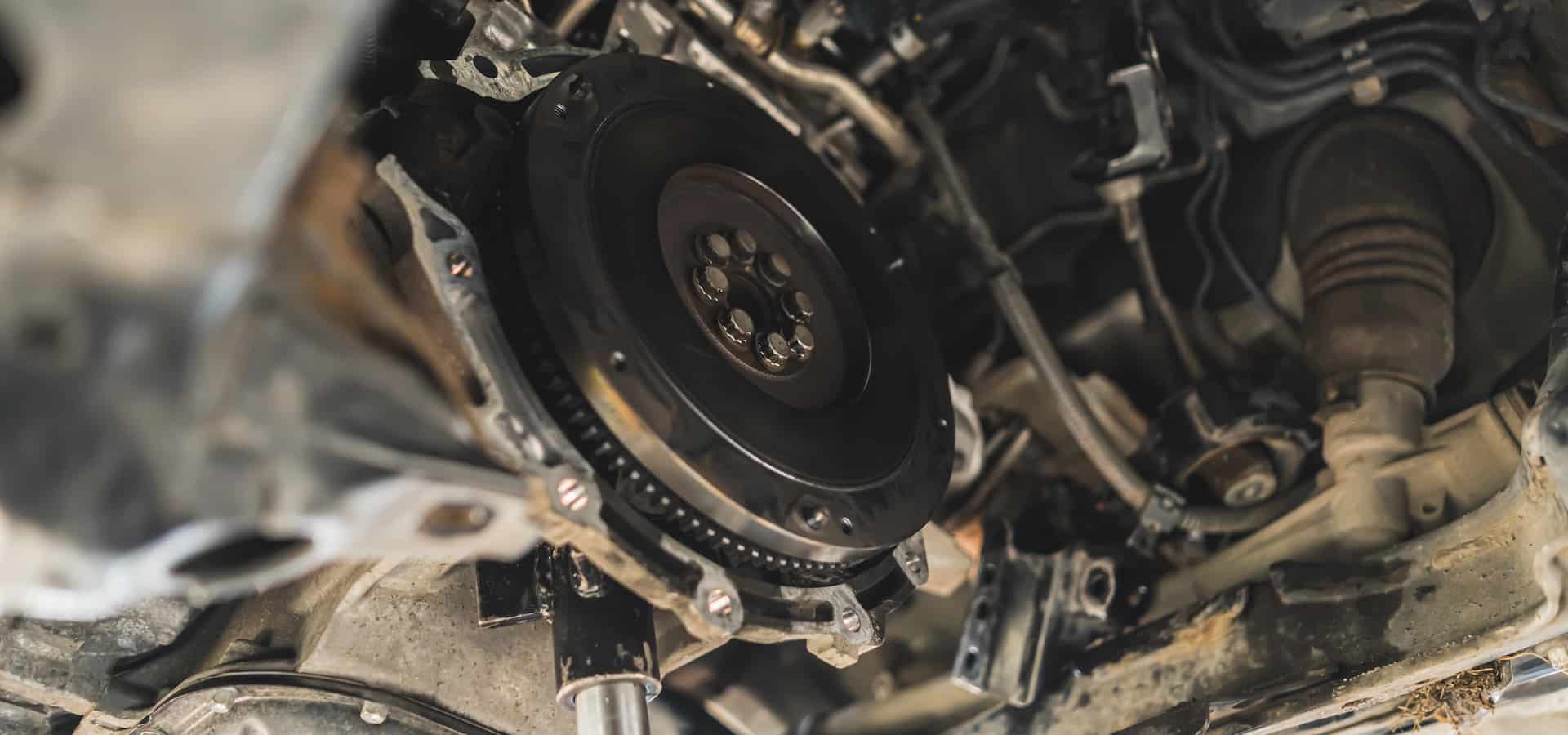
Buick Transmission Repair at Elevation Auto Repair
Modern Buicks lean heavily on adaptive shift logic and electronically controlled transmissions, which means a Buick transmission problem is rarely just a mechanical one. Getting the repair right takes someone who understands both the hardware and the software behind it.
The 6T40/6T45 six-speed automatics found in the Verano, Regal, and Encore are known for wave plate and clutch degradation, while the newer 9T50 nine-speed units in later Enclave and Envision models bring their own valve body and calibration quirks. On the older Lucerne and LaCrosse, the 4T65-E is a familiar face with its own pressure control solenoid failure patterns. These transmissions demand exact fluid specs – DEXRON-VI or the correct low-viscosity fill – and a proper relearn afterward so the adaptive tables reset correctly.
Guessing here leads to comebacks. We pull codes with the right scan tools, verify pressures, and confirm the software is current before touching hard parts. Here's what you can expect from us:
- Honest diagnostics that separate a solenoid or software issue from an internal failure
- Correct Buick-specific fluid, filter, and torque specs on every job
- Adaptive relearn and road verification after the repair
- Clear communication before any major work begins
Symptoms – How to Know You Need This Service
Transmission trouble usually announces itself before it strands you. On a Buick, you may notice several of these warning signs building over time.
- Harsh or delayed shifts – a bang or clunk between gears, common as 6T40 clutch material wears
- Slipping – engine RPM climbs but the car doesn't accelerate to match, often a wave plate or clutch pack issue
- Shudder under light throttle – frequently a worn torque converter clutch or degraded fluid
- Whining or humming that changes with vehicle speed
- Check engine or transmission warning lights – solenoid, pressure, or ratio codes
- Limp mode – the transmission locks into a single gear to protect itself
- Burnt smell or dark, discolored fluid on the dipstick
Schedule soon if you notice mild shudder, a new warning light, or occasional rough shifts. Stop driving and call us right away if the car drops into limp mode, slips badly, or you smell burning fluid – continuing to drive can turn a repairable problem into a full replacement.
Common Transmission Repair Issues on Buick Vehicles
Buick shares much of its drivetrain hardware with the broader GM family, so the failure patterns are well documented. Here's what we see most often on Denver-area Buicks:
- 6T70/6T75 valve body and wave plate failure (2008-2016 Enclave, LaCrosse): The cast-aluminum valve body wears at the solenoid bores, causing harsh 2-3 shifts, flare on upshifts, and eventual limp mode. The 3-5-R wave plate is a known weak point that fractures under load.
- 6T40/6T45 shudder in the Regal and Verano: Torque converter clutch shudder shows up as a vibration at light throttle around 40-50 mph, often traced to degraded fluid and TCC solenoid wear.
- 9T50 9-speed harsh engagement (Encore GX, later Envision): Early software calibrations produced clunky low-speed shifts and delayed engagement – frequently corrected with updated TCM programming plus fluid service.
- Cooler line and radiator cross-contamination: On models with an integrated trans cooler in the radiator, a failed internal barrier lets coolant into the ATF, creating the classic "strawberry milkshake" fluid and rapid clutch damage.
- Wiring and TEHCM issues: The transmission control module mounted inside the pan can develop connector corrosion, throwing shift solenoid codes and erratic behavior.
- Delayed engagement on cold mornings: Common on higher-mileage 6-speeds where pump wear drops line pressure until fluid warms.
Which Buick Models We See for Transmission Repair
We work on the full range of front-wheel-drive and all-wheel-drive Buick platforms. Find your car below to see where our transmission work most often applies.
- Encore / Encore GX – 6T40 six-speed and the newer 9-speed and CVT units; wave plate and valve body concerns are common
- Verano – 2012-2017, 6T40 six-speed automatic
- Regal – 6T45/6T70 six-speeds and later 9T50 nine-speed; GS and AWD variants add a transfer unit and rear coupling to inspect
- LaCrosse – earlier 4T65-E and later 6T70/9T50 units depending on model year
- Enclave – 6T70/6T75 on first-gen models, 9T65 nine-speed on the 2018-up second generation; AWD models get added driveline attention
- Envision – 6-speed and 9-speed automatics with AWD-specific coupling service
- Lucerne – 2006-2011, 4T65-E four-speed automatic
AWD Encore GX, Regal TourX, and Enclave models need extra attention to the transfer case and rear drive coupling, which are easy to overlook when a transmission is the obvious complaint. If you have a rare or heavily modified drivetrain we don't commonly see, let us know up front so we can confirm we're the right fit before you make the trip.
Buick's transmission lineup spans front-wheel-drive sedans, the Enclave crossover, and turbocharged Encore models – and each platform brings its own quirks. Whether you drive a 6T70-equipped LaCrosse or a newer Encore GX with the 9-speed automatic, these units respond to Denver's altitude, stop-and-go traffic, and mountain grades in predictable ways. We focus on fast, accurate diagnosis so you spend less time guessing and more time driving.
Causes & Risks – What Happens if Ignored
Most Buick transmission trouble traces back to heat, fluid neglect, and design-specific wear points. Denver's grades load the torque converter hard, and thin high-altitude air means the trans works harder to move the same weight. Overdue fluid changes accelerate everything.
Waiting rarely makes these issues cheaper. A shudder that starts as a minor annoyance often ends as a full converter or clutch pack replacement.
- Ignoring TCC shudder for months typically burns the torque converter clutch lining, contaminating the whole system with friction material.
- Driving on coolant-contaminated ATF destroys clutch packs and seals in short order – what could have been a cooler repair becomes a rebuild.
- Postponing a valve body fix on the 6T70 lets metal debris circulate, scoring the pump and bore surfaces.
- Neglecting a fractured wave plate leads to loss of reverse and limp-mode operation that strands you.
- Skipping fluid service raises operating temps until seals harden and leaks start.
The safety side matters too: a transmission that unexpectedly drops into limp mode on I-70 or refuses to hold a gear on a grade puts you and other drivers at real risk. Catching symptoms early keeps the repair small and the car predictable.
Safety Impact – Why Transmission Repair Matters
A failing Buick transmission does more than shift poorly. Because the TCM shares data across the vehicle network, drivetrain faults can affect stability control, traction control, and the ABS module's wheel-speed logic. Unexpected limp mode or gear loss also removes engine braking on descents – a genuine hazard in the Rockies.
Know which symptoms demand immediate attention:
- Stop driving now: burning smell, fluid on the ground, complete loss of forward or reverse, transmission stuck in a single gear with a flashing warning light.
- Stop driving now: loud grinding or metallic clunking on shifts.
- Schedule soon: light shudder at cruise, occasional delayed engagement, a check-engine light with a stored shift-quality code.
- Schedule soon: slightly slipping shifts that clear when fluid warms up.
There's also a liability angle. If a known drivetrain fault contributes to a collision and it wasn't addressed, that can complicate an insurance claim. Documented, timely repair protects you on both the road and the paperwork.
How Buick Transmission Repair Actually Works
Modern Buicks run electronically controlled automatics where the TCM commands shift solenoids, monitors input and output speed sensors, and adapts shift points based on wear. That means proper repair isn't just mechanical – it's electronic. After a rebuild or valve body replacement, the transmission needs fluid learn/relearn procedures and often updated software so shifts land correctly.
What sets Buick work apart from generic transmission service:
- OEM software steps: Many 6-speed and 9-speed fixes require GM-level scan tooling to reprogram the TCM and clear adaptive values.
- Fluid specifications matter: These units are sensitive to the correct DEXRON-spec fluid and precise fill level checked at temperature – overfill or wrong fluid causes shudder.
- Torque and sequence specs: Valve body bolts and pan-mounted TEHCM connectors have specific torque values to prevent
Buick's front-wheel-drive lineup leans heavily on GM's automatic transmissions – the 6T40/6T45 six-speeds in the Verano, Regal, and Encore, and the 6T70/6T75 in the LaCrosse and Enclave. These units have their own personalities: valve body wear, torque converter shudder, and wave-plate failures that show up in specific model years. Knowing where each platform tends to fail is what turns a slow parts-swap into a fast, targeted fix.
How We Diagnose Transmission Repair Issues on Buick
A shudder at light throttle or a hard 2-3 shift on a Regal usually points to a handful of known culprits. We work through them in order rather than guessing.
- Pull transmission codes with a GM-capable scan tool (GDS2/Tech2-level access) to read P0700 series faults, solenoid performance codes, and stored TCM data the generic readers miss.
- Review live data – line pressure, TCC slip speed, and individual clutch apply timing – to catch shudder that a code alone won't flag.
- Road test to reproduce the complaint: flare on the 6T70's 3-5-6 clutch, harsh downshifts, or torque converter lockup shudder common on higher-mileage LaCrosse and Enclave units.
- Inspect and measure fluid condition and level, checking for burnt smell, metal, or clutch material that signals internal wear.
- Perform a visual check of external lines, cooler fittings, pan, and the electrical connectors that corrode and mimic internal faults.
Once we know whether the fault is a solenoid, wave plate, valve body, or converter, we build a clear repair plan and quote before any parts come off the shelf – no surprises mid-job.
Transmission Repair on Buick: Repair vs. Replacement
Not every Buick transmission complaint means a rebuild. The right call depends on what's actually worn.
- Genuine repair: Torque converter shudder on a 6T70 often clears with a proper fluid exchange and updated TCM software. Erratic shifts can trace to a single solenoid or a corroded connector – clean, adjust, replace, done.
- Partial replacement: A worn 3-5-R wave plate or a leaking valve body can be replaced while the rest of the transmission stays in service, saving the bulk of the assembly. Torque converter replacement alone is common when lockup is the only fault.
- Full replacement or rebuild: When we find contaminated fluid full of clutch material, multiple failed clutch packs, or hard-part damage, piecemeal repair stops making sense – especially once repair cost approaches a reman unit.
We lay out both paths with real trade-offs so you decide based on your vehicle's mileage and how long you plan to keep it – never a push toward the most expensive option.
How to Make Your Buick Transmission Repair Last Longer
A repaired transmission lasts when the conditions that stressed it are addressed too.
- Driving habits: Let the car warm briefly in cold Denver mornings, come to a full stop before shifting into reverse, and avoid riding heavy throttle in stop-and-go traffic that spikes fluid temps in the 6T40/6T70 units.
- Towing and load: Enclave owners who tow should watch transmission temperature closely and consider added cooling – heat is the number-one killer of these units.
- Owner checks: Listen for new whine or shudder, watch for a check engine or transmission-temp light, and note any delayed engagement early rather than after it worsens.
Brand-specific care matters here:
- Use the correct GM DEXRON-VI fluid – substitutes cause the exact shudder we work to fix.
- Keep TCM software current, since GM has released shift-quality updates for these transmissions.
- Follow Buick's service intervals for fluid rather than treating it as lifetime fill.
Checking fluid level and listening for changes is safe DIY. Fluid exchanges, valve body work, and anything internal should stay with us – these are precision, safety-critical repairs where torque specs and fill procedures are unforgiving.
What to Expect When You Bring Your Buick In
Buick transmissions have their own personalities depending on the platform – the 6T70/6T75 six-speed in the Enclave and LaCrosse, or the 9T50 nine-speed in later Envision and Regal models. Each has distinct failure patterns, so the visit starts with matching symptoms to the right hardware.
- Drop-off or appointment: Tell us what you're feeling – harsh 2-3 shifts, torque converter shudder, delayed engagement, or a slip under load. Leave the vehicle with valet key access and remove valuables; the glovebox and console can stay as they are.
- Initial inspection: We pull codes with a GDS2/Tech2-capable scan tool, check fluid condition and level, and inspect for external leaks at the pan, cooler lines, and axle seals.
- Written estimate: You get a line-item breakdown before any parts come off – valve body work, solenoid replacement, converter, or a full rebuild.
- During the work: We text or call with findings and photos. No surprise add-ons appear on the invoice.
- Pickup walkthrough: We show you what was replaced and explain any adaptive relearn performed.
Loaner and shuttle options are available, and after-hours pickup can be arranged. Every job ends with a road test and a scan-tool re-check to confirm shift quality and clean data. If anything feels off afterward, bring it back and we'll re-verify.
Why Choose Elevation Auto Repair for Buick Transmission Repair
Transmission work on Buick platforms rewards familiarity. The 6T70/6T75 family is prone to wave-plate failure and torque converter shudder tied to fluid breakdown, while the 9T50 units have their own valve body and software quirks that a generic flush won't touch.
We stay current on Buick TSBs and controller reprogramming, so adaptive shift relearns and updated valve body calibrations get done correctly rather than skipped. That matters – a mechanically sound repair can still shift poorly without the right software.
- Platform-specific diagnosis: GM factory-level scan tools read live solenoid and clutch pressure data instead of guessing.
- Correct fluid and specs: We use the specified Dexron fluid and torque values for your generation, not a one-size-fits-all fill.
- End-to-end ownership: The same shop diagnoses, repairs, reprograms, and road-tests your Buick.
You get honest diagnostics, clear communication, and repairs built for long-term reliability – a real dealership alternative in Denver that keeps you safely on the road.
Our Buick Services
- Air Conditioning AC Repair
- Battery Repair Replacement
- Brake Repair & Brake Fluid Change
- Check Engine Light Diagnostics
- Clutch Repair & Replacement
- Coolant Leak Repair
- Cooling System Repair
- Drive Shaft Repair
- Engine Repair
- Exhaust & Catalytic Converter Repair
- Head Gasket Repair & Replacement
- Oil Change
- Oil Leak Repair
- Scheduled Service Maintenance
- Steering Repair
- Suspension Repair
- Cambelt Timing Belt Replacement
- Tune Up
- Wheel Alignment