Chevrolet Oil Leak Repair at Elevation Auto Repair
Spotted a slick spot on your driveway or caught that hot-oil smell after a drive? We track the leak to its actual source and fix it right the first time. Chevrolet oil leaks rarely come from one obvious gasket, so guesswork wastes your money and risks bigger damage.
Chevrolet platforms have their own quirks. The LS and LT-series V8s (Silverado, Tahoe, Camaro) are known for rear main seal and oil pan gasket seepage, while the Ecotec 2.0T and 2.4L four-cylinders (Malibu, Equinox, Cruze) commonly weep from the valve cover gasket and cam cover housing. The 3.6L LFX/LGX V6 found in Traverse, Impala, and Camaro often leaks at the timing cover and oil filter housing.
Getting this right means proper torque sequencing on aluminum covers, correct RTV where GM specifies it instead of a gasket, and OEM-grade seals that hold up to Colorado temperature swings. A generic reseal that skips the diagnostics tends to come back.
What you can expect from us:
- A dye or UV trace to confirm the true leak source before any parts come off
- OEM-spec seals, gaskets, and fasteners torqued to GM values
- Honest reporting – we only fix what's actually leaking
- Repairs that protect your warranty coverage and resale value
Symptoms – How to Know You Need This Service
Oil leaks tend to announce themselves gradually, then suddenly. Here's what you may notice on your Chevrolet:
- Dark spots under the vehicle – brown or black puddles where you park, often near the front or center of the engine bay
- Burning oil smell – especially after highway driving, as oil drips onto the hot exhaust manifold
- Blue or gray smoke from the engine bay or tailpipe
- Low oil level warning or the oil pressure light flickering at idle
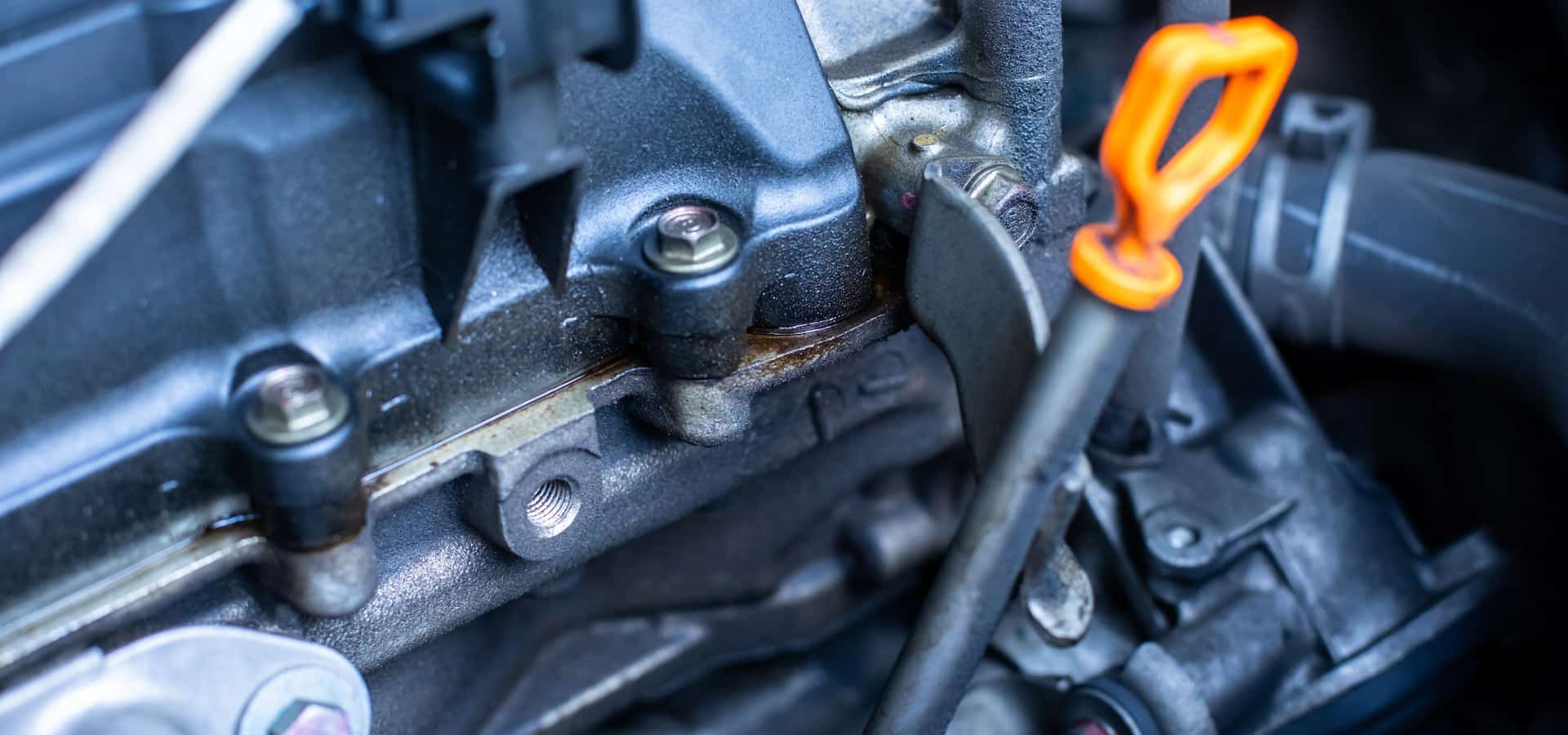
- Visible residue around the valve cover, oil pan rail, or timing cover
- Whining or ticking that worsens as oil level drops and lubrication suffers
- Oil on the belt or accessory pulleys, which can throw the belt or damage components
Schedule soon if you see minor seepage or the occasional drop – it's usually a gasket that's better fixed before it worsens. Stop driving immediately if the oil pressure light is on, the level is critically low, or you see heavy oil hitting the exhaust or belt. Running a Chevrolet low on oil risks bearing failure and turbo damage on the Ecotec turbo engines.
Common Oil Leak Repair Issues on Chevrolet Vehicles
Spot a slick puddle under your Chevy or catch that burnt-oil smell at a stoplight? We track the leak to its actual source and fix it right, protecting both your warranty and resale value along the way.
Certain Chevrolet platforms leak in predictable spots. These are the patterns we see most often in our Denver bays:
- LS/LT V8 rear main seal seepage (2007-present Silverado/Tahoe/Camaro) – The one-piece rear main and its housing weep over time, and it's easy to confuse with an oil pan gasket leak until the transmission bellhousing shows wet oil.
- Ecotec 2.0T/2.4T valve cover and PCV failure (2010-2017 Malibu, Equinox, Cruze) – The integrated PCV diaphragm in the cover tears, spiking crankcase pressure and pushing oil past seals. A cheap-looking part causes multiple leaks at once.
- 3.6L V6 timing cover and valley pan leaks (LFX/LLT, 2009-2017 Traverse, Camaro, Impala) – The plastic-backed valley cover gasket hardens and drips onto the exhaust, and the front timing cover seal follows.
- 1.4L Turbo oil leaks (2011-2019 Cruze/Sonic) – Turbo oil feed line seals and the valve cover PCV are frequent culprits, often paired with coolant loss.
- 5.3L active fuel management oil consumption (2007-2014 GMT900 trucks/SUVs) – AFM lifters and worn valve seals can burn and weep oil, showing up as external seepage and low levels.
- Oil pan and drain plug gasket wear – Common on high-mileage Chevys where road debris and Colorado temperature swings age the sealant.
Which Chevrolet Models We See for Oil Leak Repair
We service the full Chevrolet lineup for oil leaks. Find your platform below:
- Silverado 1500 / Tahoe / Suburban (GMT900, K2XX, T1XX) – 5.3L and 6.2L LS/LT V8s prone to rear main seal and oil pan gasket leaks, plus valve cover seepage
- Camaro (Fifth & Sixth Gen) – LS3/LT1 V8s and the 3.6L LFX/LGX V6; SS and ZL1 variants get extra attention on the oil cooler lines
- Malibu / Cruze / Equinox – Ecotec 1.4T, 1.5T, 2.0T, and 2.4L; valve cover gaskets and cam cover housings are frequent offenders
- Traverse / Impala / Acadia-shared 3.6L – timing cover and oil filter housing leaks common past higher mileage
- Colorado / Trailblazer – 2.5L, 2.7L Turbo, and 3.6L; pan and front cover seals
- Corvette (C6 / C7 LS/LT) – dry-sump and wet-sump variants both handled, with careful RTV work on the covers
We're comfortable with manual and automatic transmissions and both naturally aspirated and turbocharged Ecotec engines. Older pre-2000 carbureted or very early platforms are outside our usual focus, so call ahead if you drive a classic and we'll point you the right direction.
Causes & Risks – What Happens if Ignored
Most Chevrolet oil leaks come down to aging elastomer gaskets, a plugged PCV system building crankcase pressure, and Denver's dry, high-altitude temperature cycling that hardens seals faster than milder climates. Add stop-and-go driving and the seepage accelerates.
A small weep rarely stays small. On the Ecotec engines especially, a torn PCV diaphragm keeps forcing oil out of every seal you just cleaned – so chasing one leak without fixing the root cause wastes your money.
- Rear main seal seepage ignored for months lets oil saturate the clutch or flywheel, turning a seal job into a transmission-out repair.
- 3.6L valley pan drips onto the exhaust manifold create smoke, odor, and a real fire risk.
- 1.4L turbo feed line leaks can starve the turbo, leading to bearing failure and a full turbocharger replacement.
- Chronic low oil level from an unaddressed leak accelerates bearing and cam wear, risking major engine damage.
- Oil on serpentine belt or pulleys causes slipping, squealing, and eventual accessory failure.
The gap between a gasket replacement and an engine or transmission teardown is measured in how long you wait. We'd rather catch it early and keep your Chevy on the road.
Safety Impact – Why Oil Leak Repair Matters
Oil where it doesn't belong does more than make a mess. It compromises systems you rely on every mile.
- Braking – Oil dripping onto brake components or contaminating the master cylinder area reduces stopping confidence.
- Steering – On models sharing seal proximity with power steering lines, leaks can affect assist and response.
- Belt-driven systems – A slick serpentine belt can slip off, killing power steering, water pump, and charging in one shot.
- Fire risk – Oil pooling on hot exhaust manifolds (common on the 3.6L V6) is a genuine ignition hazard.
Stop driving now if you notice:
- Smoke or burning smell from under the hood
- Oil pressure warning light or rapidly dropping level
- Belt squeal combined with lost steering assist
Schedule soon if you see: small drips on the driveway, a faint oil odor after highway drives, or slight seepage at the valve cover. Addressing a known leak before an incident also protects you from liability questions and keeps your service records clean for resale.
How Chevrolet Oil Leak Repair Actually Works
Your engine relies on a network of gaskets, seals, and a PCV system that keeps crankcase pressure in check. When any of those age out, oil finds the path of least resistance. On modern Chevrolets, fixing it correctly means respecting GM's specific procedures, not just swapping a gasket.
We start by cleaning and dye-testing to confirm the true source, then repair with OEM-grade seals and GM sealant where a torque-and-cure sequence is specified. Many Chevy assemblies use RTV rather than a solid gasket, and getting the bead width and cure time right is what separates a lasting repair from a comeback.
- PCV-first diagnosis on Ecotec engines – we verify crankcase pressure before sealing anything, since a bad PCV re-leaks otherwise.
- Torque-sequence-critical covers – valve covers, oil pans, and timing covers follow GM's staged tightening pattern to avoid warping.
How We Diagnose Oil Leak Repair Issues on Chevrolet
An oil spot on the driveway or a burning smell after a drive tells us something's weeping. We track the source before touching a wrench, because Chevrolet leaks often migrate from a high point and pool somewhere misleading.
- Interview and history check – We ask about spot color, drive habits, and recent service, then pull records for the specific engine such as the LT1, LS-series, or Ecotec 2.0T/2.4L.
- Scan for related codes – Using a GDS2 or Tech2-compatible scan, we read oil pressure sensor data and check for pending codes that point to gasket or PCV faults.
- Cold visual inspection – We look at the valve cover gaskets, rear main seal, oil pan, and the notorious oil filter housing / cooler O-rings on 3.6L LFX/LGX V6 engines.
- UV dye and pressure test – A fluorescent dye and cranking-pressure check isolate active leaks from old residue.
- Road test and re-inspect – We drive under load, then measure seepage at operating temperature to confirm the true origin.
Once we pinpoint the source, we build a clear repair plan and an itemized quote – no guesswork, no padded line items. You'll know exactly what leaks, what it takes to fix, and why.
Oil Leak Repair on Chevrolet: Repair vs. Replacement
Not every leak needs major surgery. We match the fix to the actual failure so you spend on what matters.
- Genuine repair – A weeping valve cover gasket on a 5.3L LS/Vortec, loose oil pan bolts, or a worn PCV grommet often just needs a reseal, retorque, or a single small part.
- Partial replacement – Chevrolet 3.6L V6 oil cooler O-ring and filter housing leaks call for replacing the failed seals and housing while keeping the surrounding assembly intact. Same logic applies to Ecotec timing cover gaskets.
- Full replacement – A failed rear main seal on high-mileage LS platforms, or cascading damage from a leak that's cooked adjacent components, may justify replacing the complete assembly when repair cost creeps toward the cost of new.
We lay out the options side by side – what each approach costs, how long it holds, and how it affects your warranty and resale value. You decide with full information. We won't push the biggest invoice when a targeted reseal keeps your Chevrolet on the road just as reliably.
How to Make Your Chevrolet Oil Leak Repair Last Longer
A quality reseal lasts when the engine runs clean and cool. A few habits protect the work you paid for.
Driving Habits That Help
- Let the engine warm briefly before hard acceleration, especially in cold Denver mornings – seals flex less when oil is at temperature.
- Avoid sustained high-RPM towing or heavy loads that spike crankcase pressure and stress fresh gaskets.
- Watch for overheating, since heat cycles harden rubber seals prematurely.
Maintenance You Can Do
- Glance under the car for fresh spots after it sits overnight.
- Check the dipstick monthly and note any sudden drops.
- Listen for a whistling PCV or new ticking, and act on the oil pressure light immediately.
Brand-Specific Care
- Use the correct dexos-approved oil and viscosity – the wrong weight accelerates seal wear on GM engines.
- Stick to Chevrolet's service intervals and keep the ECM software current, since PCV and oil control updates apply to some Ecotec and V6 platforms.
- Use OEM or OE-equivalent gaskets where fit and material matter.
Dipstick checks and topping off are safe DIY. Leave rear main seals, oil coolers, and anything requiring lifts or torque specs to us – guessing on those risks a bigger repair and your warranty.
What to Expect When You Bring Your Chevrolet In
Spotted a spot on the driveway or caught that burning smell after a drive? Bring the Chevrolet in and we'll trace the leak to its actual source instead of guessing. Chevy oil leaks often masquerade – a weeping valve cover can look like a rear main, and coolant crossovers on some LS/LT platforms mimic oil seepage.
- Drop-off or appointment – Schedule ahead or leave it with us. Grab personal items from the cabin; we secure the vehicle regardless.
- Initial inspection – We clean suspect areas, apply UV dye when needed, and pinpoint the origin – valve cover gaskets, oil pan, front cover, or the rear main seal common on high-mileage Silverado and Tahoe 5.3L engines.
- Written estimate – You get a clear breakdown of parts, labor, and what we found before any wrench turns.
- During the work – We text or call with updates and photos. Loaner and shuttle options help you stay moving.
- Pickup walkthrough – We show you the replaced components and explain what caused the leak.
Before handoff, every Chevy gets a road test and a scan-tool re-check to confirm no lingering codes. After-hours pickup is available when your schedule runs long. If anything feels off afterward, bring it back – we stand behind the repair and follow up until it's right.
Why Choose Elevation Auto Repair for Chevrolet Oil Leak Repair
Chevrolet oil leaks have patterns, and we know them. GM's Ecotec 2.4L engines in the 2010-2017 Equinox and Malibu are notorious for timing chain cover and PCV-related seepage, while the Gen IV/V small-block V8s frequently weep at the oil pan rail and rear cover. We reference current Chevrolet TSBs and apply software or PCV updates where GM has revised the fix.
- Correct-source diagnosis – dye tracing and pressure checks so you replace the leaking gasket, not the one next to it.
- OEM torque and sealant specs – proper RTV cure times and fastener sequencing on cover and pan repairs that generic shops skip.
- End-to-end ownership – the same shop diagnoses, repairs, and verifies the work with a post-repair scan and road test.
Repairs done to factory standard protect your remaining powertrain warranty and preserve resale value – sloppy sealant jobs cost you later. As your Denver dealership alternative, we keep the work honest, skip repairs you don't need, and keep your Chevrolet reliable for the long haul.
Our Chevrolet Services
- Air Conditioning AC Repair
- Battery Repair Replacement
- Brake Repair & Brake Fluid Change
- Check Engine Light Diagnostics
- Clutch Repair & Replacement
- Coolant Leak Repair
- Cooling System Repair
- Drive Shaft Repair
- Engine Repair
- Exhaust & Catalytic Converter Repair
- Head Gasket Repair & Replacement
- Oil Change
- Scheduled Service Maintenance
- Steering Repair
- Suspension Repair
- Cambelt Timing Belt Replacement
- Transmission Repair
- Tune Up
- Wheel Alignment