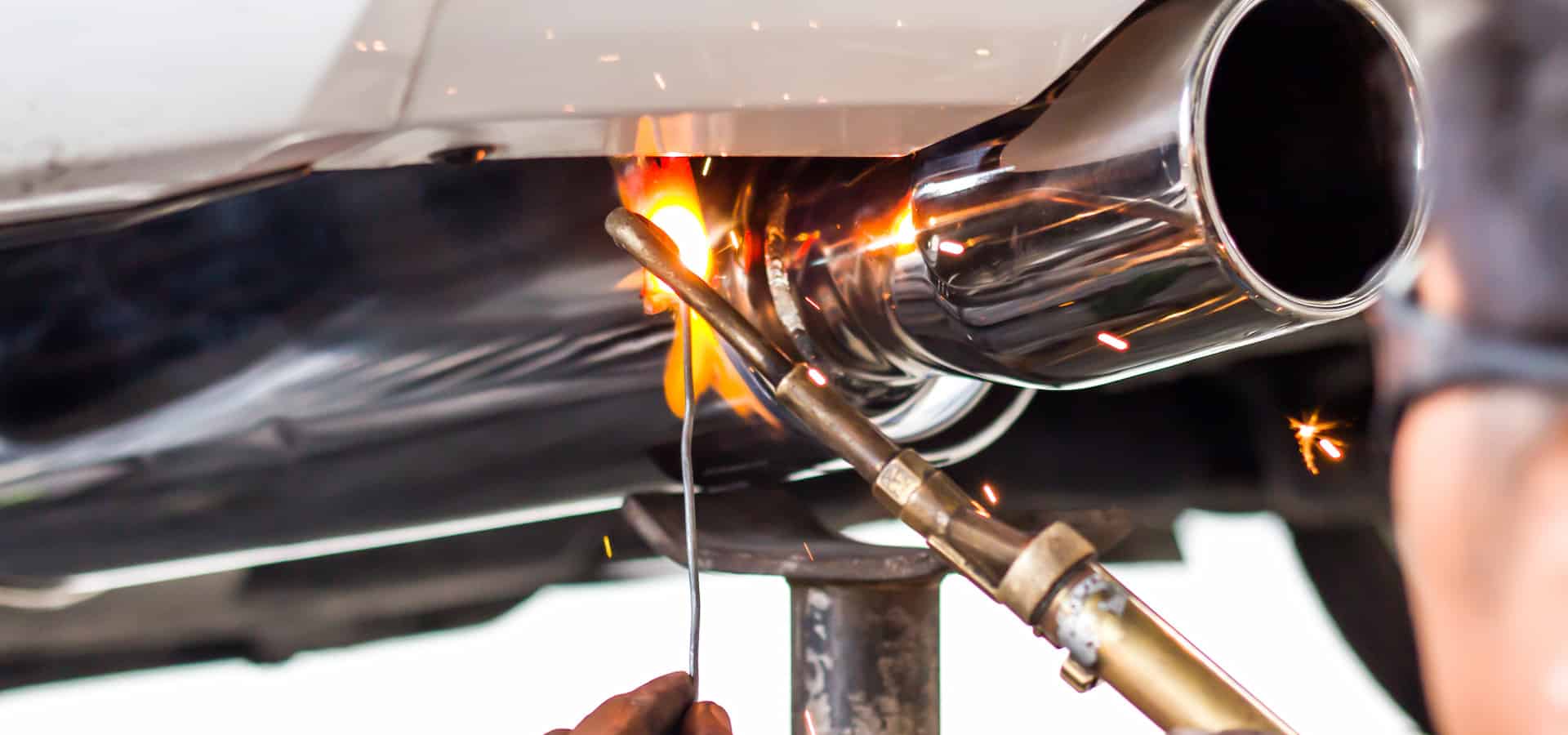
Chevrolet Exhaust & Catalytic Converter Repair at Elevation Auto Repair
Chevrolet's modern powertrains lean heavily on downstream oxygen sensors and dual pre/post catalyst monitoring to keep the ECM within emissions targets, which means a lazy or failing converter throws codes long before you smell anything. On popular platforms like the Ecotec 2.4L (LEA/LAF) and the 5.3L V8 (LC9/LMG/L83), a P0420 or P0430 is rarely just a bad cat – it is often an upstream fueling or misfire problem cooking the substrate.
Doing this right on a Chevy is different from a generic muffler-shop weld job. We pull live fuel trim and O2 switching data with a factory-capable scan tool, confirm the converter is the actual failure and not a symptom, and torque the exhaust manifold and flange hardware to GM spec so you avoid the notorious cracked-manifold-bolt leaks common on the 5.3L trucks. That approach protects your investment and keeps the check engine light off for the long haul.
- Real diagnostics that separate a failed converter from an upstream fueling or misfire cause
- OEM-grade or CARB-compliant converters correctly matched to your Chevrolet's emissions system
- Manifold, flange, and hanger hardware torqued to GM specification for leak-free longevity
- Straight answers with no unnecessary parts pushed onto your repair
Symptoms – How to Know You Need This Service
Exhaust problems on a Chevrolet usually announce themselves through sound, smell, and dashboard warnings. Here is what you may notice:
- Check engine light with P0420 or P0430 – the most common signal of reduced catalyst efficiency
- Rotten-egg or sulfur smell from the tailpipe, pointing to a saturated or failing converter
- Rattling from underneath when idling or accelerating, often a broken internal substrate
- Loud droning or deep exhaust growl that gets worse under throttle – a leak at the manifold or a rusted midpipe
- Noticeable power loss and sluggish acceleration from a clogged, restricted converter
- Reduced fuel economy paired with rich fuel trims
- Ticking near the engine on cold start that fades as it warms, a classic 5.3L exhaust manifold bolt or gasket leak
Schedule soon for a check engine light, mild droning, or dropping fuel economy. Stop driving and call us if you smell strong exhaust fumes inside the cabin, hear a heavy metallic rattle, or the vehicle bogs down badly – a collapsed converter can overheat and cause further damage.
Common Exhaust & Catalytic Converter Repair Issues on Chevrolet Vehicles
Chevrolet's wide platform range – from the LS-based small blocks to the Ecotec four-cylinders – means exhaust and catalytic converter problems show up in predictable, brand-specific patterns. Here are the failure modes we see most often on Denver Chevrolets:
- P0420 / P0430 catalyst efficiency codes on 2010-2016 Equinox and Terrain (2.4L LEA Ecotec) – the well-documented oil consumption problem on this engine contaminates the downstream cat, killing efficiency long before the converter reaches normal end of life.
- Manifold-integrated converter cracking on 2007-2013 Silverado/Tahoe (5.3L LC9/LMG) – the close-coupled cat runs hot, and repeated heat cycles crack the manifold flange, producing a tick that mimics a lifter.
- Flex pipe failure on 2011-2019 Cruze and Sonic (1.4L turbo LUJ/LUV) – the braided flex coupling near the turbo downpipe fatigues and tears, causing an exhaust leak and boost-related drivability complaints.
- O2 and wideband sensor drift on LS/LT V8 trucks – aging upstream sensors skew fuel trims, which can prematurely trigger catalyst codes even when the cat itself is fine.
- Rusted rear muffler and tailpipe hangers on older Malibu and Impala – Colorado road salt eats the rear section, dropping the muffler or breaking hangers so the system rattles against the underbody.
- Aftermarket or stolen converter replacement on 2010+ trucks and vans – catalytic converter theft is common on higher-clearance Chevrolets, and cheap universal replacements rarely pass Colorado emissions.
Which Chevrolet Models We See for Exhaust & Catalytic Converter Repair
We service exhaust and catalytic converter work across nearly the full Chevrolet lineup. These are the platforms we see most often:
- Silverado 1500 (GMT900 and K2XX, 2007–2018) – 4.8L/5.3L/6.2L V8s prone to cracked manifold bolts and P0420/P0430 codes
- Tahoe & Suburban (GMT900/K2XX) – same V8 exhaust manifold and converter concerns as the trucks
- Equinox & Malibu (2010–2017) – 2.4L Ecotec (LEA/LAF) with converter efficiency failures often tied to oil consumption
- Cruze (2011–2019) – 1.4L turbo (LUJ/LUV) exhaust leaks and downstream sensor issues
- Impala & Traverse – 3.6L V6 (LFX/LLT) with rear-bank manifold and flex-pipe cracking
- Camaro (5th/6th gen) – LS/LT V8 dual-cat systems; performance and SS variants often use high-flow configurations we account for
- Colorado (2015+) – 3.6L V6 and 2.8L Duramax diesel exhaust and aftertreatment components
Diesel Duramax aftertreatment work (DPF/SCR) on the heavy-duty trucks involves additional emissions hardware, so let us know your exact configuration when you call. We handle most gas and light-duty diesel Chevrolet exhaust jobs, and we will tell you upfront if a specialized emissions component is better routed elsewhere.
Causes & Risks – What Happens if Ignored
Most Chevrolet exhaust failures trace back to a mix of heat cycling, Colorado's road salt and altitude, engine oil contamination, and a few known platform quirks like the 2.4L Ecotec's oil consumption. Left alone, a small leak or a single trouble code rarely stays small.
A cracked flex pipe or manifold flange that gets ignored for a few months usually pulls the downstream sensors out of calibration, which then triggers additional codes and richer fuel trims. What starts as one repair spreads into several.
- A minor exhaust leak grows until unburned fuel overheats and destroys the catalytic converter substrate.
- Oil-fouled converters on the 2.4L LEA keep re-triggering P0420 until the underlying oil consumption is addressed – replacing the cat alone just repeats the failure.
- Broken hangers let the system sag onto driveline components, wearing through heat shields and nearby wiring.
- A failing cat can restrict flow, choking the engine and dropping fuel economy and power noticeably.
- Exhaust leaks ahead of the sensors confuse the ECM, causing rough idle and hard starts that mimic bigger engine problems.
The cost side is simple – a flex pipe or sensor caught early is a modest job, while a neglected leak that takes out the converter turns into a far bigger repair. We'd rather catch it at the code stage.
Safety Impact – Why Exhaust & Catalytic Converter Repair Matters
Exhaust problems are not just a performance issue – they affect what you breathe and how the vehicle behaves. A leak upstream of the cabin can push carbon monoxide toward the passenger compartment, and a dragging exhaust component can damage brake lines, fuel lines, and wiring routed along the underbody.
On Chevrolets, skewed oxygen sensor data from an exhaust leak also feeds the ECM, which can affect drivability and, in some cases, illuminate warnings that mask other faults.
- Stop driving now – strong exhaust smell inside the cabin, loud roaring that suggests a broken pipe near the passenger area, or a dragging component scraping the road.
- Schedule soon – a check engine light for catalyst efficiency, a mild tick on cold start, reduced power, or a rattle over bumps.
There is also a liability angle worth noting – Colorado requires functioning emissions equipment, and a known, unaddressed defect that contributes to an incident can complicate insurance claims. Keeping the system sound protects your registration and your passengers.
How Chevrolet Exhaust & Catalytic Converter Repair Actually Works
Your Chevrolet's exhaust system does two jobs at once – it routes hot gases safely away from the cabin and it cleans them through the catalytic converter, which uses precious-metal coatings to convert harmful gases into less harmful ones. Upstream and downstream oxygen sensors report to the ECM so it can confirm the cat is working and fine-tune the fuel mixture.
What makes Chevrolet work different from generic exhaust service is the electronics. The ECM watches the sensor readings closely, and simply bolting on parts without addressing calibration leaves codes active.
- OEM diagnostics – we read live fuel trims and catalyst efficiency data with GM-capable scan tools, not just a generic code reader, so we confirm whether the cat, a sensor, or an upstream leak is the real cause.
- Correct converter matching – GM-spec or CARB-compliant converters are required to satisfy the ECM's efficiency monitor and pass Colorado emissions.
- Sensor placement and torque – oxygen and wideband sensors follow specific torque and anti-seize proc
How We Diagnose Exhaust & Catalytic Converter Repair Issues on Chevrolet
Chevrolet's OBD-II system runs catalyst efficiency monitors that compare the upstream and downstream oxygen sensor signals – when the rear sensor starts mirroring the front, the ECM sets a P0420 or P0430. That code is a symptom, not a diagnosis, so we dig deeper before condemning a converter.
- Pull codes with a GM-capable scan tool (GDS2/Tech2-level access) to read freeze-frame data, fuel trims, and misfire counters that generic readers miss.
- Graph the pre- and post-cat O2 sensor voltages live to confirm whether the converter is actually failing or a lazy sensor is throwing the P0420.
- Check long-term fuel trims for rich or lean conditions – a Chevy 5.3L LS-series V8 running rich from a leaking injector can cook a converter prematurely.
- Visually inspect flex pipes, manifold-to-cat flanges, and welded joints for soot streaks, cracks, and rust-through common on high-mileage Silverado, Equinox, and Malibu platforms.
- Road test to locate rattles, drone, or a rich exhaust smell, then use a smoke test or exhaust backpressure gauge to confirm a clogged or collapsed substrate.
Once we know whether the fault is a sensor, a leak, or a spent converter, we build a clear repair plan and quote so you know exactly what's needed – and what isn't.
Exhaust & Catalytic Converter Repair on Chevrolet: Repair vs. Replacement
Not every exhaust complaint means a new converter. We match the fix to the actual fault.
- Genuine repair: A P0420 caused by a failed downstream O2 sensor, a cracked manifold gasket, or a leaking flange on a Malibu or Cruze often needs only a sensor swap, gasket, or a re-welded joint – the converter stays.
- Partial replacement: On Silverado and Tahoe trucks, corrosion frequently attacks one section of the exhaust while the rest is solid. We replace the rusted mid-pipe or a single converter and preserve the good hardware.
- Full replacement: When the substrate is melted from a long-term rich condition or misfire, when a rattle confirms a broken internal honeycomb, or when repair cost approaches the price of a complete assembly, replacing the converter with an OEM-grade unit is the right long-term call.
We fix the root cause too – replacing a converter without correcting the fuel trim or misfire that killed it just burns out the new part. We lay out the options and let you decide rather than steering you toward the biggest ticket.
How to Make Your Chevrolet Exhaust & Catalytic Converter Repair Last Longer
A converter that follows good habits and clean upstream conditions can outlast the vehicle's warranty many times over.
- Let the engine reach operating temperature before hard driving – repeated cold, short trips leave unburned fuel that overheats the catalyst.
- Avoid towing at the ragged edge of a half-ton's rating; sustained heavy load on a 5.3L or 6.2L runs the exhaust hotter than the substrate likes.
- Address a check engine light quickly – a lingering misfire on a direct-injected Equinox or Traverse dumps raw fuel straight into the converter.
Owner maintenance that pays off:
- Periodically glance under the vehicle for rust streaks or hanging heat shields, especially in Denver's salted winter roads.
- Listen for new rattles, drone, or hissing and note any sulfur smell – early clues we can catch before damage spreads.
- Keep oil changes on Chevrolet's Oil Life System schedule and use the specified GM dexos spec oil; oil burning fouls sensors and coats the catalyst.
- Stay current on ECM calibration updates, which can refine fuel and misfire management.
Safe to DIY: visual checks, listening, and keeping fluids fresh. Leave sensor replacement, welding, and anything involving hot or supported exhaust components to us – it's safety-critical work that deserves the right tools and a proper lift.
What to Expect When You Bring Your Chevrolet In
Chevrolet exhaust systems fail in predictable places – the Y-pipe flex joints on Silverado and Sierra trucks, the manifold-mounted catalysts on the 5.3L and 6.2L V8s, and the downstream cat efficiency codes (P0420/P0430) that plague many GMT900 and K2XX platform trucks. We build the visit around confirming the real cause before touching a wrench.
- Drop-off or appointment – Schedule ahead or drop the vehicle off. Grab any personal items from the cabin; we only need your key and a working phone number.
- Initial inspection – We lift the vehicle, inspect the manifolds, flanges, hangers, and O2 sensor wiring, and pull live data to separate a failed converter from an upstream fuel-trim or misfire issue.
- Written estimate – You get a clear breakdown of parts, labor, and any related items like broken exhaust studs or rotted flange gaskets before we proceed.
- Communication during the work – We call or text with updates and never add repairs without your approval.
- Pickup walkthrough – We show you what was replaced and explain what we found.
Loaner and shuttle options help you stay mobile, and after-hours pickup is available when your schedule is tight. Every job ends with a road test and a scan-tool re-check to confirm codes stay cleared and catalyst efficiency reads within spec. If anything feels off after you leave, bring it back and we'll recheck it.
Why Choose Elevation Auto Repair for Chevrolet Exhaust & Catalytic Converter Repair
A P0420 doesn't always mean a bad converter. On many Chevrolet V8s, sticky lifters, a lazy downstream O2 sensor, or an exhaust leak upstream of the sensor throw the same code – and we've seen shops replace expensive cats that didn't need replacing.
- Brand-specific diagnosis – We check for relevant Chevrolet TSBs and PCM software updates that affect catalyst monitor readiness before condemning hardware.
- Platform familiarity – From Cruze and Malibu Ecotec exhaust manifolds to Silverado/Tahoe K2XX cat-back and flex-pipe failures, we know where these systems rot and crack.
- Correct parts and specs – Proper converter fitment, torqued-to-spec flange hardware, and new gaskets so joints seal and stay sealed.
We own the job end to end – diagnosis, repair, and post-repair verification – so the fix holds up long after you drive off. That focus on long-term reliability is what keeps Denver Chevrolet owners bringing every vehicle system to one shop.
Our Chevrolet Services
- Air Conditioning AC Repair
- Battery Repair Replacement
- Brake Repair & Brake Fluid Change
- Check Engine Light Diagnostics
- Clutch Repair & Replacement
- Coolant Leak Repair
- Cooling System Repair
- Drive Shaft Repair
- Engine Repair
- Head Gasket Repair & Replacement
- Oil Change
- Oil Leak Repair
- Scheduled Service Maintenance
- Steering Repair
- Suspension Repair
- Cambelt Timing Belt Replacement
- Transmission Repair
- Tune Up
- Wheel Alignment