Chevrolet Air Conditioning AC Repair at Elevation Auto Repair
Chevrolet's move to R-1234yf refrigerant on newer platforms changed the rules for A/C service – the charging equipment, oil specs, and safety handling are different from the older R-134a systems you'll still find on trucks and SUVs from the early 2010s. Getting it right takes more than topping off a can.
A/C repair covers the full loop: compressor, condenser, evaporator, expansion valve or orifice tube, and the electronics that command it all. On a Chevrolet, that last part matters. Many GM systems run through the HVAC control module and body control module, so a "no cold air" complaint can trace back to a communication fault or a failed blend-door actuator rather than low refrigerant.
Two Chevrolet-specific factors we watch closely:
- Condenser and line failures on Silverado, Equinox, and Malibu platforms where the condenser sits exposed to road debris.
- Refrigerant type and PAG oil viscosity – mixing R-134a and R-1234yf, or using the wrong oil weight, damages the compressor.
What you can expect from us:
- Electronic leak detection and dye tracing before any parts get replaced
- Correct refrigerant and PAG oil matched to your exact model year
- Full system evacuation and vacuum test to pull moisture out
- Honest findings – no swapping a compressor when a $40 actuator is the fault
Symptoms – How to Know You Need This Service
Chevrolet A/C problems tend to announce themselves gradually, then all at once. Watch for these:
- Warm air from the vents even with the system set to max cold – often low refrigerant from a slow leak.
- Clicking or rapid cycling from under the hood as the compressor clutch engages and drops out.
- A musty or moldy smell when you first turn on the A/C, pointing to a dirty evaporator or clogged cabin filter.
- Air only blows from one set of vents or won't change temperature – a common blend-door actuator failure on Silverado and Tahoe models.
- Whining or grinding from the compressor, which signals internal bearing wear.
- Water pooling on the passenger floor from a blocked evaporator drain.
- Weak airflow at all speeds, which can be a failing blower motor or resistor.
You can keep driving with warm air or a musty smell and simply schedule soon. Stop and shut the A/C off if you hear grinding from the compressor – a seizing clutch can throw the serpentine belt and take out other accessories.
Common Air Conditioning AC Repair Issues on Chevrolet Vehicles
Chevrolet's move to variable-displacement compressors and cabin-side pressure sensors gives these systems better fuel economy, but it also creates failure paths that show up in predictable ways. Here are the patterns our Denver techs see most often across the Chevy lineup.
- A/C condenser leaks on 2010-2015 Camaro (Zeta platform): The forward-mounted condenser sits low and takes road debris and salt spray head-on, leading to pinhole refrigerant leaks that slowly kill cooling performance.
- Compressor clutch and coil failure on Silverado/Sierra 1500 (GMT900 and K2XX): High idle loads and long summer highway cycles wear the clutch and burn out the compressor coil, often paired with a seized bearing that throws belt noise.
- Blend door actuator failure on 2007-2014 Tahoe/Suburban/Avalanche: The plastic HVAC actuator gears strip, producing a clicking behind the dash and one side blowing warm while the other blows cold.
- Evaporator core leaks on 2016+ Malibu and Cruze (D2XX platform): Corrosion at the evaporator inlet lets refrigerant escape into the case, so the system holds pressure at rest but loses cooling under load.
- Orifice tube and accumulator clogging on older TBI/Vortec trucks: Debris from a failing compressor circulates and plugs the orifice tube, starving the evaporator.
- Rear A/C line leaks on long-wheelbase SUVs: The extended lines running to the rear evaporator on Suburban and Yukon XL corrode at crimp fittings under the body.
Which Chevrolet Models We See for Air Conditioning AC Repair
We service A/C systems across the Chevrolet lineup, from daily drivers to work trucks. The models we see most:
- Silverado 1500 (GMT900, K2XX, and T1XX platforms, 2007–present) – condenser damage and blend-door actuators are frequent.
- Equinox (2010–2017 and 2018+ 1.5T/2.0T) – condenser and compressor complaints are common.
- Malibu (2013–2015 Epsilon II and 2016+) – evaporator and refrigerant leak diagnosis.
- Tahoe and Suburban (GMT900 through T1XX) – rear A/C line and dual-zone actuator work.
- Traverse (Lambda and C1XX) – rear evaporator lines and blower issues.
- Cruze (2011–2019, Delta II) – compressor and line leaks.
- Camaro (5th and 6th gen, Zeta/Alpha) and Corvette (C6/C7) – performance variants with tighter engine-bay routing.
Note on refrigerant type: many 2018-and-newer Chevrolet models use R-1234yf, which needs dedicated equipment we run in-house. Older R-134a systems on trucks and full-size SUVs are handled separately. If you drive an EV such as the Bolt with a heat-pump climate system, let us know the year up front so we can confirm we can help before you make the trip.
Causes & Risks – What Happens if Ignored
Colorado's dry air, high-UV summers, and winter road salt push A/C components harder than milder climates. Most Chevrolet cooling problems trace back to refrigerant loss, worn seals, and electrical actuator wear that all accelerate with age and elevation-driven temperature swings.
Small leaks rarely stay small. A system low on refrigerant also runs low on the oil that keeps the compressor alive, and that is where a modest repair becomes an expensive one.
- Low refrigerant ignored: Running a starved compressor on a Silverado for a season commonly seizes it, sending metal debris through the condenser and requiring a full system flush.
- Blend door click left alone: Continued strain snaps the actuator and can crack the HVAC case, turning a simple actuator swap into a dash-out job.
- Condenser pinhole leaks: Moisture enters, mixes with refrigerant, and forms acids that corrode the evaporator and lines from the inside.
- Defrost loss: The A/C system dries windshield air, so a dead system means foggy, iced glass in Denver winters and reduced visibility.
Catching the leak early keeps the fix to a seal or O-ring instead of a compressor, condenser, and evaporator. We'll pinpoint the source before it spreads.
Safety Impact – Why Air Conditioning AC Repair Matters
A/C is not just comfort. The same system clears your windshield, and a compressor that seizes can affect the accessory drive belt that also turns the water pump and, on many Chevrolets, the power steering pump.
- Stop driving soon if: you hear grinding or squealing from the compressor, smell hot refrigerant or burning belt, or the serpentine belt is visibly shredding.
- Schedule soon if: cooling is weak, one vent blows warm, you hear dash clicking, or defrost is slow to clear glass.
A seized compressor on a Silverado or Tahoe can throw the belt, which cuts power steering assist and engine cooling at highway speed – a real hazard, not an inconvenience. Reduced windshield defrost also limits visibility in wet, cold conditions.
There's a liability angle too. If a known cooling or defrost defect goes unaddressed and contributes to a visibility-related incident, that gap in maintenance can matter. We document what we find and fix, so your service history stays clear and honest.
How Chevrolet Air Conditioning AC Repair Actually Works
Your Chevrolet A/C system moves heat, not cold. The compressor pressurizes refrigerant, the condenser sheds that heat out front, and the evaporator inside the dash absorbs cabin heat while a blower pushes cooled air through blend doors that mix hot and cold to hit your set temperature. On automatic climate systems, the body control module and HVAC module manage that mix electronically.
What makes Chevy work different from a generic recharge is the software and the specs behind it. Many later models use variable-displacement compressors and R-1234yf refrigerant, and they expect precise fill weights.
- OEM charge specs: Chevrolet publishes exact refrigerant and PAG oil weights per model – guessing leads to poor cooling or high-pressure trips.
- GDS2 diagnostics: Reading HVAC module data and commanding actuators through GM's software isolates a bad blend door from a bad sensor without tearing the dash apart.
- R-1234yf handling: Newer platforms require dedicated recovery equipment that won't cross-contaminate the older R-134a systems.
- Actuator recalibration: After replacing a blend door actuator, the HVAC module often needs a relearn so door travel matches commanded temperature.
We use the right tooling and OEM values so your Chevrolet cools correctly the first time –
How We Diagnose Air Conditioning AC Repair Issues on Chevrolet
Chevrolet A/C systems, from the Silverado and Tahoe full-size trucks to the Equinox, Malibu, and Cruze, share a habit of hiding failures behind vague symptoms – weak airflow one day, warm vents the next. We separate the compressor problem from the control problem before touching a single component.
- Pull HVAC and body control codes with a GM-capable scan tool (GDS2 / Tech2-style access) to read compressor clutch commands, pressure sensor data, and blend-door actuator faults.
- Verify live data – high- and low-side pressures against GM spec, evaporator temperature, and whether the ECM is actually commanding the clutch on.
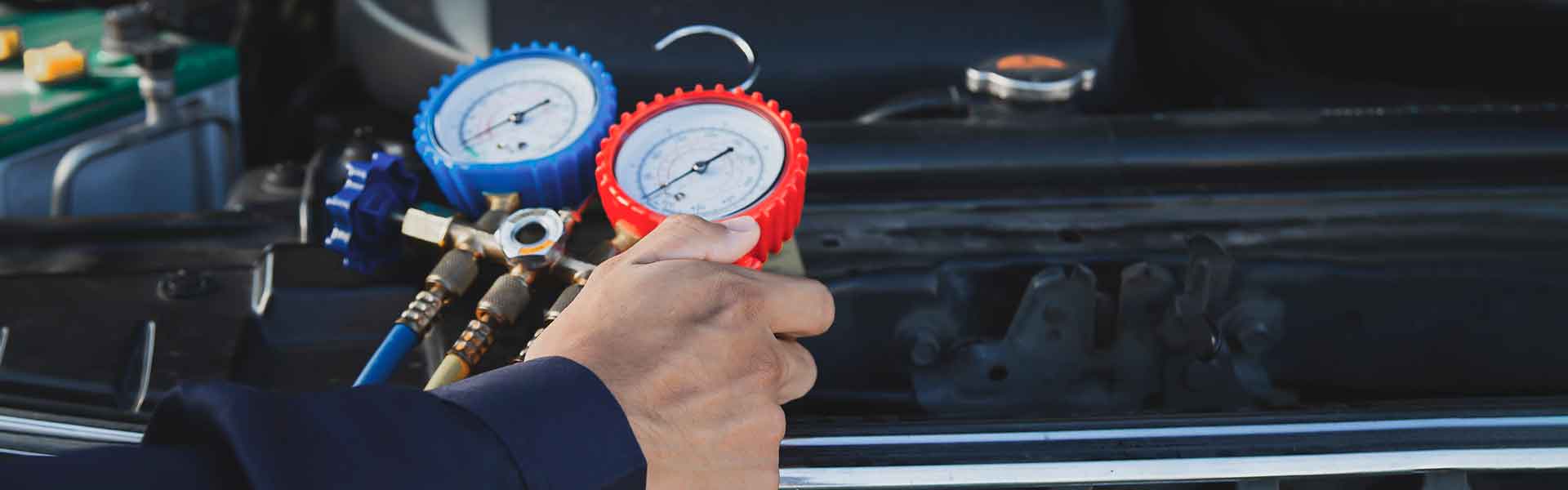
- Run a manifold gauge test and dye/electronic leak check at the usual Chevy leak points: condenser fins on trucks, evaporator core on Equinox/Terrain, and the compressor front seal.
- Inspect the clutch air gap, serpentine belt, and connector corrosion (a frequent cause of intermittent cooling on GMT900/K2XX trucks).
- Perform a road test with vents mapped, confirming blend-door movement and recirculation function.
Once we know whether it's a refrigerant charge issue, a failed pressure switch, a leaking evaporator, or a dying compressor, we build a clear repair plan and a written quote so you approve the work before it starts – no guesswork, no surprise add-ons.
Air Conditioning AC Repair on Chevrolet: Repair vs. Replacement
Not every warm-air complaint means a new compressor. We match the fix to the actual failure.
- Genuine repair: A low charge from a slow condenser leak, a stuck pressure switch, a corroded connector, or a blend-door actuator (common on Malibu and Impala) – single-part fixes that restore full cooling.
- Partial replacement: Replacing a leaking condenser on a Silverado or a failed evaporator on an Equinox while keeping the sound compressor and lines. When the compressor itself grenades and sends debris downstream, we replace the compressor, accumulator/drier, and orifice tube together and flush the system – standard GM practice to prevent repeat failure.
- Full replacement: When cascading wear hits the compressor, condenser, and lines at once, or when repair cost climbs toward the price of a complete system, a full overhaul is the smarter long-term call.
We lay out each option side by side – what it costs, how long it lasts, and what risk you're carrying if you defer part of it. You choose. We never default to the most expensive route to pad a ticket.
How to Make Your Chevrolet Air Conditioning AC Repair Last Longer
A rebuilt or repaired A/C system lasts far longer when the system stays clean, charged, and exercised.
- Run the A/C year-round: Use it briefly even in Denver's cold months to keep compressor seals lubricated and prevent them from drying out.
- Ease the load: Crack windows to vent trapped heat before blasting max cold, and avoid parking your Tahoe or Silverado in direct sun with recirculation off.
- Listen and watch: A clicking clutch, hissing at shutdown, or musty vents signal early trouble – catching them keeps a small repair small.
- Keep the condenser clean: Rinse road grime, bugs, and salt off the front condenser, especially on trucks that see gravel and highway miles.
For Chevrolet specifically, insist on the correct refrigerant type and PAG oil viscosity called out for your model – mixing the wrong oil shortens compressor life. Keep body and HVAC control module software current, since GM releases updates that refine blend-door and clutch behavior. Follow the cabin air filter interval on Equinox, Malibu, and Cruze to protect the evaporator.
Safe DIY: cabin filter swaps, condenser rinsing, and monitoring for new noises. Leave refrigerant handling, leak repair, and compressor work to the shop – it's a sealed, pressurized system that needs proper recovery and evacuation equipment to service safely.
What to Expect When You Bring Your Chevrolet In
Chevrolet A/C systems have their own personality – the R-1234yf refrigerant on late-model Silverado, Equinox, and Malibu platforms requires different service equipment than the older R-134a Cruze and Impala models. We sort that out before we touch anything.
- Drop-off or appointment: Schedule ahead or drop the vehicle off. Leave the key and let us know what you've noticed – warm air at idle, a musty smell, or a compressor that short-cycles.
- Initial inspection: We check static and high/low side pressures, inspect the compressor clutch, condenser, and evaporator, and scan for HVAC actuator faults common on GMT900 and K2XX trucks.
- Written estimate: You get a clear breakdown of what's failing and what it takes to fix it – no add-ons you didn't approve.
- Communication during the work: We call or text with findings and wait for your go-ahead before ordering parts or opening the system.
- Pickup walkthrough: We show you what was replaced and confirm vent temps in front of you.
Shuttle service and loaner options are available – just ask when you book. Grab personal items before drop-off, and after-hours pickup can be arranged. Every job ends with a road test and a scan-tool re-check to verify the fix. If something feels off afterward, bring it back and we'll make it right.
Why Choose Elevation Auto Repair for Chevrolet Air Conditioning AC Repair
Chevrolet A/C problems tend to repeat by platform, and knowing the pattern saves you from throwing parts at a symptom. Blend-door actuator failures on 2007-2014 Silverado/Tahoe, evaporator leaks on early Cruze, and clutch-cycling issues tied to low charge or a failing pressure switch all have known fixes – we start with the actual cause.
- Brand-specific knowledge: We reference Chevrolet TSBs and available HVAC software updates rather than guessing, including reprogramming actuators after recalibration.
- Proper equipment: Separate recovery and charging machines for R-134a and R-1234yf, so your system gets the correct refrigerant and oil type by spec.
- End-to-end ownership: The same team handles diagnosis, repair, evacuation, recharge, and post-repair verification – no handoffs, no finger-pointing.
You get honest diagnostics without unnecessary repairs, and one shop that handles everything from a leaking condenser to a full compressor replacement. We fix it once, verify it works, and get you back on the road comfortable.
Our Chevrolet Services
- Battery Repair Replacement
- Brake Repair & Brake Fluid Change
- Check Engine Light Diagnostics
- Clutch Repair & Replacement
- Coolant Leak Repair
- Cooling System Repair
- Drive Shaft Repair
- Engine Repair
- Exhaust & Catalytic Converter Repair
- Head Gasket Repair & Replacement
- Oil Change
- Oil Leak Repair
- Scheduled Service Maintenance
- Steering Repair
- Suspension Repair
- Cambelt Timing Belt Replacement
- Transmission Repair
- Tune Up
- Wheel Alignment