
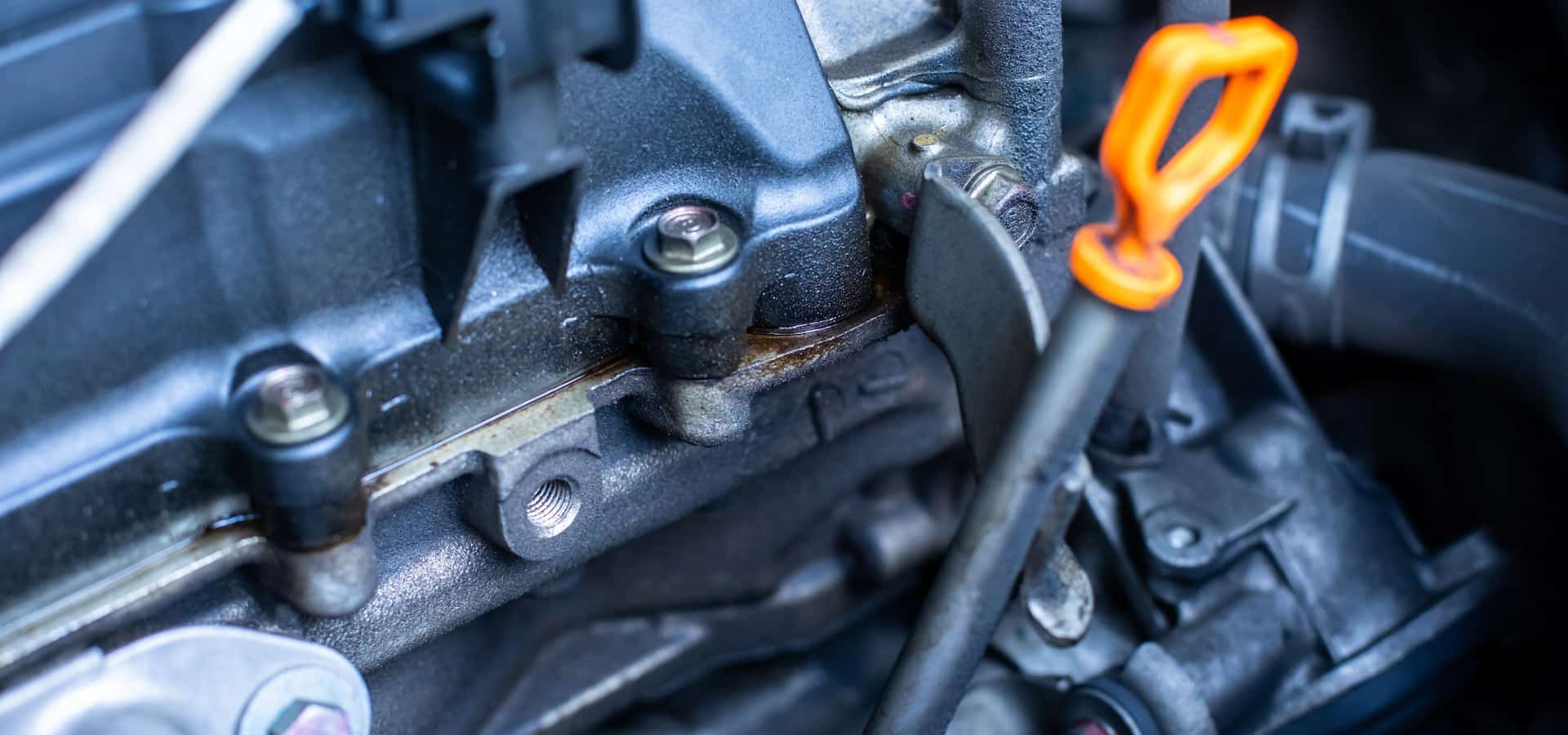
Buick Oil Leak Repair at Elevation Auto Repair
That faint burning smell after you park, or the small spots forming on your garage floor, usually mean a Buick oil leak has started working its way from a seal or gasket. Chasing that leak to its true source takes patience and platform knowledge, not just a quick glance under the hood.
Oil leaks on Buicks rarely come from one obvious place. The turbocharged 2.0T LTG four-cylinder found in Regal GS and later Envision models tends to weep at the valve cover and turbo oil feed lines, while the 3.6L LFX/LGX V6 in the Enclave and LaCrosse is known for valve cover gasket seepage and timing cover leaks that mimic a rear main seal. Getting the diagnosis right matters, because we use dye tracing and factory torque specs on aluminum cover hardware to avoid warping and repeat leaks. We also check for GM service bulletins covering PCV-related crankcase pressure issues that push oil past otherwise healthy seals.
Here is what you can expect when you bring your Buick to us:
- A verified leak source, not a guess based on the first wet spot we see
- OEM-grade gaskets and seals installed to GM torque sequences
- A check for PCV and crankcase ventilation faults that cause repeat leaks
- Clear communication before any work begins, with no padded repair list
Symptoms – How to Know You Need This Service
Buick oil leaks tend to announce themselves gradually, so the earlier you act, the less likely you are to face internal damage. You may notice one or several of these signs:
- Dark brown or amber spots on the driveway, usually under the front or center of the engine
- A burning oil smell, strongest right after shutting the engine off
- Light blue smoke drifting from the engine bay at stoplights
- Oil level dropping between changes without visible external buildup
- An illuminated oil pressure warning light or low-oil message on the driver display
- Visible residue coating the valve covers, timing cover, or oil pan rail
- A rough idle or rough running condition tied to PCV-related pressure problems
Small spots and a faint smell mean you should schedule service soon before the leak grows. A steady oil pressure light, a rapidly dropping level, or oil dripping onto hot exhaust components is a stop-driving-now situation – continuing risks engine damage or a fire. Call us and we will get you looked at quickly.
Common Oil Leak Repair Issues on Buick Vehicles
If you're finding spots on your Denver driveway or catching that hot-oil smell after a drive up I-70, your Buick is telling you something. Certain leak points show up again and again across the modern Buick lineup, and knowing where to look speeds up the fix.
- Valve cover gasket seepage on 1.4L Turbo (LUV/LUJ) engines – The Encore and early Verano share this small-displacement turbo four, and the valve cover gaskets harden with heat cycling, weeping oil down the front of the block and sometimes onto the exhaust.
- Timing cover and front crank seal leaks on 2.0L Turbo (LTG) Regal and Verano – Higher cylinder pressure and repeated warm-cold cycling wear the front seal, producing a slow drip that often gets mistaken for an oil pan issue.
- Oil pan gasket and rear main seal on 3.6L V6 (LFX/LGX) Enclave and LaCrosse – The transverse V6 layout makes the rear main harder to reach, and pan gasket seepage is common as sealant ages past the 90k mark.
- Oil filter housing / cooler seals on 2.5L (LCV) engines – Later LaCrosse and Regal models can develop leaks where the filter adapter meets the block.
- PCV-related over-pressurization on turbo models – A failing PCV diaphragm pushes crankcase pressure past seals, turning a minor gasket into an active leak.
- Camshaft position sensor and cover leaks – O-rings around sensors dry out and seep on higher-mileage Enclave and Encore units.
Which Buick Models We See for Oil Leak Repair
We service the full modern Buick lineup along with many older models. These are the platforms we most often diagnose for oil leaks:
- Enclave (2008–present) – 3.6L V6, first the LLT and later LFX/LGX; valve cover and timing cover seepage are the usual culprits
- LaCrosse (2010–2019) – 2.4L Ecotec and 3.6L V6 variants, with oil pan and cover gasket leaks common on higher-mileage cars
- Regal (2011–2020) – 2.0T LTG turbo engines, including the GS; watch valve cover, turbo feed, and oil cooler seal areas
- Encore and Encore GX (2013–present) – 1.4L turbo and later 1.2T/1.3T triple; small-displacement turbos that leak at the front cover and PCV path
- Envision (2016–present) – 2.0T and 2.5L, with valve cover gasket and turbo-related seepage
- Verano (2012–2017) – 2.4L and 2.0T Ecotec, prone to cover gasket weeping
- Older Century, Regal, and LeSabre – 3.8L 3800 Series II/III V6, where valve cover and lower intake gaskets are classic leak points
The turbocharged LTG and 1.4T variants call for extra attention to crankcase ventilation and oil feed lines, so that work differs from a naturally aspirated 3.6L job. If you have a heavily modified engine or a rare imported variant, let us know up front so we can confirm parts availability before scheduling.
Causes & Risks – What Happens if Ignored
Most Buick oil leaks trace back to gasket and seal materials that harden after years of heat cycling, and Denver's altitude, temperature swings, and dry climate accelerate that aging. Turbocharged models run hotter under the valve covers, which shortens gasket life further.
A weep you ignore rarely stays small. Oil finds the path of least resistance, spreads across the block, and starts attacking rubber and plastic components nearby.
- A minor valve cover leak on a 1.4L Turbo dripping onto the exhaust manifold creates smoke, odor, and a real fire risk over time.
- Ignoring a front crank seal on an LTG engine lets oil migrate onto the accessory belt, leading to belt slip, squeal, and eventual failure.
- Low oil from an unaddressed leak on a 3.6L V6 starves the timing chain guides and VVT solenoids, turning a gasket job into a chain and phaser repair.
- Oil contaminating engine or transmission mounts causes them to collapse, adding vibration and driveline clunks.
- Prolonged seepage onto sensors and wiring harnesses triggers intermittent check engine codes that mask the root cause.
What starts as a simple seal replacement can grow into engine internal work if oil level drops unnoticed. We'd rather catch it early and keep the repair contained.
Safety Impact – Why Oil Leak Repair Matters
Oil where it doesn't belong touches more than just the engine. On a modern Buick, leaks can compromise systems you rely on every mile.
- Braking – Oil contaminating the accessory belt can affect the belt-driven components, and smoke from a hot leak reduces visibility.
- Stability and traction control – Oil-fouled sensors and harness connectors can throw ABS and stability control faults, disabling those safeguards.
- Steering – Belt slip from oil contamination degrades power steering assist on belt-driven systems.
- Fire risk – Oil dripping onto the exhaust or turbo housing is the most serious hazard on turbocharged Encore, Verano, and Regal models.
Know the difference between wait and act:
- Stop driving now: visible smoke from the engine bay, burning oil smell with a low-oil warning, or oil dripping onto hot exhaust.
- Schedule soon: small driveway spots, faint odor after long drives, or a slow drop in oil level between changes.
A documented leak left unaddressed can also complicate an insurance claim after an incident. Addressing it promptly keeps you covered and keeps the car safe.
How Buick Oil Leak Repair Actually Works
Finding a Buick oil leak is part detective work, part precision. Oil travels, so the highest wet spot isn't always the source. We clean the area, run the engine, and often use UV dye to trace the leak to its true origin before opening anything up.
Buick's GM platforms bring specifics that a generic approach misses. Turbo engines route oil feed and return lines that need correct sealing, and V6 layouts demand careful sequencing to reseal properly.
- Torque and sequence specs – Valve cover and oil pan fasteners on LTG and LFX/LGX engines use staged torque patterns; over-torquing crushes gaskets and reintroduces leaks.
- OEM sealant requirements – Timing covers and pans on the 3.6L V6 rely on GM-spec RTV applied to a precise bead width, with correct cure time before oil fill.
- PCV system checks – On turbo models, we verify crankcase pressure so a fresh gasket isn't blown out by an underlying PCV fault.
- Scan-tool verification – After the repair, we clear and confirm
How We Diagnose Oil Leak Repair Issues on Buick
You noticed spots on the driveway, a burning smell after highway driving, or the low-oil light flickering on your Enclave, LaCrosse, or Regal. Oil leaks on Buicks rarely announce their exact source, so we track the origin before touching a wrench.
- We pull data with a GM-compatible scan tool (GDS2/Tech2 procedures), checking oil pressure sensor readings and any pending codes that hint at consumption or crankcase ventilation faults.
- We clean the suspect area and apply UV dye, then run the engine and use a UV light to pinpoint whether oil is escaping from the valve cover, timing cover, oil pan, or rear main seal.
- We inspect the usual Buick trouble spots – valve cover gaskets and the PCV system on the 3.6L LFX/LLT V6 (Enclave, LaCrosse), and oil filter housing/turbo lines on the 2.0T and 1.4L LUV Ecotec engines in the Encore and Regal.
- A visual under-hood check covers spark plug tube seals, camshaft position sensor O-rings, and a saturated intake valley that mimics a bigger leak.
- A short road test and warm-engine recheck confirm the leak under real operating temperature and pressure.
From there we build a plain-language repair plan and a written quote so you know exactly which gasket or seal is failing and why – no guesswork, no padding the ticket.
Oil Leak Repair on Buick: Repair vs. Replacement
Not every oil leak means a torn-down engine. We match the fix to the actual failure.
- Genuine repair: A weeping valve cover gasket on a 3.6L V6, a loose oil filter housing on the 2.0T, or a fouled PCV grommet often just needs a fresh gasket, proper torque to GM spec, and cleanup.
- Partial replacement: When the camshaft cover carrier or oil cooler seal is cracked, we replace that component and reuse the surrounding hardware – common on higher-mileage Enclave and Encore engines where one part fails while the rest stays serviceable.
- Full replacement: Rear main seal failure, timing cover leaks combined with chain guide wear, or an oil pan compromised by corrosion can push labor toward the cost of a reman assembly. When cascading wear or a safety concern shows up, replacement protects you long term.
We lay out each option side by side – what it costs, what it buys you, how long the underlying part typically lasts – and let you decide. We don't default to the most expensive path.
How to Make Your Buick Oil Leak Repair Last Longer
A good gasket job lasts far longer when the engine isn't fighting heat, pressure, and sludge. A few habits protect the repair.
- Let the engine warm briefly before hard acceleration – cold, thick oil stresses fresh seals, especially in Denver winters.
- Avoid short-trip-only driving when possible; Buicks that never fully warm up build moisture and sludge that shortens gasket life.
- Don't overfill oil – excess pressure pushes past new seals.
Owner-friendly maintenance you can handle yourself:
- Check the driveway and dipstick regularly, and watch for the oil pressure or low-oil warning lights.
- Listen for new lifter tick or rough idle that can signal PCV or consumption issues on the 3.6L and 2.0T.
- Stick to Buick's recommended oil intervals and use the correct dexos-approved oil viscosity – the wrong grade accelerates seal wear.
Brand-specific care matters: OEM or OEM-equivalent gaskets and a properly functioning PCV system prevent repeat leaks, and keeping your Buick's engine control software current can address consumption-related updates. Fluid checks and visual inspections are safe DIY – valve cover, timing cover, and rear main work belong in the shop, where torque specs and clean sealing surfaces make the repair last.
What to Expect When You Bring Your Buick In
Maybe you spotted dark spots on the driveway, caught a whiff of burning oil after a drive, or your dash lit up with a low-oil-pressure warning. Whatever brought you in, here's how we handle a Buick oil leak from the moment you arrive.
- Drop-off or appointment – Schedule ahead or bring it by. Grab your garage opener, sunglasses, and anything valuable from the cabin before you hand over the keys. Shuttle and loaner options are available so you're not stranded.
- Initial inspection – We clean the suspect areas, add UV dye if needed, and trace the source instead of guessing. On many Buicks that means checking valve cover gaskets, oil pan seals, the timing cover, and rear main seal.
- Written estimate – You get an itemized breakdown of the actual failed seals and gaskets, no padded add-ons. We call before touching anything beyond the agreed scope.
- Repair updates – We text or call with findings as the work moves along, so you always know where things stand.
- Pickup walkthrough – We show you the old parts, explain what we replaced, and answer questions. After-hours key pickup is available when your schedule is tight.
Before your Buick leaves, we road test it and run a scan-tool re-check to confirm oil pressure reads correctly and no codes remain. If anything feels off afterward, bring it back and we'll re-verify our work.
Why Choose Elevation Auto Repair for Buick Oil Leak Repair
Buick oil leaks aren't all the same, and chasing them takes brand-specific knowledge. We track GM technical service bulletins and PCM software updates that affect models across the Enclave, LaCrosse, Regal, and Encore lineups.
- Platform familiarity – Valve cover and timing cover seepage on the 3.6L LFX/LLT V6, oil pan and filter housing leaks on the 2.0L and 1.4L turbo Ecotec engines, and rear main seal weeps on higher-mileage transverse platforms.
- Correct sealing procedures – We follow GM torque sequences and RTV/gasket specs rather than reusing tired hardware, so the repair actually holds.
- End-to-end ownership – The same shop that diagnoses your leak repairs it and verifies it afterward. No handoffs, no finger-pointing.
As your Denver dealership alternative, we handle everything from the oil change to major engine work under one roof – with honest diagnostics that skip repairs your Buick doesn't need. You get clear communication at every step and repairs built for long-term reliability.
Our Buick Services
- Air Conditioning AC Repair
- Battery Repair Replacement
- Brake Repair & Brake Fluid Change
- Check Engine Light Diagnostics
- Clutch Repair & Replacement
- Coolant Leak Repair
- Cooling System Repair
- Drive Shaft Repair
- Engine Repair
- Exhaust & Catalytic Converter Repair
- Head Gasket Repair & Replacement
- Oil Change
- Scheduled Service Maintenance
- Steering Repair
- Suspension Repair
- Cambelt Timing Belt Replacement
- Transmission Repair
- Tune Up
- Wheel Alignment