
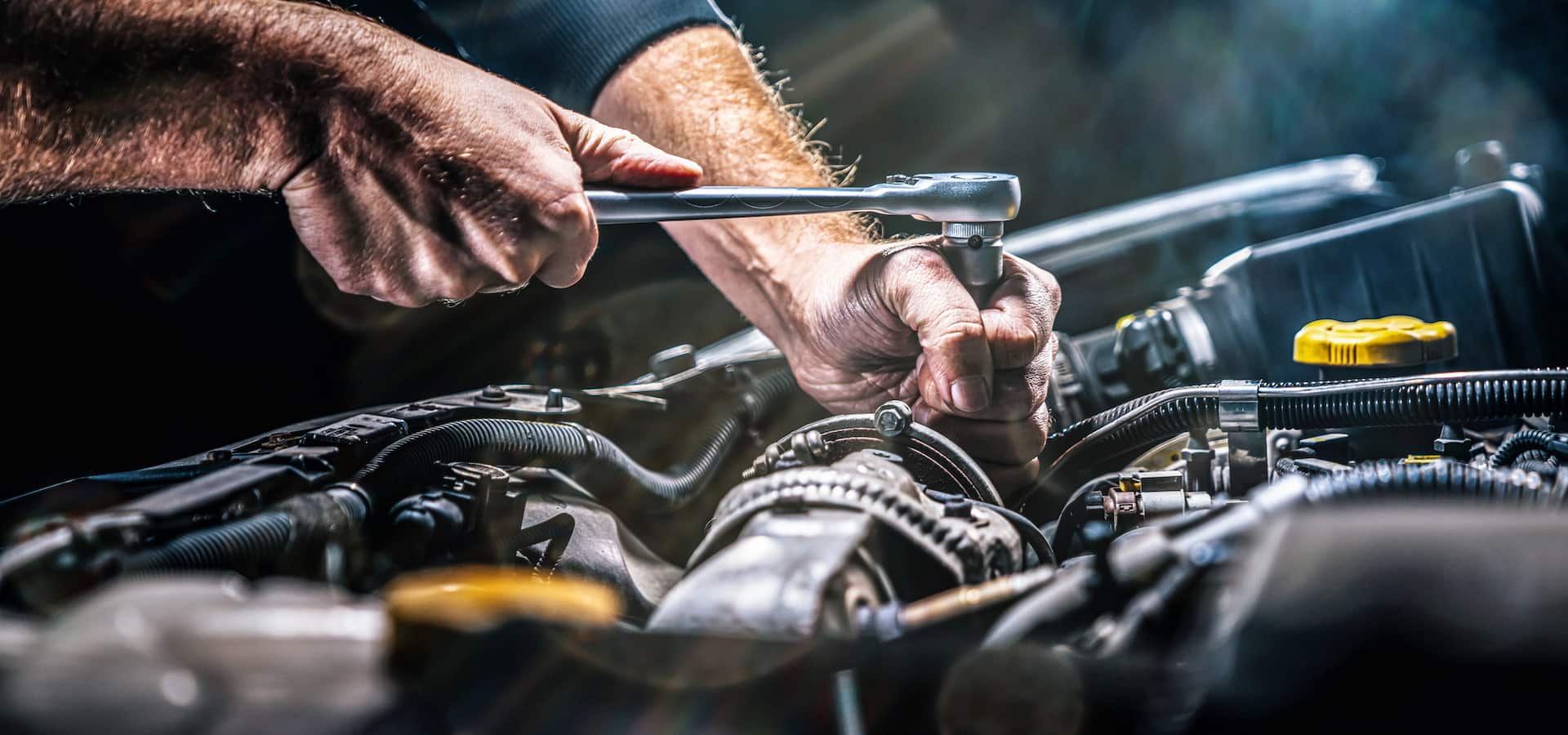
Buick Head Gasket Repair & Replacement at Elevation Auto Repair
A head gasket job on a Buick isn't a bolt-and-torque exercise – it's a precision seal between aluminum heads and iron or aluminum blocks that live under real pressure and heat cycling. Denver's altitude and temperature swings put extra stress on cooling systems, which is exactly why doing this right on a Buick pays off long-term.
Buick's modern lineup leans heavily on GM's Ecotec and high-feature V6 families. The 2.0T LTG and 2.5L LCV four-cylinders in the Regal and LaCrosse, along with the 3.6L LFX/LGX and older 3.6L LY7 V6s in Enclave and Lacrosse, each have their own torque sequences, TTY (torque-to-yield) bolt requirements, and cooling-system bleed procedures. Skipping the proper bleed on these engines traps air and can cook a fresh gasket in weeks.
We follow OEM torque-angle specs, replace TTY bolts rather than reuse them, and check heads for warp against factory flatness limits before reassembly. Software also matters – GDS2 scanning confirms no lingering thermostat or coolant-temp codes after the repair.
- Machine-shop head inspection for warp, cracks, and surface finish
- New TTY head bolts and OEM-grade multi-layer steel gaskets
- Full cooling-system flush and proper vacuum-fill bleed
- Post-repair scan and road test to verify temps and pressures
Symptoms – How to Know You Need This Service
Head gasket trouble on a Buick usually builds over time, but a few signs mean you should stop driving right away to avoid warping a head or scoring cylinders.
- White, sweet-smelling exhaust smoke – coolant burning in the combustion chamber. Schedule soon.
- Overheating that returns after topping off coolant – pressure is escaping. Stop driving if the gauge climbs into the red.
- Milky, tan residue on the oil cap or dipstick – coolant and oil mixing. Stop driving immediately.
- Bubbling or gurgling in the coolant reservoir – combustion gases pushing into the cooling system.
- Unexplained coolant loss with no visible leak on the driveway.
- Rough idle or misfire codes on the 2.0T LTG or 3.6L V6, often paired with a fouled plug in one cylinder.
- Check engine light for coolant temperature, misfire, or lean conditions.
You may notice several of these at once. If you see white oil, steam from under the hood, or a temperature warning, shut the engine off and have the car towed – continuing to drive turns a gasket job into an engine rebuild.
Common Head Gasket Repair & Replacement Issues on Buick Vehicles
Buick engines fail head gaskets in fairly predictable ways once you know the family. Here are the patterns we see most:
- 3800 Series II V6 (1995-2005 LeSabre, Park Avenue, Regal): The upper intake manifold plastic and gasket degrade near the EGR passage, letting coolant seep and overheating the aluminum heads. Once the block overheats, the head gasket often follows.
- 3.6L high-feature V6 (LaCrosse, Enclave, Regal): Timing chain wear and coolant crossover leaks can mask or accelerate head gasket weeping. Elevated combustion temps from carbon buildup stress the multi-layer steel gasket.
- 2.0L / 1.4L turbo four-cylinders (Encore, Verano, later Regal): Turbo heat cycling and localized head hot spots wear the fire ring, producing combustion gases in the coolant and pressurized overflow tanks.
- Chronic overheating from failed cooling components: Buick's plastic radiator end tanks and thermostat housings crack with age, and the resulting overheat event is a frequent trigger for gasket failure.
- Oil-and-coolant intermix: Milky residue on the oil cap or a mayonnaise film under the valve cover shows up on higher-mileage V6 platforms when the gasket lets fluids cross.
- White exhaust smoke and disappearing coolant: A classic breached-gasket sign on both the 3800 and 3.6L when coolant is drawn into a cylinder.
Which Buick Models We See for Head Gasket Repair & Replacement
We regularly work on late-model and older Buicks across GM's front-drive and crossover platforms. Find your model below to see where your engine fits.
- Buick Regal (2011–2020) – Epsilon II and E2XX platforms with 2.0T LTG and 2.4L/2.5L four-cylinders. GS variants share the drivetrain but add cooling load worth checking.
- Buick LaCrosse (2010–2019) – 3.6L LFX/LGX V6 and 2.4L eAssist four-cylinders; the V6 needs careful bank-to-bank torque work.
- Buick Enclave (2008–present) – Lambda and C1XX platforms with 3.6L LY7, LLT, and LGX V6s. Early LY7/LLT engines commonly show cooling-related wear with mileage.
- Buick Encore / Encore GX (2013–present) – 1.4T LUV/LE2 and 1.3L/1.2L turbo triples; smaller displacement, still full OEM procedure.
- Buick Verano (2012–2017) – 2.4L LEA and 2.0T LHU, shared with the Regal turbo family.
- Buick Envision (2016–present) – 2.0T and 2.5L variants on GM's crossover architecture.
Turbocharged LTG and LHU engines take longer because of intercooler and downpipe access, and V6 Enclaves and LaCrosse models involve more disassembly for rear-bank access. If your Buick is a rare imported trim or a heavily modified build, call first so we can confirm parts availability before scheduling.
Buick's engine lineup spans several distinct families, and head gasket work varies a lot between them. The 3800 Series II V6, the high-feature 3.6L V6, and the more recent turbocharged four-cylinders each have their own quirks that reward a technician who knows the platform rather than a one-size-fits-all approach. That's the difference we bring to Buick head gasket repair here in Denver.
Causes & Risks – What Happens if Ignored
Most Buick head gasket failures trace back to heat and age. Denver's altitude and temperature swings push cooling systems hard, and aging plastic intake and cooling parts on the 3800 and 3.6L platforms are frequent starting points. Once the gasket loses its seal, the problem rarely stays small.
Ignoring an early coolant loss or a warm-running temp gauge for a few weeks often turns a straightforward gasket job into a machine-shop project.
- Warped cylinder head: Continued driving on an overheating aluminum head warps the mating surface, adding resurfacing to the repair.
- Cracked head or block: Severe overheat events can crack castings, which means replacement parts instead of a gasket set.
- Hydrolock risk: Coolant pooling in a cylinder can bend a connecting rod on startup.
- Catalytic converter contamination: Coolant burning through the exhaust ruins the cat and oxygen sensors.
- Bearing damage: Coolant-diluted oil breaks down lubrication and scores crankshaft bearings.
The safety side matters too – a car that stalls or overheats in traffic becomes a hazard. Bring it in early and we usually keep the fix to a gasket rather than a full rebuild.
Safety Impact – Why Head Gasket Repair & Replacement Matters
A failing head gasket affects more than the engine. Overheating and unpredictable power delivery ripple into systems you rely on to control the car.
- Sudden power loss or stalling: Loses power brake boost and hydraulic power steering assist, making the car harder to stop and steer.
- Stability and traction control faults: An engine in limp mode or misfiring can throw ESC and traction control codes that disable those systems.
- Steam and reduced visibility: Coolant hitting hot exhaust produces steam that can blind you and drivers behind you.
- Fire risk: Coolant and oil on a hot exhaust manifold is a real hazard.
Stop driving now if: the temp gauge is in the red, steam comes from the hood, or the engine is knocking. Schedule soon if: you notice slow coolant loss, faint sweet smell, or occasional white exhaust puffs on startup. Addressing a known coolant leak promptly also keeps you clear of liability questions if a breakdown contributes to an incident.
How Buick Head Gasket Repair & Replacement Actually Works
The head gasket seals combustion pressure, coolant passages, and oil galleries between the cylinder head and block. On Buick's aluminum-head engines, precise torque and cleanliness matter more than on old iron motors because aluminum moves with heat and the multi-layer steel gaskets rely on exact clamping load.
What sets Buick work apart is the attention to platform-specific procedure:
- Torque-to-yield head bolts: The 3800 and 3.6L use single-use bolts that must be replaced and tightened in a staged angle sequence, not just a torque value.
- Timing and VVT relearn: The 3.6L high-feature V6 requires correct cam timing setup and a camshaft position relearn with a factory-level scan tool after reassembly.
- Cooling system fill procedure: These engines trap air easily, so a proper vacuum fill and bleed prevents a false overheat that damages the fresh gasket.
- Surface
Buick's engine lineup carries its own quirks when it comes to head gasket work, and knowing the platform history saves guesswork. The 3.8L 3800 Series II V6 – found in older LeSabre, Park Avenue, and Regal models – earned a reputation for upper intake manifold and gasket failures that let coolant seep into the engine, often mistaken for a head gasket problem. Newer Buicks running the 3.6L LFX/LGX V6 (Enclave, LaCrosse) and the 2.0L/2.5L Ecotec fours in the Regal and Envision bring different failure signatures tied to overheating events and cooling system neglect. Getting the diagnosis right on these engines takes brand familiarity, not a one-size-fits-all approach.
How We Diagnose Head Gasket Repair & Replacement Issues on Buick
A blown head gasket mimics several other faults, so we confirm before we open anything. Here is how the process runs:
- Pull codes with a GM-capable scan tool (GDS2/Tech2 style diagnostics) to read misfire counts, coolant temperature history, and any P0217 overheat or lean/rich trims that hint at combustion leakage.
- Run a block test (combustion leak detector) on the coolant to check for exhaust gases in the cooling system – the fastest confirmation of a breach.
- Perform a cylinder leak-down and compression test to isolate which cylinder is losing pressure and whether it's leaking into a neighboring cylinder or the water jacket.
- Cooling system pressure test to catch external weeps, cracked plastic intake components on 3800-series engines, and radiator or heater core losses that masquerade as gasket failure.
- Visual inspection for milky oil, white exhaust, coolant loss without visible leaks, and a road test to watch temperature behavior under load.
Once we know whether the gasket, a cracked head, or a cooling component is the real culprit, we lay out a clear repair plan and a written quote so you see exactly what the job involves before any work starts.
Head Gasket Repair & Replacement on Buick: Repair vs. Replacement
Not every coolant-in-the-wrong-place complaint means a full teardown, and we don't sell one when a smaller fix will do.
- Genuine repair: On many 3800 Series II engines, the actual failure is the plastic upper intake manifold and its gaskets, not the head gasket. Replacing those parts and flushing the system restores the seal without pulling a head.
- Partial replacement: When one head gasket has failed but the head still measures flat within GM spec and the block checks out, we resurface the head, replace the gasket set, and reuse serviceable hardware – keeping cost down while doing it right.
- Full replacement: If the head is warped beyond machining limits, cracked, or the engine ran hot long enough to damage bearings and cylinder walls, rebuilding or replacing the engine becomes the smarter long-term call.
We walk you through what the measurements show and where your Buick actually falls, so the decision is based on the engine's condition – not on pushing the largest invoice.
How to Make Your Buick Head Gasket Repair & Replacement Last Longer
Head gaskets fail from heat, so most of what protects a fresh repair comes down to keeping the cooling system healthy.
- Driving habits: Let the engine reach operating temperature before hard acceleration, avoid towing near capacity in Denver's heat, and shut down promptly if the temp gauge climbs into the danger zone.
- Owner maintenance: Check coolant level at the reservoir when cold, watch for milky residue under the oil cap, listen for a whirring water pump, and take any coolant warning light seriously instead of topping off and driving on.
- Brand-specific care: Use GM DEX-COOL coolant – mixing incompatible coolant types causes sludge that clogs passages on these engines. Stick to Buick's cooling service intervals, keep the ECM software current since GM issues updates affecting fan and temperature control, and use OEM-grade gaskets and thermostats.
Topping off fluids and visual checks are fine to handle yourself. Leave coolant flushes, thermostat replacement, and anything involving pressure testing or the head to the shop – a mistake on a cooling system that just got repaired can undo the whole job.
Buick's engine lineup spans a wide range of designs, and head gasket work on these platforms rewards a shop that knows the differences. The 3800 Series II V6 (found in older Regal, LeSabre, and Park Avenue models) is notorious for coolant intrusion tied to plastic upper intake manifold degradation, which often gets misdiagnosed as a gasket failure when the real culprit is upstream. Later turbocharged 2.0T LTG engines in the Regal GS and the Ecotec 2.4L in the LaCrosse and Verano bring their own heat-cycling stresses. Knowing which is which before tearing into a cylinder head is where real expertise starts.
What to Expect When You Bring Your Buick In
We keep the process clear from the moment you drop off so there are no surprises along the way.
- Drop-off and intake – Schedule an appointment or use after-hours drop-off. Clear personal items from the cabin; anything left behind is logged and secured.
- Initial inspection – We pressure-test the cooling system, run a combustion-gas (block) test, and pull codes to confirm whether you're dealing with a genuine head gasket breach or an intake manifold gasket issue common on 3800-series V6 engines.
- Written estimate – You get an itemized estimate covering machining, gasket sets, coolant, and any warped-head resurfacing before we proceed.
- Repair updates – We text or call with findings, especially if we discover pitted cylinder liners or a cracked head during teardown.
- Pickup walkthrough – We show you the old parts and explain what was replaced.
Loaner and shuttle options help you stay mobile while your Buick is with us. Before you leave, we road-test the vehicle and run a scan-tool re-check to verify coolant temps, misfire counts, and clean fuel trims. If anything feels off after pickup, bring it back – we stand behind the diagnosis and the repair.
Why Choose Elevation Auto Repair for Buick Head Gasket Repair & Replacement
Head gasket jobs go wrong when a shop skips the machining step or reuses head bolts that require a torque-to-yield replacement. We do neither.
- Correct diagnosis first – We separate true head gasket failures from intake gasket coolant leaks that plague older 3800 V6 Buicks, so you don't pay for the wrong repair.
- OEM-spec procedures – Head resurfacing to factory flatness limits, new torque-to-yield fasteners, and staged torque sequences specific to your engine.
- TSB and software awareness – We check for applicable Buick service bulletins and any cooling-system or ECM calibration updates that affect long-term reliability.
We own the whole job – diagnosis, machining coordination, reassembly, and post-repair verification – so accountability never gets passed around. As your Denver dealership alternative, you get honest diagnostics, clear communication, and a repair built to last well beyond the immediate fix.
Our Buick Services
- Air Conditioning AC Repair
- Battery Repair Replacement
- Brake Repair & Brake Fluid Change
- Check Engine Light Diagnostics
- Clutch Repair & Replacement
- Coolant Leak Repair
- Cooling System Repair
- Drive Shaft Repair
- Engine Repair
- Exhaust & Catalytic Converter Repair
- Oil Change
- Oil Leak Repair
- Scheduled Service Maintenance
- Steering Repair
- Suspension Repair
- Cambelt Timing Belt Replacement
- Transmission Repair
- Tune Up
- Wheel Alignment