Chrysler Air Conditioning AC Repair at Elevation Auto Repair
You climb into your 300 or Pacifica on a hot Denver afternoon, crank the temperature to max cold, and get a lukewarm breeze that never catches up. That gap between what the system promises and what it delivers is where good diagnostics matter, and Chrysler air conditioning has enough quirks to reward a shop that knows the platform.
Chrysler A/C work is rarely just a recharge. These systems run on R-1234yf refrigerant on newer LX and RU platforms, which demands specific recovery equipment and calibrated charge weights. We also see software-controlled blend door actuators and HVAC modules that throw fault codes only a factory-level scan tool reads correctly. A generic vacuum-and-fill misses failed evaporators, clogged expansion valves, and clutch relay faults hiding behind the same weak-cold symptom.
- Electronic leak detection and dye tracing before we quote any parts
- Refrigerant recovery and recharge to exact OEM charge weights, R-134a or R-1234yf
- Blend door actuator and HVAC module diagnostics with factory-level scan tools
- Straight talk on what actually failed – no bundling in repairs you do not need
Symptoms – How to Know You Need This Service
Chrysler A/C trouble tends to announce itself gradually, then all at once on the worst day of summer. Watch for these signs:
- You may notice air that starts cold, then fades to warm after 10 or 15 minutes – often a failing compressor clutch or overcharged system
- A clicking or cycling sound from under the hood as the compressor engages and disengages too rapidly
- Airflow that only blows from one vent or gets stuck on defrost – a classic clicking blend door actuator on 300, Charger, and Town & Country models
- A musty or mildew smell when you first turn the system on, pointing to a dirty evaporator or clogged drain
- Oily residue or dye stains near A/C fittings, condenser, or under the dash
- Reduced fan speed or a blower that quits on certain settings – often a failed blower resistor or module
Schedule soon if cold air is simply weak. Stop driving and get it checked promptly if you smell burning, see smoke from the vents, or hear a loud grinding from the compressor – a seizing compressor can send debris through the whole system.
Common Air Conditioning AC Repair Issues on Chrysler Vehicles
You climb into your Chrysler on a hot Denver afternoon, crank the dial to cold, and get lukewarm air blowing out the vents. That single symptom points to several distinct problems that show up again and again across the Chrysler, Dodge, and Jeep lineup.
- Blend door actuator failure – Very common on 2011-2020 Chrysler 300 (LX/LD platform) and Town & Country/Pacifica minivans. You'll hear a clicking or knocking behind the dash, and the temperature stops responding on one side.
- Compressor clutch and coil breakdown – The Sanden and Denso compressors used on 3.6L Pentastar V6 models often lose clutch engagement as the coil weakens, leaving the AC engaged intermittently or not at all.
- Evaporator and condenser leaks – Front-mounted condensers on the 300 and Charger sit low and take rock strikes on I-70, while evaporator core seepage is a known slow-leak path on higher-mileage minivans.
- Radiator/condenser combo leaks on Pentastar cooling – Shared front-end packaging means a small refrigerant leak can hide near coolant components, complicating diagnosis.
- Expansion valve (TXV) restriction – Debris from a failing compressor circulates and clogs the orifice, causing frosting at the valve and warm air at the vents.
- HVAC control module and CAN faults – On later Uconnect-equipped models, a communication fault can disable the whole climate system even when the mechanical parts are fine.
Each pattern has its own tell, which is why proper diagnosis beats guessing at parts.
Which Chrysler Models We See for Air Conditioning AC Repair
We service A/C across the modern Chrysler lineup and many older models. Find your platform below:
- 300 (LX / LD platform, 2005–2023) – blend door actuator and condenser failures are common; V6 and 5.7 HEMI variants share the same HVAC layout
- Pacifica (RU platform, 2017–present) – uses R-1234yf; the Pacifica Hybrid adds an electric compressor that requires high-voltage-safe service procedures
- Town & Country (RT platform, 2008–2016) – rear A/C lines and dual-zone evaporator issues show up frequently
- Chrysler 200 (2011–2017) – compressor clutch and expansion valve complaints on both the 2.4L and 3.6L Pentastar
- Sebring / Cirrus (2007–2010) – aging systems often need full component replacement rather than a recharge
- PT Cruiser (2001–2010) – condenser and compressor wear typical for its age
Pacifica Hybrids need extra care because of their electrically driven compressor, and we treat those accordingly. We focus on Chrysler's front-wheel-drive minivans, LX rear-drive cars, and Pentastar-era models; if you have a rare imported variant or a heavily modified system, call first so we can confirm parts availability before you make the trip.
Causes & Risks – What Happens if Ignored
Most Chrysler AC problems trace back to a mix of Colorado's dry heat, altitude cycling, road debris, and the natural aging of seals and O-rings. Refrigerant leaks start small, then accelerate as system pressures fluctuate.
The real danger is what a slow leak does to the compressor. Refrigerant carries the oil that lubricates the compressor internals. Once the charge drops, that lubrication disappears fast.
- Ignoring a low charge for a season often turns a simple O-ring or valve repair into full compressor replacement.
- A failing compressor sheds metal debris that contaminates the condenser, drier, and expansion valve – forcing a complete system flush and multiple part replacements.
- A dead blend door actuator left unaddressed can strip the plastic gearset entirely, sometimes requiring dash disassembly to reach it.
- Clogged condenser fins reduce cooling efficiency and raise head pressure, stressing the compressor and adjacent Pentastar cooling components.
- Persistent moisture from a saturated receiver-drier promotes internal corrosion and acid formation throughout the loop.
What starts as one weak repair grows into a chain of expensive parts. Catching it early keeps the fix small and keeps your defrost working when the weather turns.
Safety Impact – Why Air Conditioning AC Repair Matters
Air conditioning on your Chrysler does more than keep you cool – the system feeds the defrost function that clears fog and ice from the windshield. When AC is down, visibility suffers fast in Denver's freeze-thaw mornings.
A neglected system also strains related components. A seized compressor clutch can throw the serpentine belt, which drives the water pump, alternator, and power steering on many Chrysler platforms – a belt failure at speed affects steering feel and charging at once.
- Stop driving soon: loud grinding or screeching from the compressor, burning smell, or belt smoke.
- Stop driving now: defrost won't clear an iced or fogged windshield and you can't see clearly.
- Schedule soon: weak cooling, intermittent cold air, clicking behind the dash, or musty vent odor.
There's also a practical liability angle – a windshield you can't defog reduces your ability to react in traffic. Restoring proper AC and defrost keeps sightlines clear and protects the accessory drive components your car depends on every mile.
How Chrysler Air Conditioning AC Repair Actually Works
Your Chrysler's AC is a sealed loop that moves refrigerant between high and low pressure states. The compressor pressurizes the refrigerant, the condenser sheds heat, the expansion valve drops the pressure, and the evaporator absorbs cabin heat before a blend door blends hot and cold air to the temperature you selected.
What sets modern Chrysler systems apart is how tightly the climate control ties into the vehicle network. Actuators, sensors, and the compressor are managed through Uconnect and CAN bus communication, so guesswork with a can of refrigerant rarely fixes the real problem.
- Blend door actuators often require recalibration through the HVAC module after replacement so the doors relearn their end stops.
- Correct refrigerant type and charge weight matter – newer Chrysler models use R-1234yf, which demands dedicated recovery equipment separate from older R-134a systems.
- Factory-level scan tools read live HVAC data and actuator commands to confirm the fault before parts go in.
- Proper evacuation, vacuum hold, and PAG oil charge follow OEM specs so the compressor stays lubricated and the system pulls down to correct pressures.
We use modern recovery machines and OEM-aligned diagnostics to match the exact charge and calibration your Chrysler needs, so the cold air lasts and the repair holds.</
How We Diagnose Air Conditioning AC Repair Issues on Chrysler
You climb into your 300 or Pacifica on a hot Denver afternoon, crank the fan, and get lukewarm air that never quite turns cold. That symptom points in several directions on a Chrysler, so we work through a set order rather than guessing.
- Pull HVAC and body codes with a scan tool capable of reading Chrysler's CCN and HVAC modules – wiTECH-level access shows blend-door actuator faults, AC clutch relay status, and pressure sensor data that a generic reader misses.
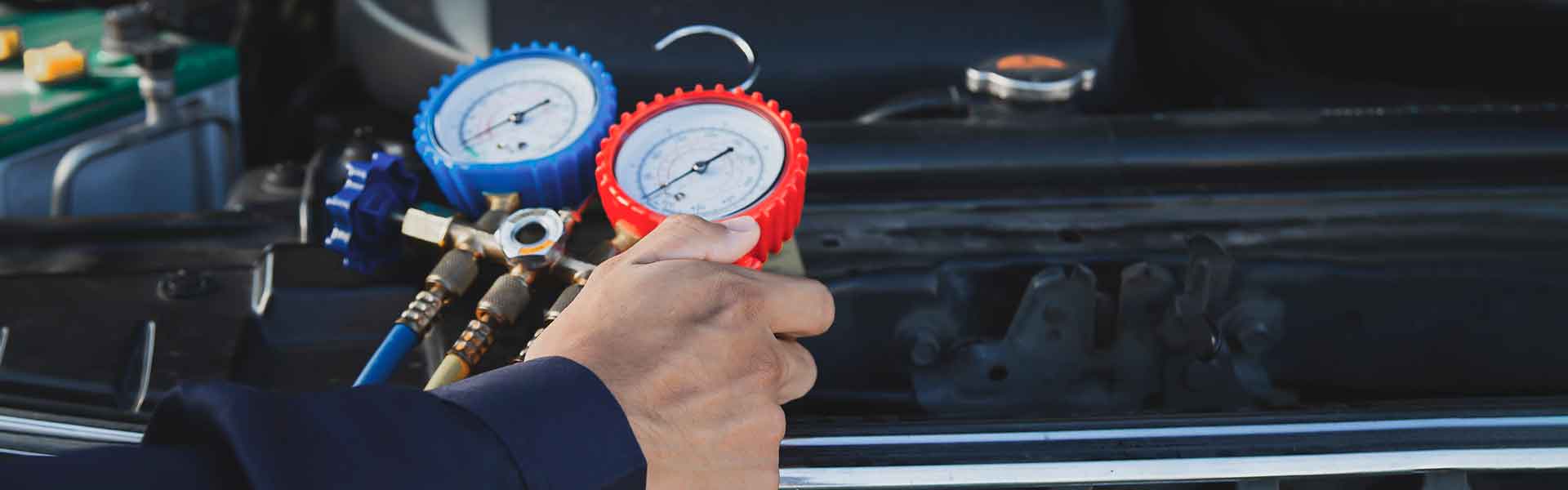
- Verify refrigerant charge and system pressures with manifold gauges, watching high and low side behavior with the compressor engaged.
- Inspect the compressor clutch engagement, the electronic variable-displacement control valve common on late-model 3.6L Pentastar Chryslers, and the condenser for road debris and impact damage.
- Run a UV dye or electronic leak check on the condenser, evaporator core, and line fittings – evaporator leaks on 200 and Town & Country platforms often hide behind the dash.
- Perform a road test and duct-temperature measurement to confirm actual cooling output against ambient conditions.
Chrysler blend-door actuators and stuck recirculation doors mimic a "weak AC" complaint even when the refrigerant side is healthy, so the visual and mechanical checks matter as much as the scan. Once we've isolated the actual fault, we build a clear repair plan and a written quote before any work begins – no surprises.
Air Conditioning AC Repair on Chrysler: Repair vs. Replacement
Not every cold-air complaint means a new compressor. We match the fix to the failure.
- Genuine repair: A low charge from a slow O-ring leak, a failed AC pressure switch, a sticking blend-door actuator on a 200 or 300, or a corroded relay – these are single-part or service-only jobs that restore full function.
- Partial replacement: A leaking condenser from rock strikes on the front-mounted core, or a worn expansion valve, gets swapped while the compressor and evaporator stay in service. On Pentastar-equipped models, a failed compressor control valve can sometimes be addressed without replacing the whole unit.
- Full replacement: When a compressor grenades internally, it sends metal debris system-wide. That calls for a new compressor, condenser, accumulator/drier, and a full flush – repairing piecemeal risks repeat failure and voids the work.
We lay out these options plainly, explain what each one buys you in reliability, and let you choose. The most expensive path is rarely the only path, and we'll tell you when a straightforward repair will serve you just as well.
How to Make Your Chrysler Air Conditioning AC Repair Last Longer
A well-repaired AC system rewards a few simple habits, especially in Colorado's dry heat and altitude swings.
- Run the AC year-round: Cycling the compressor briefly even in winter keeps seals lubricated and prevents the O-rings from drying out and leaking.
- Ease the initial load: Crack the windows to vent trapped heat before blasting the AC on a hot day – it reduces strain on the compressor clutch.
- Watch for early warnings: A faint hiss, clutch cycling too often, or a musty odor from the evaporator are signals to have it checked before a small leak becomes a compressor failure.
Owner-friendly maintenance is straightforward and safe:
- Replace the cabin air filter on Chrysler's recommended interval to protect airflow and the evaporator.
- Keep the condenser fins clear of leaves and grille debris after mountain drives.
- Listen for changes in fan or compressor noise and report them early.
Leave refrigerant handling, evacuation, and recharge work to the shop – it requires proper recovery equipment, and Chrysler specifies exact charge weights and PAG oil types by system. Using the correct OEM-spec refrigerant and lubricant, plus keeping HVAC module software current, keeps your Chrysler cooling strong for the long haul.
What to Expect When You Bring Your Chrysler In
You flip the A/C to max on a hot Denver afternoon and get lukewarm air, or the compressor cycles on and off with a faint click from behind the dash. On Chryslers, that often traces back to a specific culprit rather than a mystery – and we start by pinning it down before touching a wrench.
- Drop-off or appointment: Schedule ahead or drop by. Grab your garage door remote, sunglasses, and anything personal from the cabin – we'll handle the rest.
- Initial inspection: We hook up manifold gauges and pull refrigerant state-of-charge, then perform electronic leak detection and dye tracing on common failure points like the condenser, evaporator core, and the notorious rear A/C lines on Pacifica and Town & Country vans.
- Written estimate: You get a line-item breakdown before any repair begins – parts, labor, and what we found, in plain language.
- Repair with updates: We text or call as the work progresses. Shuttle and loaner options are available so you're not stranded.
- Pickup walkthrough: We show you the failed parts and explain what was done. After-hours pickup can be arranged when the schedule is tight.
Every job ends with a vent-temperature verification, a scan-tool re-check for HVAC and blend-door codes, and a road test under load. If anything feels off afterward, bring it back and we'll dig back in.
Why Choose Elevation Auto Repair for Chrysler Air Conditioning AC Repair
Chrysler A/C problems tend to follow patterns, and we know them. From evaporator failures on the RT-platform minivans to blend-door actuator ticking on the LX-platform 300, we diagnose the actual fault instead of just recharging refrigerant and sending you off.
- Brand-specific knowledge: We reference Chrysler TSBs and apply available HVAC software updates through factory-aligned scan tools, catching issues like erratic ATC control-head behavior and stuck blend-door recalibration.
- Platform quirks handled: Rear evaporator leaks and dual-zone climate faults on Pacifica, Voyager, and older Town & Country vans, plus compressor clutch and PAG oil charge specs done to OEM values.
- End-to-end ownership: The same shop that diagnoses the leak evacuates the system to a proper vacuum, verifies it holds, recharges by weight, and confirms vent temps before you leave.
We're your Denver dealership alternative – honest diagnostics, no unnecessary repairs, and clear communication from estimate to pickup. Cooling, steering, suspension, or a check engine light down the road, it's all handled under one roof by technicians who work on complex systems every day.
Our Chrysler Services
- Battery Repair Replacement
- Brake Repair & Brake Fluid Change
- Check Engine Light Diagnostics
- Clutch Repair & Replacement
- Coolant Leak Repair
- Cooling System Repair
- Drive Shaft Repair
- Engine Repair
- Exhaust & Catalytic Converter Repair
- Head Gasket Repair & Replacement
- Oil Change
- Oil Leak Repair
- Scheduled Service Maintenance
- Steering Repair
- Suspension Repair
- Cambelt Timing Belt Replacement
- Transmission Repair
- Tune Up
- Wheel Alignment