Chrysler Oil Leak Repair at Elevation Auto Repair
A misdiagnosed oil leak on a Chrysler rarely stays cheap. Chase the wrong gasket on a 3.6L Pentastar and you can replace an oil cooler that was never the problem, while the actual seep at the rear main or oil filter housing keeps dripping. That is exactly the guessing game our shop is built to avoid.
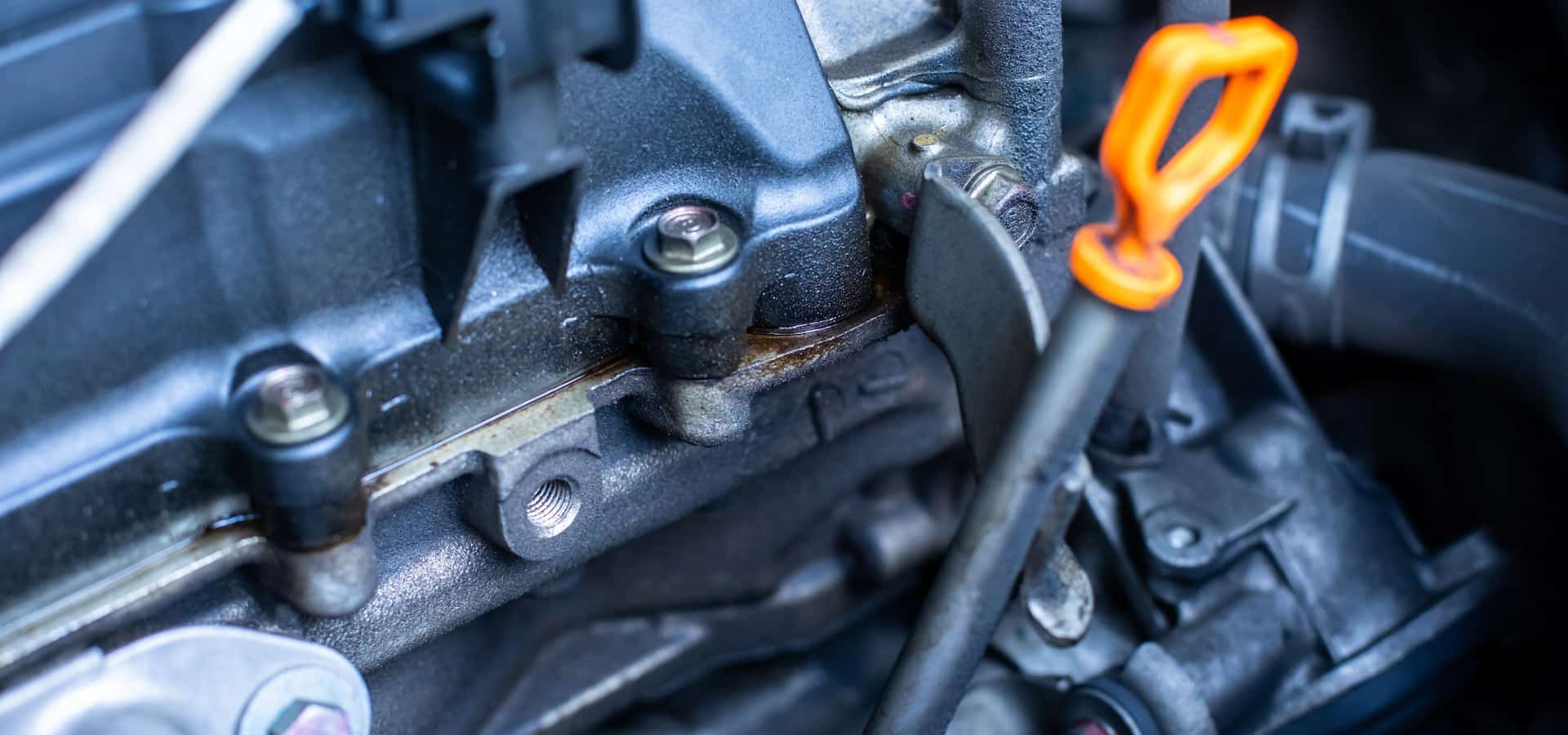
Oil leak repair means pinpointing the exact source, then sealing it with the right parts and torque – not smearing sealant and hoping. On Chrysler platforms that matters more than most, because these engines hide leaks well. The Pentastar V6 routes oil through a plastic oil filter housing and cooler assembly that warps and cracks with heat cycling, dripping onto the exhaust and mimicking a valve cover leak. HEMI 5.7L and 6.4L engines are known for valve cover and oil pan gasket weeps that migrate down the block.
We use UV dye tracing, factory torque specs, and updated OEM housing and gasket designs rather than the original failure-prone parts. Here is what you can expect:
- A clear diagnosis identifying the true leak source before any parts are ordered
- Updated OEM or OEM-equivalent gaskets and housings, not temporary sealant fixes
- Fast turnaround with honest communication at every step
- No unnecessary repairs stacked onto the estimate
Symptoms – How to Know You Need This Service
Chrysler oil leaks tend to announce themselves before they become expensive. You may notice one or several of these:
- A burning oil smell after driving, especially at stoplights – oil dripping onto hot exhaust
- Blue or gray smoke from under the hood or trailing the exhaust
- Dark spots or puddles on your driveway, often under the front-center of the engine on Pentastar V6 models
- Oil level dropping between changes with no visible external cause at first
- Oil pressure warning light or low-oil message on the dash
- Residue and grime building up on the front of the engine, oil pan, or timing cover
- A faint ticking that worsens as oil starves the valvetrain on HEMI engines
Stop driving immediately if the oil pressure light comes on, you see heavy smoke, or the level drops fast – running a Chrysler low on oil risks camshaft, lifter, and bearing damage. A slow seep with a faint smell can be scheduled soon rather than treated as an emergency, but don't let it linger, since small leaks grow and contaminate other components.
Common Oil Leak Repair Issues on Chrysler Vehicles
Getting an oil leak wrong on a Chrysler usually means chasing the wrong gasket while the real source keeps dripping. These platforms have well-documented leak paths, and knowing them up front cuts diagnosis time dramatically.
- 3.6L Pentastar valve cover / oil filter housing leaks – On 2011-2017 Pentastar V6 engines (300, Charger, Town & Country, Grand Cherokee), the original plastic oil filter housing warps and cracks, dripping oil down the front of the block and often mimicking a cooler leak.
- 2.4L Tigershark valve cover gasket seepage – Common on 2013+ 200 and Cinch platforms, where the integrated PCV in the cover fails and pushes oil past the gasket onto the exhaust manifold.
- 5.7L / 6.4L HEMI rear main and oil pan gasket weeping – Age-related shrinkage on LX/LC platform trucks and sedans, frequently confused with intake valley pan leaks on the 5.7L.
- Cam adjuster / VVT solenoid seal leaks – Pentastar variable valve timing solenoids seep at the housing seal, dropping oil onto the alternator on many 2011+ units.
- Front crankshaft seal and timing cover leaks – Seen on higher-mileage 3.6L and 2.7L engines where the front seal hardens and lets oil sling onto the accessory belt.
- Turbo oil feed/return line leaks – On 2.0L and 1.3L turbo Hurricane-family applications, the feed line fittings weep under heat cycling.
Which Chrysler Models We See for Oil Leak Repair
We work on the full modern Chrysler lineup and the shared FCA/Stellantis platforms behind them. Scan for your vehicle below:
- Chrysler 300 (LX/LD, 2005–present) – 3.6L Pentastar oil filter housing cracks and rear main seeps; 5.7L HEMI valve cover and oil pan gasket leaks
- Chrysler 200 (2011–2017) – 2.4L Tigershark valve cover gasket weeping and Pentastar V6 housing leaks
- Chrysler Pacifica / Voyager (RU, 2017–present) – 3.6L Pentastar oil cooler housing and camshaft seal leaks; hybrid variants require added care around the electrified drivetrain
- Chrysler Town & Country (RT, 2008–2016) – 3.6L and older 3.8L V6 pan and valve cover leaks
- Chrysler Sebring / Cirrus and earlier platforms – commonly seen for oil pan and timing cover seepage on higher-mileage examples
The plastic oil filter housing on Pentastar engines is the single most common culprit we address, and the updated design seals far better than the original. HEMI 5.7L and 6.4L jobs differ noticeably in labor and gasket layout compared to the V6 cars. If you have a very early or heavily modified Chrysler we don't routinely service, tell us the details up front and we'll be straight with you about whether it's a good fit.
Causes & Risks – What Happens if Ignored
Most Chrysler oil leaks trace back to heat cycling, plastic components that age poorly, and Denver's dry climate combined with big temperature swings that harden rubber seals faster. Add altitude-related engine load and stop-and-go driving, and gaskets that might last elsewhere give up sooner here.
A pinhole seep on a Pentastar filter housing is a quick fix today. Left alone, it soaks the front accessory drive and multiplies into a bigger job.
- Ignoring a cracked oil filter housing typically leads to sudden oil loss, a soaked serpentine belt, and possible loss of power steering and charging.
- Valve cover seepage onto a hot exhaust manifold creates burning-oil smell and a genuine fire risk over time.
- A weeping rear main seal that goes unaddressed contaminates the clutch or torque converter seals, turning a seal job into a transmission-out repair.
- Chronic low oil from an unrepaired leak accelerates VVT solenoid, cam phaser, and lifter wear on the 3.6L and 5.7L.
- Oil-fouled sensors and connectors trigger check engine lights and misfires that get misdiagnosed as ignition problems.
The pattern is consistent – a small seal now, or an engine tear-down later. We move quickly to catch it at the cheap stage.
Safety Impact – Why Oil Leak Repair Matters
Oil leaks on a Chrysler reach well beyond the engine. Fluid on the belt, sensors, or hot components affects systems you rely on to stop and steer.
- Power steering assist – oil-soaked belts can slip or shred, killing electro-hydraulic and belt-driven steering assist.
- Braking and stability – a shredded serpentine belt on many models stops the water pump and charging, and low voltage can drop ABS, traction, and stability control functions.
- Fire risk – oil pooling on the exhaust manifold or catalytic converter is the most direct safety hazard.
- Visibility and traction – dripping oil on the road affects your own tires and other drivers.
Stop driving now if you see: smoke from the engine bay, a burning-oil smell with a hot engine, a lit oil pressure light, or a squealing/slipping belt.
Schedule soon if you notice: spots on the driveway, faint oil smell after a drive, or slowly dropping oil level between changes.
There's also a liability angle – a known, unrepaired leak that causes a fire or road-oil incident can complicate an insurance claim. Documenting the repair protects you.
How Chrysler Oil Leak Repair Actually Works
Finding a Chrysler oil leak is a diagnostic step, not a guess. We clean the engine, run it, and use UV dye and inspection to pinpoint the true origin before pulling a single part – because oil travels and the wet spot is rarely the source.
Chrysler's implementation adds wrinkles that generic shops miss. The Pentastar's plastic oil filter housing must be replaced with the updated aluminum-reinforced unit and torqued in the correct sequence, or it warps again. VVT and cam phaser work requires wiTECH-level scan access to verify timing correlation after reseal.
- Plastic-to-updated component swaps (filter housing, oil cooler) rather than re-sealing failed originals.
- Torque-to-spec and staged tightening sequences on aluminum covers to prevent re-warping.
- wiTECH scanning to clear codes and confirm VVT/cam correlation after any front-of-engine reseal.
- OEM-grade RTV and gaskets matched to Chrysler's Pentastar and HEMI specs, with proper cure time.
- Post-repair leak verification under load, not just a quick idle check.</
How We Diagnose Oil Leak Repair Issues on Chrysler
Misreading a Chrysler oil leak gets expensive fast – a dripping valve cover on a 3.6L Pentastar looks identical to a failing oil cooler housing until you clean the area and watch where oil actually collects. We isolate the true source before touching a wrench, then hand you a plan.
- Interview and history check – recent oil consumption, spots on the driveway, burning smells, and model-year context (2011-2013 Pentastar cylinder head issues, LX-platform Hemi valve cover seepage).
- Scan with wiTECH-compatible tooling – we pull PCM data, oil pressure sensor readings, and stored codes to rule out internal pressure problems that mimic external leaks.
- Degrease and dye trace – UV dye and a clean engine let us pinpoint the origin: oil filter housing/cooler on the 3.6L, rear main seal, oil pan gasket, or timing cover.
- Visual and tactile inspection – checking the PCV system, cam sensor seals, and gasket surfaces for warping or hardened rubber.
- Road test and re-inspection – confirming the leak under real operating temperature and load, then measuring oil level change.
From there you get a written diagnosis and a clear quote – exactly which part is leaking, what's involved, and no padded line items.
Oil Leak Repair on Chrysler: Repair vs. Replacement
Not every Chrysler leak needs a big job. The right call depends on the part, the surrounding wear, and how the numbers shake out.
- Genuine repair – a weeping valve cover on a 3.6L Pentastar or a loose oil pan bolt often needs only a fresh gasket, resealing, and correct torque. The component is still serviceable.
- Partial replacement – the plastic oil filter housing on 2011-2016 Pentastar engines is a known failure point; we replace it with an updated aluminum-reinforced unit and reuse the sound surrounding hardware.
- Full replacement – when a rear main seal leak coincides with a worn oil pump pickup, or cascading damage threatens the timing chain area, replacing the full assembly is safer and often cheaper long-term than repeated teardowns.
Hemi valve cover leaks that soak the spark plug tubes are another judgment call – sometimes reseal, sometimes replace the cover outright if the plastic has cracked. We lay out both paths, the cost difference, and the risk of each, then let you decide. The most expensive option is never the default.
How to Make Your Chrysler Oil Leak Repair Last Longer
A clean reseal lasts when the engine isn't fighting heat, pressure, and neglect. A few habits protect the work.
- Warm up gently – let oil circulate before hard acceleration, especially in Denver's cold mornings, so gaskets aren't shocked by pressure spikes.
- Avoid chronic overheating – heat hardens seals; keep the cooling system healthy on Pentastar and Hemi platforms.
- Watch loads – frequent towing raises crankcase pressure, so keep the PCV system clear.
Owner-friendly maintenance goes a long way:
- Glance under the car for fresh spots and check the oil level monthly.
- Listen for new ticking near the valve covers and note any burning-oil smell.
- Watch for the oil pressure light and don't ignore it.
Brand-specific care matters – use the correct SAE 5W-20 or 5W-30 spec Chrysler calls for, stick to MOPAR-quality filters, keep PCM software current, and follow the factory oil change intervals. Topping off fluids and visual checks are safe to DIY. Reseal work, oil cooler housing replacement, and anything involving the timing cover should stay with us – those jobs demand precise torque specs and clean surfaces to hold.
Chase the wrong gasket on a Chrysler and you can spend real money without stopping a single drop. A weeping oil cooler on a 3.6L Pentastar mimics a valve cover leak, and a Hemi that drips at the front often traces back to the timing cover or oil pan gasket, not the seal you can see. Getting the source right the first time is what protects your wallet – and that starts with a fast, accurate diagnosis.
What to Expect When You Bring Your Chrysler In
We built our process around clear communication and quick turnaround, so you always know where your Chrysler stands.
- Drop-off or appointment: Schedule ahead or leave it with us. Shuttle service and loaner options help you stay on the road while we work. Grab valuables from the cabin; anything left behind stays secured.
- Initial inspection: We clean the suspect area, add UV dye when needed, and trace the leak to its true origin – oil cooler housing, valve cover, rear main seal, or oil pan gasket on Pentastar and Hemi platforms.
- Written estimate: You get a line-item breakdown of parts and labor before anything is torn down, with recommendations sorted by what's leaking now versus what to watch.
- During the work: We text or call with updates and photos, and we don't proceed on added items without your approval.
- Pickup walkthrough: We show you the old parts, explain what we replaced, and offer after-hours pickup when your schedule is tight.
Before your Chrysler leaves, we run a road test and a scan-tool re-check to confirm no stored codes and no fresh seepage. If anything feels off afterward, bring it back and we'll re-inspect the same area.
Why Choose Elevation Auto Repair for Chrysler Oil Leak Repair
Oil leaks on Chrysler platforms have patterns, and we know them. The 3.6L Pentastar oil filter housing – originally plastic on many 2011-2016 builds – is a frequent culprit, and we're familiar with the updated design and related TSBs. On 5.7L and 6.4L Hemi engines, we check timing cover seepage and oil pan gaskets that generic shops often misdiagnose.
- Brand-specific know-how: We reference current Chrysler service bulletins and apply software or component updates where they apply to a given VIN.
- Correct specs, every time: Proper torque sequences and OEM-grade gaskets and sealants keep the repair from reopening.
- End-to-end ownership: The same shop handles diagnosis, repair, and post-repair verification – no handoffs, no finger-pointing.
You get honest diagnostics with no unnecessary repairs, and a dealership-level fix without the dealership runaround.
Our Chrysler Services
- Air Conditioning AC Repair
- Battery Repair Replacement
- Brake Repair & Brake Fluid Change
- Check Engine Light Diagnostics
- Clutch Repair & Replacement
- Coolant Leak Repair
- Cooling System Repair
- Drive Shaft Repair
- Engine Repair
- Exhaust & Catalytic Converter Repair
- Head Gasket Repair & Replacement
- Oil Change
- Scheduled Service Maintenance
- Steering Repair
- Suspension Repair
- Cambelt Timing Belt Replacement
- Transmission Repair
- Tune Up
- Wheel Alignment