Chrysler Wheel Alignment at Elevation Auto Repair
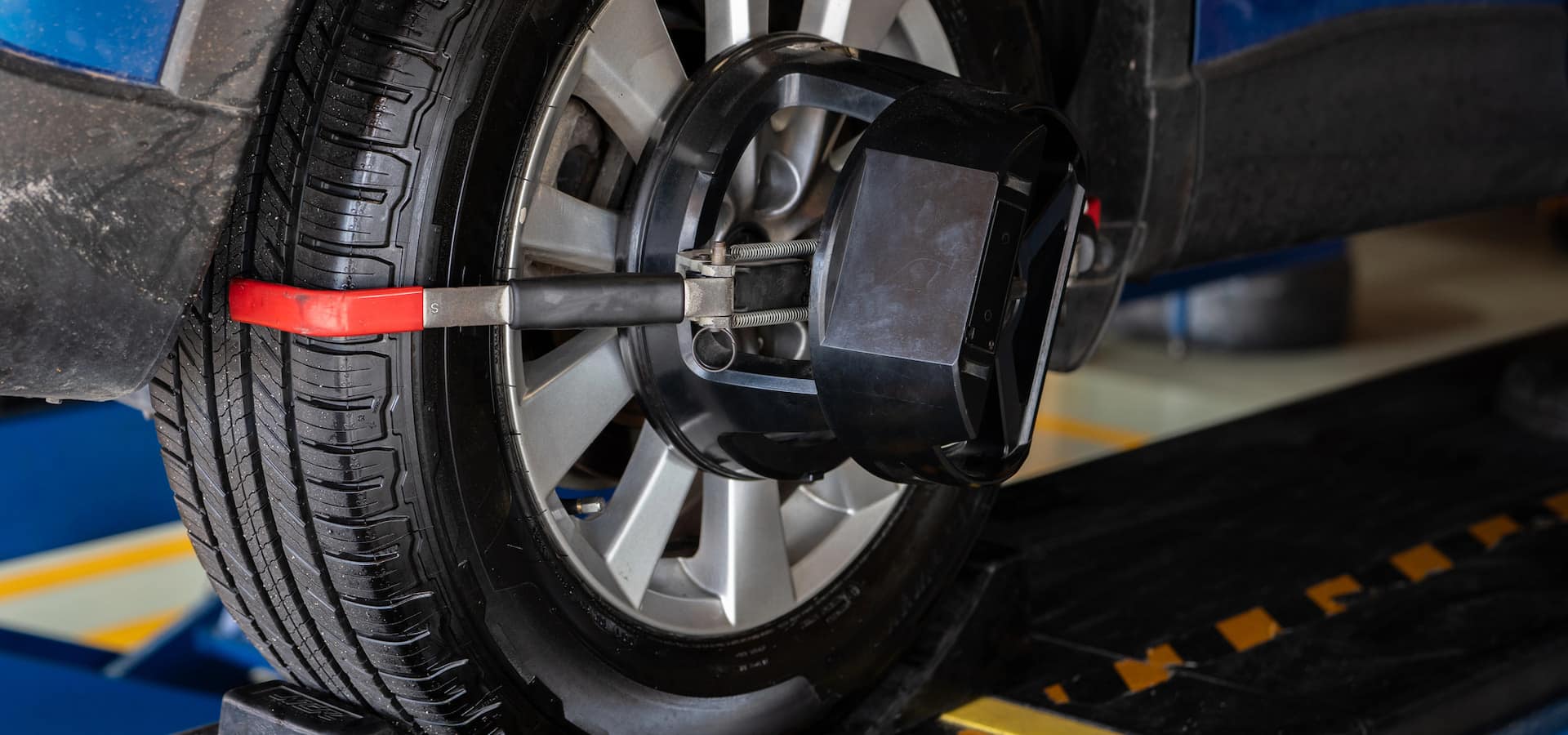
When your Chrysler drifts on I-25 or chews through the inside edge of a tire, the alignment is usually telling you something before you feel it fully. A proper alignment restores the factory angles – camber, caster, and toe – so your car tracks straight, steers predictably, and stops eating tires.
Getting it right on a Chrysler is not a set-it-and-forget-it job. Rear-drive LX/LD platforms (300, Charger, Challenger) use a fully independent SLA front and multi-link rear that demands attention to rear toe and thrust angle, not just front toe like a cheap alignment. Front-drive models on the JS and later platforms (200, Sebring) rely on tight torque specs at the lower control arm and knuckle to hold settings. We also account for Chrysler electronic power steering and electronic stability control, which often require a steering angle sensor reset or recalibration after alignment work so warning lights don't return.
Here's what you can expect when you bring it in:
- A full four-wheel alignment measured against Chrysler factory specs, not a generic ballpark
- Suspension and steering inspection before we touch a single adjustment
- Steering angle sensor and stability control recalibration when the platform calls for it
- A clear before-and-after readout so you see exactly what changed
Symptoms – How to Know You Need This Service
Your Chrysler usually gives plenty of warning before alignment problems turn into ruined tires. Here's what you may notice from the driver's seat:
- The car pulls left or right on a flat, straight road even when you're barely holding the wheel
- The steering wheel sits off-center while you're driving straight
- Uneven tire wear – feathered edges or a worn inside shoulder are classic rear toe issues on LX/LD cars
- A vibration or shimmy through the wheel that gets worse with speed
- Steering feels loose, vague, or wanders and needs constant correction
- Tires squeal on turns you used to take without a sound
- The stability control or traction light flickers after hitting a pothole or curb
Schedule soon if you notice a mild pull, an off-center wheel, or early uneven wear. Stop driving and get it inspected right away if the vibration is severe, the steering suddenly wanders badly, or a warning light appears after a hard impact – those can point to bent or damaged components, not just a settings drift.
Common Wheel Alignment Issues on Chrysler Vehicles
If your Chrysler is pulling to one side, chewing through the edge of a front tire, or the steering wheel sits crooked on a straight road, the alignment has drifted out of spec. Certain Chrysler platforms show predictable patterns based on how their suspensions are built.
- 300 and Charger (LX/LD platform, 2005-present): The multi-link rear setup runs a lot of adjustable camber and toe. Worn upper control arm bushings and rear lateral links throw off rear thrust angle, causing dog-tracking and diagonal rear tire wear.
- Pacifica minivan (RU platform, 2017+): Heavy front weight bias plus soft front lower control arm bushings leads to inner-edge front tire feathering and a slow drift that owners often blame on road crown.
- Town & Country / Grand Caravan (RT platform, 2008-2020): Front strut mount wear and sagging rear springs shift ride height, pushing camber and toe out of range and producing uneven shoulder wear.
- 200 (2011-2017): Front lower control arm bushing deflection and tie rod end play are frequent culprits behind a wandering feel and off-center steering wheel.
- Pacifica Hybrid: Added battery weight over the rear axle accelerates rear toe drift, so rear alignment matters more than many owners expect.
- Colorado potholes and freeze-thaw cycles knock any of these platforms out fast, often bending a tie rod or shifting a subframe slightly.
Which Chrysler Models We See for Wheel Alignment
We align the full range of modern Chrysler vehicles, and knowing your platform helps us set the right approach from the start. Find your car below:
- Chrysler 300 (LX / LD, 2005–present) – rear-drive and AWD; AWD variants need careful thrust-angle checks and the SRT8 6.1L/6.4L versions run more aggressive factory settings
- Chrysler 300M and Concorde (LH platform, late 1990s–early 2000s) – front-drive, commonly seen for front camber and toe correction
- Chrysler 200 (JS 2011–2014, then 2015–2017) – front-drive; the later generation shares its platform with the Cherokee and benefits from a full four-wheel setup
- Chrysler Sebring (JS/JR, 2001–2010) – front-drive sedans and convertibles prone to inner front tire wear
- Chrysler Pacifica (RU minivan, 2017–present, including Hybrid) – heavier front end makes proper camber and toe important for even tire life
- Chrysler Town & Country (RT, 2008–2016) – minivan alignment focused on front settings and steering centering
AWD 300s and the SRT models get extra attention because ride-height and driveline geometry affect the readings. If you're driving a classic pre-1995 Chrysler with a solid front axle or a discontinued model we don't commonly stock parts for, let us know the year and we'll tell you honestly whether we're the right shop before you make the trip.
Causes & Risks – What Happens if Ignored
Most Chrysler alignment problems trace back to a mix of Denver road conditions and normal component wear. Rough winter pavement, curb strikes, and aging rubber bushings all let the suspension geometry shift over time.
The longer a misalignment sits, the more it drags secondary parts into the repair. A small toe error becomes a set of ruined tires, then a suspension component under load it was never designed to carry.
- Ignoring inner-edge tire wear on a 300 or Charger for a few thousand miles typically means replacing tires far ahead of schedule.
- A pull left unaddressed forces constant steering correction, wearing tie rod ends and the rack faster.
- Worn control arm bushings on Pacifica and Town & Country models get progressively looser, adding clunks and eventually taking out the ball joint.
- Rear thrust-angle drift on LX/LD platforms causes the car to crab down the road, wearing all four tires unevenly.
- A bent tie rod from a pothole hit can develop into steering slop that becomes a genuine control hazard.
What starts as a straightforward alignment turns into control arms, tie rods, and tires once the wear compounds. Catching it early keeps the fix simple and keeps you safely on the road.
Safety Impact – Why Wheel Alignment Matters
Alignment is not just about tire life. On modern Chrysler vehicles, the steering angle sensor and stability systems assume the wheels track true. When they do not, the safety net gets confused.
- ABS and ESC/traction control: A misaligned setup with uneven grip can trigger inconsistent brake-based corrections, especially on the Pacifica and 300.
- Steering angle sensor: A crooked steering wheel means the sensor reads a false center, degrading how electronic stability control responds in an emergency swerve.
- Braking distance: Cupped or edge-worn tires from bad alignment lose grip, lengthening stops on wet Colorado roads.
Stop driving now if:
- The steering feels loose, vague, or wanders badly at highway speed.
- You hear clunking from the front end over bumps combined with a strong pull.
- The vehicle darts when you brake.
Schedule soon if: the wheel sits slightly off-center, there's a mild steady pull, or you notice early edge wear. Addressing a known geometry problem promptly also keeps you clear on the liability side if an incident ever gets reviewed.
How Chrysler Wheel Alignment Actually Works
A wheel alignment sets three main angles – camber, caster, and toe – so all four wheels point where the design intends. On Chrysler's LX/LD platform (300, Charger) and the RU Pacifica, the rear suspension is fully adjustable, so a proper job means aligning all four wheels and confirming the rear thrust angle, not just setting front toe.
What sets Chrysler work apart from a generic quick alignment:
- Steering angle sensor reset: Newer Chryslers require a steering angle sensor relearn through the factory-style scan tool after alignment so ESC reads true center.
- Ride-height sensitivity: LX/LD camber and caster are ride-height dependent, so worn springs must be checked before setting angles.
- OEM torque and sequence specs: Cam bolts and eccentric adjusters on the multi-link rear must be torqued in the correct sequence to hold the setting.
- ADAS on 2017+ Pacifica: Forward camera and radar aim reference vehicle geometry, so alignment and sensor calibration go hand in hand.
We align to Chrysler's published specs on rack equipment, then verify the electronics rather than leaving the car to relearn on its own. That's the difference between a number on a screen and a Chrysler that tracks straight and handles the way it should.
How We Diagnose Wheel Alignment Issues on Chrysler
If your Chrysler is pulling to one side, chewing through the edge of a tire, or the steering wheel sits crooked on a straight road, those are your clues that alignment angles have drifted. Here's how we track down the cause.
- Interview and road test: We listen to what you're feeling – wander on the highway, a tug under braking, or a steering wheel that won't center – then confirm it ourselves on the road.
- Steering angle sensor scan: Many late-model 300, Pacifica, and Voyager platforms with electric power steering store SAS and lane-keep data. We pull codes with a factory-level scan tool so we know whether a recalibration is needed after adjustment.
- Chassis mount to the alignment rack: We measure live camber, caster, toe, and thrust angle against Chrysler's factory spec ranges for your exact model and trim.
- Hands-on suspension inspection: We check tie rod ends, outer and inner ball joints, control arm bushings, and the strut mounts – common wear points on LX/LD platform 300 and Charger cars and on RU-body minivans.
- Tire and wear read: Feathering, cupping, or one-sided wear tells us how long the problem has existed.
From there you get a plain-language explanation of what's out of spec, which parts (if any) are worn, and a written repair plan and quote before we touch anything.
How to Make Your Chrysler Wheel Alignment Last Longer
A fresh alignment holds up far longer when the driving and upkeep support it. A few habits go a long way.
- Ease off the potholes and curbs: Denver's freeze-thaw roads knock toe and camber out fast. Slowing for rough pavement and avoiding curb strikes protects your tie rods and control arm bushings.
- Watch your load: Consistently overloading a Pacifica or Voyager sags the rear suspension and shifts alignment angles – distribute weight and stay near rated capacity.
- Rotate tires on schedule: Even wear keeps small alignment drift from turning into premature tire replacement.
Things you can safely check yourself:
- Glance at tire tread edges for uneven wear each time you fuel up.
- Notice new pulls, vibrations, or an off-center steering wheel and report them early.
- Keep tire pressures at the door-jamb spec – low pressure mimics alignment problems.
Leave the alignment adjustments, ball joint work, and steering angle sensor recalibration to us. Use OEM-grade suspension parts and keep your Chrysler's software current, since EPS and lane-keep systems on newer models rely on accurate calibration. Staying on Chrysler's service intervals lets us catch worn bushings before they pull your angles out again.
What to Expect When You Bring Your Chrysler In
If your Chrysler drifts on center, chews through the inside edge of a front tire, or fights you with an off-center steering wheel after hitting a Denver pothole, those are the exact symptoms an alignment addresses. Here's how a visit works from the moment you pull in.
- Drop-off or scheduled appointment – Tell us what you're feeling: pulling, wandering, a crooked wheel, or uneven tread wear. Shuttle service and loaner arrangements can be set up ahead of time, and after-hours pickup is available so your schedule stays intact.
- Initial inspection – Before touching the alignment rack, we check tie rod ends, ball joints, control arm bushings, wheel bearings, and ride height, since worn parts on 200, 300, Pacifica, and Town & Country platforms throw numbers off.
- Written estimate – You get a clear breakdown of what's needed and what isn't. We flag anything that must be corrected before a lasting alignment is possible.
- The work – We call or text with updates and won't proceed on added repairs without your approval. Leave personal items in the vehicle if you like; we secure the cabin.
- Pickup walkthrough – We show you before-and-after camber, caster, and toe readings.
Every alignment ends with a road test and a scan-tool re-check of steering angle sensor data. If anything still feels off, bring it back and we'll re-verify.
Why Choose Elevation Auto Repair for Chrysler Wheel Alignment
Chrysler platforms have their own alignment quirks, and we set specs to match the vehicle in front of us rather than a generic ballpark. On many 300 and Charger LX/LD rear-wheel-drive cars, rear toe and camber matter as much as the front, and we adjust both. On Pacifica and minivan platforms, worn lower control arm bushings and outer tie rod ends are frequent culprits behind inside-edge tire wear.
- Steering angle sensor calibration – Many late-model Chryslers with electronic stability control require a steering angle reset after alignment, and we perform it so the ESC and lane-keeping systems read center correctly.
- TSB and software awareness – We check for Chrysler service bulletins and control-module updates that affect steering feel and pull complaints before assuming it's a mechanical issue.
- End-to-end ownership – Diagnosis, worn-component replacement, alignment, and post-repair verification all happen under one roof, so nothing gets handed off or missed.
You get a Denver dealership alternative with honest diagnostics – we won't sell you rear adjustments a solid-axle setup can't take or an alignment that a bad ball joint would ruin in a week.
Wheel Alignment on Chrysler: Repair vs. Replacement
Not every alignment issue means new parts. We start with the least invasive fix that actually solves the problem.
- Adjustment only (true repair): When suspension components are still tight and only the angles have drifted, we simply reset toe, camber, and caster to spec. Some LX-platform 300 and Charger cars need cam bolt or slotted-mount adjustments to bring camber back in line.
- Partial replacement: When a single part is the culprit – a worn outer tie rod end, a sagging control arm bushing, or a loose sway bar link on a Pacifica – we replace that piece and align around a now-solid assembly.
- Full assembly replacement: When wear has cascaded – a failed lower ball joint that also damaged the control arm, or corroded, seized adjusters common on older salt-belt Town & Country vans – replacing the complete arm is safer and often more sensible than fighting individual worn fasteners.
Safety-critical parts like ball joints and tie rods get replaced, not patched. When repair costs climb toward the price of a new assembly, we lay both options side by side and let you choose – no steering you toward the biggest ticket.
Our Chrysler Services
- Air Conditioning AC Repair
- Battery Repair Replacement
- Brake Repair & Brake Fluid Change
- Check Engine Light Diagnostics
- Clutch Repair & Replacement
- Coolant Leak Repair
- Cooling System Repair
- Drive Shaft Repair
- Engine Repair
- Exhaust & Catalytic Converter Repair
- Head Gasket Repair & Replacement
- Oil Change
- Oil Leak Repair
- Scheduled Service Maintenance
- Steering Repair
- Suspension Repair
- Cambelt Timing Belt Replacement
- Transmission Repair
- Tune Up