Jeep Wheel Alignment at Elevation Auto Repair
A Wrangler owner rolls in with a fresh set of tires worn to the cords on the inside edge after barely 15,000 miles. The culprit wasn't the tires – it was a caster and toe setting nobody dialed in after a lift install. That's the kind of Jeep story we hear weekly in Denver.
Wheel alignment sets the angles at which your tires meet the road: toe, camber, and caster. On a Jeep, this is rarely a bolt-on-and-go job. Solid front axles on the JK and JL Wrangler and the Gladiator JT rely on adjustable track bars, control arm angles, and cam bolts – very different from the independent front suspension on a Grand Cherokee WK2 or WL.
Getting it right means factory alignment specs, proper thrust-angle correction, and a road-force-capable rack. Lifted Jeeps often need adjustable control arms or a drop bracket to recover lost caster, and steering-angle sensor relearns matter on newer models with electronic stability and lane-keeping.
- A pre-alignment inspection of ball joints, tie rods, track bar, and control arm bushings
- Alignment measured and set to Jeep factory angles – or corrected for your lift
- Clear, transparent explanation of what we found before any work begins
- A test drive to confirm straight tracking and a centered steering wheel
Symptoms – How to Know You Need This Service
Jeeps hide alignment trouble behind their rugged feel, so watch for these signs from the driver's seat:
- You may notice the steering wheel sits off-center while driving straight
- Uneven tire wear – inner or outer edges scuffed down faster than the rest
- The Jeep pulls to one side on a level, straight road
- A wandering, darty feel on the highway that keeps you correcting the wheel
- The dreaded "death wobble" – violent front-end shaking after hitting a bump, common on JK and TJ Wranglers
- Squealing tires on turns taken at normal speed
- A crooked steering wheel that returns slowly or unevenly after a turn
Stop driving and call us right away if you experience death wobble or sudden severe shaking – that points to worn steering or track bar components that make the Jeep unsafe. Gradual pulling, off-center steering, or mild uneven wear means schedule soon before your tires pay the price. The earlier we catch it, the more we save you on tires and handling components.
Common Wheel Alignment Issues on Jeep Vehicles
Jeep's solid front-axle design and lift-friendly platforms create wear patterns you won't find on a typical unibody crossover. Here's what rolls through our bays most often:
- Death wobble on 2007-2018 Wrangler JK and 2018+ JL – Worn track bar bushings, loose ball joints, and out-of-spec caster combine to trigger violent steering oscillation at highway speed. Alignment alone won't fix it, but correct caster is part of the cure.
- Positive camber and inside-edge tire wear on lifted Wranglers – Lift kits without adjustable control arms leave caster low and camber off, chewing the inner tread within a few thousand miles.
- Toe drift on 2011-2013 Grand Cherokee WK2 – The independent front suspension on the WK2 relies on precise toe settings; worn lower control arm bushings pull toe out and scrub the front tires.
- Rear thrust angle issues on Cherokee KL (2014+) – The KL's rear suspension needs individual rear toe correction, and a bent rear component throws the whole vehicle off its centerline.
- Steering pull on Gladiator JT – Heavier front-end loading and 33-inch tires accelerate ball joint and tie rod wear, shifting toe and creating a lazy pull.
- Uneven caster after aftermarket suspension on any TJ/JK – Fixed-length control arms with a lift almost always drop caster below the 4-6 degree target range.
Which Jeep Models We See for Wheel Alignment
We align every Jeep platform Denver drives, from daily commuters to trail rigs. Find yours below:
- Wrangler JL (2018–present) – solid front axle, adjustable track bar and control arms; lifted builds need caster correction
- Wrangler JK (2007–2018) – the classic death-wobble candidate; alignment paired with track bar and steering inspection
- Wrangler TJ/YJ (1987–2006) – older solid-axle setups where cam bolts and adjustable arms come into play
- Gladiator JT (2020–present) – shares JL front geometry, but added length changes thrust angle behavior
- Grand Cherokee WK2 (2011–2021) and WL (2021–present) – independent front suspension with steering-angle sensor relearns
- Cherokee KL (2014–2023) – FWD-based platform requiring rear toe adjustment too
- Compass and Renegade (MP/BU) – unibody crossovers with four-wheel alignment needs
Lifted and off-road variants – Rubicon, Trailhawk, and aftermarket suspension builds – often require adjustable components we install as part of the alignment. If your Jeep runs a heavily modified long-arm kit or custom axle swap, tell us up front so we can plan the geometry work correctly.
Bring us your year and trim and we'll confirm the exact specs before you commit to anything.
A customer brought in a 2015 Wrangler JK last month with tires wearing so unevenly on the inside edge that the steel belts were showing at 22,000 miles. He'd added a two-inch lift and never had the angles reset. That single conversation is why solid-axle Jeeps show up for alignment work more than almost anything else we see on the rack.
Causes & Risks – What Happens if Ignored
Colorado roads punish alignment. Potholes after winter freeze-thaw, gravel forest routes, and the constant impact of curbs and construction all shift settings over time. Jeeps add their own quirks: lift kits, oversized tires, and solid-axle geometry that reacts strongly to any component wear.
Waiting rarely makes the problem cheaper. A slightly off toe setting quietly destroys a set of tires, then the pull worsens as bushings and ball joints take the extra load.
- Ignoring inside-edge wear on a lifted Wrangler for a few thousand miles typically ruins otherwise good off-road tires long before their tread life.
- Letting caster stay low on a JK feeds directly into death wobble, turning a simple adjustment into ball joint and track bar replacement.
- Delaying toe correction on a WK2 or KL lets worn control arm bushings deteriorate further, adding parts cost to what started as a settings fix.
- Driving with a pull masks a failing tie rod end that can eventually separate at speed.
We stay upfront about which items are adjustment-only versus which need parts, so you know the full picture before any work begins.
Safety Impact – Why Wheel Alignment Matters
Alignment ties directly into the systems that keep a Jeep planted. When angles drift, the steering, braking, and electronic stability programs all fight the geometry instead of working with it.
- Electronic Stability Control and traction control read steering angle and wheel speed – a misaligned front end feeds them bad data and delays intervention.
- ABS and braking balance suffer when uneven tire wear reduces contact patch on one corner.
- Steering feel and death wobble can make a Wrangler genuinely dangerous at highway speed.
Stop driving and call now if:
- The steering wheel shakes violently after hitting a bump (classic death wobble).
- You feel play or clunking in the steering.
- The Jeep darts or pulls hard enough that you fight to hold your lane.
Schedule soon if: you notice a mild pull, a slightly off-center steering wheel, or feathered tire edges. Addressing a known steering issue before an incident also matters if liability ever comes into question after a crash.
How Jeep Wheel Alignment Actually Works
A proper alignment sets three angles at each wheel – camber, caster, and toe – so all four tires roll straight and the steering returns to center. On a solid-axle Wrangler or Gladiator, caster and camber move together with the axle, so correction usually means adjustable control arms rather than simple cam bolts. Independent-suspension Jeeps like the Grand Cherokee and Cherokee adjust each corner separately.
What sets Jeep work apart:
- Solid front axle on Wrangler/Gladiator needs adjustable arms and correct track bar geometry, not just a toe tweak.
- Lift and tire size change the target specs – factory numbers don't apply once a kit is installed.
- Steering angle sensor recalibration is required on newer models so ESC and lane systems read center correctly.
- Torque and sequence specs on track bar and control arm hardware must follow OEM values to hold the setting.
We put every Jeep on precision alignment equipment, set angles to the correct spec for your exact setup, and recalibrate the steering sensor so the electronics agree with the tires. Clear communication at every step means you leave knowing what we did
A Wrangler owner rolled into the shop after a Moab-style weekend, convinced something big was broken. The steering wheel sat off-center, the front tires were feathering on the inside edges, and the Jeep wandered on I-25. The real culprit? Toe knocked out of spec after a hard trail run – a quick, honest fix that saved him from replacing perfectly good parts.
How We Diagnose Wheel Alignment Issues on Jeep
Alignment problems on a Jeep rarely start at the alignment rack. They start with worn steering and suspension components that let angles drift. Here's how we track down the root cause:
- Interview and road test – We listen for pulling, wander, or a crooked steering wheel, then drive the Jeep to confirm symptoms under real load.
- Lift and visual inspection – We check the ball joints, tie rod ends, track bar, and control arm bushings. On JK and JL Wranglers, a loose track bar and worn drag link are frequent offenders behind the dreaded "death wobble."
- Dry-park and play checks – We shake the wheels to expose slop in tie rods, unit bearings, and steering box mounts.
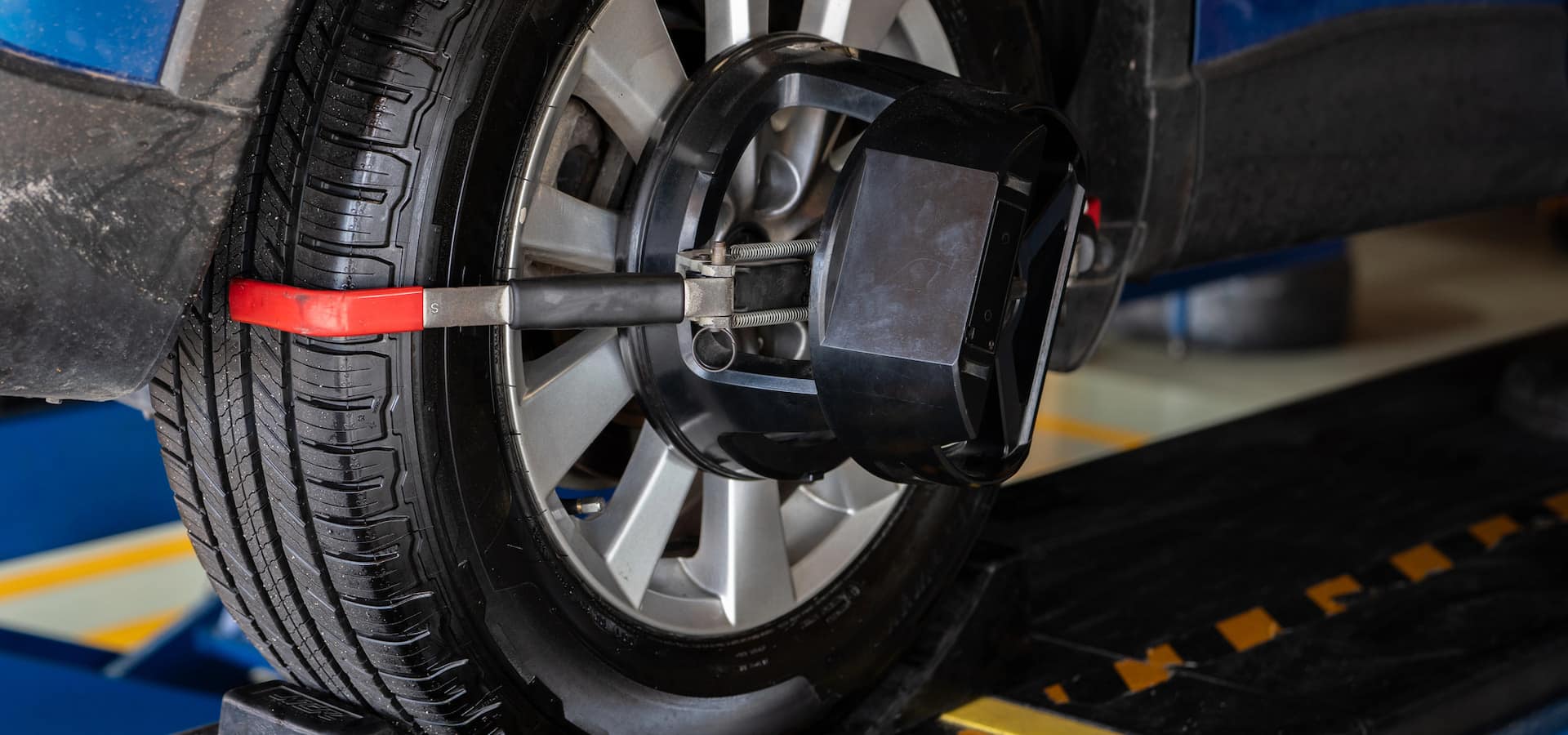
- Computer alignment scan – Laser/camera heads measure caster, camber, toe, and thrust angle against Jeep factory specs for your exact platform – KL Cherokee, WK2 Grand Cherokee, JK/JL Wrangler, or JT Gladiator.
- Tire wear reading – Feathering, inner-edge scrub, or cupping tells us whether the issue is toe, camber, or a failing component.
Once we see the numbers alongside the physical condition, we build a clear repair plan with an upfront, itemized quote – no surprises, no padding.
Wheel Alignment on Jeep: Repair vs. Replacement
Not every alignment concern means new parts. We match the fix to what your Jeep actually needs.
- Straight adjustment (repair): When components are still tight, we simply reset toe, and adjust caster and camber through the factory cam bolts or aftermarket adjusters. A lifted JK often just needs caster dialed back after new control arms.
- Partial replacement: Swap the worn piece, keep the rest. Common on Jeeps – a single sloppy tie rod end, a failing track bar on a JL, or a worn drag link – then align around the fresh part.
- Full assembly replacement: When wear cascades, replacement is the safe call. Death wobble on a JK/JL usually points to multiple worn joints and a tired track bar bushing that must all be addressed together.
When repair costs start creeping toward the price of a full steering-component refresh – or when the part is safety-critical – we lay out both paths. You decide with the facts in front of you; we never push the biggest ticket by default.
How to Make Your Jeep Wheel Alignment Last Longer
Jeeps take abuse that sedans never see, so alignment longevity comes down to habits and upkeep.
Driving habits that help
- Air down for the trail and reinflate for pavement to reduce sidewall and joint stress.
- Ease off curbs, potholes, and hard rock ledges that knock toe and caster out.
- Distribute heavy gear and roof loads evenly – uneven weight accelerates uneven tire wear.
Owner maintenance you can do
- Rotate tires on schedule and eyeball tread for inner-edge feathering.
- Listen for new clunks over bumps – early warning of a loosening track bar or tie rod.
- Watch for a steering wheel that drifts off-center after off-road use.
Brand-specific care
- Use OEM-grade steering and suspension parts – budget track bars and tie rods on Wranglers wear fast and reintroduce wobble.
- Keep up with Jeep's factory service intervals and any steering-related software or recall updates.
- After any lift or larger tires, have caster and toe reset by the shop.
Tire rotations and visual checks are safe DIY. Leave track bar, ball joint, and alignment work to us – these are safety-critical systems that need proper torque specs and calibrated equipment to get right.
What to Expect When You Bring Your Jeep In
A Wrangler owner rolled in recently after a set of oversized 35s left the steering wheel cocked to one side and the front tires feathering on the edges. That kind of story is common with lifted Jeeps – and it's exactly the situation a proper alignment fixes. Here's how a visit goes:
- Drop-off or appointment: Schedule ahead or drop the Jeep off. Grab any personal items from the cabin – we still lock and secure the vehicle regardless.
- Initial inspection: Before we touch the alignment rack, we check tie rods, ball joints, control arm bushings, and track bar play. On JK and JL Wranglers, a worn track bar or death-wobble-prone steering damper will throw numbers off, so those get flagged first.
- Written estimate: You get a clear line-item breakdown – what needs correcting, what's optional, and what can wait. No surprise add-ons.
- Communication during work: We call or text before doing anything beyond the agreed scope. If a bent control arm or seized cam bolt shows up, you hear about it first.
- Pickup walkthrough: We show you the before-and-after alignment printout and explain what changed.
Shuttle and loaner options help when you can't wait, and after-hours pickup is available. Every alignment closes with a road test and a scan-tool re-check on models with electronic steering assist. If the wheel still feels off after you leave, bring it back – we make it right.
Why Choose Elevation Auto Repair for Jeep Wheel Alignment
Jeeps don't align like a typical sedan. Solid front axles on Wrangler JK, JL, and Gladiator JT platforms behave differently than the independent front suspension on Grand Cherokee WK2 and WL models, and lift kits change caster and toe geometry in ways a quick-lube shop won't account for.
- Platform-specific knowledge: We adjust caster on solid-axle Wranglers using adjustable control arms and track bar corrections – not just toe-and-go.
- TSB and software awareness: We check for Jeep steering-related service bulletins and electronic power steering recalibration needs, especially on JL and Grand Cherokee electric-assist systems.
- Lift and tire correction: Oversized tires and 2-4 inch lifts get dialed to Jeep-appropriate caster targets to reduce wander and death wobble.
We own the job start to finish – diagnosis of worn steering and suspension parts, the alignment itself, and post-repair verification on the rack and the road. That end-to-end approach means your Jeep leaves tracking straight, with tires that wear evenly and a steering wheel that sits where it should.
Our Jeep Services
- Air Conditioning AC Repair
- Battery Repair Replacement
- Brake Repair & Brake Fluid Change
- Check Engine Light Diagnostics
- Clutch Repair & Replacement
- Coolant Leak Repair
- Cooling System Repair
- Drive Shaft Repair
- Engine Repair
- Exhaust & Catalytic Converter Repair
- Head Gasket Repair & Replacement
- Oil Change
- Oil Leak Repair
- Scheduled Service Maintenance
- Steering Repair
- Suspension Repair
- Cambelt Timing Belt Replacement
- Transmission Repair
- Tune Up