Jeep Oil Leak Repair at Elevation Auto Repair
You spot a dark patch on the garage floor after a weekend on the trail, and by Monday there's a faint burning smell drifting through the vents. Jeep oil leaks rarely announce themselves loudly, which is exactly why they need a shop that knows where these platforms tend to weep.
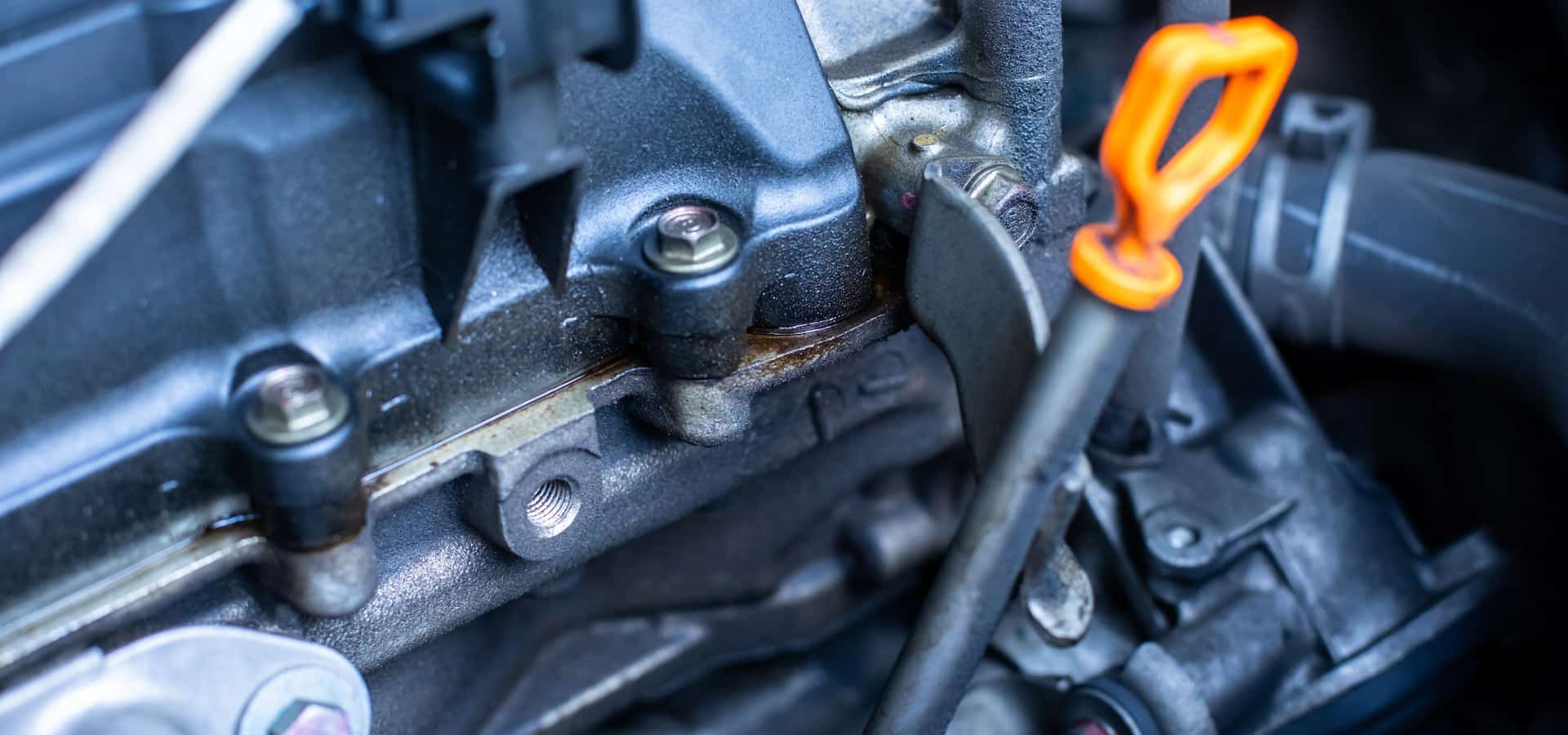
Oil leak repair means finding the true source, replacing the failed seal or gasket, and confirming the fix holds under real load – not just cleaning up and hoping. On a Jeep, that's different from generic work because the leak point depends heavily on the engine family.
- The 3.6L Pentastar V6 (2011+ Wrangler JK/JL, Grand Cherokee WK2) is known for oil filter housing and cooler gasket leaks, since the early plastic housings crack and seep onto the front of the block.
- The 3.0L EcoDiesel and older 4.0L inline-six each have their own oil pan and rear main seal quirks that call for correct RTV cure procedures and torque sequencing.
We use proper diagnostic dye tracing, factory-spec torque values, and OEM-grade gaskets so the repair actually lasts. Here's what you can expect:
- A verified leak source, not a guess based on where oil pooled
- Honest recommendations with no padded-on repairs you don't need
- Correct sealing components and torque specs for your engine family
- A cleaned engine bay so future leaks are easy to catch early
Symptoms – How to Know You Need This Service
Oil leaks tend to build gradually, so the earliest signs are easy to brush off. Watch for these from the driver's seat:
- Dark brown or amber spots on your driveway, usually under the front-center of the engine on Pentastar models
- A burning-oil smell after highway driving, strongest when you stop and step out
- Faint blue-tinged smoke from the engine bay as oil hits hot exhaust components
- The oil pressure or check engine light flickering on – if oil pressure drops, stop driving immediately to avoid engine damage
- Needing to top off oil more often between changes
- Visible wet residue on the oil filter housing, valve covers, or oil pan when you glance underneath
- A ticking or knocking that worsens as oil level falls low
A small drip you can monitor means schedule soon. Any low oil pressure warning, rapid oil loss, or smoke that won't clear means pull over and call – running a Jeep low on oil risks bearing and rear main seal failure that costs far more than the original leak.
Common Oil Leak Repair Issues on Jeep Vehicles
Jeep engines have a handful of leak paths that show up again and again, and knowing the platform tells us where to look first.
- 3.6L Pentastar oil filter housing (2011-present Wrangler JK/JL, Grand Cherokee WK2) – the original plastic housing warps and cracks, weeping oil down the back of the block and often into the cooler. Later aluminum replacements hold up far better.
- 4.0L inline-six rear main seal and oil pan gasket (TJ, XJ Cherokee, ZJ/WJ Grand Cherokee) – high-mileage 4.0L engines commonly seep at the rear main and the pan rail, dripping onto skid plates and crossmembers.
- Valve cover gasket leaks on the 3.6L and older 4.7L – hardened gaskets and stretched cover bolts let oil onto the exhaust manifold, producing that burning odor and light smoke.
- 2.0L turbo (JL Wrangler, JT Gladiator) turbo oil feed and drain lines – heat cycling ages the seals at these fittings, and leaks here also risk turbo starvation.
- Front and rear camshaft/crankshaft seals on the Pentastar – aging seals seep behind the timing cover, often mistaken for a pan leak until traced properly.
- EcoDiesel 3.0L V6 oil cooler and turbo seals – tightly packed engine bay makes early leaks easy to miss until they reach the belt or exhaust.
Which Jeep Models We See for Oil Leak Repair
We work on the full modern Jeep lineup plus the older workhorses still earning their keep around Denver. Find your Jeep below:
- Wrangler JK (2007-2018) and JL (2018+) – 3.6L Pentastar oil filter housing and cooler gasket leaks; 3.8L V6 valve cover seeps on early JKs
- Grand Cherokee WK2 (2011-2021) and WL (2021+) – Pentastar housing leaks, 3.0L EcoDiesel oil pan and turbo feed line weeping, and 5.7L HEMI valve cover and oil pan gaskets
- Cherokee KL (2014-2023) – 2.4L Tigershark and 3.2L Pentastar valve cover and oil filter housing leaks
- Gladiator JT (2020+) – shares Pentastar and EcoDiesel leak points with the JL Wrangler
- Compass and Renegade – 2.4L Tigershark valve cover and oil pan seepage
- Older TJ/XJ platforms with the 4.0L inline-six – rear main seal and oil pan gasket leaks common with age and heat cycling
EcoDiesel and turbocharged variants need extra care around oil feed and return lines, so those repairs differ from a standard gas V6 job. If you're driving something unusual or a heavily modified rig, call first – we'll tell you honestly whether it's in our wheelhouse or point you the right direction.
You back out of the driveway and notice fresh, dark spots on the concrete where your Jeep sat overnight. Maybe there's a faint burning smell after a highway run, or the oil light flickers sooner than it should between changes. Those small signs usually point to a leak that's easy to chase down early and far cheaper to fix before it spreads. Here's how we tackle Jeep oil leaks and keep them fixed for the long haul.
Causes & Risks – What Happens if Ignored
Colorado's temperature swings, dusty trails, and altitude all work against gaskets and seals. Heat cycling hardens rubber, off-road vibration loosens fasteners, and the dry Front Range air accelerates aging on the plastic components Jeep used on early Pentastar engines.
A weep you ignore rarely stays small. Oil migrates, coats other components, and turns a single gasket job into a multi-part repair.
- A seeping oil filter housing left for months can crack fully, dumping oil fast and starving the engine.
- Oil on a hot exhaust manifold creates smoke, odor, and a genuine fire risk on trail runs.
- Ignoring a valve cover leak lets oil drip onto the serpentine belt, causing slip, squeal, and eventual belt failure that kills charging and cooling.
- A neglected rear main seal contaminates the clutch or torque converter area, turning a seal replacement into a transmission-out job.
- Turbo feed line leaks on the 2.0L can starve the turbo bearing, leading to turbo replacement instead of a simple line seal.
Catching the source early keeps the fix contained and protects the parts around it.
Safety Impact – Why Oil Leak Repair Matters
Oil where it doesn't belong reaches systems that keep you in control, especially on a vehicle built to leave pavement.
- Oil on the serpentine belt can disable power steering assist and coolant circulation, leading to overheating and hard steering.
- Fluid dripping near brake and ABS components or wiring harnesses can compromise sensor signals and traction control behavior.
- Smoke from oil on the exhaust reduces visibility and signals a fire hazard, particularly relevant on wooded trails.
- Sudden oil loss risks engine seizure, which can lock the driveline at speed.
Stop driving now if: you see smoke, a rapidly growing puddle, an oil light that stays on, or you smell strong burning oil. Schedule soon if: you notice small overnight spots, a faint odor after long drives, or oil consumption between changes. Addressing a known, documented leak before an incident also keeps you on the right side of any liability question if a failure contributes to a collision.
How Jeep Oil Leak Repair Actually Works
Finding the true source is the whole game. On tightly packed Pentastar and turbo engines, oil travels along seams and drips far from where it started, so we clean the area, apply UV dye when needed, and trace the leak to its origin before touching a wrench.
Jeep's design choices shape how the repair has to be done right the first time:
- Pentastar oil filter housing jobs are done with the upgraded aluminum unit and new cooler gaskets, torqued to spec to prevent repeat warping.
- Rear main and timing cover seals require correct install depth and clean sealing surfaces – over-torqued or misaligned seals leak again quickly.
- Valve cover and pan gaskets need specified torque sequences so aluminum covers don't distort.
- Turbocharged 2.0L and EcoDiesel lines use OEM-spec fittings and seals to hold under boost and heat.
We follow factory torque values and sequences, use quality OEM-grade gaskets, and verify the repair with a clean-and-recheck after a heat cycle. That's the difference between a leak that's gone and one that comes back – and why our Jeep owners around Denver keep their
You park your Jeep in the same spot every night, and one morning there's a dark spot on the concrete that wasn't there before. Maybe you catch a whiff of burning oil at a stoplight, or the low-oil light flickers sooner than expected. Oil leaks on Jeeps rarely announce themselves loudly, but they tell a clear story once you know where to look. Here's how we track them down and fix them for good.
How We Diagnose Oil Leak Repair Issues on Jeep
A drip on the driveway can originate a foot or more from where it lands, so guesswork wastes your money. We follow a repeatable process that separates the actual source from the migration path.
- Scan for related codes. Using a compatible scan tool with Jeep-specific coverage, we pull PCM data and check for oil-pressure sensor faults, low-level warnings, or crankcase ventilation issues that point toward pressurized leaks.
- Cold visual inspection. We look at usual suspects – oil filter housing gaskets on the 3.6L Pentastar, rear main seals, oil pan gaskets, and the valve cover gaskets that harden on high-mileage 4.0L inline-sixes and 3.8L V6 Wranglers.
- UV dye and clean-and-return. When the source is ambiguous, we degrease the area, add fluorescent dye, and have you drive normally before rechecking under UV light.
- Road test and load check. Leaks that only appear under heat and RPM show themselves during a real drive, not idling in a bay.
- Confirm and measure. We verify oil level, condition, and pressure so we're treating the cause, not just the symptom.
From there you get a plain-language explanation of the source and a written repair plan and quote before any work begins.
Oil Leak Repair on Jeep: Repair vs. Replacement
Not every leak means a teardown. The right answer depends on which component is weeping and how far the wear has spread.
- Genuine repair: A loose oil filter housing, an over-torqued drain plug, or a fresh valve cover gasket often needs cleaning, resealing, or a single small part. Early Pentastar filter housing seeps frequently fall here.
- Partial replacement: When the plastic oil filter housing on 3.6L Pentastar engines (common on 2011-2016 Grand Cherokee and Wrangler) cracks, we replace the housing with an upgraded unit and reuse the surrounding hardware that's still sound.
- Full replacement: A failing rear main seal paired with a worn oil pan gasket and contaminated components can make piecemeal fixes uneconomical. When labor overlaps heavily or the leak threatens the clutch or timing components, doing the job once completely is the smarter call.
We lay out each option with the trade-offs so you decide – we never default to the biggest invoice.
How to Make Your Jeep Oil Leak Repair Last Longer
A fresh gasket lasts far longer when the surrounding conditions support it. Small habits protect the repair for years.
- Warm up before hard load. Let the engine reach operating temperature before towing or off-roading so seals expand evenly and aren't shocked by pressure spikes.
- Watch your intervals. Follow Jeep's recommended oil service schedule – old, acidic oil degrades gaskets from the inside out.
- Use the right oil and parts. Match the OEM viscosity spec (many Pentastars call for 0W-20 or 5W-20) and choose quality gaskets. The correct filter housing torque matters as much as the part itself.
- Keep software current. Updated PCM calibrations help oil-pressure and ventilation systems run within spec, reducing crankcase pressure that stresses seals.
You can safely check your driveway for spots, monitor the dipstick, and note new oil smells. Leave pressurized systems, rear main seals, and anything requiring the vehicle on a lift to us – those repairs demand proper support and torque procedures. Regular quick inspections catch a small seep before it becomes a cascading problem, keeping your Jeep dependable for the long haul.
What to Expect When You Bring Your Jeep In
You notice dark spots on the driveway, catch a burning smell after a highway run, or spot oil weeping down the side of the block. That's the point where a clear plan matters more than guesswork. Here's how a visit flows:
- Drop-off or scheduled appointment – Tell us where the drips show up and when the smell hits. Clear out personal items you'll want during the day; anything left behind stays secured.
- Initial inspection – We clean suspected areas and use UV dye or a direct visual trace to find the true source, since Jeep leaks migrate downward and mimic each other.
- Written estimate – You get an itemized breakdown of the failed gasket or seal, related parts, and labor before any wrench turns.
- Repair with updates – We call or text as work progresses, and flag anything we find along the way rather than surprising you at pickup.
- Pickup walkthrough – We show you the replaced parts and explain what caused the leak.
Shuttle and loaner options help you stay mobile, and after-hours pickup is available when your schedule runs late. Every repair closes with a road test and a scan-tool re-check for related codes, plus a standing invitation to come back if anything feels off.
Why Choose Elevation Auto Repair for Jeep Oil Leak Repair
Jeep oil leaks follow patterns, and knowing those patterns saves you from chasing the wrong repair. We've traced the usual suspects across the lineup:
- 3.6L Pentastar – oil filter housing and cooler assembly cracking on 2011–2020 Wranglers, Grand Cherokees, and Cherokees, plus rear main and valve cover weeping.
- 2.0L turbo (JL/JT) – timing cover and turbo oil feed line seepage.
- 4.0L inline-six (TJ/XJ) – classic rear main and oil pan gasket leaks on older platforms.
- EcoDiesel 3.0L – oil cooler and turbo line concerns worth a careful look.
We stay current on Jeep TSBs and software updates that affect these repairs, and we replace the updated-design filter housing rather than the failure-prone original where it applies. Torque specs and Mopar-spec fluids get followed to the letter.
We own the job start to finish – diagnosis, repair, and post-repair verification under one roof. No handing off, no unnecessary add-ons, just an honest fix built to keep your Jeep dry and dependable for the long haul.
Our Jeep Services
- Air Conditioning AC Repair
- Battery Repair Replacement
- Brake Repair & Brake Fluid Change
- Check Engine Light Diagnostics
- Clutch Repair & Replacement
- Coolant Leak Repair
- Cooling System Repair
- Drive Shaft Repair
- Engine Repair
- Exhaust & Catalytic Converter Repair
- Head Gasket Repair & Replacement
- Oil Change
- Scheduled Service Maintenance
- Steering Repair
- Suspension Repair
- Cambelt Timing Belt Replacement
- Transmission Repair
- Tune Up
- Wheel Alignment