Jeep Exhaust & Catalytic Converter Repair at Elevation Auto Repair
Get a Jeep exhaust job wrong and the fallout adds up fast – a mismatched aftermarket converter that trips a P0420 within weeks, seized manifold bolts snapped off in aluminum heads, or a repair that never clears the readiness monitors needed to pass Colorado emissions. That is why this work belongs with people who know Jeep platforms, not a muffler-shop guess.
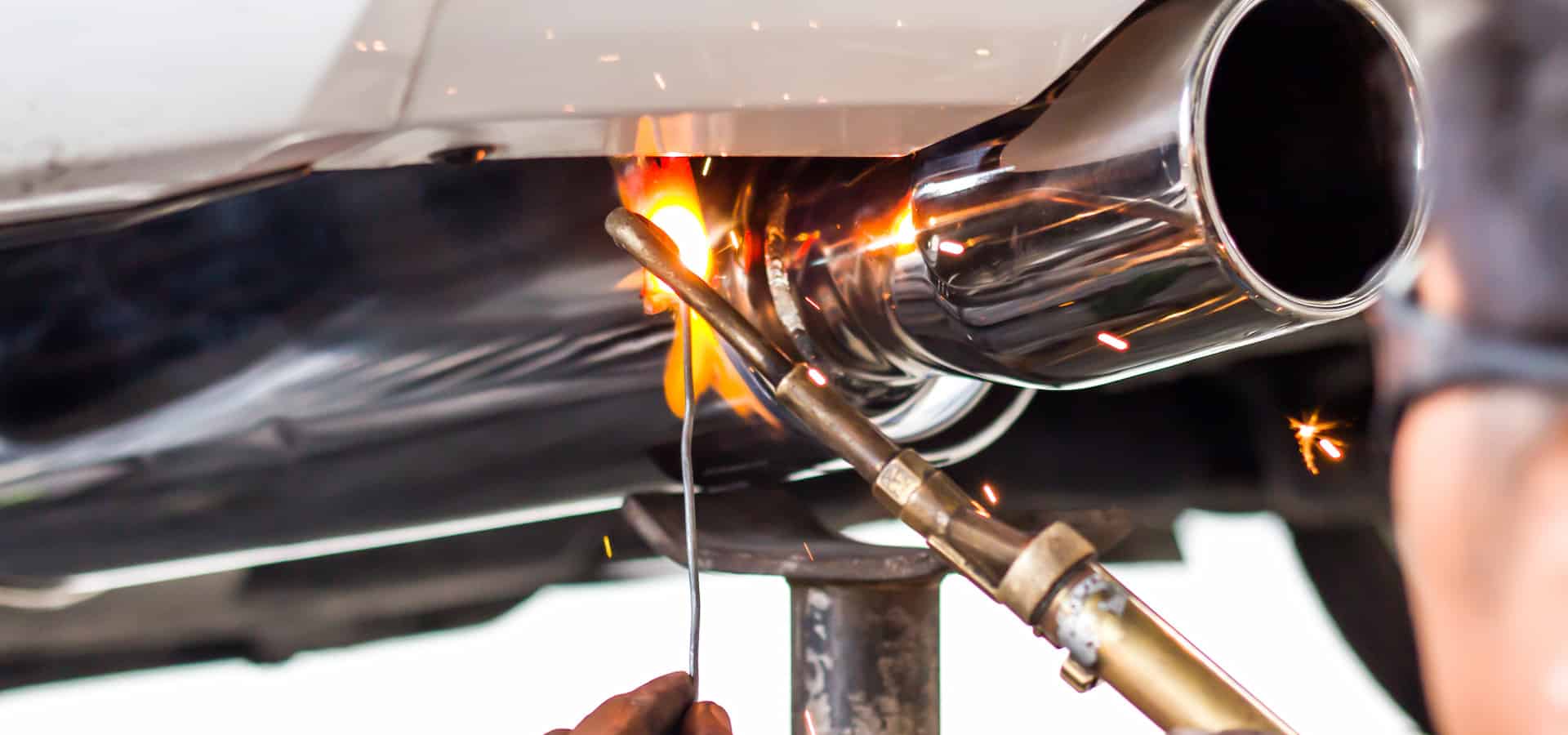
Exhaust and catalytic converter service covers everything from the exhaust manifold and downpipe back through the cats, flex joints, resonators, mid-pipe, and muffler. On Jeeps it gets specific: the 3.6L Pentastar and 2.0L GME turbo both use tightly packaged manifold-integrated or close-coupled catalysts, and the 3.6 is well known for cracked exhaust manifolds and broken studs on high-mileage examples. We use a factory-capable scan tool to read live O2 and catalyst-efficiency data, verify fuel trims, and confirm the fault is the converter and not an upstream sensor or exhaust leak.
- Straight diagnosis that separates a bad converter from a lazy O2 sensor or leak
- Clear, upfront pricing with no add-ons you did not approve
- Converters that meet federal and Colorado emissions standards and clear readiness monitors
- Proper torque specs and anti-seize on manifold and downpipe hardware to prevent repeat failures
Symptoms – How to Know You Need This Service
Jeep exhaust problems usually announce themselves before they leave you stranded. You may notice:
- A check engine light with codes like P0420 or P0430 – catalyst efficiency below threshold
- A ticking or tapping that grows louder on a cold start – a classic cracked-manifold or broken-stud symptom on the 3.6L Pentastar
- A deep drone or loud rumble under acceleration pointing to a failed muffler, cracked flex joint, or leaking gasket
- A rotten-egg or sulfur smell from a failing catalytic converter
- Sluggish acceleration or reduced power from a clogged or restricted cat
- Rattling underneath at idle – often a broken internal converter substrate
- Failed emissions testing or monitors that will not set to ready
Schedule soon for a check engine light, drone, or minor tick. Stop driving and call us if you smell strong exhaust inside the cabin, hear loud rattling with power loss, or feel excessive heat – a plugged converter can overheat and become a fire risk.
Common Exhaust & Catalytic Converter Repair Issues on Jeep Vehicles
Getting exhaust work wrong on a Jeep costs owners twice – once for the botched fix and again when the P0420 code returns and the replacement converter you just bought gets ruined by an unaddressed upstream fault. Here are the failure patterns we see most often across the Denver fleet.
- P0420/P0430 catalyst efficiency codes on 3.6L Pentastar Wranglers (JK 2012-2018, JL 2018+): The Pentastar's integrated exhaust manifold and close-coupled cats run hot, and a slow oxygen sensor or minor oil consumption can degrade the converter well before it should fail.
- Exhaust manifold cracks and broken studs on 4.0L inline-six Cherokee/Grand Cherokee (XJ, WJ): The cast manifold warps from repeated heat cycling, snapping the rearmost studs and producing a cold-start tick that fades as metal expands.
- Rusted flex pipes and rotted mid-pipe sections on Colorado-driven Jeeps: Road salt and slush pack into the flex joint behind the catalyst, splitting the braided coupler and creating a droning exhaust leak.
- Downstream O2 sensor failure on 2.0L turbo JL Wranglers and 3.0L EcoDiesel Grand Cherokees: Heat-soaked sensors drift out of range and throw false efficiency codes that mimic a dead converter.
- EcoDiesel DPF and SCR faults (WK2 Grand Cherokee 3.0L, 2014-2019): Clogged diesel particulate filters and NOx sensor faults trigger limp mode and forced regeneration issues.
- Cat-back and muffler corrosion on aging TJ/JK models: Perforated mufflers and rattling heat shields are constant on lifted, trail-run Wranglers.
Which Jeep Models We See for Exhaust & Catalytic Converter Repair
We service exhaust and catalytic converter work across the full modern Jeep lineup, plus older platforms still on Denver roads. Find yours below:
- Wrangler JK (2007–2018) and JL (2018–present) – 3.6L Pentastar and 2.0L GME turbo; cracked manifolds and broken studs are common on higher-mileage JKs
- Grand Cherokee WK2 (2011–2021) and WL (2021–present) – 3.6L V6, 5.7L HEMI, and the 6.4L on SRT / Trackhawk variants, which use larger dual-cat exhaust systems
- Cherokee KL (2014–2023) – 2.4L Tigershark and 3.2L Pentastar; close-coupled converters are typical here
- Compass MP/552 (2017–present) and Renegade BU (2015–present) – 2.4L and turbo-four exhaust setups
- Gladiator JT (2020–present) – 3.6L Pentastar sharing much of the JL exhaust architecture
- Liberty, Patriot, and older Cherokee XJ – serviced as parts availability allows
The 4xe plug-in hybrids and diesel EcoDiesel setups involve added emissions hardware, so bring those in for a specific look before assuming a standard converter job. Whatever you drive, we will confirm the right part and the right fix for your exact platform.
Causes & Risks – What Happens if Ignored
Colorado's altitude, temperature swings, and heavy winter salt use all accelerate exhaust wear on Jeeps. Add trail use, water crossings, and the Pentastar's hot-running design, and small leaks turn into major repairs fast.
A single slow O2 sensor left alone will send incorrect fuel trims to the PCM, dumping raw fuel into the converter and cooking the ceramic substrate. What starts as a cheap sensor becomes a full converter replacement in a matter of months.
- A minor manifold leak on a 4.0L XJ progresses to snapped studs and a warped manifold that must be machined or replaced.
- Ignoring a P0420 while the underlying oil consumption or misfire continues destroys the new catalyst you install to clear it.
- A cracked flex pipe pulls exhaust fumes toward the cabin, worsening as the split widens over a winter.
- Deferred EcoDiesel DPF service leads to repeated forced regens, diluted engine oil, and eventual turbo and injector strain.
- Rattling heat shields left loose contact the driveline or fuel lines, creating a burn and fire risk on lifted rigs.
We'll pinpoint the true root cause first and tell you exactly what the repair involves before anything gets replaced.
Safety Impact – Why Exhaust & Catalytic Converter Repair Matters
A compromised exhaust is more than a noise problem. Leaks upstream of the catalytic converter can push carbon monoxide toward the cabin, and on soft-top Wranglers that risk climbs quickly. Faulty O2 and NOx sensor data also feed the PCM, which can affect throttle response and, on EcoDiesel models, drop the vehicle into limp mode at highway speed.
- Stop driving now: exhaust smell inside the cabin, loud sudden roar with dizziness or headache, glowing-hot converter with a rotten-egg odor, or sustained limp mode on the highway.
- Schedule soon: a returning check engine light with a P0420, a cold-start manifold tick, a low drone under acceleration, or a rattle from the heat shields.
There's also a liability angle. A known exhaust leak or failed emissions component that goes unaddressed can complicate an insurance claim and will fail Colorado emissions testing outright. Handling it correctly the first time keeps you legal, safe, and on the road.
How Jeep Exhaust & Catalytic Converter Repair Actually Works
The exhaust system routes combustion gases from the manifold through the catalytic converter, where precious-metal coatings convert harmful gases, then out through the muffler. Upstream and downstream oxygen sensors let the PCM compare readings across the converter to judge its efficiency – that comparison is what generates the P0420 code. On EcoDiesel Jeeps, the DPF and SCR system add particulate filtering and NOx reduction that require active regeneration cycles.
Jeep's implementation demands more than a bolt-on swap, which is why generic muffler shops often miss the real fix.
- Pentastar and turbo Jeeps use CARB/federal-compliant converters that must match the VIN calibration or the efficiency code returns immediately.
- 4.0L manifold work requires correct stud extraction, thread repair, and OEM torque sequence to prevent repeat cracking.
- EcoDiesel DPF and NOx sensor service needs factory-level scan tools to command forced regens and relearn sensor baselines.
- Downstream sensor faults must be verified with live data before condemning a converter.
We use factory-level diagnostics, verify the root cause, and give you clear, transparent p
A botched exhaust or catalytic converter job on a Jeep costs more than the part itself. On the 3.6L Pentastar found across Wranglers, Grand Cherokees, and Cherokees, guessing at a converter code without proper testing often means replacing a cat that was never the problem – while the real culprit, an upstream misfire or oxygen sensor, keeps cooking the new one. We approach these repairs with honest diagnostics and transparent pricing so you pay for what your Jeep actually needs.
How We Diagnose Exhaust & Catalytic Converter Repair Issues on Jeep
Catalytic converter codes rarely tell the whole story on a Jeep. A P0420 or P0430 points to converter efficiency, but the cause can live upstream. Here's how we work through it:
- Full scan with factory-level tools – We pull stored and pending codes using scan equipment that reads Jeep-specific PIDs, checking for misfire counts, fuel trims, and O2 sensor switching that generic readers miss.
- Live data review – We watch upstream and downstream oxygen sensor voltages during operation. A downstream sensor mirroring the upstream signal confirms the converter is no longer doing its job.
- Visual and physical inspection – We check for cracked exhaust manifolds (a known weak spot on Pentastar 3.6L engines), rusted flex pipes, loose heat shields, and rotted hangers common on Colorado-driven Jeeps exposed to road salt.
- Backpressure and temperature testing – We measure exhaust backpressure and compare inlet-to-outlet converter temperatures to confirm a clogged or collapsed substrate.
- Road test – We drive the Jeep to reproduce rattles, drone, or power loss under load and verify data patterns hold up.
Once testing is done, we translate findings into a plain-language repair plan and a clear quote before any work begins – no surprises, no unnecessary parts.
Exhaust & Catalytic Converter Repair on Jeep: Repair vs. Replacement
Not every exhaust complaint means a full system swap. We sort the situation into three honest categories:
- Genuine repair – A leaking gasket, a loose clamp, a broken hanger, or a rattling heat shield on a Wrangler JK or JL is often a straightforward fix that restores quiet, leak-free operation.
- Partial replacement – When a single section is rotted or a resonator has rusted through, we replace that segment and keep the serviceable pipe and muffler. A failed downstream O2 sensor triggering a P0420 is often a sensor-only job, not a converter.
- Full replacement – When the converter substrate is melted or clogged, or a cracked exhaust manifold on a 3.6L Pentastar has damaged downstream components, replacing the assembly protects your investment and keeps the Jeep emissions-legal.
We show you the failed part, explain what caused it, and lay out the options side by side. You decide – we don't push the priciest path.
How to Make Your Jeep Exhaust & Catalytic Converter Repair Last Longer
A fresh converter or exhaust section lasts far longer when the conditions that killed the last one get addressed. A few habits protect the repair:
- Fix misfires promptly – Unburned fuel from a weak coil or plug overheats the converter substrate. Don't ignore a flashing check engine light.
- Let the Jeep warm briefly – Short cold trips in Denver winters leave moisture in the system, accelerating rust on flex pipes and welds.
- Watch the load – Frequent towing or hard off-road climbing raises exhaust temps, so keep cooling and fuel systems in good shape.
Owner-friendly maintenance you can handle safely:
- Listen for new rattles, ticking, or drone and report changes early.
- Glance under the Jeep for hanging heat shields or surface rust after off-road runs.
- Keep up with oil changes using the correct spec – oil burning past worn rings contaminates converters.
Leave sensor testing, welding, and converter replacement to us. We use OEM-grade parts and keep your Jeep's software current so sensor readings stay accurate and the repair holds up for the long haul.
What to Expect When You Bring Your Jeep In
A botched exhaust or catalytic converter job on a Jeep gets expensive fast – mismatched aftermarket cats trip P0420/P0430 codes on 3.6L Pentastar Wranglers, and a leaking manifold on a 4.0L straight-six can cook downstream O2 sensors. Here's how a visit actually goes.
- Drop-off or appointment – Schedule ahead or bring it by. Leave personal items in the cabin; we only need the key and a quick note on symptoms like a droning rasp, a rotten-egg smell, or a check engine light.
- Initial inspection – We lift the Jeep, trace the exhaust from the manifold or downpipe back to the tailpipe, pressure-check for leaks, and pull live data from front and rear O2 sensors to see whether the converter is genuinely failing or a sensor is lying.
- Written estimate – You get a clear, itemized quote before any wrench turns. We explain OEM versus CARB-compliant converter options and why one fits your platform.
- Communication during the work – We call or text with findings. Nothing extra happens without your approval.
- Pickup walkthrough – We show you the old parts and walk through what changed.
Loaner and shuttle options help you keep your day moving, and after-hours pickup is available when needed. Before your Jeep leaves, we road test it and run a scan-tool re-check to confirm readiness monitors set and no codes return. If anything feels off afterward, bring it back and we'll make it right.
Why Choose Elevation Auto Repair for Jeep Exhaust & Catalytic Converter Repair
Exhaust work on a Jeep is more than bolting on a muffler. We know the platform-specific traps – 3.6L Pentastar Wranglers and Grand Cherokees (WK2) that throw catalyst efficiency codes from cheap converters, 4.0L XJ and TJ manifolds that crack near the runners, and Cherokee (KL) 2.4L Tigershark setups where oil consumption contaminates the cat.
- Brand-specific diagnostics – We check for relevant Jeep TSBs and PCM software updates before condemning a converter, since a calibration fix sometimes resolves a P0420 without new hardware.
- Right parts, right fit – Direct-fit, emissions-compliant converters and proper gaskets, hangers, and hardware sized to your model and drivetrain.
- End-to-end ownership – The same shop diagnoses, repairs, and verifies. No handing your Jeep between three places.
You get transparent pricing, plain-English explanations, and post-repair verification that confirms the fix actually held. As your Denver dealership alternative, we handle Jeep exhaust repair with the tooling and platform knowledge to do it once and do it correctly.
Our Jeep Services
- Air Conditioning AC Repair
- Battery Repair Replacement
- Brake Repair & Brake Fluid Change
- Check Engine Light Diagnostics
- Clutch Repair & Replacement
- Coolant Leak Repair
- Cooling System Repair
- Drive Shaft Repair
- Engine Repair
- Head Gasket Repair & Replacement
- Oil Change
- Oil Leak Repair
- Scheduled Service Maintenance
- Steering Repair
- Suspension Repair
- Cambelt Timing Belt Replacement
- Transmission Repair
- Tune Up
- Wheel Alignment