
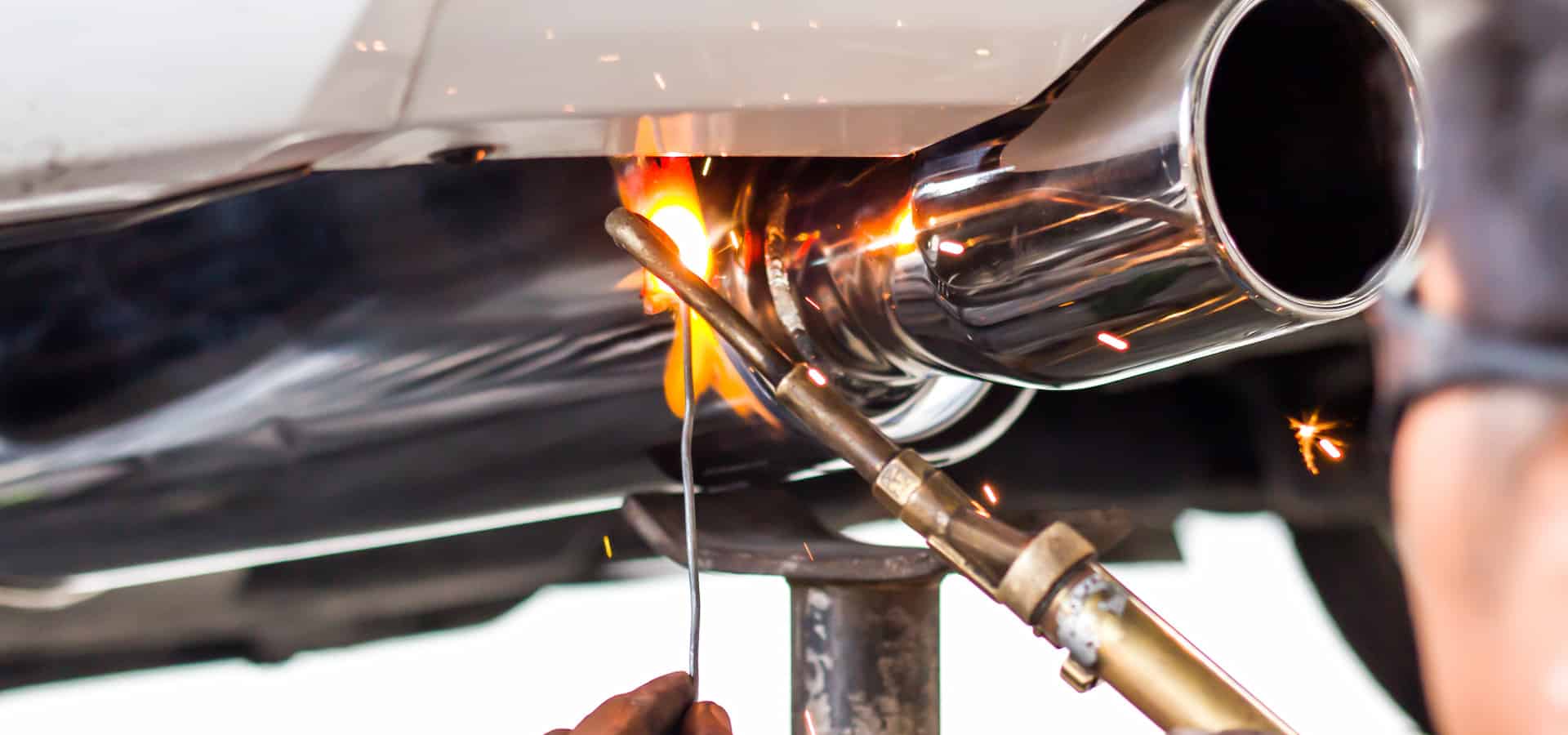
INFINITI Exhaust & Catalytic Converter Repair at Elevation Auto Repair
A rattling heat shield or a lit P0420 code on your INFINITI usually points to something specific, and we track it to the root instead of throwing parts at it. Exhaust and catalytic converter work covers everything from the exhaust manifolds and flex pipes to the front and rear O2/air-fuel sensors, plus the catalyst itself.
INFINITI builds most of its lineup on the VQ35/VQ37 V6 and the newer VR30DDTT twin-turbo, and each carries its own quirks. The VQ-series front cats sit close to the exhaust manifolds, so heat cycling cracks flex joints and loads the downstream sensors with false efficiency readings. On the VR30, the turbo-back layout and tight underbody routing demand correct sensor indexing and factory torque sequences to avoid leaks at the mid-pipe flanges. We read live fuel-trim and catalyst efficiency data with a proper scan tool before condemning a converter – a fouled sensor or an upstream misfire often mimics a failing cat.
- Honest diagnostics that separate a real converter failure from a sensor or fuel-trim issue
- Transparent pricing and clear communication before any parts go on the car
- OEM-grade or CARB-compliant converters and correct sensor indexing
- Post-repair drive cycle verification so the readiness monitors actually pass
Symptoms – How to Know You Need This Service
INFINITI exhaust problems show up in ways you can hear, smell, and feel. Here is what tends to send drivers our way.
- You may notice a rattling or buzzing under the floor, often worse at idle or on acceleration – frequently a loose heat shield or a broken catalyst substrate.
- A check engine light with P0420 or P0430 (catalyst efficiency below threshold) on VQ35/VQ37 models.
- A rotten-egg or sulfur smell from the tailpipe, a classic sign of a saturated converter.
- Noticeable drop in power or sluggish throttle, especially on the VR30DDTT when a cat is partially clogged.
- A deeper, louder exhaust note or hissing that points to a cracked flex pipe or manifold gasket.
- Reduced fuel economy tied to lazy or failing O2/air-fuel sensors.
Schedule soon for a light, a smell, or a mild rattle. Stop driving right away if you smell exhaust inside the cabin, feel severe power loss, or hear loud roaring – a collapsed cat can restrict flow and let dangerous gases in.
Common Exhaust & Catalytic Converter Repair Issues on INFINITI Vehicles
Rattles, a lit check engine light, or a rotten-egg smell usually point to the same handful of problems on INFINITI platforms. We start by confirming the actual fault before quoting anything, so you only pay for the parts your car needs.
- Catalytic converter efficiency codes (P0420/P0430) on VQ35/VQ37 models – The 2003-2019 G35/G37/Q50 and FX/QX lineups running the VQ V6 frequently trip these codes as the manifold-mounted cats age. INFINITI's close-coupled converter design runs hot, which accelerates substrate breakdown compared with underfloor units.
- Pre-cat oxygen and air-fuel ratio sensor failures – On VQ-powered G37 and Q50 cars, the wideband A/F sensors upstream of the cats degrade and skew readings, often mimicking a failed converter when the real issue is the sensor.
- Exhaust manifold cracking on VK-series V8s – The 2003-2013 Q56/QX56 and M56 with the VK56 engine can develop hairline manifold cracks and warped flanges from repeated heat cycling.
- Flex pipe and mid-pipe corrosion – Colorado road salt and moisture eat the flex coupling and welds on FX35/FX45 and older G-series cars, producing an exhaust leak and drone.
- Failed gaskets at the collector and cat-back joints – Hardened donut and flange gaskets cause ticking leaks that get louder cold.
- Aftermarket or hollowed cats triggering repeat P0420 – Cheap replacement converters on Q50/Q60 3.0T VR30 cars often fail emissions logic within months.
Which INFINITI Models We See for Exhaust & Catalytic Converter Repair
We regularly handle exhaust and catalytic converter work across the modern INFINITI lineup. Find your platform below.
- G35 / G37 (V35, V36) – VQ35DE and VQ37VHR; the close-coupled front cats and downstream sensors are common culprits for P0420/P0430.
- Q50 / Q60 (V37) – includes both VQ37VHR and the twin-turbo VR30DDTT (Red Sport 400); turbo-back routing and mid-pipe flanges require careful sealing.
- G25 / Q40 sedans – VQ25/VQ37 variants with similar cat and sensor layouts.
- FX35 / FX37 / FX45, QX70 – SUV V6 and older V8 exhaust systems with heavier heat-shield and manifold concerns.
- QX60 (VQ35 / KR15DDT) – crossover exhaust and cat service.
- M35 / M37 / M56, Q70 – VQ and VK56 V8 applications.
- EX35 / EX37, QX50 – including the VC-Turbo variable-compression engine on later QX50s.
Manual G-series and the VR30DDTT turbo cars get extra attention on sensor placement and torque specs since exhaust leaks there skew fuel trims fast. We are happy to advise on very early Q45/I30/I35 models, though hard-to-source cats for those years may point toward a specialist – we will tell you up front rather than guess.
Causes & Risks – What Happens if Ignored
Most INFINITI exhaust problems trace back to heat, age, and Denver's climate. High-altitude driving changes fueling, salted winter roads corrode pipes, and the close-coupled converter layout on VQ engines simply runs hotter than most.
A converter code or small leak feels harmless at first, but the damage compounds. Ignoring a P0420 for months usually means the failing substrate keeps clogging, restricting flow and dragging down power and fuel economy. What starts as a sensor or gasket job can turn into a full converter and manifold replacement.
- Unburned fuel overheats the cat – a rich condition from a bad A/F sensor can melt the converter substrate, converting a sensor swap into a converter job.
- Small flex-pipe leaks grow – corrosion spreads down the mid-pipe, eventually cracking welds and requiring larger sections replaced.
- Manifold cracks on VK56 engines – left alone, they warp the flange and damage studs, complicating removal and raising labor.
- Exhaust drone and vibration – loose or broken hangers let the system contact the chassis and heat shields, damaging surrounding components.
- Failed emissions testing – a stored converter code means no passing an inspection until it's resolved.
Safety Impact – Why Exhaust & Catalytic Converter Repair Matters
A leaking or damaged exhaust is more than a noise issue. On INFINITI models it can push exhaust gases toward the cabin and disrupt the sensor data the engine and emissions systems depend on.
- Carbon monoxide intrusion – leaks ahead of or under the cabin can allow CO to enter, especially with the HVAC on recirculate.
- Overheating and fire risk – a clogged converter builds extreme heat that can scorch heat shields and underbody components.
- Drivability faults – skewed A/F readings on VQ and VR30 engines can cause stumbling, stalling, or limp mode in traffic.
Stop driving now if you notice:
- Exhaust fumes inside the cabin or a strong sulfur smell
- Loud roaring with a burning odor or visible smoke
- Sudden power loss with a flashing check engine light
Schedule soon if you have: a steady P0420/P0430, a light exhaust tick, or mild drone at speed. Addressing a known exhaust defect promptly also protects you on the liability side if an incident ever occurs.
How INFINITI Exhaust & Catalytic Converter Repair Actually Works
Your INFINITI's exhaust routes gases from the manifold through one or more catalytic converters that use precious-metal coatings to reduce emissions, while upstream and downstream oxygen sensors let the ECM verify the cat is doing its job. The computer compares those two signals – if the downstream sensor tracks the upstream one too closely, it flags an efficiency code.
INFINITI's implementation adds a few wrinkles that separate a proper repair from a generic muffler-shop patch. We use CONSULT-grade diagnostics to read live sensor data and confirm the true fault before replacing parts.
- Close-coupled converters on VQ35/VQ37 engines sit right at the manifold, so accurate fault isolation matters before condemning an expensive part.
- Wideband A/F sensors on Q50/Q60 and G37 models need correct part matching and connector orientation to report properly.
- OEM-grade converters that meet INFINITI's efficiency thresholds prevent repeat P0420 codes common with budget aftermarket cats.
- Torque and gasket sequence</strong
How We Diagnose Exhaust & Catalytic Converter Repair Issues on INFINITI
A rotten-egg smell, a rattling underneath, or a P0420/P0430 catalyst efficiency code all point to the same starting place – a structured diagnosis before anyone touches a wrench. On INFINITI models, especially the VQ35/VQ37VHR-powered G35, G37, and Q50, and the VK56 in QX56/QX80, we confirm the actual failure instead of guessing at parts.
- Pull codes and freeze-frame data with a CONSULT-compatible scan tool that reads INFINITI-specific PIDs, then review upstream and downstream oxygen (air/fuel ratio) sensor activity.
- Compare front A/F sensor and rear O2 sensor waveforms – a lazy or flatlined rear sensor often reveals whether the converter itself has degraded or a sensor is lying.
- Perform a cold-start and road test to reproduce drone, tick-on-acceleration, or exhaust smell under load.
- Lift the vehicle for a visual inspection of the manifold, flex pipe, mid-pipe flange gaskets, and hangers – checking for cracks, discoloration, and soot around leaking joints.
- Measure exhaust backpressure and temperature across the converter to confirm internal restriction from a collapsed or melted substrate.
From there we build a clear repair plan with transparent pricing – you see exactly what failed, what's still good, and what the fix involves before we proceed.
Exhaust & Catalytic Converter Repair on INFINITI: Repair vs. Replacement
Not every exhaust complaint means a full system. We separate a genuine repair from a replacement based on what the inspection shows.
- True repair – A leaking manifold-to-pipe gasket, a broken hanger, a loose heat shield rattling on a G37, or a small weldable flex-pipe tear. These are serviceable without replacing major components.
- Partial replacement – A single failed downstream O2 sensor, one corroded mid-pipe section, or one converter of the pair on VQ V6 engines where the opposite bank still passes efficiency testing. We replace the worn part and keep the healthy assembly.
- Full replacement – A collapsed substrate causing backpressure, converter contamination from burning oil or coolant, or severe rust cascading through the mid and rear sections on higher-mileage QX56/QX80 units. When repair cost approaches replacement, new is the smarter spend.
We walk you through each option side by side – what it costs, how long it lasts, and why – so the choice is yours, not a default to the priciest route.
How to Make Your INFINITI Exhaust & Catalytic Converter Repair Last Longer
A converter or exhaust repair should last for years when the underlying causes are managed. How you drive and maintain the car makes the difference.
- Let the VQ or VK engine reach operating temperature before hard acceleration – repeated cold, high-load starts shorten converter life.
- Fix oil consumption and coolant leaks promptly; oil ash and coolant are the fastest way to poison a fresh catalyst.
- Avoid short-trip-only driving when possible, since converters need sustained heat to burn off deposits.
- Address a check engine light quickly – a misfire dumping raw fuel downstream can destroy a new converter within days.
Owner-friendly habits that help:
- Listen for new rattles, drone, or hissing and note when they occur.
- Glance under the rear for hanging or sagging exhaust sections after winter road salt exposure.
- Use the INFINITI-recommended oil grade and keep spark plugs and coils on schedule to prevent misfires.
- Keep ECM software current, since updated fuel and catalyst-monitor calibrations can affect efficiency readings.
Checking fluids and listening for changes are safe to do yourself. Leave exhaust welding, converter replacement, and anything involving lifting the vehicle or hot components to us – these are safety-critical and best handled with proper tools. Bring it in and we'll keep your INFINITI running clean and quiet.
What to Expect When You Bring Your INFINITI In
A droning exhaust note, a rotten-egg smell, or a P0420/P0430 catalyst code all point to the same conversation – and we start it by getting the car on the lift and confirming what's actually failing before touching a part.
- Drop-off or appointment – Schedule ahead or drop off using our after-hours key box. Clear the cabin of personal items; anything left behind gets bagged and set aside.
- Initial inspection – We scan for stored and pending codes, check upstream and downstream O2 sensor data, and inspect flex pipes, manifolds, gaskets, and hangers for leaks and rust-through.
- Written estimate – You get a clear breakdown of what's needed versus what can wait, with OEM versus aftermarket converter options spelled out.
- Communication during the work – We call or text before any change, so nothing gets done without your approval. Loaner and shuttle options help you stay mobile.
- Pickup walkthrough – We show you the removed parts and explain what was corrected.
Before your INFINITI leaves, we run a road test and re-scan with the factory-level tool to verify catalyst efficiency and confirm readiness monitors have set. If anything feels off after pickup, bring it back and we'll recheck it – no runaround.
Why Choose Elevation Auto Repair for INFINITI Exhaust & Catalytic Converter Repair
Catalyst codes on INFINITI rarely mean "just replace the converter." We diagnose the real cause first, because a lazy front O2 sensor or an upstream exhaust leak will kill a brand-new cat in short order.
- Platform-specific knowledge – Familiarity with VQ35/VQ37 (G35, G37, Q50) precat and manifold cracking, plus P0420/P0430 patterns tied to aging air-fuel ratio sensors on FX and QX models.
- TSB and software awareness – We check for applicable INFINITI bulletins and ECM reflashes that affect fuel trims and catalyst monitor behavior before condemning hardware.
- End-to-end ownership – The same shop diagnoses, sources the correct converter and gaskets, welds or bolts it in to spec, and verifies the fix.
You get transparent pricing, honest recommendations, and post-repair scan-tool confirmation that the monitors pass – so the check engine light stays off and your INFINITI stays on the road.
Our INFINITI Services
- Air Conditioning AC Repair
- Battery Repair Replacement
- Brake Repair & Brake Fluid Change
- Check Engine Light Diagnostics
- Clutch Repair & Replacement
- Coolant Leak Repair
- Cooling System Repair
- Drive Shaft Repair
- Engine Repair
- Head Gasket Repair & Replacement
- Oil Change
- Oil Leak Repair
- Scheduled Service Maintenance
- Steering Repair
- Suspension Repair
- Cambelt Timing Belt Replacement
- Transmission Repair
- Tune Up
- Wheel Alignment