
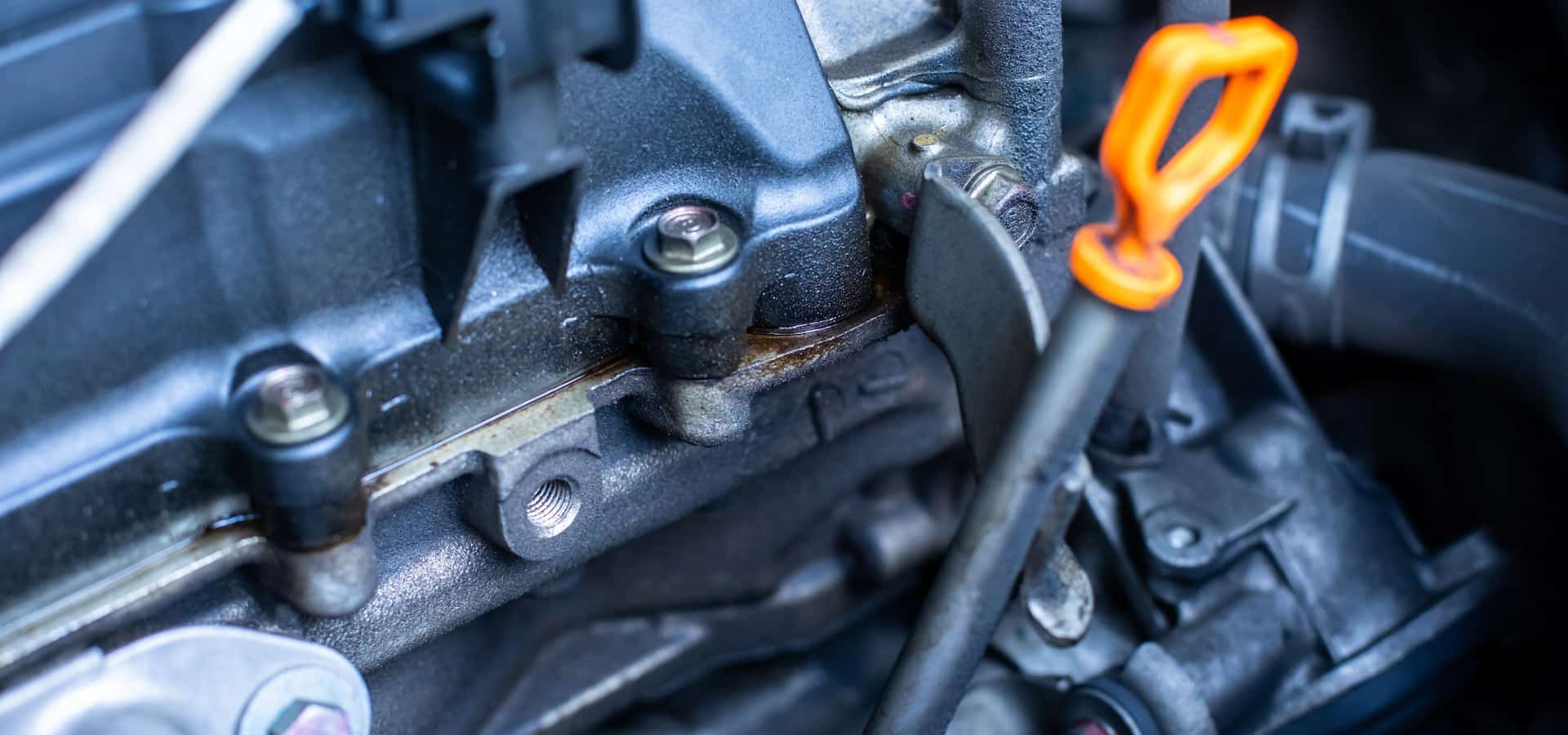
INFINITI Oil Leak Repair at Elevation Auto Repair
INFINITI's VQ and VR engine families run tight tolerances and rely on a handful of gaskets and seals that harden and weep as the miles climb. Chasing a leak on these platforms takes more than a can of stop-leak and a guess – it takes knowing where these engines actually fail.
The VQ35DE and VQ37VHR are notorious for valve cover gasket seepage and oil cooler O-ring leaks, while the twin-turbo VR30DDTT adds turbo oil feed and drain lines to the list. Getting the repair right means torquing the valve covers to spec in the correct sequence, using the correct RTV where INFINITI specifies it, and refilling with the right viscosity for your engine. A generic shop often stops at the first drip; we trace the leak to its true source.
Here in Denver, altitude and temperature swings work the seals hard, so a small weep becomes a burning-oil smell fast. We diagnose before we open anything.
- An honest diagnosis that identifies the true leak source, not just the visible drip
- OEM-grade gaskets, seals, and O-rings that hold up to real-world driving
- Proper torque sequences and sealant specs for your specific VQ or VR engine
- Clear communication before any work begins – no surprise add-ons
Symptoms – How to Know You Need This Service
Oil leaks rarely announce themselves all at once. On most INFINITI models you will pick up small clues before the leak turns serious.
- Burning oil smell after driving, especially at stoplights – often valve cover or oil cooler seepage hitting hot exhaust components
- Blue or gray smoke from the engine bay – schedule soon, as oil is reaching hot surfaces
- Dark spots on your driveway under the front or center of the vehicle
- Low oil level between changes, or a low-oil-pressure warning light
- Oil residue around the valve covers, timing cover, or rear main seal area
- Rough idle or misfire codes on VQ engines when oil contaminates the spark plug tubes
- A visible drip or steady stream under the car – stop driving immediately if oil pressure drops or the warning light comes on
A faint smell or a small spot means you can schedule at your convenience. A flashing oil pressure light, heavy smoke, or a rapidly dropping level means stop driving and have the vehicle towed – running an INFINITI low on oil risks bearing and turbo damage.
Common Oil Leak Repair Issues on INFINITI Vehicles
INFINITI's VQ and VR engine families are strong performers, but their gasket and seal designs develop predictable leak paths as they age. Knowing where these platforms weep saves guesswork and gets the right seal replaced the first time.
- VQ35DE/VQ35HR valve cover gaskets (G35, G37, FX35, M35) – The rubber cover gaskets and spark plug tube seals harden with heat cycling, dripping oil onto the exhaust manifolds and creating that burning smell many G-platform owners notice.
- VQ37VHR variable valve timing solenoid leaks (2008+ G37, Q50, Q60) – The VVEL and cam solenoid gaskets seep at the front of the head, often mistaken for a front cover leak until inspected closely.
- Rear main seal wear on higher-mileage VQ engines – Oil pooling at the bellhousing seam usually points to the rear main, common once these engines pass higher mileage bands.
- Oil cooler and filter housing gaskets (VK56 in QX56/QX80) – The oil cooler O-rings and gasket sets degrade and leak coolant or oil around the filter assembly on these full-size platforms.
- VR30DDTT turbo oil feed/return lines (Q50/Q60 Red Sport) – The twin-turbo setup puts extra heat on the feed line seals, a known weep point on these newer platforms.
- Front timing cover and oil pan seepage – RTV sealant breakdown at the cover-to-block joint shows up as a slow film across the lower engine.
Which INFINITI Models We See for Oil Leak Repair
We work on the full modern INFINITI lineup and know where each platform tends to leak. Find your car below.
- G35 / G37 (V35, V36 chassis) – VQ35DE and VQ37VHR engines; valve cover gaskets, oil cooler O-rings, and spark plug tube seals are the usual culprits
- Q50 / Q60 (V37 chassis) – VR30DDTT twin-turbo models add turbo oil line and oil cooler leaks; naturally aspirated VQ37 variants share the older leak points
- Q40 / Q60 (2014-2015 sedan/coupe) – late VQ37 platforms with similar valve cover and front cover seepage
- FX35 / FX37 / FX50 and QX70 – VQ and VK engines; rear main and oil pan gasket weeps common with age
- QX50 / EX35 / EX37 – VQ-based crossovers with valve cover and oil cooler concerns
- QX60 (JX35) – VQ35DE with transverse layout; oil cooler and pan gasket leaks show up with mileage
- M35 / M37 / M45 / M56 and Q70 – VQ and VK engines; front cover and valve cover gaskets are frequent repairs
Twin-turbo VR30 cars call for extra care around the turbo oil feed and drain lines, so that work differs from a standard VQ valve cover job. We service most 2003-and-newer INFINITI models; for very early Q45 and I-series vehicles, reach out first so we can confirm parts availability before you make the trip.
Causes & Risks – What Happens if Ignored
Denver's temperature swings and dry, high-altitude air accelerate rubber and RTV breakdown, so INFINITI seals here often fail earlier than in milder climates. Age, heat cycling, and the tight packaging of the VQ and VR engine bays all push oil past hardened gaskets.
A minor valve cover weep left alone for months tends to saturate spark plug tubes and ignition coils, which turns a simple gasket job into misfires and coil replacement.
- Valve cover seepage ignored typically leads to fouled coils, rough idle, and stored misfire codes.
- Oil dripping onto exhaust manifolds creates smoke, odor, and a genuine underhood fire risk.
- Rear main or oil pan leaks left unchecked drop oil levels low enough to risk bearing and timing chain wear.
- Turbo feed line leaks on VR30 engines can starve the turbo of proper lubrication, leading to expensive cartridge failure.
- Contaminated belts and pulleys from oil exposure fail early and can strand the vehicle.
What starts as a spot on the driveway becomes a chain of related repairs. Catching the leak early keeps it in the gasket-and-seal category rather than the internal-engine category.
Safety Impact – Why Oil Leak Repair Matters
Oil leaks reach well beyond the engine on a modern INFINITI. Low oil levels affect timing chain tensioners and variable valve timing, while oil on hot components and shared under-car areas creates direct hazards.
- Fire risk – Oil reaching the exhaust manifolds or catalytic converters can ignite.
- Engine protection loss – Low oil compromises the hydraulic VVEL and chain tensioners on VQ/VR engines.
- Traction leaks onto tires or brakes – Rear main and pan leaks can contaminate braking components on certain layouts.
Stop driving now if you notice:
- Smoke from under the hood or a strong burning-oil smell.
- The oil pressure warning light illuminated.
- Large, fresh oil puddles after short drives.
Schedule soon if you notice: a slow drip, faint oil smell after highway drives, or a thin film building on the lower engine. Addressing a known leak promptly also protects you – an unrepaired, documented issue can complicate liability if it contributes to a breakdown or incident.
How INFINITI Oil Leak Repair Actually Works
Repairing an INFINITI oil leak starts with confirming the true source, since oil travels along the block and mimics multiple leak points. We clean the area, apply UV dye or trace the flow, then pull the failed component and reseal it to factory spec.
INFINITI's engineering matters here. The VQ and VR engines use precise RTV bead patterns, torque sequences, and cure times that differ from generic gasket jobs, and getting these wrong causes repeat leaks.
- Torque-to-sequence specs – Valve cover and timing cover bolts follow a staged pattern and low torque values that must be respected to seal the aluminum surfaces without warping.
- OEM RTV and cure time – Timing cover and oil pan joints require the correct sealant and dry time before oil contact.
- VVEL and VVT considerations – Solenoid and actuator seals on VQ37VHR and VR30 engines need careful handling to avoid disturbing timing components.
- Turbo line service (VR30DDTT) – Feed and return line seals demand clean routing and correct fittings to protect turbo lubrication.
As your Denver dealership alternative, we handle these repairs with honest diagnostics, OEM-grade parts, and clear communication – so the le
INFINITI's VQ and VR engine families are known for real power and long service life, but they hide their oil leaks in ways that fool general shops. The VQ35DE and VQ37VHR run oil through timing chain covers, spool valves, and rear main areas that seep long before you see a drop on the driveway, while the VK56 in QX56 and QX80 models tends to weep from valve cover gaskets baked by underhood heat. Getting the source right the first time is what separates a lasting fix from a repeat visit.
How We Diagnose Oil Leak Repair Issues on INFINITI
Finding the true source matters because oil migrates downward and forward, so the drip point is rarely the leak point. Our process pins it down before any parts come off.
- Pull codes and live data with a CONSULT-compatible scanner to check for VVEL system faults, oil pressure sensor readings, and any pending misfire codes tied to oil intrusion on VQ37VHR coil boots.
- Perform a clean-and-return inspection – degrease the suspect area, run the engine, and re-inspect to see fresh oil at the actual origin.
- Apply UV dye when a slow seep hides between the timing cover, oil cooler, and rear main seal on high-mileage VQ35 platforms.
- Complete a hands-on visual of valve cover gaskets, the oil cooler O-rings, spool valve solenoid seals, and the oil pan RTV joint.
- Road test to load the engine and confirm whether pressure-fed leaks worsen under throttle.
These steps combine scan data with physical measurement so we know exactly which gasket, seal, or housing is failing. From there we build a clear repair plan and written quote, listing what needs attention now versus what can wait – no guesswork passed on to you.
Oil Leak Repair on INFINITI: Repair vs. Replacement
Not every oil leak calls for a big teardown. The right answer depends on which component is failing and how far the wear has spread.
- Genuine repair: A weeping valve cover gasket on a VK56 QX56, a loose oil pan bolt, or a hardened spool valve O-ring – these are clean, targeted fixes that keep the rest of the assembly intact.
- Partial replacement: When a timing chain cover on a VQ35 shows seepage but the cover itself is sound, we replace the gasket and reseal rather than swapping the whole housing. Same logic for a single failed oil cooler seal.
- Full replacement: Rear main seal failures paired with a leaking oil pump, or an oil cooler that has cracked and contaminated surrounding parts, justify replacing the assembly – especially when repeated repairs would cost nearly as much.
We show you what we find, explain which path actually solves the problem, and let you decide. Our aim is a lasting fix at a fair scope, not the biggest invoice.
How to Make Your INFINITI Oil Leak Repair Last Longer
A fresh seal lasts longest when the conditions that killed the old one are managed. A few habits go a long way on these engines.
- Let the engine reach operating temperature before hard driving – cold, thick oil stresses seals and gaskets on VQ engines.
- Avoid extended idling in Denver summer heat, which cooks valve cover gaskets on QX56 and QX80 models.
- Check your driveway and oil level regularly, and watch for the oil pressure warning or a burning smell after shutdown.
- Listen for new ticking, which can signal oil starvation from a developing leak.
Brand-specific care matters here. Use the correct INFINITI-spec oil viscosity and change it on schedule – old, sludged oil hardens seals and accelerates leaks. Stick with OEM or OEM-equivalent gaskets, since aftermarket RTV substitutes often fail on the timing cover. Keep engine control software current so oil pressure and VVEL functions read correctly.
Topping off fluids and visual checks are safe to do yourself. Leave rear main seals, timing cover reseals, and anything requiring engine or subframe support to the shop – these are precision jobs where a small mistake gets expensive fast.
What to Expect When You Bring Your INFINITI In
INFINITI engines like the VQ35DE, VQ37VHR, and the twin-turbo VR30DDTT each leak in their own distinctive ways, so the visit starts with pinpointing the real source rather than throwing gaskets at a wet valve cover. Here is how a typical appointment moves along:
- Drop-off or scheduled appointment – Tell us where you see drips, when the smell of burning oil appears, and whether the low-oil light has triggered. Loaner and shuttle options are available so you are not stranded.
- Initial inspection – We degrease, add UV dye when needed, and trace the leak to its origin, whether that is a VQ valve cover gasket, the timing chain cover, the rear main seal, or the oil cooler O-rings common on VQ37 platforms.
- Written estimate – You get a clear breakdown of parts, labor, and any related seals worth addressing while the area is open.
- Repair with updates – We keep you posted as the work progresses and flag anything we uncover along the way.
- Pickup walkthrough – We show you the replaced components and confirm the area is clean and dry.
Please remove valuables before drop-off. After-hours pickup can be arranged. Every job ends with a road test and a scan-tool re-check for related codes, and if anything feels off afterward, we want it back so we can make it right.
Why Choose Elevation Auto Repair for INFINITI Oil Leak Repair
Oil leaks on INFINITI vehicles are rarely one-size-fits-all. The VQ35 and VQ37 are known for weeping valve cover and timing cover gaskets as they age, while the VR30DDTT can seep around the turbo oil feed and return lines. We diagnose to the actual failure point instead of guessing.
- Platform-specific knowledge – Familiarity with INFINITI TSBs, applicable software updates, and the quirks of the G, Q50, Q60, QX60, and FX/QX70 lines.
- Correct torque and sealant procedures – Aluminum covers and cam-cap sealing surfaces demand OEM torque sequences, not a rushed reassembly.
- End-to-end ownership – The same shop that diagnoses the leak performs the repair and verifies it afterward.
As your Denver dealership alternative, we handle everything from the valve cover reseal to the rear main, then confirm the fix with a post-repair inspection so the leak stays gone. Honest diagnostics mean you only pay for the repair your INFINITI actually needs.
Our INFINITI Services
- Air Conditioning AC Repair
- Battery Repair Replacement
- Brake Repair & Brake Fluid Change
- Check Engine Light Diagnostics
- Clutch Repair & Replacement
- Coolant Leak Repair
- Cooling System Repair
- Drive Shaft Repair
- Engine Repair
- Exhaust & Catalytic Converter Repair
- Head Gasket Repair & Replacement
- Oil Change
- Scheduled Service Maintenance
- Steering Repair
- Suspension Repair
- Cambelt Timing Belt Replacement
- Transmission Repair
- Tune Up
- Wheel Alignment