INFINITI Wheel Alignment at Elevation Auto Repair
INFINITI builds its performance sedans and crossovers on Nissan's FM (Front Midship) platform, and that rear-biased, multi-link suspension geometry rewards precise alignment far more than a typical front-drive commuter. A slightly off camber or toe setting on a G37 or Q50 shows up fast in uneven tire shoulders and lazy turn-in.
Getting it right on an INFINITI is not a generic four-wheel job. Several models carry factory-specific quirks that a rushed shop misses.
- Direct Adaptive Steering (DAS) on Q50/Q60 is steer-by-wire and needs a torque-angle sensor relearn after alignment or the wheel sits crooked.
- Rear multi-link toe and camber on FM-platform cars (G35/G37/Q40/Q50/Q60) use adjustable eccentric bolts that must be set to spec, then torqued at ride height.
- ADAS calibration on 2016+ models with lane departure and adaptive cruise often requires a camera reset tied to the alignment.
We follow INFINITI's published alignment specs and use factory-level scan tools for steering angle and sensor relearns.
Here's what you can expect:
- A four-wheel alignment measured against OEM specs, not a one-size number.
- Steering angle sensor and DAS relearn where the platform calls for it.
- Honest reporting – we won't sell you an alignment you don't need.
- Work that protects your tire investment, factory warranty, and resale value.
Symptoms – How to Know You Need This Service
Alignment problems creep in gradually, so many INFINITI drivers get used to them. Watch for these signs:
- You may notice the car pulling left or right on a flat, straight road even with hands light on the wheel.
- The steering wheel sits off-center while driving straight – common after a curb strike or new tires.
- Uneven tire wear, especially feathered inside edges on the rear of a G37 or Q50.
- A vibration through the wheel that worsens at highway speed.
- Tires that squeal in slow turns from a toe setting that's off.
- Your DAS or steering warning light appears after suspension work or a hard hit.
- The car feels vague or wandering and needs constant small corrections.
If you feel a sudden, strong pull or clunking along with a warning light, stop driving and have the vehicle inspected – that can point to a bent control arm or damaged tie rod, not just alignment. Steering-wheel off-center, gradual pull, and mild tire wear can wait for a scheduled visit.
Common Wheel Alignment Issues on INFINITI Vehicles
INFINITI builds most of its lineup on Nissan's FM (Front-Midship) platform, which favors sharp turn-in and a rear-biased weight balance. That sporting geometry rewards precise alignment and punishes neglect. Here's what we see roll through the shop most often.
- Rear camber wear on G35/G37 and Q50/Q60 (FM platform): The independent multi-link rear suspension runs aggressive negative camber from the factory. Owners often notice inner-edge tire scrubbing on the rears well before the fronts show any wear.
- Adaptive/Direct Adaptive Steering drift on 2014+ Q50 (DAS): The steer-by-wire system can develop an off-center steering wheel feel after a bump strike or curb contact, even when the toe reads close to spec.
- Toe drift from worn rear links on FX/QX70 and QX50: Rubber bushings in the rear lower links soften with age and Denver's temperature swings, letting toe wander under load and cornering.
- Front lower control arm bushing fatigue on M35/M37/M45: These heavier sedans load the front bushings hard, and worn bushings shift caster and camber readings out of tolerance.
- Ride-height changes affecting alignment on lowered or sagging QX56/QX80: Tired springs on high-mileage examples drop the vehicle and change camber curves, mimicking an alignment fault.
- Pothole and curb hits pulling front toe on all trims: Colorado roads and freeze-thaw cracks knock front toe out quickly, showing up as a pull or feathered front tread.
Which INFINITI Models We See for Wheel Alignment
We align the full modern INFINITI lineup, with attention to the platform-specific hardware each one uses.
- G35 (V35, 2003–2007) and G37 (V36, 2008–2013) – FM-platform coupes and sedans; rear eccentric bolts and aggressive camber settings drive inner-edge tire wear.
- Q40 / Q50 / Q60 (2014–present) – note the Direct Adaptive Steering variants require a steer-by-wire relearn after alignment.
- M35 / M37 / M45 / M56 and Q70 (Y50/Y51) – heavier rear-drive and AWD sedans that benefit from thrust-angle correction.
- FX35 / FX37 / FX50 and QX70 – performance crossovers with sport suspension that hold tight camber tolerances.
- QX50, QX60, and QX56 / QX80 – family crossovers and full-size SUVs; AWD models need balanced four-wheel settings for even tire wear.
- EX35 / EX37 – FM-platform crossovers sharing G-series geometry.
Rear-drive and AWD variants align differently, and 2016+ models with lane-keep cameras may need ADAS calibration alongside the alignment. Very early or heavily modified builds with non-standard suspension we'll assess first and tell you honestly what we can and can't dial in. Not sure which platform you're driving? Bring it in and we'll identify it and set it to factory spec.
Causes & Risks – What Happens if Ignored
Most INFINITI alignment problems trace back to a mix of aggressive factory geometry, aging rubber bushings, and Denver's rough winter roads. Add in the occasional pothole or curb strike, and toe and camber slip out of spec faster than owners expect.
Left alone, a small alignment shift snowballs. Ignoring inner-edge rear wear on a G37 or Q50 for a few thousand miles often means replacing a tire set that still had plenty of tread left, plus the alignment you needed all along.
- Tire life: Feathered or cupped tread shortens tire life dramatically – a quick toe correction becomes a full set of tires.
- Suspension parts: A worn rear link ignored long enough loads the wheel bearing and adjacent bushings, turning a link replacement into a multi-part job.
- Steering feel: On Q50 DAS cars, a neglected off-center condition strains the steering actuator and complicates later calibration.
- Braking distance: Uneven tread and a pull make emergency stops longer and less predictable, especially on winter surfaces.
- Warranty and resale: Documented alignment service protects your maintenance record and keeps tire and suspension wear from raising red flags at resale.
The fix is straightforward when caught early. We measure first, show you the numbers, and only correct what's actually out.
Safety Impact – Why Wheel Alignment Matters
Alignment isn't cosmetic. On a modern INFINITI, the wheels feed data and grip to systems that keep you controlled in a panic stop or a slick corner.
- Vehicle Dynamic Control (VDC) and traction control: These rely on consistent tire contact – uneven wear from bad alignment reduces the grip these systems assume you have.
- ABS behavior: Mismatched tread depth from alignment wear changes how each wheel locks and releases under hard braking.
- Steering precision: A pull or wandering feel forces constant correction and hides real steering faults.
Know the difference between wait and act:
- Stop driving now: Sudden strong pull, clunking over bumps, or a steering wheel that fights you after a hard impact.
- Schedule soon: Slight off-center wheel, gradual tire noise, or mild drift on level road.
There's also a liability angle. If a known handling or wear issue isn't addressed and contributes to a collision, documented service history matters. We keep clear records of every alignment we perform.
How INFINITI Wheel Alignment Actually Works
A proper INFINITI alignment sets three angles at each corner – camber, caster, and toe – back to factory geometry so the tires roll true and the steering centers correctly. On the FM-platform rear-drive cars, the rear suspension is fully adjustable, which is why we align all four wheels rather than just the front.
What makes INFINITI different from a generic front-toe-only job:
- Four-wheel thrust-angle procedure: The multi-link rear on G/Q/M cars demands rear camber and toe adjustment, not just a front set.
- DAS calibration on Q50/Q60: Direct Adaptive Steering requires an OEM-level software step to re-center the steer-by-wire system after alignment, or the wheel won't sit straight.
- Ride-height verification first: On QX56/QX80 and older M-series, we confirm ride height before touching angles, since sagging springs skew camber readings.
- Torque-to-spec fasteners: Eccentric cam bolts and link fasteners get set to INFINITI's specs and sequence so settings hold under load.
We measure on precision equipment, walk you through the before-and-after numbers, and calibrate the electronic systems the platform
How We Diagnose Wheel Alignment Issues on INFINITI
INFINITI's multi-link rear suspension and, on models like the Q50 and Q60, the Direct Adaptive Steering (steer-by-wire) system, mean alignment work is more involved than bolting the car to a rack and eyeballing the numbers. Steering angle sensors and DAS calibration must agree with the physical geometry, or the system fights you.
- Interview and road test – we listen for pulling, wandering, or a crooked wheel, and note uneven tire feathering common on FX/QX70 and G37 rear links.
- Connect CONSULT-III Plus – INFINITI's factory scan tool reads steering angle sensor data, DAS status, and any chassis fault codes that would throw alignment numbers off.
- Visual inspection – we check tie rod ends, ball joints, control arm bushings, and rear compensation links for play, cracked rubber, or leaking dampers.
- Tire and wear read – tread patterns tell us whether the issue is toe, camber, or a worn component.
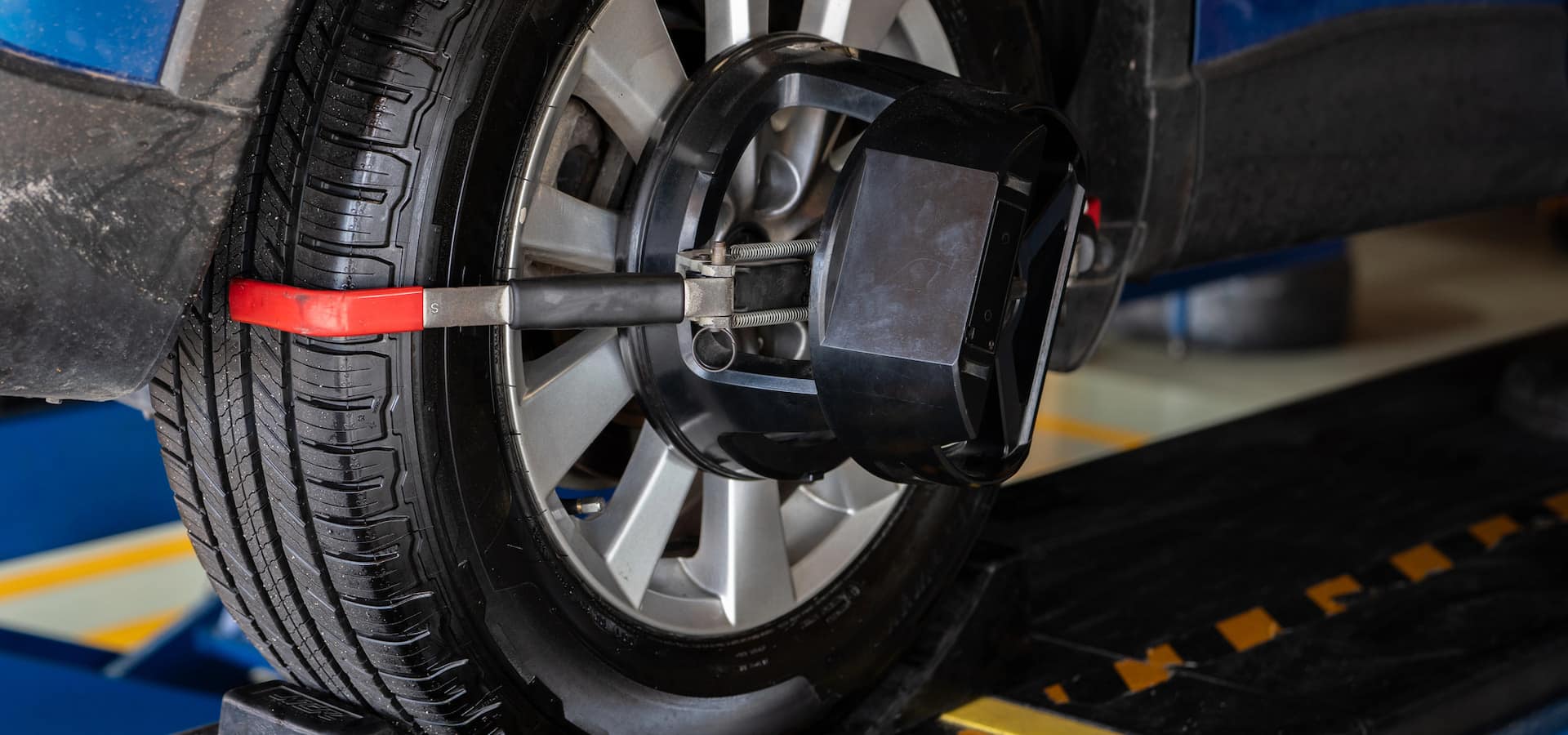
- Rack measurement – we mount the vehicle and pull live camber, caster, and toe against INFINITI factory specs for the exact chassis and trim.
Once we see whether the numbers are simply out of adjustment or a worn part is driving them out, we build a clear repair plan and quote. You approve the work before we touch a bolt – no surprises, no unnecessary line items.
How to Make Your INFINITI Wheel Alignment Last Longer
Good alignment lasts when the suspension and your driving habits work with it.
- Ease off potholes, curbs, and hard bumps – impacts are the fastest way to knock toe and camber out on INFINITI's multi-link setup.
- Avoid overloading the cargo area on QX models; excess rear weight changes ride height and geometry.
- In Denver's freeze-thaw climate, watch for road-salt corrosion on links and hardware, which accelerates bushing wear.
Simple owner checks go a long way:
- Rotate tires on schedule and look for uneven inner or outer edge wear.
- Notice new pulling, a off-center steering wheel, or a steering warning light and mention it early.
- Keep tire pressures at the door-jamb spec – low pressure mimics and worsens alignment wear.
Brand-specific care matters: use OEM-grade suspension components so geometry holds, follow INFINITI's maintenance intervals, and keep control-module software current so DAS and steering angle calibrations stay accurate. Tire rotation and pressure checks are safe DIY. Leave alignment adjustments, DAS calibration, and any steering or suspension component work to the shop – these are safety-critical systems that need factory tooling and torque specs done right.
INFINITI's multi-link rear suspension – used across the FM platform under the G35, G37, Q50, and Q60 – rewards precise alignment but punishes shortcuts. The rear toe and camber links on these RWD and AWD chassis wear at the bushings, and a lazy setup leaves you chewing through the inner edges of a set of tires long before their time. Getting the geometry right protects both your handling and your investment.
What to Expect When You Bring Your INFINITI In
We keep the process straightforward and keep you in the loop from the first call to the drive home.
- Drop-off or appointment – Schedule ahead or drop the car when it suits you. Grab personal items from the cabin; anything left behind stays secured.
- Initial inspection – Before touching the alignment heads, we check tie-rod ends, control-arm bushings, wheel bearings, and the rear toe/camber links common on FM-platform G and Q models. Alignment can't hold if worn parts move.
- Written estimate – You get a clear breakdown of what the car needs and what it doesn't. If the numbers are in spec and no parts are worn, we tell you.
- The work – We set caster, camber, and toe to INFINITI factory specs and note any applicable TSBs or steering-angle relearn requirements.
- Pickup walkthrough – We review before-and-after readings with you in plain language.
Need to keep moving? Ask about shuttle and loaner options, plus after-hours pickup when your schedule runs long. Every alignment ends with a road test and a steering-angle sensor scan-tool re-check to confirm the car tracks straight and the wheel sits centered. If anything feels off afterward, bring it back and we'll re-verify.
Why Choose Elevation Auto Repair for INFINITI Wheel Alignment
An alignment is only as good as the diagnosis behind it. We treat INFINITI geometry as a system, not a printout.
- Platform-specific knowledge – We know the rear multi-link toe drift on G35/G37/Q50 chassis and how worn subframe and link bushings throw readings off before the rack ever moves.
- Electronics done right – Q50 and Q60 models with Direct Adaptive Steering need proper steering-angle sensor calibration after alignment. We handle the relearn, not just the toe.
- TSB and software awareness – We check for known INFINITI service bulletins and updates that affect steering feel and tracking.
You get one shop that owns the whole job – inspection, any needed suspension repair, the alignment itself, and post-repair verification. That end-to-end approach keeps your factory warranty intact and protects resale value, since documented, in-spec service history matters when it's time to sell.
We're your Denver dealership alternative: honest diagnostics, no unnecessary repairs, and clear communication at every step.
Wheel Alignment on INFINITI: Repair vs. Replacement
Not every alignment problem needs new parts. We separate a true adjustment from a worn-component job.
- Genuine adjustment (repair): Suspension hardware is tight and undamaged – we simply reset toe, camber, and caster to spec and recalibrate the steering angle sensor. Common after new tires or curb contact.
- Partial replacement: A single worn item is dragging the geometry out – think a sloppy outer tie rod end on a G37, a cracked lower control arm bushing on an FX/QX70, or worn rear compensation links. We replace that part, keep the healthy assembly, then align.
- Full replacement: When wear has cascaded – ball joints, multiple bushings, and a bent link all at once, or a strut is leaking and safety-critical – piecing it together costs more than a proper assembly. On higher-mileage QX and Q platforms this is often the smarter long-term call.
We show you the worn parts and the measurements, explain which fix protects your warranty and resale value, and let you decide. Our goal is the repair that keeps you safely on the road – not the biggest invoice.
Our INFINITI Services
- Air Conditioning AC Repair
- Battery Repair Replacement
- Brake Repair & Brake Fluid Change
- Check Engine Light Diagnostics
- Clutch Repair & Replacement
- Coolant Leak Repair
- Cooling System Repair
- Drive Shaft Repair
- Engine Repair
- Exhaust & Catalytic Converter Repair
- Head Gasket Repair & Replacement
- Oil Change
- Oil Leak Repair
- Scheduled Service Maintenance
- Steering Repair
- Suspension Repair
- Cambelt Timing Belt Replacement
- Transmission Repair
- Tune Up