INFINITI Cooling System Repair at Elevation Auto Repair
INFINITI packs serious performance into a refined package, and the VQ and VK engine families run warm under Denver's altitude and summer heat. That combination makes a healthy cooling system non-negotiable – and it makes proper diagnosis worth doing right the first time.
Cooling work on an INFINITI isn't a swap-and-pray job. The VQ35DE and VQ37VHR use plastic thermostat housings and radiator end tanks that grow brittle with heat cycling, and the electric water pump on later VR30DDTT twin-turbo engines requires software recognition after replacement. Bleeding these systems demands the correct fill procedure and OEM-grade blue long-life coolant – mix in the wrong fluid and you invite gasket and seal trouble down the road.
We use factory-level diagnostics to read coolant temp sensor data, monitor electric fan operation, and confirm thermostat function before we recommend anything. No guesswork, no padded estimates.
- Honest diagnostics that pinpoint the actual failure – not a parts-cannon repair
- OEM-correct coolant and torque specs on housings, hoses, and clamps
- Proper vacuum-fill and bleed to eliminate air pockets and hot spots
- Transparent pricing and clear explanations before we touch a wrench
Symptoms – How to Know You Need This Service
Cooling problems on an INFINITI often show up gradually, then escalate fast. Watch for these signs:
- Temperature gauge climbing higher than normal, especially in stop-and-go traffic or on I-70 grades
- Sweet, syrupy smell from the engine bay – a classic sign of leaking coolant
- Green or blue puddles under the front of the car after parking
- Low coolant warning or a check engine light with codes tied to coolant temp sensors
- Heater blowing cold air even when the engine is warm – often an air pocket or failing thermostat
- Steam or a burning odor from under the hood
- Cooling fans running loud and constant, or not engaging at all
- Bubbling or gurgling from the reservoir at idle
Stop driving immediately if you see steam, a red-zone temperature reading, or a hard overheat warning – continued driving risks warped heads and a blown head gasket on the aluminum VQ block. Schedule soon for slow coolant loss, occasional high readings, or a faint sweet smell before a small leak becomes a roadside breakdown.
Common Cooling System Repair Issues on INFINITI Vehicles
Certain cooling failures show up again and again across the INFINITI lineup. Knowing the pattern by platform speeds up an accurate diagnosis.
- Radiator crossover / plastic end-tank cracks (2003-2008 G35, FX35, VQ35): The molded plastic tanks go brittle with heat cycling and start weeping at the crimp seam, often dumping coolant under load.
- Water pump weep and bearing noise (VQ35/VQ37 G35, G37, M37): The timing-chain-driven pump develops seal seepage and bearing whine; because it sits behind the front cover, catching it early avoids a much bigger job.
- Secondary radiator and turbo cooling on VR30DDTT (2016+ Q50/Q60 3.0t): The twin-turbo setup uses an auxiliary cooling circuit and electric pump for the turbos – air pockets and pump faults trigger overheating codes that a standard bleed won't clear.
- Thermostat housing and O-ring leaks (VK56 QX56/QX80): Aging gaskets on the big V8 seep coolant that bakes onto the housing, mimicking a bigger leak than it is.
- Radiator/transmission oil cooler cross-contamination: On models with an integrated cooler, an internal breach lets coolant and ATF mix – the classic "strawberry milkshake" that risks the transmission.
- Electric cooling fan and fan control module faults (Q50/Q60/QX60): Failing fan modules leave the engine unable to shed heat at idle or in Denver stop-and-go traffic.
Which INFINITI Models We See for Cooling System Repair
We service the full INFINITI lineup and know where each platform tends to develop cooling faults. Find your car below:
- G35 / G37 (V35, V36 chassis, VQ35DE / VQ37VHR) – plastic thermostat housings, radiator end-tank cracks, and aging hoses are the usual culprits
- Q50 / Q60 (V37, VQ37VHR and VR30DDTT twin-turbo) – the VR30 uses an electric water pump and intercooler circuit that need correct coolant type and post-repair verification
- FX35 / FX37 / FX45 and QX70 – radiator, thermostat, and water pump wear common with mileage and heat cycling
- M35 / M37 / M45 and Q70 (Y50, Y51) – VQ and VK-series cooling components, including radiator and hose failures
- QX60 (JX35, VQ35 with CVT cooler) – radiator-integrated transmission cooler concerns worth inspecting together
- QX56 / QX80 (VK56 V8) – water pump and radiator service on the larger truck platform
- EX35 / EX37 (QX50 first gen) – shares VQ cooling architecture with the G-series
Twin-turbo VR30 models and CVT-equipped crossovers get extra attention – their cooling circuits and coolers add complexity that a general shop can miss. If you're driving a very rare or heavily modified INFINITI, call first so we can confirm parts availability before you come in.
INFINITI's VQ and VR engine families run hot and pack a lot of aluminum into tight engine bays, which means their cooling systems live a harder life than most. From the VQ35 in the G35/G37 to the twin-turbo VR30DDTT in the Q50 and Q60 Red Sport, each platform has its own cooling quirks. Getting them right takes brand-specific knowledge, not a generic flush-and-fill.
Causes & Risks – What Happens if Ignored
Colorado's altitude, dry heat, and elevation-driven temperature swings push cooling systems hard. Add age-related plastic fatigue and deferred coolant changes, and small leaks turn into real problems fast.
An INFINITI that loses coolant slowly may run fine for weeks – then spike on a hot climb up I-70. Ignoring a weeping water pump or cracked end tank on a VQ35 for a few months typically ends in aluminum head warping or a blown head gasket, which multiplies the repair.
- Small radiator seep → chronic low coolant, air pockets, and hot spots that scorch head gaskets.
- Water pump weep → bearing failure, chain-guide contamination, and possible timing issues behind the front cover.
- Neglected coolant → corroded passages, clogged heater core, and a failing thermostat stuck closed.
- Oil cooler breach → ATF contamination that can destroy a costly INFINITI automatic transmission.
- Overheating episodes → warped aluminum heads, cracked blocks, and repairs that dwarf the original fix.
The safety cost matters too – an engine that overheats mid-drive can leave you stranded on a shoulder or lose power steering assist. We'll catch the leak early and give you a clear picture before it snowballs.
Safety Impact – Why Cooling System Repair Matters
A cooling failure on a INFINITI is not just an engine problem. When temperatures climb, the car's electronics and driver aids can react in ways that affect control.
- Sudden power loss: Overheat protection can pull the engine into limp mode on a highway merge or mountain grade.
- Steam and visibility: A ruptured hose or end tank can fog the windshield and coat the road in slick coolant.
- Overheat-triggered shutdowns: Losing engine assist affects power steering feel and braking confidence in traffic.
Stop driving now if you see:
- Temp gauge climbing into the red or an overheat warning light
- Steam or coolant smell from under the hood
- A large puddle of orange, green, or blue fluid
Schedule soon if you notice: a slow coolant drop, sweet smell inside the cabin, or a heater that's gone lukewarm. Addressing a known cooling weakness before it fails also keeps you clear of liability questions if a breakdown causes an incident.
How INFINITI Cooling System Repair Actually Works
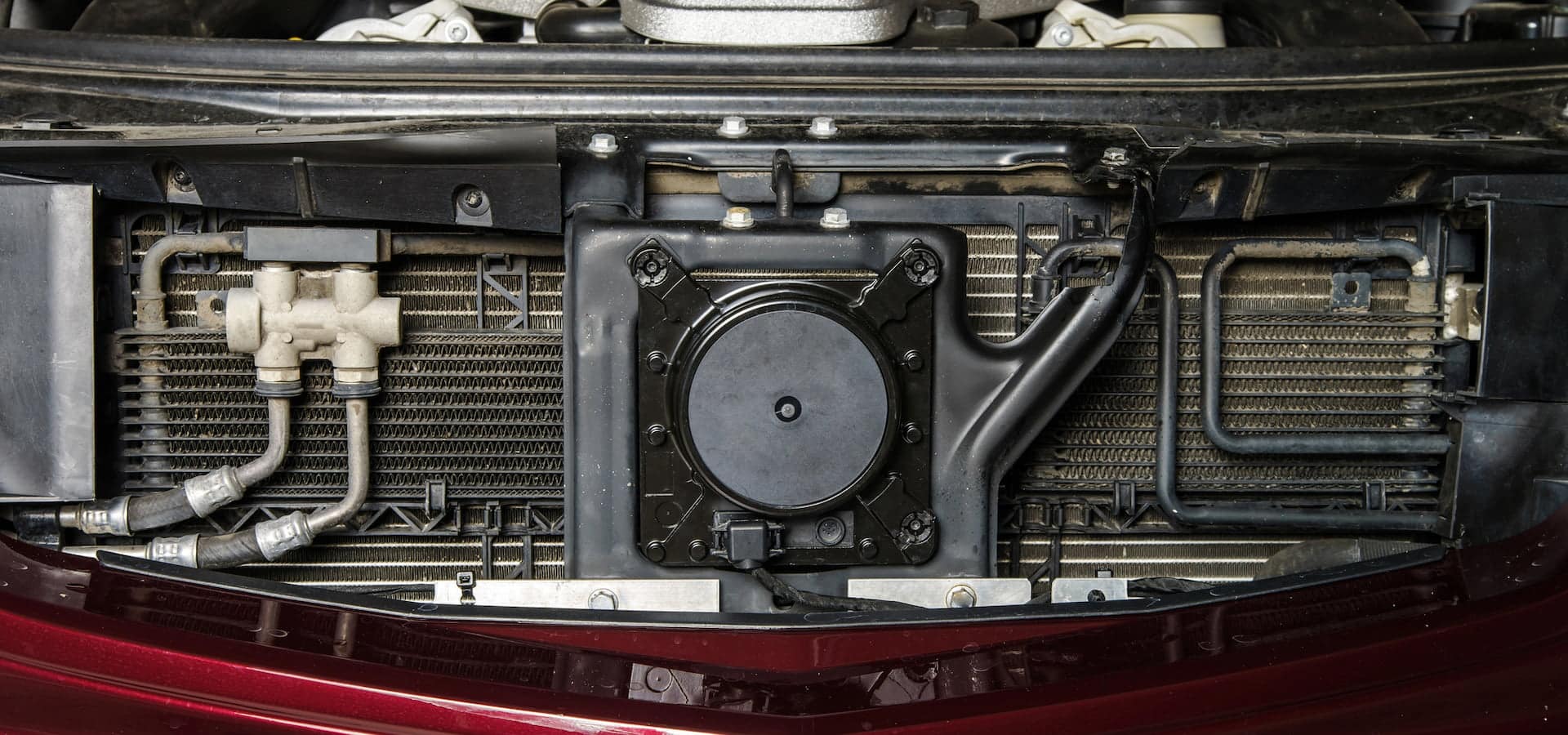
Your INFINITI's cooling system routes coolant through the block and heads, out to the radiator, and back – regulated by a thermostat and, on newer models, electronically controlled fans and pumps. The VR30DDTT twin-turbo adds a separate low-temperature circuit with its own electric pump to keep the turbochargers and charge air cool, which is why these cars need a proper vacuum fill rather than a simple top-off.
What sets INFINITI work apart is the electronics and the precision it demands:
- Vacuum-assisted fill and bleed to purge air from the VQ, VK, and VR circuits – trapped air causes false overheats.
- Electric fan and auxiliary pump testing through the fan control module, verified with proper scan data.
- OEM-spec coolant matched to INFINITI's long-life
INFINITI cooling systems mix Nissan VQ and VR engine architecture with luxury packaging that crowds the engine bay – meaning coolant leaks, thermostat faults, and radiator failures often hide behind covers and tight routing. The VQ35DE and VQ37VHR engines in the G35, G37, and Q50, along with the VK56 in the QX56/QX80, each have their own quirks. Specialist attention pays off here, and clear pricing keeps the process honest from the first estimate.
How We Diagnose Cooling System Repair Issues on INFINITI
We start with data, not guesswork. INFINITI cooling faults frequently trigger subtle codes long before the temperature gauge moves.
- Interview and history: We ask about overheating, sweet coolant smell, low reservoir levels, or heater performance drops.
- Scan tool pull: Using CONSULT-compatible diagnostics, we read live coolant temperature sensor data, thermostat regulation behavior, and any P0128 or P0217 codes common on VQ-powered platforms.
- Cooling system pressure test: We pressurize the system to spec to expose leaks at the radiator end tanks, water pump weep hole, and the notorious plastic coolant crossover fittings on VQ engines.
- Visual inspection: We check hose condition, look for dried coolant residue near the timing cover, and inspect the radiator for the plastic tank cracking seen on higher-mileage G and M chassis.
- Thermal and road test: We monitor warm-up behavior and confirm the thermostat opens at the correct temperature and the electric or clutch fan engages properly.
Once we confirm the root cause – not just the symptom – we translate findings into a written repair plan with a clear quote before any work begins.
Cooling System Repair on INFINITI: Repair vs. Replacement
Not every cooling concern needs a big-ticket fix. We match the repair scope to the actual condition of the parts.
- Genuine repair: A single leaking hose clamp, a stuck thermostat, or a cracked overflow bottle on a Q50 or G37 is often a straightforward component swap while keeping the rest of the system intact.
- Partial replacement: A weeping water pump on a VQ35 or VQ37 can be replaced on its own, but we inspect the timing-side gaskets and belt-driven accessories at the same time since access overlaps.
- Full replacement: When a radiator end tank has cracked, the transmission cooler is contaminating coolant, and hoses are brittle, piecemeal repairs cost more over time. Cascading wear on high-mileage QX56/QX80 units often justifies a complete cooling package.
We lay out each option side by side – what it costs, what it buys you, and how long the remaining components should last – so you decide with full information instead of being pushed toward the priciest ticket.
How to Make Your INFINITI Cooling System Repair Last Longer
A fresh repair lasts far longer when the system is treated right afterward.
- Driving habits: Let the engine reach operating temperature before hard acceleration, avoid heavy towing in extreme heat with the QX line, and watch the gauge in Denver's altitude and summer traffic.
- Owner checks: Peek at the reservoir level weekly, look under the car for coolant spots, and listen for a laboring fan or gurgling after shutdown.
- Brand-specific care: Use OEM-spec Nissan Long Life Coolant – mixing incompatible coolant types accelerates corrosion on VQ and VK aluminum components. Keep the reservoir cap in good condition and follow INFINITI's published coolant service intervals rather than stretching them.
- Software: Keep ECM calibrations current, since some fan and temperature control updates improve regulation on later Q50 and Q60 models.
Topping off coolant and visual inspections are safe to do yourself. Leave pressure testing, thermostat replacement, and anything involving the water pump or bleeding air from the system to us – trapped air pockets on VQ engines cause hidden hot spots that only proper equipment resolves.
INFINITI cooling systems carry their own set of quirks, and the VQ35 and VQ37VHR V6 engines behind the G, M, Q50, and Q60 lines are no exception. Plastic-necked radiators, thermostat housing seepage, and water pump weep-hole leaks show up often on higher-mileage VQ platforms, while the twin-turbo VR30DDTT in the Q50/Q60 Red Sport runs dual coolant circuits that demand careful bleeding to avoid air pockets and hot spots.
What to Expect When You Bring Your INFINITI In
We keep the process straightforward so you always know where your vehicle stands.
- Drop-off or appointment – Schedule ahead or drop the vehicle off; grab our shuttle or ask about loaner availability so you're not stranded.
- Initial inspection – We pressure-test the system, inspect the radiator, hoses, water pump, and thermostat housing, and pull codes with INFINITI-capable scan tools to catch electric water pump or coolant temp sensor faults.
- Written estimate – You get a clear, itemized quote before any wrench turns. No surprise add-ons.
- Updates during the work – We call or text with findings and wait for your approval before moving forward.
- Pickup walkthrough – We show you the old parts, explain what was done, and answer questions.
Please take valuables with you at drop-off. Ask about after-hours pickup if your schedule is tight.
Before your INFINITI leaves, we run a road test and a scan-tool re-check to confirm proper temp regulation, fan operation, and a fully bled system. If something feels off afterward, bring it back and we'll take another look.
Why Choose Elevation Auto Repair for INFINITI Cooling System Repair
Cooling work on a VQ or VR30 engine isn't a generic radiator swap, and we treat it that way.
- Platform familiarity – We know where VQ35/VQ37 thermostat housings seep, how VR30DDTT dual-circuit systems must be bled, and which INFINITI TSBs and software updates apply to coolant temp and electric pump behavior.
- Proper fluids and specs – We refill with the correct long-life coolant type and follow factory bleed procedures so air pockets don't cause overheating.
- End-to-end ownership – The same shop diagnoses, repairs, and verifies the fix, so nothing falls through the cracks.
You'll get transparent pricing and clear communication at every step, along with honest diagnostics that skip repairs your INFINITI doesn't need. From a single hose to a full water pump and radiator job, we handle it under one roof and back the work with a road-tested, scan-verified result.
Our INFINITI Services
- Air Conditioning AC Repair
- Battery Repair Replacement
- Brake Repair & Brake Fluid Change
- Check Engine Light Diagnostics
- Clutch Repair & Replacement
- Coolant Leak Repair
- Drive Shaft Repair
- Engine Repair
- Exhaust & Catalytic Converter Repair
- Head Gasket Repair & Replacement
- Oil Change
- Oil Leak Repair
- Scheduled Service Maintenance
- Steering Repair
- Suspension Repair
- Cambelt Timing Belt Replacement
- Transmission Repair
- Tune Up
- Wheel Alignment