
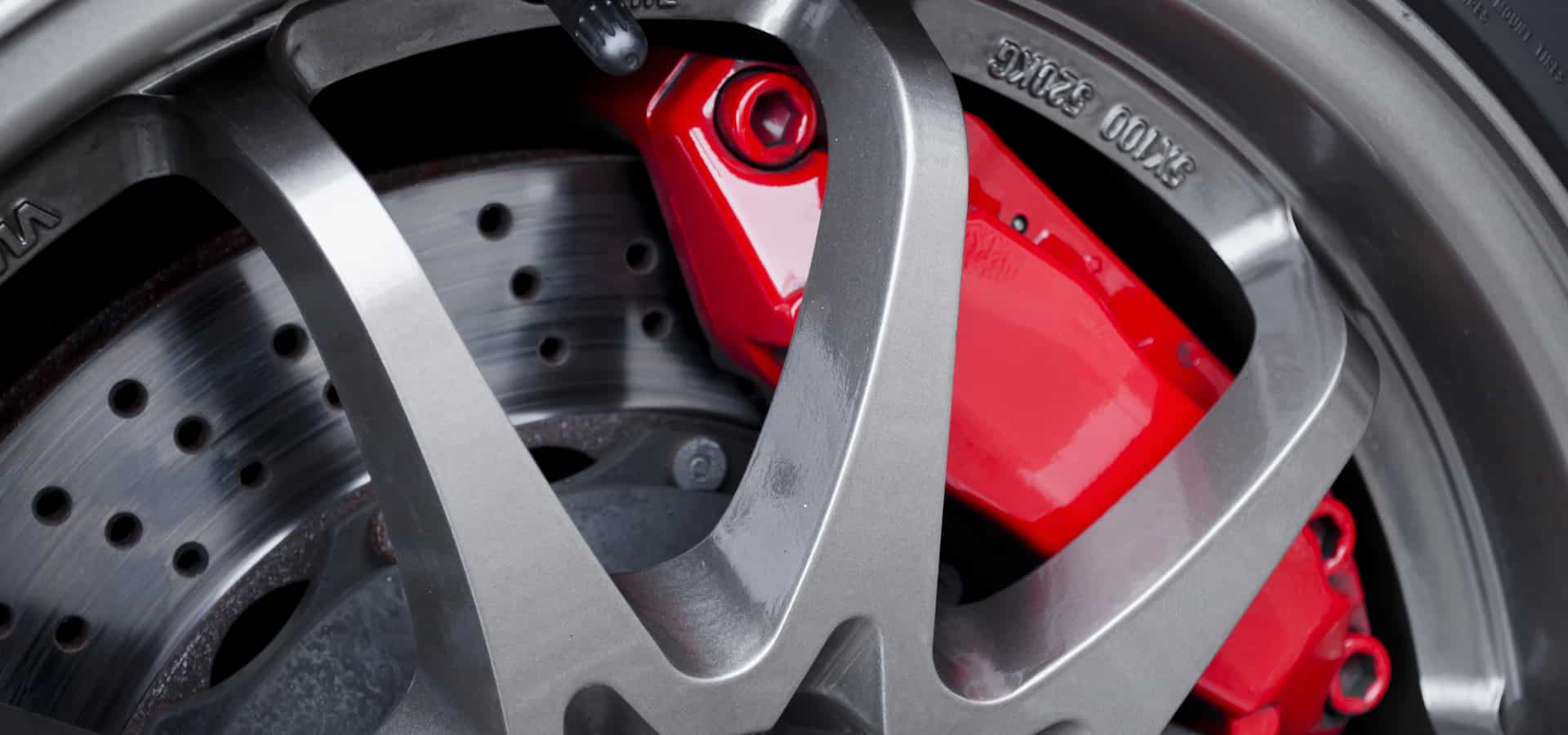
Jeep Brake Repair & Brake Fluid Change at Elevation Auto Repair
A Wrangler owner rolled into our Denver shop convinced the grinding on his morning commute was "just brakes." Turns out a seized caliper slide pin had cooked one pad down to the backing plate and warped the rotor. That's the kind of thing a Jeep specialist catches early.
Brake work on a Jeep isn't the same job as a compact sedan. Heavier curb weights on the JL Wrangler and JT Gladiator, plus the way Colorado drivers actually use these trucks – towing, mountain descents, road salt in winter – put real stress on pads, rotors, and hydraulic fluid. Brake fluid is hygroscopic, so it absorbs moisture over time and lowers its boiling point, which matters a lot on long grades where fade sets in.
Getting it right means respecting the details: proper caliper bracket torque specs, correct bleed sequence, and using the factory-compatible scan tool to cycle the ABS module on models with electronic stability control so no air stays trapped in the HCU.
- Honest inspection of pads, rotors, calipers, hoses, and fluid condition
- DOT-spec fluid flush with proper ABS-aware bleeding
- Torque-to-spec reassembly and a clear rundown of what we found
- Transparent pricing before any work begins
Symptoms – How to Know You Need This Service
Your Jeep usually tells you well before a brake problem becomes an emergency. Watch for these signs:
- Grinding or metal-on-metal scraping – pads are gone and rotors are taking damage. Stop driving and schedule right away.
- Squealing or high-pitched chirp – wear indicators contacting the rotor; time to schedule soon.
- Soft or spongy pedal that sinks toward the floor – often air or moisture-laden fluid. Have it checked immediately.
- Pulsing or shudder through the pedal or steering wheel when braking – warped or uneven rotors.
- Pulling to one side under braking – a sticking caliper or collapsed hose, common on older TJ and WJ models.
- Brake or ABS warning light on the cluster – have it scanned promptly.
- Burning smell after downhill driving – overheated fluid or a dragging caliper. Pull over and let it cool.
- Longer stopping distances or a Jeep that feels like it wants to keep rolling.
Any hard-pedal loss, grinding, or brake warning light means you should have it looked at before your next drive.
Common Brake Repair & Brake Fluid Change Issues on Jeep Vehicles
Jeep braking systems take a beating in Denver's mix of stop-and-go traffic and steep mountain grades. Certain patterns show up again and again across the lineup.
- Warped front rotors on JK/JL Wranglers (2007-present) – The heavy solid front axle and tall tire packages generate steering-wheel shimmy under braking, especially with lift kits and oversized tires that increase rotational mass.
- Rear caliper seizure on WK2 Grand Cherokee (2011-2021) – Sliding pins and caliper pistons corrode from road salt and moisture, causing uneven pad wear and dragging brakes that overheat the rear rotors.
- Electronic parking brake faults on Grand Cherokee and Cherokee (KL) – The motor-on-caliper EPB actuators throw service-brake warnings and require software-driven retraction before pads can be swapped.
- Moisture-saturated brake fluid – DOT 3/DOT 4 fluid absorbs water over time, and hard mountain descents boil that moisture into vapor, producing a spongy pedal and reduced stopping power.
- Premature pad wear on Gladiator (JT) and towing-equipped models – Trailer and payload loads accelerate friction material breakdown, often glazing pads and scoring rotors early.
- Rusted brake lines on older TJ/XJ platforms – Age and winter chemicals eat through steel lines, causing pressure loss and fluid leaks near the frame rails.
Which Jeep Models We See for Brake Repair & Brake Fluid Change
We service the full modern Jeep lineup along with older platforms owners keep on the road. Find yours below:
- Wrangler JL (2018–present) and JK (2007–2018) – heavier builds and oversized tires accelerate pad and rotor wear; Rubicon variants often run larger brake packages.
- Gladiator JT (2020–present) – added payload and towing loads mean fluid condition matters more; frequent flushes recommended.
- Grand Cherokee WK2 (2011–2021) and WL (2021–present) – SRT and Trackhawk models use Brembo six-piston front calipers that require careful pad and rotor matching.
- Cherokee KL (2014–2023) – electronic parking brake means the ABS/EPB module should be handled with the correct scan tool during rear service.
- Compass MP/MX and Renegade BU – smaller platforms, straightforward but still fluid-sensitive.
- Liberty KJ/KK, older Grand Cherokee WJ/WK, and Wrangler TJ – seized caliper pins and rusted hardware are common on these; we address them with fresh hardware.
We handle both manual and automatic Jeeps, and models with or without electronic stability control. If you have a heavily modified rig with an aftermarket big-brake kit, let us know the setup ahead of time so we plan the right parts and procedure.
A Wrangler owner rolled into the shop last summer with a soft pedal that sank halfway to the floor and a grinding noise coming from the front. He'd been putting off a brake job through two Colorado mountain seasons. What could have been pads and a fluid flush had turned into warped rotors, a seized caliper, and contaminated fluid throughout the system. That's the story we hear often – and it's exactly the kind of avoidable escalation we help Jeep owners get ahead of with clear pricing and straight answers.
Causes & Risks – What Happens if Ignored
Most Jeep brake problems trace back to a few root causes: high-altitude thermal stress on long descents, road salt and moisture from winter driving, added weight from lift kits and towing, and simple age-related fluid degradation. The system is designed to wear – the trouble starts when small wear items get ignored.
A set of pads that squeals for a few weeks is a cheap fix. Drive on them until the backing plate contacts the rotor, and you're into new rotors, possibly a caliper, and always more labor.
- Ignoring worn pads for a few weeks scores the rotors, turning a pad-only job into pads plus rotors.
- A dragging WK2 rear caliper left unaddressed overheats and warps the rotor and can damage the parking brake motor.
- Old fluid that's absorbed moisture corrodes ABS module components and calipers from the inside out.
- A spongy pedal on a mountain descent can fade to almost nothing when boiling fluid vaporizes.
- Rusted brake lines that finally rupture cause sudden, total loss of hydraulic pressure at that corner.
Safety Impact – Why Brake Repair & Brake Fluid Change Matters
Brakes don't work alone on a modern Jeep. The hydraulic system ties directly into ABS, electronic stability control, traction control, hill-descent control, and trailer sway management. Contaminated fluid or a failing component degrades all of them.
When the ABS module sees inconsistent pressure or a wheel-speed fault, stability and traction control can drop out entirely – right when you need them on a slick grade.
- Stop driving now: pedal sinks to the floor, brake warning light with a hard or vanishing pedal, fluid leaking at a wheel, grinding metal-on-metal.
- Schedule soon: squealing wear indicators, mild shimmy under braking, brake fluid past its service interval, slightly longer stopping distances.
There's also a liability angle. If a known brake defect goes unaddressed and contributes to a collision, that can complicate an insurance claim. Keeping documented, up-to-date brake service protects you on the road and on paper.
How Jeep Brake Repair & Brake Fluid Change Actually Works
Your Jeep's brakes convert pedal pressure into hydraulic force through the master cylinder, pushing fluid to each caliper to clamp the pads against the rotors. The ABS module modulates that pressure many times per second to prevent lockup. Most newer Jeeps add an electronic parking brake and driver-assist features that layer software over the mechanical system.
That software is why a Jeep brake job isn't a purely mechanical task. Skipping the electronic steps risks warning lights, damaged actuators, or an incomplete flush.
- Electronic parking brake on Grand Cherokee, Cherokee, and later models must be put in service/maintenance mode with a scan tool before the rear pads can be compressed.
- ABS module bleeding often requires cycling the module electronically to purge trapped air and old fluid the manual method leaves behind.
- Fluid specification matters – Jeep calls for specific DOT 3 or DOT 4 fluid depending on model and system, and mixing types degrades performance.
- Torque and sequence specs for caliper brackets, guide pins, and lug nuts prevent warped rotors and dragging calipers.
We use factory-level diagnostic tooling to handle the coding and calibration these syst
A Grand Cherokee owner rolled into the shop last month describing a pulsing brake pedal at highway speeds and a faint grinding when coming to a stop. She'd been told at a quick-lube spot to "just replace everything." After a proper inspection, the fix was warped front rotors and a fluid flush – not a four-wheel overhaul. That's the difference honest diagnostics make.
How We Diagnose Brake Repair & Brake Fluid Change Issues on Jeep
Jeep braking complaints rarely tell the whole story from the driver's seat. We work through a repeatable process to find the real cause.
- Scan the modules – We connect a scan tool capable of reading Jeep's ABS/ESC controller for stored codes, wheel-speed sensor faults, and brake pressure sensor data that generic readers miss on WK2 Grand Cherokee and JL Wrangler platforms.
- Road test – We replicate the symptom: pedal pulsation, pull under braking, extended stopping distance, or a low pedal that signals air or moisture in the fluid.
- Wheels off, visual inspection – We measure pad thickness, check rotor surface for scoring and heat cracking, and inspect calipers for sticking slides or seized pistons – a known nuisance on rear calipers of higher-mileage WK2 units.
- Rotor runout and thickness – We mic the rotors against Jeep's minimum spec to confirm warping versus uneven pad deposits.
- Brake fluid test – We check moisture content and boiling point, since hygroscopic DOT 3/DOT 4 fluid degrades and causes a spongy pedal.
Each finding goes into a clear, itemized repair plan with a transparent quote before any work begins – no surprises, no padded line items.
Brake Repair & Brake Fluid Change on Jeep: Repair vs. Replacement
Not every brake job needs a full teardown. We match the fix to what your Jeep actually needs.
- Genuine repair – Cleaning and lubricating caliper slide pins, adjusting a parking brake, or a straight fluid flush restores a soft pedal when the hardware is still within spec. Common on Cherokee KL and Compass models with sticky guide pins.
- Partial replacement – Replacing worn pads and resurfacing serviceable rotors, or swapping a single seized caliper while keeping healthy components. This is the sweet spot for many mid-mileage Wranglers.
- Full replacement – When rotors are below minimum thickness, pads are metal-on-metal, and a caliper has failed, cascading wear makes a complete corner rebuild the safe and sensible call. Same logic applies when repair cost creeps toward replacement cost.
We lay out the options side by side, explain what each one buys you in safety and longevity, and let you decide. The most expensive path is never the default here.
How to Make Your Jeep Brake Repair & Brake Fluid Change Last Longer
How you drive and maintain your Jeep has a direct effect on how long fresh brakes hold up.
- Drive smart – Coast to slow down before braking, avoid riding the pedal on Colorado's long downgrades, and use lower gears on mountain descents to spare the pads and fluid from heat soak.
- Mind the load – Heavy trailering or lift-and-oversized-tire setups on Wranglers add braking stress; upgraded pads may be worth discussing.
- Listen and look – Watch for squeal, grinding, a low or pulsing pedal, and any brake warning light on the cluster.
Owner-friendly maintenance that helps:
- Peek at pad thickness through the wheel spokes during tire rotations.
- Note any change in pedal feel or new noises early.
- Keep up with Jeep's recommended fluid change intervals and use OEM-spec DOT fluid – moisture-laden fluid corrodes lines and ABS components.
- Stay current on any braking-related software updates for ABS/ESC modules.
Visual checks and topping washer fluid are fine to DIY. Bleeding brakes, replacing pads, and any ABS work should stay with the shop – these are safety-critical systems where a small mistake carries real risk. Bring it in and we'll handle it right.
A Grand Cherokee owner rolls in describing a low, spongy pedal and a faint grinding at stops – the kind of thing that starts as a nuisance and turns into rotor damage fast. That's the moment to get eyes on the brakes, and it's exactly the kind of visit we handle every week at Elevation Auto Repair in Denver.
What to Expect When You Bring Your Jeep In
We keep the process simple and the communication clear from the first phone call to the drive home.
- Drop-off or appointment – Schedule ahead or drop off; grab a shuttle ride or ask about loaner availability so your day isn't stuck on hold.
- Initial brake inspection – We measure pad thickness, rotor runout and thickness, inspect calipers and slide pins, and test brake fluid moisture content with a refractometer. Corroded rear caliper pins are common on WK2 Grand Cherokees, and warped front rotors show up often on JK/JL Wranglers running larger tires.
- Written estimate – You get a clear, itemized quote before any work starts. No surprise add-ons, no vague line items.
- Communication during the work – We text or call with findings, photos of worn parts, and a straight answer on what's needed now versus what can wait.
- Pickup walkthrough – We show you the removed pads and rotors, explain what we found, and go over the fluid we flushed and replaced.
Leave personal items in the vehicle if you like – we work around them. After-hours pickup is available when your schedule runs late. Before your Jeep leaves, we road test it, re-scan the ABS module for stored codes, and confirm firm pedal feel. If anything feels off after pickup, bring it back and we'll recheck it.
Why Choose Elevation Auto Repair for Jeep Brake Repair & Brake Fluid Change
Jeep brakes have quirks that generic shops overlook. We know the platforms and the procedures that go with them.
- Platform-specific knowledge – We account for the electronic parking brake on WK2 Grand Cherokees, which needs the actuator retracted with a scan tool before caliper service. We also watch for the ABS/traction control recalibration steps Jeep specifies after certain brake jobs.
- TSB and software awareness – We check for relevant Jeep service bulletins and controller updates that affect brake feel and warning-light behavior on JL Wranglers and JT Gladiators.
- Proper fluid service – We flush to the correct DOT spec, bleed in the factory sequence, and verify moisture content instead of just topping off a reservoir.
We own the whole job – diagnosis, repair, and post-repair verification under one roof. That means the technician who inspected your Jeep sees it through the road test, so nothing gets lost in a handoff. You get transparent pricing, clear updates, and brakes that stop the way they should.
Our Jeep Services
- Air Conditioning AC Repair
- Battery Repair Replacement
- Check Engine Light Diagnostics
- Clutch Repair & Replacement
- Coolant Leak Repair
- Cooling System Repair
- Drive Shaft Repair
- Engine Repair
- Exhaust & Catalytic Converter Repair
- Head Gasket Repair & Replacement
- Oil Change
- Oil Leak Repair
- Scheduled Service Maintenance
- Steering Repair
- Suspension Repair
- Cambelt Timing Belt Replacement
- Transmission Repair
- Tune Up
- Wheel Alignment